
How many angels are there: Scripture and Christian tradition give no exact number, instead describing countless hosts — myriads of myriads — and ordered choirs, teaching that God’s angels are innumerable, purposefully arranged to worship, serve, and protect, not to be reduced to a literal headcount.
?Have you ever paused at the hush of dawn and wondered how many angels are there, as Scripture and worship hint at a multitude that surrounds our lives?
Numbers and metaphors: how Scripture speaks of angels
When Scripture speaks of angelic hosts it often uses numbers and images rather than a head count. Prophets and visionaries describe a vast company—“myriads of myriads” and an “innumerable company of angels”—phrases meant to stir wonder and trust more than to record a census. Those words draw the heart upward, inviting awe at God’s wide and careful ordering of creation.
Numbers in the Bible frequently carry symbolic weight. Words like seven and twelve point to wholeness and covenant, while terms such as thousands or sands of the sea suggest abundance and mystery. Reading these phrases with a devotional eye helps us see that Scripture aims to show the scale of God’s care; the emphasis is on presence and purpose, not on a literal headcount.
That way of speaking shapes how we pray and live. Let the image of countless messengers encourage a quiet trust: you are not alone, and your life is held within a vast, loving economy. Offer a simple thanks for that unseen company, and let the biblical language of numbers turn your wonder into steady courage and gentle devotion.
Archangels and choirs: biblical ranks and names

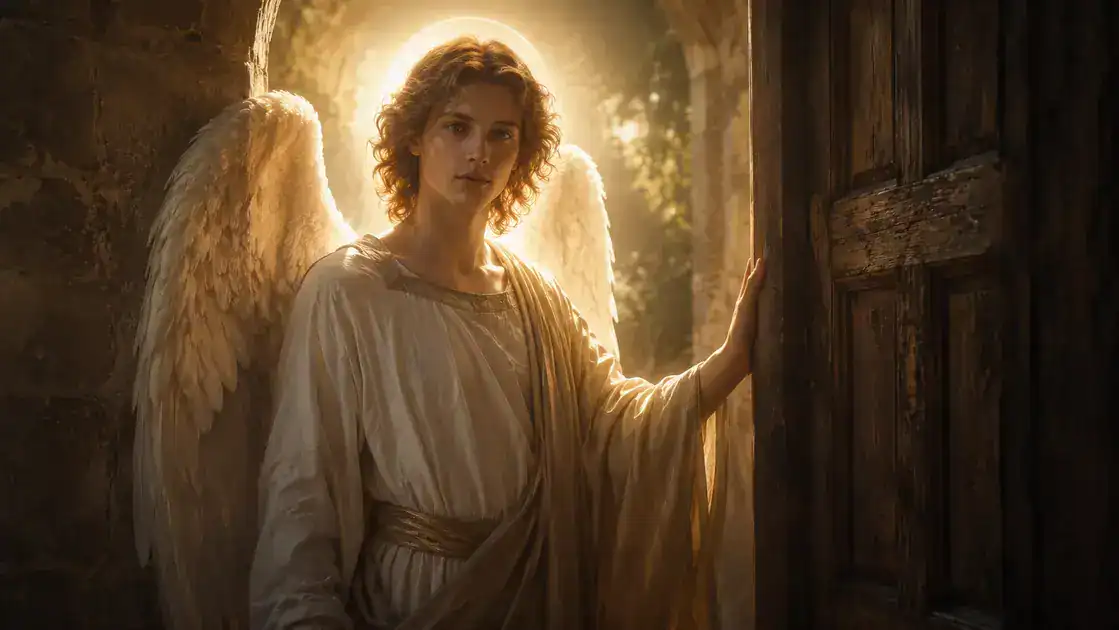
The Bible names only a few celestial leaders, yet those names carry deep meaning for how we see God’s care. Read in Daniel and Revelation, Michael appears as a defender of God’s people, while in Luke and Daniel, Gabriel brings word and revelation. These brief scenes show angels acting with purpose: some guard, some deliver messages, and some dwell closest to God’s throne. The sparse naming in Scripture invites reverence rather than curiosity about a full roster.
The church later grouped heavenly beings into choirs to help people pray and worship with order. Tradition lists nine ranks—seraphim, cherubim, thrones, dominions, virtues, powers, principalities, archangels, and angels—each with a felt role in the life of creation. Scripture paints parts of this picture: Isaiah’s vision of seraphim calling God holy, Ezekiel’s strange, living cherubim, and Revelation’s many crowned creatures around the throne. These images teach that some beings are drawn to worship at the core, while others move out to serve and guide the world.
For devotion, these names and ranks invite two simple responses: humble awe and steady trust. We need not sort angels into neat lists to live faithfully; instead, let the image of messengers and worshipers remind us of God’s ordered love. In prayer, we can ask for protection like that associated with Michael and for clear witness like that of Gabriel, always holding these figures within a posture of praise and trust rather than superstition. The choirs call us back to worship and to the quiet work of love in each day.
Theologians’ estimates: from patristic to medieval thought
Early church writers treated angelic numbers as a matter of awe more than arithmetic. Fathers like Augustine read Scripture with a pastoral eye, hearing images of hosts and myriads as invitations to worship and trust. They kept the mystery in place, using story and prayer to help people feel the nearness of God’s messengers rather than to count them precisely.
In the later patristic and Byzantine world a more ordered picture took shape. Pseudo‑Dionysius offered a vivid vision of nine choirs, a framework that helped worshipers imagine how heaven praises God. Those ranks are less a census than a map of how divine love moves—some angels drawn to the throne in silence, others sent outward to serve and guide the world below.
Medieval thinkers then brought philosophical tools to the question, asking how spirits exist and relate to the body. Thomas Aquinas wrote that angels are individual immaterial beings, each complete in itself, which led scholars to explore roles and order rather than a simple headcount. For everyday devotion the result is gentle: theologians teach us to hold number lightly and to let the idea of ordered, loving service inspire our worship and our trust in God’s care.
Counting in Jewish and Christian texts: visions and symbolic numbers

Many Jewish and Christian visions use numbers as a way to point beyond counting to meaning. Prophetic books speak of hosts like “myriads of myriads” or sands of the sea to name abundance that words cannot hold. Texts such as Daniel, Ezekiel, and the Book of Revelation present angels and cosmic scenes where numbers shape the feeling of the vision more than they give a census.
In Jewish tradition, works like 1 Enoch and later rabbinic images show many angels grouped by task and purpose, while Christian apocalyptic language borrows similar symbols to show God’s ordered reign. Numbers like twelve, seventy, and seven often stand for covenant, nations, and perfection, so the reader hears symbolic language about relationship and order rather than a simple headcount. These visions use visual metaphors—stars, sands, and countless lights—to make us feel both awe and the nearness of God’s care.
For devotion, these symbolic counts invite a gentle posture: do not demand a ledger, but let the imagery deepen trust. Let the idea of innumerable watchers and worshipers turn your fear into quiet courage and your small prayers into part of a larger chorus. Pray with the images in mind—sand, star, and light—and let them draw you into stronger worship and patient wonder at the vastness of God’s household.
Living with angels: devotional practices and discerning presence
Simple daily practices help you feel the unseen presence without seeking signs. A short morning prayer that invites the guardian angels to walk with you sets a gentle tone for the day. Small acts—blessing a meal, pausing for a breath prayer, or lighting a candle—are ways to make that quiet companionship a steady habit.
Learning to notice angelic promptings grows from patient listening and honest reflection. Read a short passage of Scripture slowly and sit with what it stirs in your heart, then check impressions with a trusted friend or spiritual guide. These practices form discernment, helping you tell a calm nudge of love from anxiety or wishful thinking.
Finally, living with angels means joining their work of service and praise. Acts of kindness, forgiveness, and simple hospitality echo the service angels offer and open ordinary life to the sacred. Let thanksgiving, small obedience, and regular moments of silence be the ground where their presence feels real and steady in your daily walk.
A gentle blessing
May you sense the soft company of God’s messengers around you, reminding you that you are never alone. Let that thought bring calm to the hard moments and warmth to the quiet ones.
Carry this wonder into your day with small acts: a breathed prayer, a moment of thanks, a kind word. These simple habits make their presence more real and open your life to blessing.
May your steps be steady, your heart grow brave, and your work reflect their quiet service. May peace and praise follow you now and always. Amen.
FAQ – Questions seekers ask about angels and sacred tradition
Do angels really exist according to the Bible?
Yes. Scripture speaks of angels throughout both Testaments—Psalm 91:11 says God commands his angels to guard us, Hebrews 1:14 calls them ministering spirits, and many narratives (for example, Acts 12 and Luke 1) show them acting on God’s behalf. The biblical witness and long religious tradition invite us to accept their real, loving service rather than treat them as mere symbols.
Does every person have a guardian angel?
Many Christian traditions affirm that each person is entrusted to a guardian angel. Jesus’ words in Matthew 18:10 point to angels watching over the ‘little ones,’ and the Church’s devotional life has long held this as a pastoral truth: an angel accompanies our life under God’s care, though Scripture does not give a full systematic account.
How can I tell if an inner prompting is from an angel or just my own thought?
Discernment matters. Test impressions against Scripture, look for the fruit of peace and humility, and seek counsel from a wise spiritual friend or pastor. The Bible also warns us to ‘test the spirits’ (1 John 4:1); true promptings lead to love, charity, and obedience to God, not fear, pride, or confusion.
Can angels answer prayers or help in practical ways?
Angels act as God’s servants to carry out his will, and Scripture shows them assisting people—rescuing, guiding, and delivering messages (Acts 12; Luke 1). Yet their help is always subordinate to God: we pray to God, and God may use angels to bring comfort, protection, or guidance according to his loving purposes (Hebrews 1:14).
Should we worship or pray directly to angels?
No. Scripture forbids worshiping creatures; when John falls to worship an angel, the angel replies, ‘Worship God’ (Revelation 22:8–9). We direct prayer to God alone while honoring angels as faithful servants; we may ask God to send their help, but not place them between us and God.
How do angels fit into daily spiritual life and practice?
Angels call us to deeper trust and praise. Their biblical roles—messengers, protectors, and companions at worship—encourage simple spiritual practices: short prayers of thanks, quiet attention to God’s promptings, and acts of service that mirror angelic ministry. Living with that awareness turns ordinary days into occasions of sacred care and gratitude.