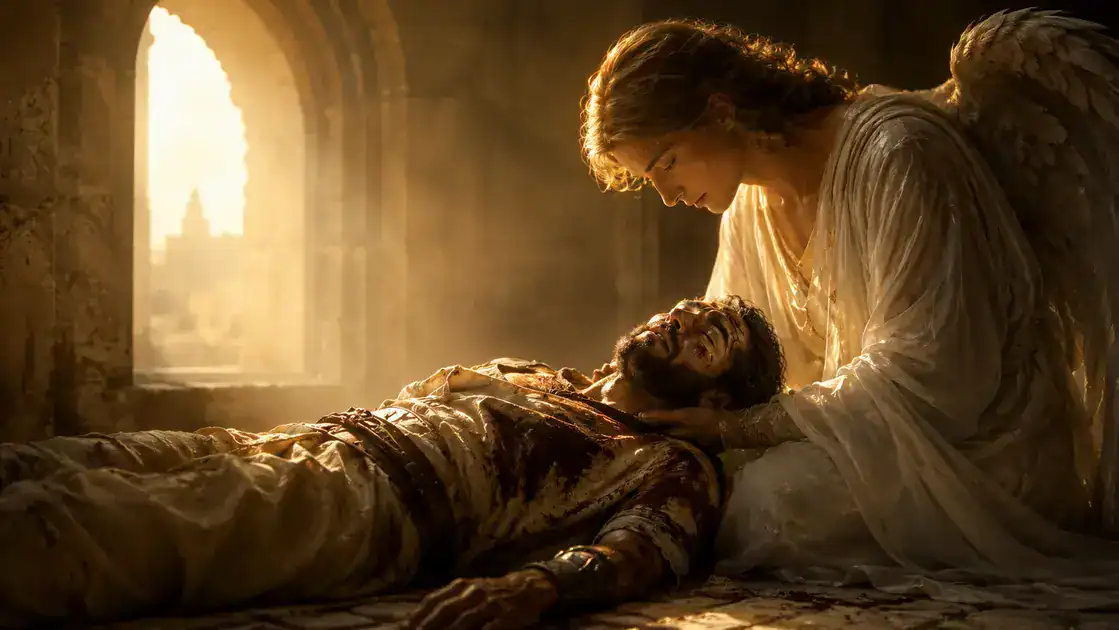

thomas aquinas angelology presents angels as created immaterial intellects ordered into choirs, serving God’s providence by knowing, willing, and aiding creation, and it invites believers to unite prayer and reason so angelic companionship becomes a practical, humble support for moral choice, worship, and daily spiritual growth.
thomas aquinas angelology — have you ever felt the hush of a chapel and wondered who stands between heaven and earth? This teaching opens a patient, luminous account of angels’ nature and care for souls, inviting quiet reflection rather than quick answers.
Thomas Aquinas in context: life and theological project
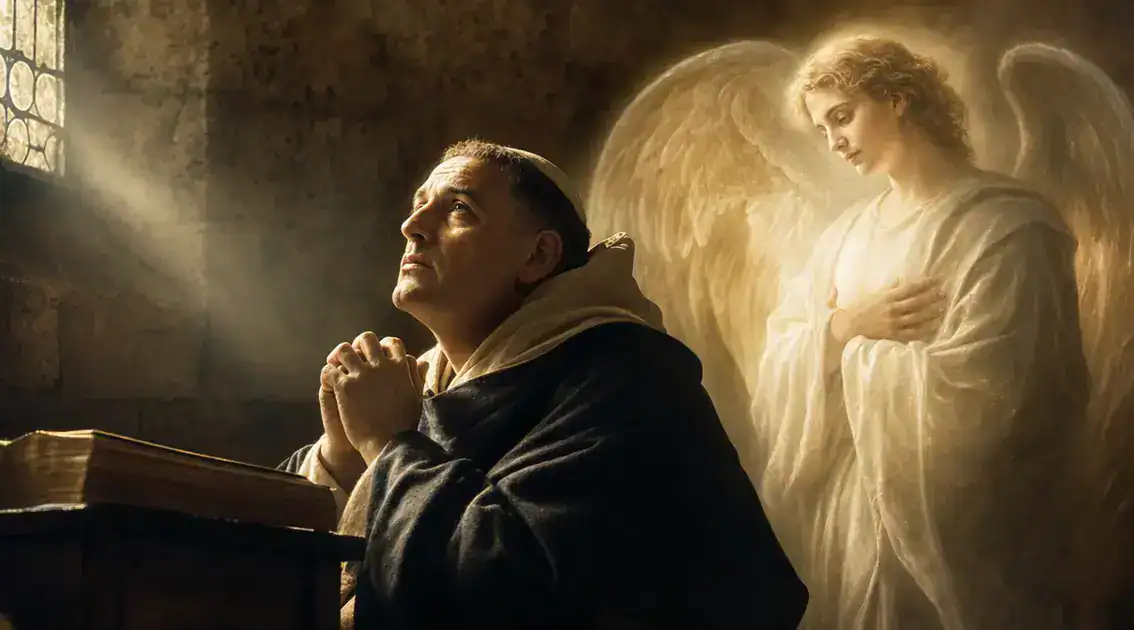
Saint Thomas lived a life shaped by prayer, study, and service. Born to a noble family, he chose the quiet discipline of the Dominican order and spent long hours reading, thinking, and praying in cloistered halls. That steady devotion gave him a calm patience that shows in his writing; he learned to listen to Scripture, to reason carefully, and to sit with mysteries rather than rush past them.
His theological project aimed to bring clarity and warmth to Christian belief by holding intellect and faith together. Thomas drew on Aristotle and the Church Fathers to explain deep truths in clear steps. In works like the Summa Theologiae he uses questions and careful answers so truths can be seen and held. Central to his method is the idea of the unity of faith and reason, a gentle bridge that lets the mind explore what the heart believes without fear.
This balance matters for how we read about angels and holy things. For Thomas, angels are not distant curiosities but part of God’s ordering of creation, intelligences that help hold the world in meaning. Reading his work invites a practical devotion: slow study, humble prayer, and a habit of wonder. As you sit with his pages, you are invited to step into that quiet rhythm of thought and praise, letting knowledge lead you deeper into trust and reverence.
Angelic nature: essence, intellect, and immaterial being
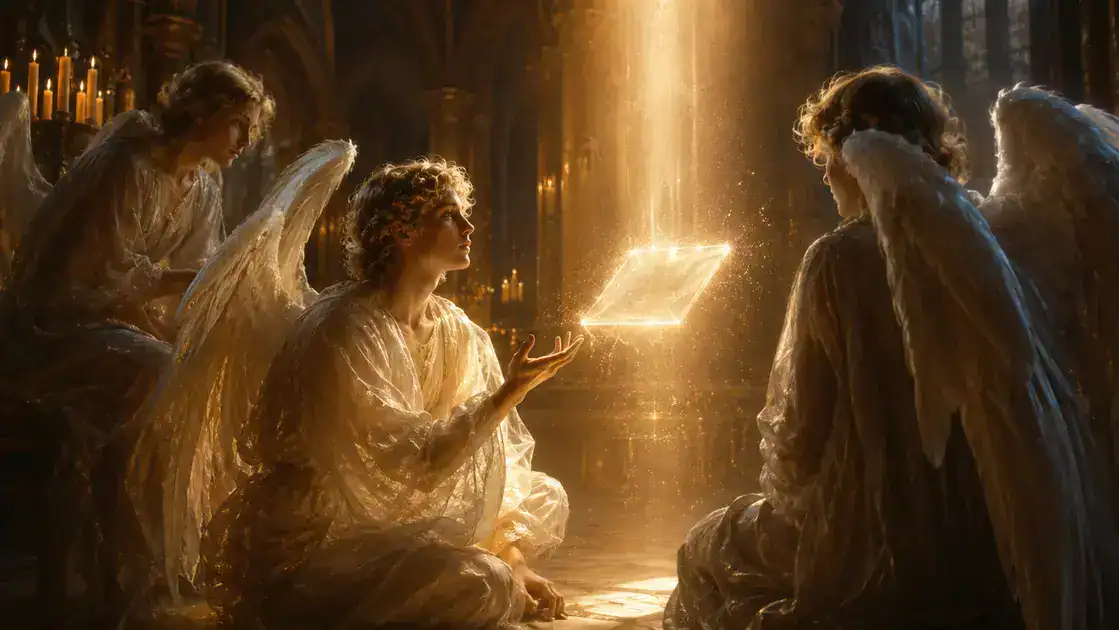
Angels are created by God as spiritual beings whose life is mostly about knowing and loving. They are not bodies with souls the way we are, but are made as pure spirits who think and will. Saint Thomas describes them as immaterial intellects, simple beings whose identity comes from their power to understand rather than from any physical shape. Scripture often shows them as messengers and worshipers, but their deepest reality is the life of the mind and heart turned toward God.
Because they are pure intellects, angels can know in a way that does not depend on senses. They grasp truth more quickly and clearly than people can, and they hold what they know without the limits of space or time. They also have wills, so their knowledge becomes loving and active service. This helps explain the biblical pictures of angels moving swiftly to help or to speak God’s will, acting with a freedom rooted in intelligence, not in muscle or tool.
Knowing angels in this way quietly changes how we pray and live. When we think of a guardian angel or the choirs around God’s throne, we meet beings whose first gift is understanding, a mirror of God’s wisdom. They invite us to lift our minds as well as our hearts, to bring clear thought into our devotion. In humble prayer we can welcome their help, trusting that their contemplative gaze draws us gently nearer to the truth and to the love that created them.
Hierarchy and order: choirs, functions, and their symbolic meaning
The idea of hierarchy among angels is not about rank for pride, but about order in love and service. Saint Thomas describes nine choirs, arranged so each group helps carry out God’s care for creation in its own way. This order points to a simple truth: God’s life pours outward in measured ways, and angels receive and reflect that life according to their gifts.
The highest choirs—Seraphim, Cherubim, and Thrones—stand closest to the divine light, living in almost constant worship and contemplation. The middle choirs—Dominions, Virtues, and Powers—govern spiritual realities and help sustain the harmony of the created world. The lower choirs—Principalities, Archangels, and Angels—are nearer to human affairs, guiding nations, delivering messages, and walking beside individual souls. Each choir has a role that complements the others; together they form a single, ordered chorus that points all things back toward God.
Knowing this order can shape our prayer and daily life. Rather than a distant catalog of names, the choirs become a pattern for how love moves: contemplation, governance, and compassionate service. Hierarchy is service—a reminder that greatness in God’s economy looks like ordered care for others. As we call upon an archangel in times of need or rest in the quiet help of our guardian angel, we participate in that same ordered love, learning humility, patience, and a steadier trust in God’s providence.
Scripture and reason: how Aquinas reads biblical angelic appearances
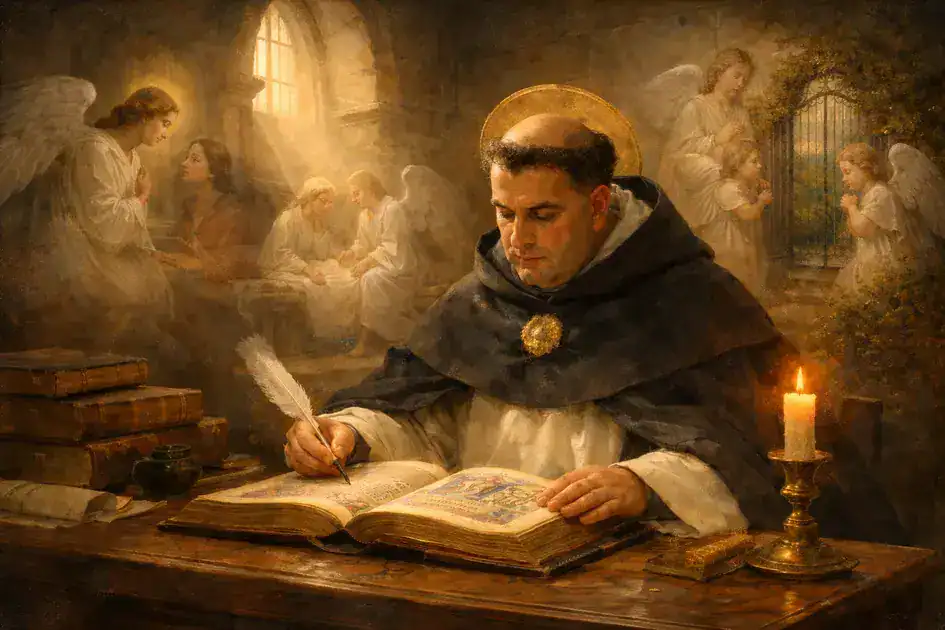
When Aquinas reads Scripture he brings both reverence and clear thought to the text. He speaks of the senses of Scripture—the literal sense and the spiritual senses—and he believes both matter. For him, reason helps us see when an angelic story names a real event and when it also points to a deeper truth about God’s work among us.
Thus a scene like Gabriel’s visit to Mary is treated as a true appearance and as a sign of God’s plan. Angels at the empty tomb show both a historical act and a hope that death will be overcome. Even strange visions, like cherubim around Eden, are read as symbols that teach about God’s care, while keeping the firm claim that angels are real spiritual beings who act for God’s will.
Reading with prayer
To follow Aquinas is to read Scripture with prayer and patience. Ask honest questions, let reason test images, and let prayer open your heart to the deeper meaning. The result is the unity of faith and reason—a gentle practice that brings knowledge and devotion together and invites angelic aid as we seek to live by what we read.
Angels and human life: guardianship, providence, and spiritual aid
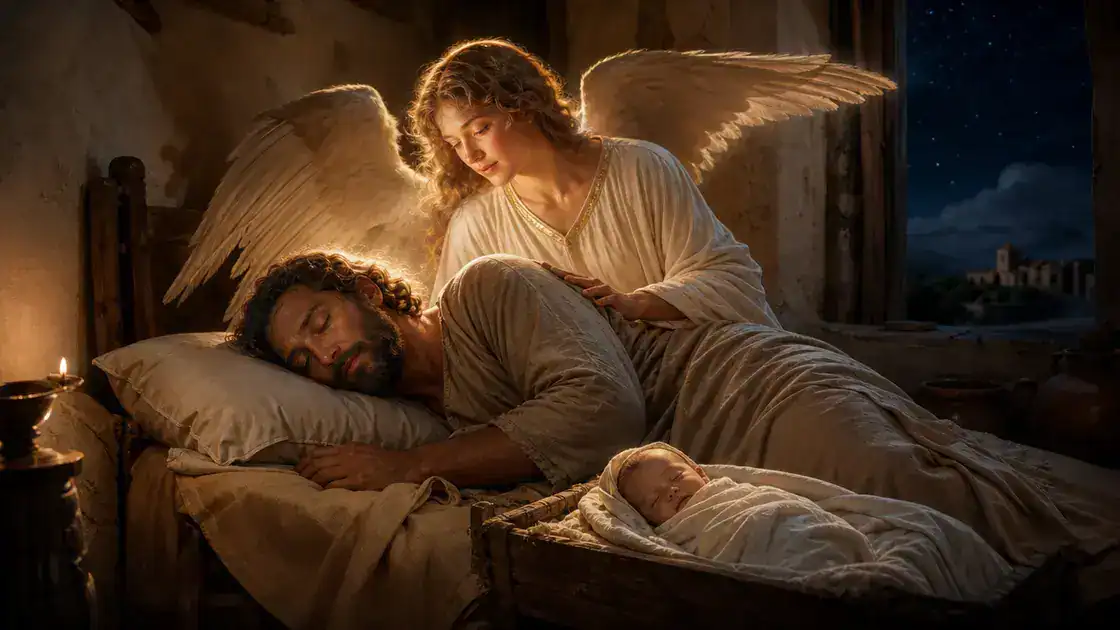
Angels walk with us through the quiet moments of daily life, often unseen but not absent. Scripture and tradition speak of a guardian angel near each person, a companion whose care is steady rather than spectacular. This presence shows up as gentle nudges of conscience, peace in danger, or a comforting sense that we are not alone when fear or sorrow comes.
These heavenly helpers also take part in God’s providence, guiding events in ways that respect our freedom. Angels may inspire a wise choice, protect a traveler, or bring a timely word that changes a heart. Their action does not force us; instead it helps reveal possibilities and opens doors, working with human will so that grace and freedom move together.
To live with this truth is simply to invite a quieter confidence into prayer and practice. A short morning greeting, a moment of thanks when fear lifts, or a brief request for guidance can deepen awareness of their care. In small habits—pausing before decisions, asking for help in prayer—we learn to notice the trustworthy touch of angelic aid and to let that care shape how we love and serve others.
Devotional practice and legacy: living Aquinas’ angelology today

Living Aquinas’ angelology begins with small, steady practices that open the heart. Read a short passage from his writings or the Psalms each morning, then offer a simple greeting to your guardian angel asking for help that day. This quiet habit trains the mind to see God’s care in common moments and makes room for wonder without demanding signs or visions.
Pray with the Church’s liturgy and let sacred art guide your imagination toward truth. Sit with an icon, a painting, or a short chant and notice how these forms lift thought into prayer. When study and worship meet, you taste the unity of faith and reason that Thomas treasured—knowledge that softens the heart and devotion that steadies the mind.
Finally, let this teaching shape the way you love others through service and small acts of mercy. Angels serve by bringing God’s care into our choices; we imitate them when we choose patience, kindness, and courage for the sake of another. By practicing prayer, study, and charity together, we carry Aquinas’ legacy into daily life and invite a truer, quieter companionship with the holy beings who walk beside us.
A prayer for the journey
Lord, in the hush of morning and the quiet of night, let us feel the gentle company of your angels. Help our hearts rest in the truth that we are never alone.
Teach us to notice small nudges, clear our minds for calm choice, and receive guidance without fear. Let their quiet help shape our steps and steady our decisions.
Give us simple practices—an honest greeting at dawn, a brief prayer before choices, a moment of thanks when grace comes—that open us to their care and to your wisdom.
May the peace of heaven walk with you today, may wonder steady your days, and may service grow in your heart. Amen.
FAQ – Questions on Saint Thomas Aquinas and angelology
Do angels really exist according to Scripture and Church tradition?
Yes. Scripture speaks of angels often (for example, Psalm 91:11 and Hebrews 1:14), and the Church has long taught their reality. Saint Thomas and the Catechism treat angels as created spiritual beings who serve God and assist the faithful.
What did Saint Thomas Aquinas teach about the nature of angels?
Aquinas describes angels as immaterial intellects and free wills—pure spirits who know and love without relying on bodies. He shows how their way of being differs from ours while affirming they act on God’s behalf in creation.
How do angels help us in everyday life?
Tradition speaks of guardian angels who watch over persons and of other angels who guide nations and events. Their help often appears as timely insight, a calming peace in danger, or unexpected help—always ordered to God’s providence and our good.
Can angels force us to do things or take away our freedom?
No. Both Scripture and Aquinas teach that angels do not override human freedom. They may inspire, warn, or protect, but they work in harmony with our will and with God’s respect for our freedom.
How should I pray to or relate with my guardian angel?
Keep it simple and humble: a short morning greeting, a moment of thanks, or a brief request for help before choices. Pray to God first, but ask your guardian angel to guide and to join your prayer, following the Church’s tradition of gentle devotion.
Are there clear signs that an angel is helping me?
Signs are usually subtle: a sense of peace, a timely idea that avoids danger, or guidance that leads to good. Biblical accounts show varied appearances (Gabriel at the Annunciation, angels at the tomb), so expect care that is respectful, often quiet, and always aimed at our welfare rather than spectacle.