

Raphael the Archangel appears in the Book of Tobit as a hidden companion who guides Tobias, provides a medicinal cure from a fish, and restores his father’s sight, illustrating how God’s providence uses prayer, simple remedies, and faithful companionship to bring embodied healing and spiritual restoration.
Have you ever wondered who walks beside the wounded on the road to home? raphael archangel tobias healing draws us into an intimate, luminous story where an angel guides Tobias toward healing, courage, and renewed trust.
The book of Tobit: story and theological context
The Book of Tobit tells a quiet, human story of exile, loss, and care. Tobit becomes blind and his family must cope with hardship. His son Tobias is sent on a far journey to recover money, and an unexpected companion joins him. That companion, the angel Raphael in disguise, guides Tobias through danger and teaches him how a simple fish can bring about healing and deliverance.
The journey reads like a lesson in how God cares through small, ordinary means. Tobit’s steady prayers and his acts of charity open the way for rescue, while Raphael’s guidance shows that help often comes through another person’s hands and through practical remedies. This story points toward divine providence that is personal and close, not distant or abstract, inviting readers to notice grace in daily acts.
The book also shaped devotion and practice. It appears in Catholic and Orthodox Scripture and has inspired prayers to the Archangel Raphael as a companion for travelers and healers. The tale presses gently on the heart: suffering is met by faithful care, prayer moves the story, and healing can be both physical and spiritual when guided by trust and simple obedience.
Raphael’s identity in Scripture and ancient tradition

The name Raphael means “God heals,” and that meaning shapes how the angel appears in Scripture and tradition. In the Book of Tobit he joins Tobias as a traveling companion, tending practical needs and guiding the journey, later revealing himself as one of the seven angels who stand in the presence of the Lord. That quiet revelation roots Raphael in heavenly service and gives the story its gentle sense of divine care close at hand.
Ancient Jewish writings and early Christian reflection expand this portrait, remembering Raphael chiefly as a healer and protector. The narrative’s simple images—a fish used for medicine, a caring companion, a staff for the road—became enduring signs in devotion and art. These everyday symbols teach that healing in Scripture often appears through ordinary means, and many artists show Raphael with a staff, a small fish, or herbs to signal his role as guide and healer.
For believers, Raphael’s presence also shapes a humble theology of care: angels are servants of God who bring God’s compassion into human life without replacing divine sovereignty. Seeing Raphael at work encourages a trust in practical mercy—prayer, hospitality, and simple remedies—as channels of grace. Many turn to his example when preparing for travel or seeking health, finding comfort in the idea that God’s healing can come through a faithful companion and the small acts that make restoration possible.
The journey motif: healing, guidance, and spiritual transformation
On the road that Tobias walks, the outward journey becomes a mirror for inner change. As he travels, every step meets a small test—fear at the river, the surprise of a fish, the need to trust a companion—and each test opens space for divine guidance to shape his heart. The movement from one place to another is not merely physical; it organizes a moral and spiritual path where care, obedience, and courage are practiced in ordinary moments.
Healing in this story unfolds on two levels at once: the body is tended and relationships are restored. The fish that Tobias catches becomes a simple medicine and a sign of God’s provision, while prayers and ritual actions bind family wounds and lift blindness. In that way the narrative shows healing and reconciliation as woven together—medicine, prayer, and faithful companionship all play a part in making a person whole again.
That motif invites readers to see their own travels—literal or life-seasonal—as places of formation. When we face illness, change, or loss, the story suggests looking for help in humble things: a friend’s steady hand, a timely remedy, a small prayer. The presence of a guiding figure like Raphael reminds us that transformation often comes gently, through company and care, and that faith learns to read God’s mercies along the way.
Symbols and rituals: fish, prayer, and sacramental echoes

The fish in Tobit is more than a plot detail; it is a concrete sign of care and cure. Tobias uses parts of the fish for a remedy, and that practical act becomes a visible sign of healing and provision. When a story gives us a small, ordinary object as a means of mercy, it teaches that God often works through simple, tactile things we can touch and use.
Alongside the fish, prayer and ritual shape the way healing happens. Tobit’s prayers and the blessing spoken over actions turn everyday gestures into sacred acts. This points to a deeper truth: prayer is not only words but a form of participation. In Christian life these moments echo in baptismal water, in oil used for anointing, and in prayers of blessing—all ways the community names and receives God’s mercy. Such echoes help us see that ritual and faith move together in ordinary care.
These symbols invite a living, humble devotion. We do not worship the fish or the oil; we treat them as channels of grace that help us pray and act with tenderness. Practically, that means bringing simple things to prayer—water blessed on the feast, a prayer said beside the sick, a quiet sign of the cross—and trusting that small gestures can open us to restoration. The story of Raphael and Tobias encourages us to practice faith in ways that are both bodily and prayerful, seeking healing that touches soul and body together.
Comparative readings: Jewish, Catholic, and Orthodox interpretations
The Book of Tobit sits at a crossroads of scripture and tradition, and different communities read it with distinct eyes. In Jewish memory the story is known through wider ancient literature and through moral themes rather than as part of the Hebrew canon. Readers in this context often listen for ethical teachings—charity, prayer, and faithful conduct—and approach angelic material with care, emphasizing God’s unique sovereignty while acknowledging angels as messengers of God’s care.
Catholic reading treats Tobit as part of sacred Scripture that nourishes prayer and pastoral practice. The figure of Raphael becomes a focus of devotion as one who brings both guidance and healing, and the story’s use of simple remedies and blessings fits naturally with sacramental life. In Catholic devotional practice, the narrative is often read beside prayers for travelers and the sick, and believers find in Tobit a scriptural example of how prayer, mercy, and practical care work together in God’s healing economy.
Eastern Orthodox tradition likewise embraces Tobit within its canon and brings the tale into the rhythm of liturgy and iconography. Icons and hymns preserve the memory of Raphael as a gentle companion whose actions point to God’s mercy made visible. This liturgical frame encourages the faithful to see healing as communal and sacramental—something prayed for within the assembly and expressed through concrete acts of care. Across these readings, one shared insight emerges: the story invites trust in a God who heals through presence, prayer, and neighborly service.
Practical devotion: invoking Raphael in prayer and healing
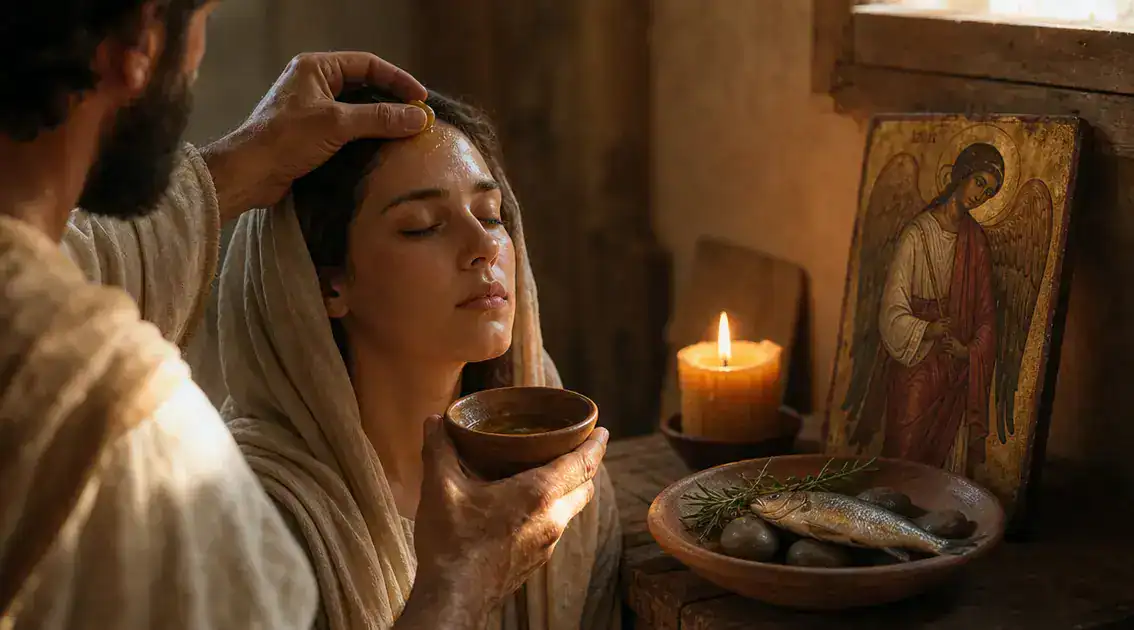
Many believers find that invoking Raphael begins with a simple, regular habit: a short prayer before travel, a quiet petition at the bedside of the sick, or a moment of thanksgiving after healing. These acts do not require ceremony or special words—just honest speech and a willing heart. Over time, such small practices shape a gentle rhythm in which prayer and presence become companions to daily care.
Physical signs can help focus the devotion without becoming objects of worship. A drop of oil on the brow, blessed water kept for blessing, or the simple laying on of hands by a friend can mark a moment as sacred and offer comfort to the body and soul. These gestures echo the story’s use of tangible remedies and invite the community to participate in healing through mercy, prayer, and practical aid.
Finally, the right posture matters: approach with humility, patience, and gratitude rather than a demand for miracles. Invite Raphael as a guide, seek the support of others, and stay attentive to small consolations—an answer may come as a timely word, a healed relationship, or renewed courage. Such a devotional life trains the heart to see God’s care in ordinary ways and to trust that healing often arrives through steady, faithful means.
What the story teaches about companionship and divine providence
The story shows companionship as a simple, steady presence rather than a grand miracle. Raphael walks with Tobias, shares the road, and helps with small tasks like catching a fish and giving practical advice. Those quiet acts become signs of divine providence because care is offered exactly when it is needed.
This teaches that God often cares through the people beside us rather than by sudden wonders. A friend’s hand, a timely word, or an ordinary remedy can be the way mercy arrives. When we read Tobit we learn to watch for help in plain things and to trust that prayer and neighborly kindness are part of how God guides life.
That lesson invites a gentle way of living: be present, be helpful, and hold hope without loud certainty. Practicing small acts of mercy trains us to notice God at work in daily life and to offer the same quiet care to others. In this way companionship becomes both a gift we receive and a way we join in God’s ongoing care for the world.
A gentle prayer for the road
May the memory of Raphael’s quiet care stay with you as you walk. Let the story remind you that God’s care often comes in small, steady acts of kindness and timely help.
Bring your needs and hopes with simple words. Ask for guidance when you travel, for healing when you are weak, and for the grace to see mercy in the ordinary moments around you.
Then go forward with a calm heart. Offer help to others, receive companionship with gratitude, and trust that little gestures can carry great healing.
May peace go with you—gentle, sure, and near—so that each day becomes a quiet path of care, prayer, and renewed hope.
FAQ – Questions about Raphael, Tobias, and sacred healing
Is Raphael actually named in Scripture?
Yes. Raphael appears by name in the Book of Tobit (a deuterocanonical book accepted in Catholic and Orthodox canons) where he guides Tobias and ministers healing. Christian tradition identifies him as an archangel and remembers his role as a heavenly companion.
What does the name Raphael mean and why does it matter?
Raphael means “God heals.” That name shapes the story: his actions—guiding Tobias, giving a remedy from a fish, and restoring sight—illustrate how God’s mercy can come through both prayer and ordinary means.
Can I ask Raphael to intercede for healing or travel?
Many Christian traditions encourage asking angels to pray for us while directing worship to God. In Catholic and Orthodox practice people often invoke Raphael’s aid for travel and healing, while also using sacramental prayers and acts of charity as primary channels of God’s healing (see James 5:14 regarding prayer and anointing for the sick).
How does the story of Tobit teach about divine providence?
Tobit shows providence as personal and practical: God cares through companions, timely remedies, and answered prayers. The narrative invites us to see ordinary acts—hospitality, prayer, medicine—as ways God’s guidance and mercy reach us in daily life.
Is the Book of Tobit part of the Bible for all Christian communities?
No. The Book of Tobit is included in the Catholic and Eastern Orthodox canons and in many ancient Christian lectionaries. It is considered deuterocanonical or apocryphal by many Protestant traditions and is not part of the Hebrew Bible, though its moral and devotional themes remain influential across communities.
How can I bring Raphael’s example into my daily spiritual life?
Practice small, steady habits: short prayers for guidance before travel, simple petitions for the sick, reading the Tobit story, and acts of mercy toward neighbors. Use tangible signs—like blessed water or a prayerful anointing—only as aids to deepen prayer, and remember to direct all prayer ultimately to God while trusting companions and remedies as part of God’s care.