Number 7 angels in the Bible signify a sevenfold pattern in which angelic agents appear as ordered instruments of God’s complete purpose, seen in passages like Revelation’s seven angels with trumpets and bowls and Tobit’s seven who stand before the Lord, guiding, warning, and serving within a divinely ordered narrative.
number 7 angels in the bible — have you ever noticed how the number seven appears beside angelic moments, from Genesis hints to Revelation visions? This pattern opens a quiet invitation to reflect on completeness, guidance, and the ordered care hidden within Scripture.
The symbolism of seven in biblical literature
When Scripture returns again and again to the number seven, it is not random. In many places seven quietly points to wholeness and divine completion, a way the biblical writers signal that God’s action is full and fitting. The number shows up in creation, ritual, prophecy, and worship, and each appearance asks the reader to notice an order beneath the events.
Think of Genesis where God rests on the seventh day, giving the week a shape of covenant rest, or the seven lamps of the menorah that steady the light in the sanctuary. Prophetic and apocalyptic books use sevens to frame visions: seven seals, seven trumpets, and sevenfold images that organize a complex revelation into a meaningful pattern. In those texts, seven is more than a count; it forms the rhythm of how the story is told.
Reading these images devotionally helps the believer attend to a sacred design in Scripture. Not a magic sign, but a way to trust that God’s work moves toward completion and care. Let the pattern of seven shape your prayer and attention, so that when angels or visions appear with sevenfold markers, you hear them as part of a larger promise rather than an isolated spectacle.
Seven and angelic roles: examples from Scripture
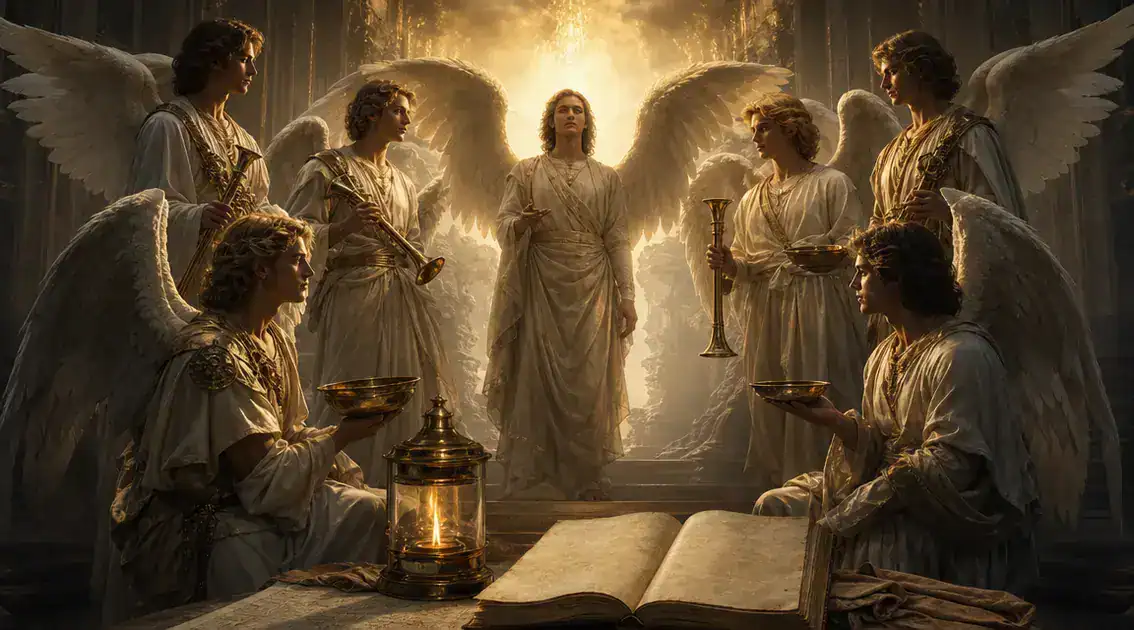
Scripture links the number seven with angelic work in striking ways. In Revelation, John sees seven angels given seven trumpets, each sounding in turn to mark a step in the vision’s movement. The scene shows angels as active messengers whose actions unfold God’s plan in a clear, ordered rhythm.
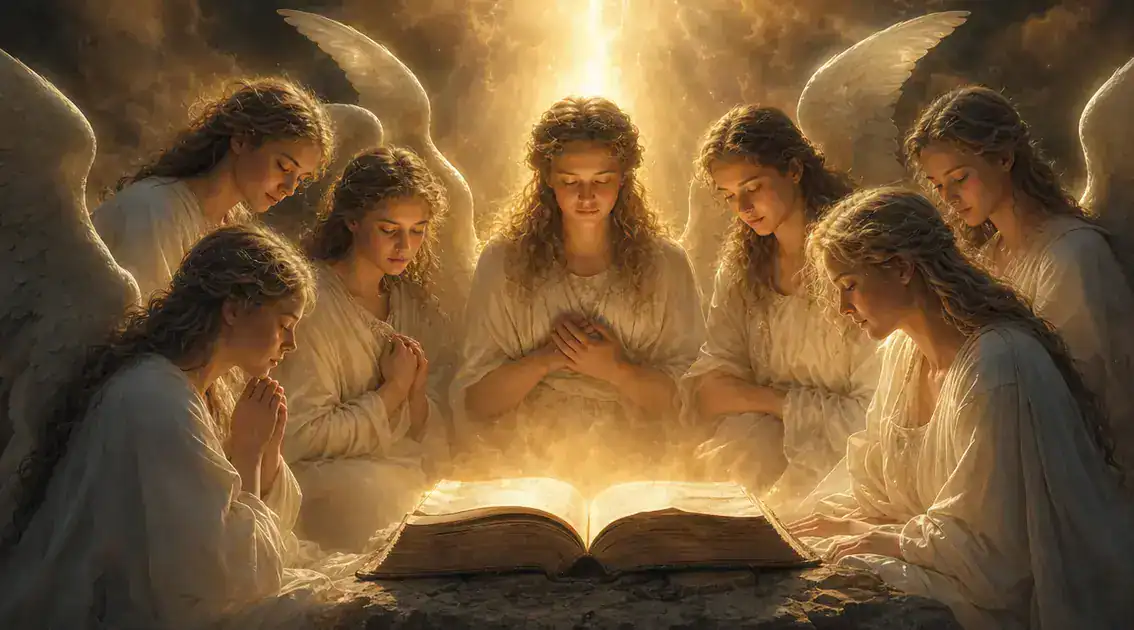
The book also speaks of seven angels who stand before God and of seven bowls poured out by angels as part of the same revelation. These images give a sense of service and mission: angels do not act at random but carry specific tasks that reveal mercy, warning, or judgment. Seeing them in sevens invites us to read their ministry as part of a broader, sacred pattern.
Beyond Revelation, the letters to the seven churches refer to the “angel of the church,” linking angelic care with local congregations and pastoral oversight. In the deuterocanonical Book of Tobit, Raphael says he is one of the seven who stand before God, a tradition that highlights named roles in healing and prayer. For devotional life, these passages remind us that angelic activity is purposeful, attentive to communities, and woven into God’s ordered work in the world.
Key passages where angels and the number seven meet
Several clear passages bring together angels and the number seven in Scripture. In Revelation we meet seven stars that represent the angels of the seven churches (Revelation 1:20), and later John describes seven angels with seven trumpets and seven angels with seven bowls who carry out stages of the vision. Tobit names Raphael as one of the seven who stand before the Lord (Tobit 12:15), and Zechariah’s image of seven lamps and seven eyes links the number with watchful, attentive presence (Zechariah 4:2, 4:10).
These passages do not list facts for their own sake; they shape a way of seeing angelic action as ordered and purposeful. The repeated use of seven frames angelic work as part of God’s complete design, whether that work brings comfort, warning, or healing. When trumpets sound or bowls are poured, the setting points to a larger rhythm of revelation rather than random events.
Reading these texts devotionally invites a calm attention: angels appearing in sevens remind us that God’s messages come within a whole, trustworthy pattern. That pattern helps turn surprising visions into a source of hope and clarity. Let these scenes guide your prayer and listening, trusting that the ordered presence of angels in Scripture reflects a steady divine care.
Theological readings across Jewish and Christian traditions
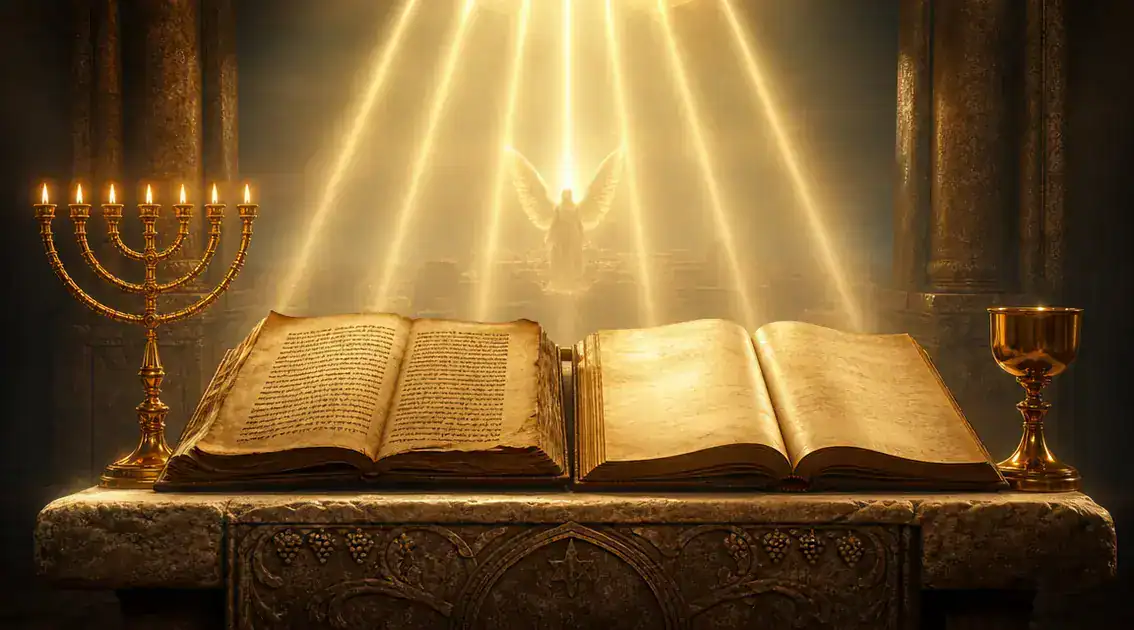
In Jewish reading, the number seven often marks completion and sacred rhythm, visible in the seven-branched menorah, the seven days of creation, and the sabbath cycle. Ancient Jewish writings and liturgy sometimes speak of angelic beings who serve before God in ordered ranks, and extra-biblical texts preserve a tradition of seven heavenly attendants who stand in God’s presence. These images helped communities see worship and history as woven into a whole pattern rather than a string of random events.
Christian interpreters similarly found meaning in sevens when they read Scripture and prayer together. Revelation’s seven churches, seven angels, and seven trumpets shaped how early Christians thought about God’s plan unfolding in stages. Church fathers and later devotional writers drew on these patterns to speak of God’s providence and the way angelic ministry participates in divine order. In both sacramental reflection and personal prayer, the sevenfold motifs point believers toward a sense of divine order and completion that comforts and steadies the heart.
Seen side by side, Jewish and Christian traditions offer complementary ways to attend to the sevenfold signs: one emphasizes covenantal rhythm and communal worship, the other highlights eschatological hope and pastoral care. For prayerful readers, this shared language invites a simple practice—notice sevens in scripture and worship, and let them guide a short, steady prayer of trust. That small practice can turn scattered anxieties into a felt sense that life, like the text, belongs to a larger, ordered story.
Devotional practices: encountering sevenfold signs in prayer
Sit quietly with a Bible or a small lamp and let the number seven guide a short practice. Light seven candles or line up seven stones and breathe slowly, naming one simple hope or thanks with each breath. This gentle rhythm is not a formula but a way to steady attention, a sevenfold sign that helps you meet God in small, steady steps.
Try repeating a brief prayer seven times or offering seven short petitions—one for guidance, one for healing, one for peace, and so on. Use your fingers or the stones to mark each repetition so your hands and breath join the prayer. The quiet repetition helps you listen more than it asks you to prove anything; it trains a soft, steady focus and invites attentive listening to what God may be saying.
Make the practice part of ordinary days: morning, bedtime, or a restless moment. Keep it short and simple so it can be kept, not performed. After the seven breaths or petitions, sit in a minute of silence and notice how the pattern holds your heart. In that pause you practice trusting God’s order, letting the sevenfold rhythm shape a calm and faithful habit.
A gentle prayer to carry with you
Lord, you who set the world in rhythm and watch with steady care, thank you for the quiet signs that hold us. In the soft pattern of seven, remind us of your order and faithfulness, and in the presence of angels, let our hearts be steady.
Teach us to notice small markers of grace—seven breaths, seven words of thanks, a short prayer repeated with honest attention. These simple acts do not change everything at once, but they help us remember that life is held within a larger, loving story.
When worry comes, let the sevenfold rhythm steady your breath. When joy arrives, let it deepen your praise. May the sense of divine order turn scattered moments into a calm practice of trust and watching.
Go now with a quiet courage: live gently, pray simply, and trust that the One who arranges the days walks beside you with unseen companions. Amen.
FAQ – Common questions about the number seven and angels in Scripture
What does the number seven usually signify in the Bible?
In Scripture, seven most often signals wholeness and divine completion. It appears in creation (God rests on the seventh day, Genesis 2:2–3), in worship (the seven-branched menorah), and in prophetic visions (numerous sevenfold images in Revelation). The pattern invites readers to see events as part of God’s ordered purpose rather than random acts.
Does the Bible name exactly seven angels?
Some passages use a sevenfold framework—Revelation speaks of seven angels with trumpets and seven with bowls (Revelation 8–16, 15), and Tobit refers to Raphael as one of the seven who stand before God (Tobit 12:15). Often the number functions symbolically to show completeness of angelic service rather than to give a literal census of every heavenly being.
Who are the ‘seven who stand before the Lord’ mentioned in tradition?
The phrase appears in Tobit (Tobit 12:15) and in later Jewish and Christian tradition as a term for chief heavenly attendants. Canonical Scripture names some—Michael, Gabriel—and tradition (especially Jewish, Catholic, and Orthodox sources) sometimes gives additional names such as Uriel, Raphael, and others. Exact lists vary across communities and are not uniformly included in every canon.
How should we understand the seven angels in Revelation?
In Revelation the sevenfold figures shape how the vision is read: the seven stars, trumpets, and bowls structure a sequence by which God’s message is revealed and acted upon. These angels function as God’s agents, bringing warnings, calls to repentance, and the unfolding of God’s purposes. Read devotionally, they point to an ordered unfolding of God’s plan rather than random or chaotic events.
Is the Book of Tobit Scripture and how does it inform angelic roles?
Tobit is part of the deuterocanonical/apocryphal books: it is accepted as canonical in Catholic and Orthodox traditions and is valued in their liturgy and teaching; many Protestant traditions treat it as useful reading but not canonical. Tobit gives a vivid portrait of angelic ministry—Raphael guides, heals, and prays—helping readers see angels as compassionate, purposeful servants of God.
How can I practice sevenfold devotion without falling into superstition?
Keep the practice simple, Scripture-rooted, and intentional: use seven breaths, seven short petitions, or seven moments of thanksgiving as a way to focus your prayer. Make the act brief and repeatable so it forms a habit of attention rather than a ritual for guaranteed results. Ground the practice in Scripture and trust—the aim is deeper listening and trust in God’s order, not a magical formula.