
Angelic hierarchy biblical basis: Scripture offers vivid portraits of seraphim, cherubim, thrones, dominions, principalities, and powers, but it does not provide a full, systematic chart; rather, biblical texts and patristic reflection invite worshipful attention to God’s rule and service rather than precise celestial taxonomy.
angelic hierarchy biblical basis — have you ever felt the hush of a biblical vision that suggests an ordered heaven? This exploration invites careful reading of Scripture, attentive to passages, patristic insight, and devotional practice that keep the mystery reverent.
Biblical passages that mention angelic orders
Several clear passages in Scripture mention celestial beings and the sense of ordered ranks that surround God’s throne. Readers meet seraphim in Isaiah 6, strange living creatures in Ezekiel 1, and the four living creatures and elders in Revelation 4–5, each scene pointing to a layered, worshiping heaven rather than a dry catalog. These texts give glimpses of function and form more than a full diagram, and they invite careful, prayerful attention to what the biblical writers saw.
In Isaiah 6 the seraphim stand by the throne, calling “Holy” and preparing the prophet for service; their role feels immediate and liturgical. Ezekiel’s vision paints cherubim as guardians of God’s presence, full of motion and symbolic detail, while the wheels and eyes suggest authority and awareness. In Revelation, the vivid tableau of creatures and elders centers every vision on praise, showing a heaven ordered around God’s worth rather than human rank.
New Testament lists—words like thrones, dominions, principalities, and powers—appear in letters such as Colossians and Ephesians and echo the older visions without spelling out a strict hierarchy. That pattern lets Scripture keep the focus on God and on worship, even as it names different kinds of heavenly service. Reading these passages devotionally helps us lift our hearts in wonder, aware that the Bible offers sacred portraits to deepen prayer rather than a full celestial blueprint.
Isaiah’s vision and the seraphim
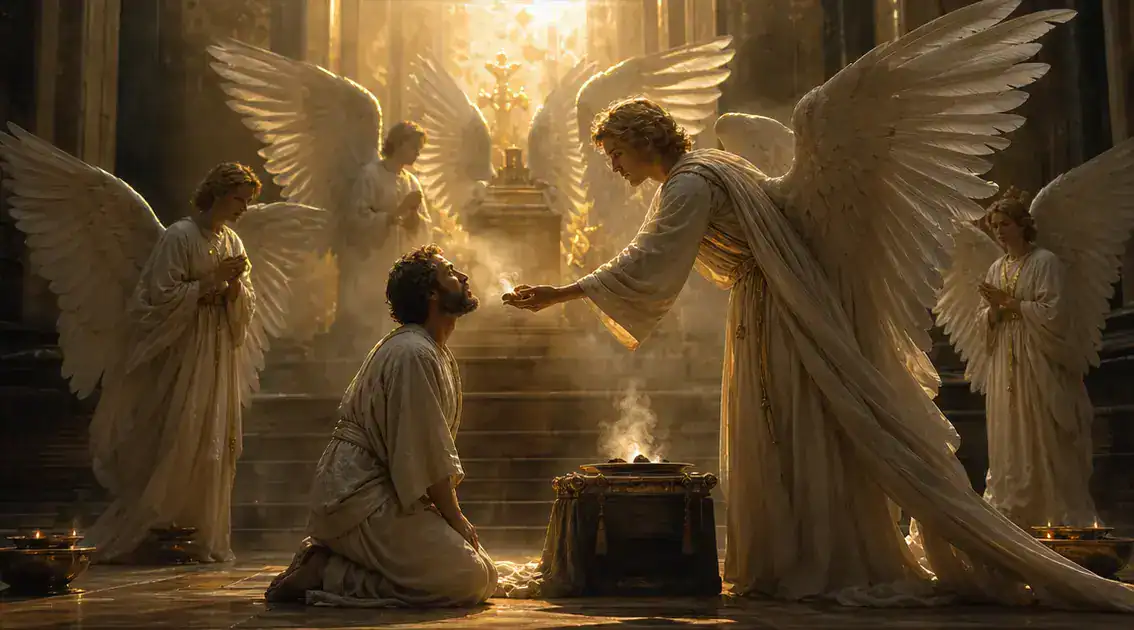
In a vision recorded in Isaiah 6, the prophet sees the Lord seated high and the temple filled with light. Around the throne stand the seraphim, each with six wings, calling out ‘Holy, holy, holy.’ The scene reads like music and flame, a moment that makes the prophet small and the heart shout back in wonder.
One seraph takes a coal from the altar and touches it to Isaiah’s lips, saying his guilt is removed and his sin atoned. The gesture is tender and decisive, showing how God’s holiness both purifies and sends. In that single touch, the prophet moves from trembling to speech, from fear to vocation.
Reading this passage devotionally we see not a dry hierarchy but a living act of praise and transformation. The seraphim teach us about God’s burning holiness and about how mercy readies us for service. The vision invites a quiet response of awe, confession, and willingness to be sent after being touched by grace.
Paul and the hierarchy: New Testament allusions
Paul uses certain phrases in his letters that name different kinds of heavenly beings, but he rarely offers a neat chart. In places like Colossians 1:16 and Ephesians 1:21 he mentions \”thrones, dominions, principalities, and powers\”, words that point to the complex spiritual world around Christ rather than to a step‑by‑step ladder. The lists feel pastoral and theological, meant to show that the whole unseen order belongs under God’s care.
When Paul names these ranks, his aim is often to lift our eyes to Christ, who is supreme over them. He writes to show that Jesus is not one power among many but Lord of all powers, present and future. This gives the words a devotional weight: they are less about cataloguing angels and more about trusting the One who holds them in his hand.
Reading Paul’s allusions devotionally can change how we pray and live. Let those phrases remind you to offer praise, to stand humbly, and to rely on Christ’s rule when fear or confusion presses in. The names point us back to worship, service, and the quiet confidence that the risen Lord governs every realm we cannot see.
How early church fathers interpreted angelic ranks
The early church writers read Scripture as a living conversation and often paused over the visions of heaven to bring them into prayer. They did not treat angelic images as abstract trivia but as signs that teach us how to praise and serve. Reading those scenes together helped them shape words and gestures for worship in a way that fed the people’s devotion.
One influential voice, Pseudo-Dionysius, described a set of nine orders to help Christians imagine different kinds of service around God’s throne. His language gave shape to a devotional picture—seraphim, cherubim, thrones, and others—so believers could see that divine life is both ordered and loving. Other fathers, like Augustine and Gregory, used similar ideas more flexibly, treating ranks as symbols of roles and virtues rather than a rigid chart to memorize.
Across the centuries the main aim remained pastoral and humble: these teachings point us back to Christ and to a life of worship, not to boastful knowledge. The fathers often warned that talk of ranks should lead to greater prayer, mercy, and humility. In that way, their reflections on angelic ranks become a spiritual guide, inviting us into deeper wonder and more faithful service.
Textual limits: what Scripture does not say
The Bible gives rich images of angels but it never lays out a full, orderly roster for our inspection. Passages in Isaiah, Ezekiel, Revelation, and in Paul’s letters name beings and roles, yet the text itself does not present a neat catalogue or step‑by‑step ladder. That deliberate restraint keeps our attention on God, on worship, and on the living scene around the throne rather than on a human desire to classify every spirit.
Because the Scriptures leave much unsaid, later writers and traditions tried to fill the gap. Works such as Pseudo‑Dionysius’s description of nine orders offered helpful language for prayer and imagination. These extra‑biblical traditions can enrich devotion when used with care, but they do not carry the same authority as the biblical witness and should not be treated as a substitute for it.
Those textual limits become a spiritual gift when we receive them rightly: they invite humility, wonder, and prayerful listening. Let the silence in the pages lead you back to worship and to acts of mercy, where the Bible shows the presence of God most plainly. In that humble posture, the mystery above us draws the heart into praise and trust rather than into mere speculation.
Liturgical and devotional reflections on angelic order
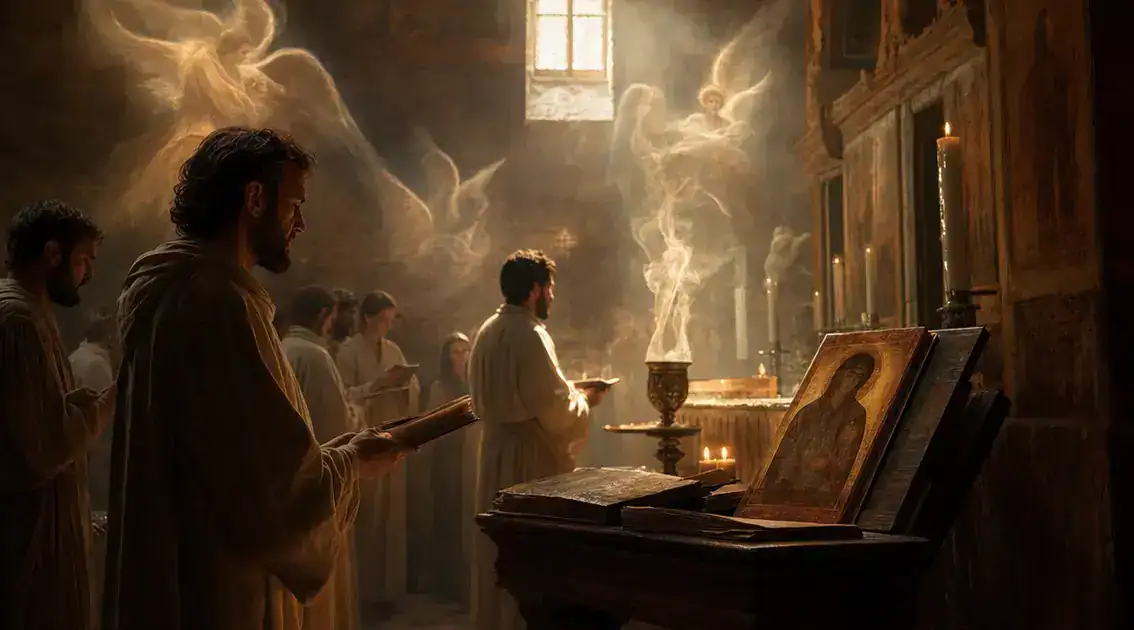
Many liturgies gently mirror what Scripture hints at by inviting the faithful to stand with the hosts of heaven. Hymns and acclamations that repeat “Holy, holy, holy” or call the angels to join our praise are not ornamental; they shape how we see the world. When worshipers lift their voices and eyes, the community practices a small entrance into the same worship the biblical visions describe.
Devotional life often borrows the language and symbols of the liturgy to keep that vision near the heart. Candles, incense, icons, and simple prayers help people remember the nearness of heavenly service and the care of guardian spirits. These practices do not create angels but help believers join in the praise and live with a steady sense of sacred accompaniment.
That steady sense then bears fruit in daily behavior: prayer that trusts, work done with humility, and acts of mercy offered quietly. Thinking of angelic order in a liturgical or devotional way invites us toward service, compassion, and humility rather than curiosity about rank. The result is a faith that moves from wonder into loving action, shaped by the worship the Scriptures point us to.
Practical spiritual takeaways for prayer and wonder
Begin with small, steady practices that turn attention to God and open the heart to wonder. Read a short passage—Isaiah 6 or a verse from the Psalms—then pause and breathe slowly, letting the words sink in. This simple habit trains the spirit to notice the holy presence that Scripture portrays and to receive awe as part of ordinary time.
Use easy devotional tools that fit your day: a brief breath prayer, a candle lit for five minutes, or a line from the liturgy repeated quietly. Try a short prayer like, “Lord, make my heart a place of praise”, then listen in silence for a moment. These small acts do not summon visions; they form a posture of attention and humility and remind us that worship reaches beyond what we see.
When prayer grows steady, let it shape how you live—serve with gentleness, choose mercy in difficult moments, and offer thanks for small gifts. Keep the focus on Christ as Lord of every realm, and let the idea of angelic order point you back to praise and service rather than rank. In this way, prayer and wonder become habits that ground your day in reverence and carry love into ordinary acts.
A gentle sending
Quiet your breath and remember the scenes of Scripture where heaven leans toward earth. May the glimpses of seraphim, cherubim, and named powers fill you with awe and draw you to simple worship.
Let that wonder shape small acts each day: a brief prayer in the morning, a pause before work, a kind word offered without praise. These small habits keep the heart open to God’s nearness and to the faithful care that surrounds us.
May you walk with trust in Christ, Lord of every realm, and let that trust steady your steps. May mercy guide your hands and praise shape your voice. Go in peace, with wonder in your heart and service in your hands.
FAQ – Questions about angelic hierarchy and Scripture
Do the Bible’s passages give a clear, ordered hierarchy of angels?
Scripture names different kinds of heavenly beings—seraphim (Isaiah 6), cherubim (Ezekiel 1), and the living creatures and elders (Revelation 4–5)—and Paul refers to “thrones, dominions, principalities, and powers” (Colossians 1:16; Ephesians 1:21). These texts show variety and role, but the Bible itself does not present a single, systematic chart. The result invites worshipful attention to God’s rule rather than a precise catalog of ranks.
Where do the terms seraphim and cherubim come from, and what do they signify?
The names come from the biblical visions: Isaiah encounters the seraphim around God’s throne, calling out “Holy, holy, holy” and enacting purification (Isaiah 6). Ezekiel’s cherubim appear as guardians of God’s presence and bearers of symbolic motion (Ezekiel 1, 10). Devotionally, seraphim often teach us about burning holiness and worship, while cherubim point to protection of the sacred.
When Paul lists thrones, dominions, and powers, did he mean literal ranks we must memorize?
Paul’s lists (Colossians 1:16; Ephesians 1:21) function theologically and devotionally: they stress that Christ is supreme over every unseen realm. He uses such names to comfort and to root faith in Christ’s lordship, not to provide a detailed taxonomy. Read devotionally, the lists turn our praise toward Jesus and away from curiosity about celestial bureaucracy.
Can we trust later sources, like Pseudo‑Dionysius, that describe nine angelic orders?
Writings such as Pseudo‑Dionysius offered a disciplined way to imagine heavenly service and were widely influential in the church’s prayer life. They can enrich imagination and worship, but they are not Scripture and do not carry the same authority. Use them prayerfully: let them deepen devotion, not replace biblical reading or humble trust in God’s revealed word.
How should awareness of angelic order shape my prayer and worship?
Let the biblical images draw you into praise and service. Repeat the simple echoes of Scripture—”Holy, holy, holy”—and use brief practices (a short verse, a candle, a breath prayer) to form devotion. The point is not rank but participation: heaven’s worship invites us to mercy, humility, and steady prayer that shapes daily life.
Are guardian angels part of this hierarchy, and how do they relate to personal prayer?
The Bible speaks of angels who serve God’s care for people (Matthew 18:10; Psalm 91:11). Tradition holds that guardian angels accompany individuals while larger orders serve broader purposes. In prayer, acknowledge the care Scripture describes, but direct worship to God—guardian angels point us to God’s protection and lead us into faithful living rather than becoming objects of devotion themselves.