
Most powerful angels in the hierarchy are depicted as seraphim, cherubim, and chief archangels (Michael, Gabriel, Raphael) who, in Scripture and tradition, embody sanctifying worship, guardianship, and decisive missions that manifest God’s authority, protection, and healing toward creation for humanity.
most powerful angels in the hierarchy: have you ever wondered who they are and why their names echo through Scripture and prayer? This short guide listens to biblical texts, tradition, and devotional insight to help you meet these celestial figures with reverence and curiosity.
Biblical glimpses of the angelic hierarchy
The Bible opens a quiet, powerful window into the life of angels as messengers and servants of God. In Genesis, angels appear as travelers who bring news and protection, and Jacob’s dream of the ladder shows a path where heaven and earth meet. These scenes invite us to see angels not as active links between God and human life, moving with purpose in ordinary moments.
Prophetic books deepen that picture: Isaiah’s vision of seraphim singing around the throne and Ezekiel’s vivid cherubim with many faces emphasize both wonder and function. In the New Testament, angelic presence frames key events—the annunciation to Mary, the angels at the empty tomb, and the hosts who worship in Revelation. Together these passages show angels at work in worship, judgment, and comfort, each image shaping our sense of their rank and role.
Reading these texts as a whole, we begin to glimpse a kind of order without losing the mystery: some angels draw near the throne in endless praise while others are sent as messengers and guardians to particular moments in history. That pattern helps believers pray with hope and humility, imagining a heavenly realm that listens, serves, and reflects God’s care toward the world.
Seraphim and cherubim: roles and symbolism
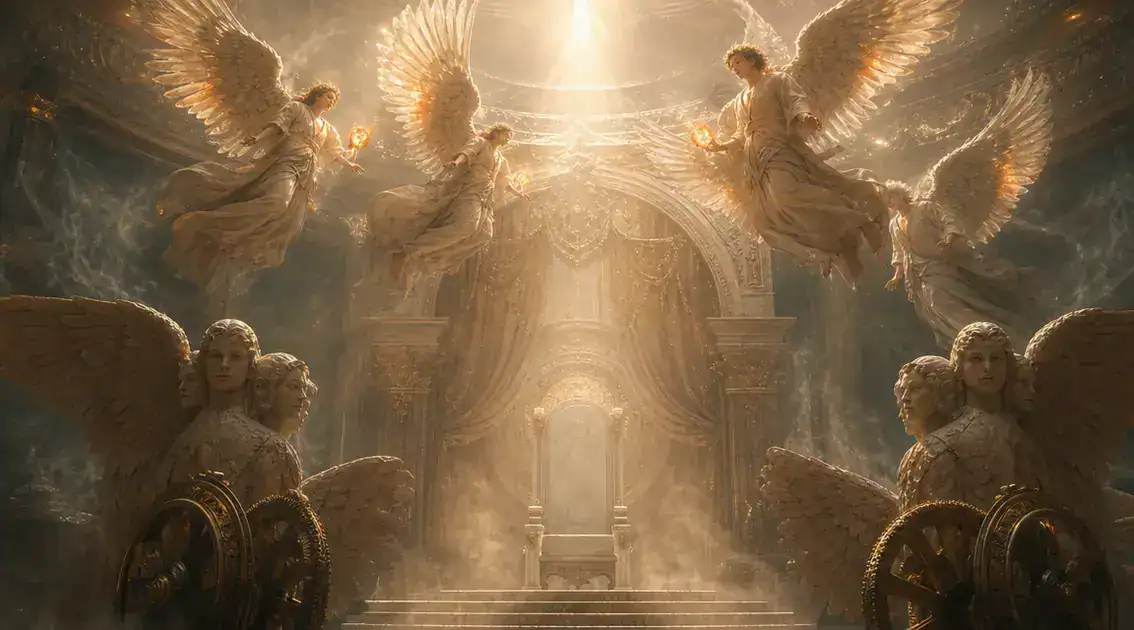
In Scripture, seraphim and cherubim reveal two faces of the heavenly realm. In Isaiah’s vision, seraphim surround the throne, moving with burning wings and touching the prophet’s lips with a coal, a moment that shows divine purity and praise close at hand. Their presence lifts the scene into awe, where worship and holiness are joined in a single, living act.
Ezekiel presents cherubim as attendant beings with many faces and wheels that move with them, images that speak of guardianship, wisdom, and motion. These creatures mark sacred spaces—the garden, the ark, the temple—and they point to a God who both protects and reveals. The contrast with seraphim helps us see a fuller order: some beings draw near in worship, others stand watch at the threshold.
For prayer and devotion, these pictures invite a humble response rather than curiosity for the marvelous. Let the seraphim turn your heart to simple praise and let the cherubim remind you that holiness often comes with care and boundary. When we hold both images together, we learn to worship with reverence and to live with the quiet hope of being held by a wise and faithful presence.
Archangels in Scripture: Michael, Gabriel, Raphael
The three named archangels in Scripture and tradition serve as clear faces of God’s care for the world. From their earliest mentions, these angels act with a steady purpose: to protect, to speak, and to heal. Each role points us back to a single truth—that God moves toward people through messengers who reflect divine care in ways we can recognize and trust.
Michael appears as a protector and leader in texts like Daniel and Revelation, called to stand against forces that threaten God’s people. When you read these passages slowly, you see Michael not as a distant warrior but as a guardian who stands where justice and mercy meet. That image can steady prayer, especially when we feel beset by anxiety or injustice, reminding us that strength can be gentle and faithful.
Gabriel shows up as the clear-voiced messenger in Daniel and at the annunciation to Mary, bringing news that reshapes lives. His words change history by revealing God’s will in a form people can receive. In prayer, Gabriel invites us to listen and to be open to surprising, loving news that calls us into new work. Raphael, remembered most fully in Tobit, comes as traveler and healer, guiding the frightened and restoring health. That tradition encourages believers to see healing as both a gift and a companionable journey, where care is practical and tender.
Together these archangels form a pattern: protection that defends without pride, messages that announce grace, and healing that walks with the vulnerable. Holding those three images lets our devotion breathe—they are not ends in themselves but windows to a God who acts with wisdom, word, and mercy in ordinary human life.
Angelic function: protection, worship, and divine council
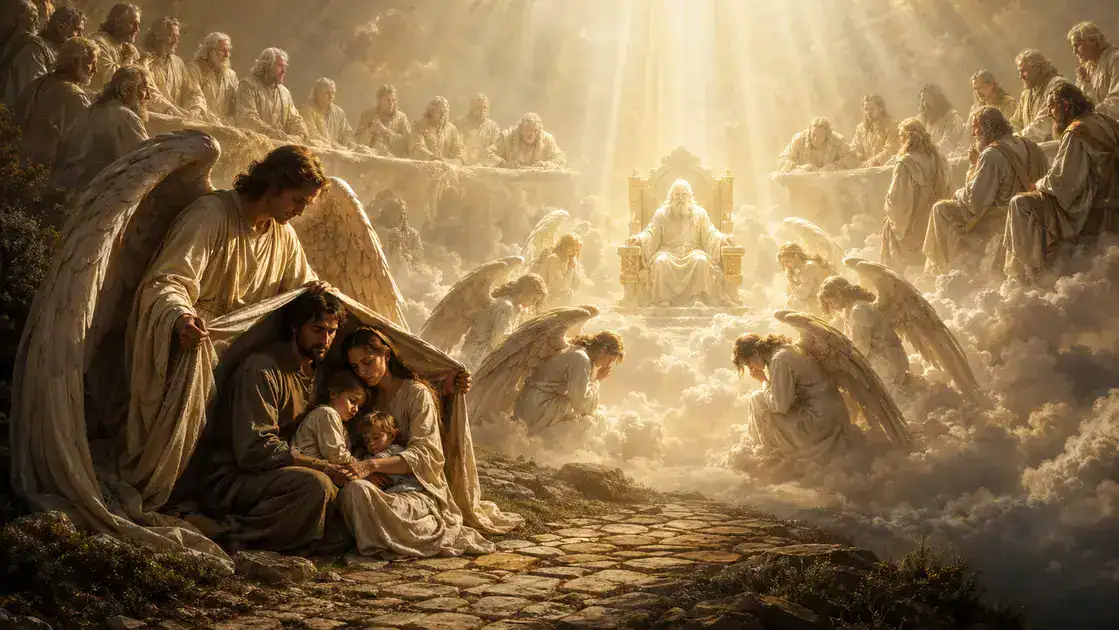
Angels often show up in Scripture as protectors who enter our stories at fragile moments. We see them guiding travelers, guarding city gates, and comforting those who fear loss. This idea of protection is not about magic but about a steady presence that points back to God’s care; when people in the Bible face danger, an angel may arrive as a quiet, practical help.
Closely tied to protection is the life of praise. In visions of heaven, angels bend low in worship, their voices and motions set around the throne. These scenes remind us that worship is the center of the angelic world. When angels worship, they teach us how to keep our hearts turned toward God in praise, and that our acts of prayer join a larger song in which heaven and earth participate together.
That same life of praise and service blooms into what we call the divine council, where heavenly beings appear to act as ministers, messengers, and sometimes advisers in God’s work. Imagery of councils in Scripture shows angels serving roles that blend action and attention—guarding, announcing, and offering judgment or mercy as God directs. Seeing angels this way gently reshapes prayer: we pray as part of a larger conversation, aware that our needs meet both the worshiping praise and the wise ordering of the heavenly realm.
How the hierarchy shapes prayer and spiritual life
When we pray with the angelic order in mind, it helps us imagine our prayers as part of a larger heavenly movement. Angels form a bridge between heaven and earth, so our petitions and praises are not isolated cries but pieces of a shared song. This gentle shift makes prayer feel less like proving ourselves and more like joining a steady, loving exchange.
Scripture shows angels praising at the throne and serving in the divine council, and that picture can shape how we pray. Bringing both worship and service into our prayers means we offer thanks as much as requests, and we trust that messengers stand with us as we speak. This creates a rhythm of quiet intercession and praise that steadies the heart in hard times.
In daily life, small practices help make the hierarchy real: begin with a short moment of praise, speak a plain request, and imagine an angel nearby as companion rather than spectacle. Many find that simple liturgy, a brief hymn, or naming an archangel in private devotion helps hold their focus. These habits shape not only what we pray but how we live—with humility, hope, and steady trust in God’s close care.
A prayer to walk with the heavenly order
May the visions of seraphim, cherubim, and archangels stay with you as a gentle reminder that you are held by God’s care. Let their praise shape your heart and their guard steady your steps.
Practice simple acts: a short moment of praise, a plain request, a quiet imagining of an angel near you. These small habits make the unseen real and keep your days rooted in wonder.
Carry this sense of the heavenly order into work, meals, and rest. When fear rises, breathe and remember the pattern of protection, worship, and service that surrounds creation.
May peace go with you now and always. Amen.
FAQ – Understanding the angelic hierarchy and devotional practice
Do angels really exist according to the Bible?
Yes. Scripture speaks of angels often as God’s messengers and servants (Psalm 91:11; Hebrews 1:14). Both Jewish and Christian traditions have long affirmed their real presence in God’s care for the world.
Who are the most powerful angels in the hierarchy?
The Bible names different kinds of heavenly beings rather than a simple power ranking. Texts portray seraphim near the throne (Isaiah 6), cherubim guarding sacred space (Ezekiel 1), and archangels like Michael acting as leaders in spiritual conflict (Daniel 10; Revelation 12). Tradition has used these images to describe roles more than a strict ladder of power.
How should I pray with the angelic hierarchy in mind?
Pray first to God and then allow the angelic images to shape your posture: praise, trust, and humble petition. Scripture shows angels joining worship (Revelation 5) and carrying God’s care to people, so simple acts of praise, brief petitions, and quiet openness help place your prayer within that larger heavenly rhythm.
What is the difference between archangels, seraphim, cherubim, and guardian angels?
Scripture and tradition point to different roles: seraphim are often linked to worship and purity (Isaiah 6); cherubim to guardianship and mystery (Ezekiel 1); archangels carry special missions in Scripture, like Michael and Gabriel; guardian angels are understood in many traditions as companions assigned to individuals (Matthew 18:10; Psalm 91:11). Each name highlights a way heaven ministers to creation.
Can angels intervene in everyday life? How do we recognize that?
Yes, Scripture records many everyday interventions—guidance, protection, and comfort (Acts 12:7; Tobit 5–12). Recognition usually comes through calm, practical help, wise counsel, or a sudden change in circumstance rather than sensational signs. Tradition advises discernment, testing experiences against Scripture and seeking wise spiritual counsel.
How do I tell the difference between an angelic prompting and my own thoughts or fear?
Scripture and tradition counsel discernment rooted in peace and conformity to God’s character. Angelic promptings, as shown in biblical accounts, bring clarity, humility, and encouragement toward good (Luke 1; Hebrews 13:2). If a thought leads to pride, confusion, or harm, it should be tested by prayer, Scripture, and trusted spiritual guidance before being embraced.