

Guardian angel for children refers to the spiritual being Scripture and Christian tradition describe as personally assigned by God to protect, guide, and comfort young lives, often known through passages like Matthew 18:10 and Psalm 91, and honored through prayer, simple blessings, and the watchful care of parents and saints.
guardian angel for children: have you ever wondered how that presence quietly guides small steps and softens hidden fears? This gentle companion, hinted throughout Scripture and lived in tradition, offers a sacred lens for parenting with prayer and attentive love.
Biblical roots of guardian angels for children
The Bible offers quiet, steady hints that children are held in a special way by heaven. In the Gospels, Jesus speaks of angels who watch over the little ones, a promise often linked to Matthew 18:10. Other scriptures, like Psalm 91:11 and Exodus’ promise of an angel sent before the people, build the same picture: God uses messengers to guard and guide those who are vulnerable.
These texts do not always paint angels as loud or dramatic figures. Rather, they show a patient presence that attends to daily life. The idea of angelic protection in the Bible is meant to reassure, not to frighten: it reveals a God who cares enough to surround children with care, whether through unexpected help, a timely warning, or the comfort felt in a dark night.
For parents and caregivers, these biblical roots invite a simple, prayerful posture. Knowing these promises can shape how we speak to children about fear, how we pray together, and how we name the unseen kindnesses that arrive in hard moments. The scriptures call us to trust a care that is both tender and steady, and to let that trust guide how we raise and protect the youngest among us.
How Scripture depicts angelic protection in childhood

The Bible pictures angelic care for the young in calm, reassuring ways. In the Gospels, Jesus’ welcome of children hints that they belong to God’s close circle of care, and passages like Matthew 18:10 remind us that angels watch over the little ones. Psalm passages speak of messengers sent to guard and lift up the vulnerable, giving us an image of protection that is gentle rather than frightening.
Scripture shows this protection as practical and tender: angels guide steps, offer unseen help, and stand near in moments of fear. Stories of deliverance in the Bible, though not always about children, illustrate the same pattern of rescue and care we pray for our young ones. These texts teach that divine care often arrives quietly — a timely nudge, a sudden safety, or the calm that settles over a child in the middle of a storm.
For parents and caregivers, these depictions invite a simple, faithful response. We can name God’s promises in prayer, teach children to trust in God’s nearness, and practice small rituals of blessing that echo the biblical hope of guardianship. Holding this vision softly in our daily life helps us to see ordinary mercies as signs that children are enfolded by a care both human and heavenly.
Saints and tradition: stories of child guardianship
Across Christian tradition, saints are often remembered for tender care of children and for honoring the presence guardian angels. Stories about St. Nicholas protecting the young, or about holy teachers who watched over orphans, offer plain examples of how the faithful have long linked sanctity with child care. These memories do not demand miracles; they point to a quiet pattern of love, courage, and steady attention to the most vulnerable.
Many saints encouraged simple practices that draw a family into that same care. Don Bosco, who spent his life with young people, insisted on prayer, kindness, and clear rules that let children feel safe and loved. Other holy figures taught parents to bless their children, to name God’s protection in daily life, and to trust that unseen help walks beside each small step.
When these traditions meet a family’s daily rhythm, they shape gentle habits more than dramatic experiences. Saying a short blessing at bedtime, telling a child a sacred story, or simply pausing to pray together becomes a way to notice grace at work. In this way, the saints’ witness invites caregivers to nurture both trust and tenderness, letting the stories of past guardians inform how we guard and guide our children today.
Prayers, rituals and daily practices for inviting protection
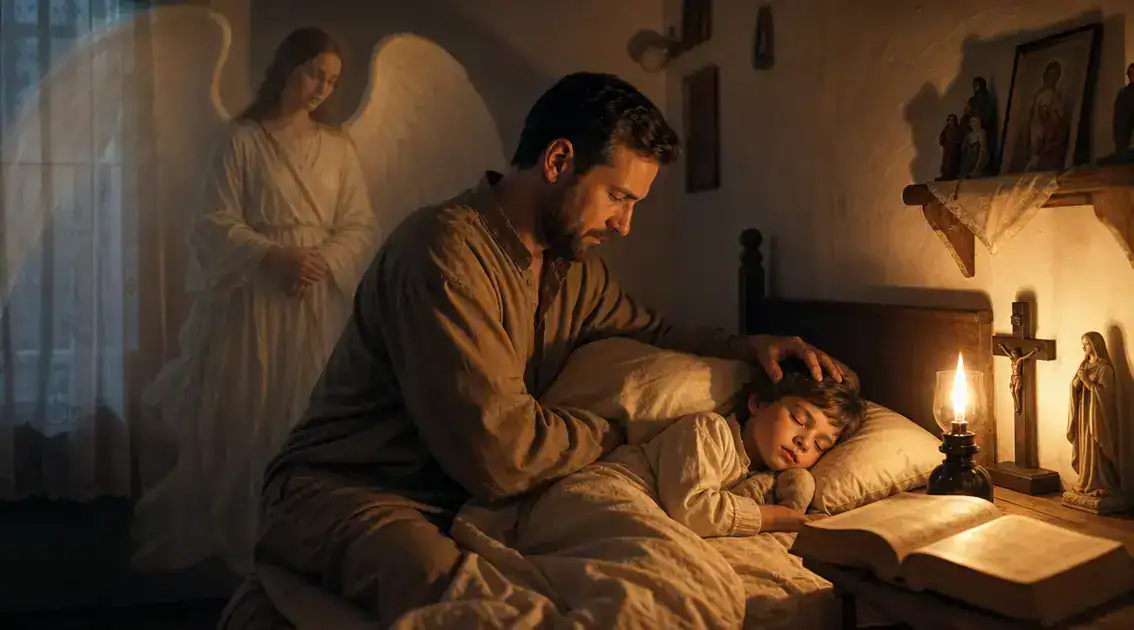
Small prayers and steady rituals help children feel safe in a way words alone cannot. Teach a simple line like “Angel of God, my guardian dear” and say it together each night; the repetition gives a child a steady rhythm to hold onto. A quick, loving blessing before school or sleep — a hand on the head, a whispered sentence of care — turns an ordinary moment into a sacred one that a child remembers.
Make practices easy to keep. Try a tidy prayer corner with a soft lamp or candle, a favorite Bible verse such as Psalm 91, and a small icon or rosary if that fits your tradition. Use the sign of the cross as a brief guardian gesture in the morning, or sing a short grace before meals. These actions are not meant to frighten but to name God’s nearness in plain, visible ways.
Over time, these tiny habits form trust more than they form rules. Invite children to notice quiet moments of help and to say thank you aloud. Model your own prayers, admit when you worry, and then show how you return to calm by praying together. Include community touchstones when possible — a family blessing at a gathering, a teacher’s quick prayer at school — so the child learns that protection is both human and holy, regular and tender.
How to listen and recognize subtle angelic presence
Listening for a guardian’s presence begins with quiet. Sit with a child or alone for a few deep breaths and invite God into the pause. When you ask for discernment, you make room to notice small comforts, sudden calm, or a steady nudge that did not come from you.
Signs of angelic closeness are simple and gentle: a clear thought that keeps you from danger, an unexpected helper, or a calm that settles a worried heart. Scripture and prayer often bring these signs into focus, so pay attention when a verse lights up in your mind or when a short prayer brings instant relief. Let the sense of peace be your first test, for true spiritual presence tends to soothe rather than spike fear.
Practice makes this listening easier. Keep a small journal of quiet moments, teach children to name feelings and say a short thank-you prayer, and bring your experiences to trusted friends or a spiritual leader. Learn to test with Scripture and prayer and to wait patiently for clarity; over time the soft promptings become part of daily life, and you learn to welcome protection with calm confidence.
A final blessing for children and their guardians
May you rest in the quiet truth that we are never truly alone. God surrounds the child you cherish with care you cannot always see but can learn to trust.
Let small practices—a blessing, a short prayer, a gentle pause—be ways you name that care each day. These simple acts steady the heart and teach children to notice kindness and calm.
When worry comes, breathe and remember the promises of Scripture and the witness of the saints. Hope and wonder guide us back to peace and help us recognize the gentle help that arrives in unexpected ways.
May you carry this peace into daily life, eyes open to ordinary grace, and a soft courage to entrust each small step to the One who watches over us all.
FAQ – Common questions about guardian angels and children
Do guardian angels really exist according to the Bible?
Yes. Scripture speaks of angelic care in passages like Psalm 91:11 (“He will command his angels concerning you”) and Matthew 18:10, where Jesus warns against despising the little ones and mentions their angels. The biblical witness, affirmed by long Christian tradition, presents angels as real servants of God who care for his people.
Does every child have a guardian angel?
Many Christian traditions teach that each person, including every child, is entrusted to a guardian angel. Jesus’ words in Matthew 18:10 and the continuous affirmation in Catholic and Orthodox teaching support the belief that God assigns attentive care to the young and vulnerable.
How should I pray about guardian angels for my children?
Pray first to God, then invite the angelic help God provides. Short, faithful prayers—like the traditional “Angel of God” prayer—bless and name God’s care. Scripture-based petitions, family blessings, and quiet moments of gratitude are all proper ways to acknowledge and welcome that protection without replacing prayer to God.
What are common signs that an angelic presence is near a child?
Signs are usually gentle: a sudden, calming peace in a frightening moment; an unexpected helper who appears at just the right time; or an inner clarity that steers someone away from harm. Scripture and the saints teach that true spiritual presence tends to comfort and guide rather than alarm, so test these moments with prayer and Scripture.
What is the difference between archangels (like Michael) and guardian angels?
Archangels—Michael, Gabriel, and Raphael—appear in Scripture with distinct missions (e.g., Michael as protector in Revelation 12; Gabriel as messenger in Luke 1; Raphael in Tobit in Catholic and Orthodox canons). Guardian angels, by contrast, are described in tradition as personal companions assigned to individual souls. Archangels act in wider, often public roles, while guardian angels serve quietly and personally.
Can guardian angels be seen or directly interact with children today?
Biblical accounts show angels sometimes appearing as strangers or shining figures (e.g., Genesis 18; Hebrews 13:2). Today, most traditions suggest encounters are rare and usually subtle—a sense of peace, timely help, or providential protection. Discernment is important: weigh any extraordinary experience with Scripture, prayer, and guidance from trusted spiritual leaders.