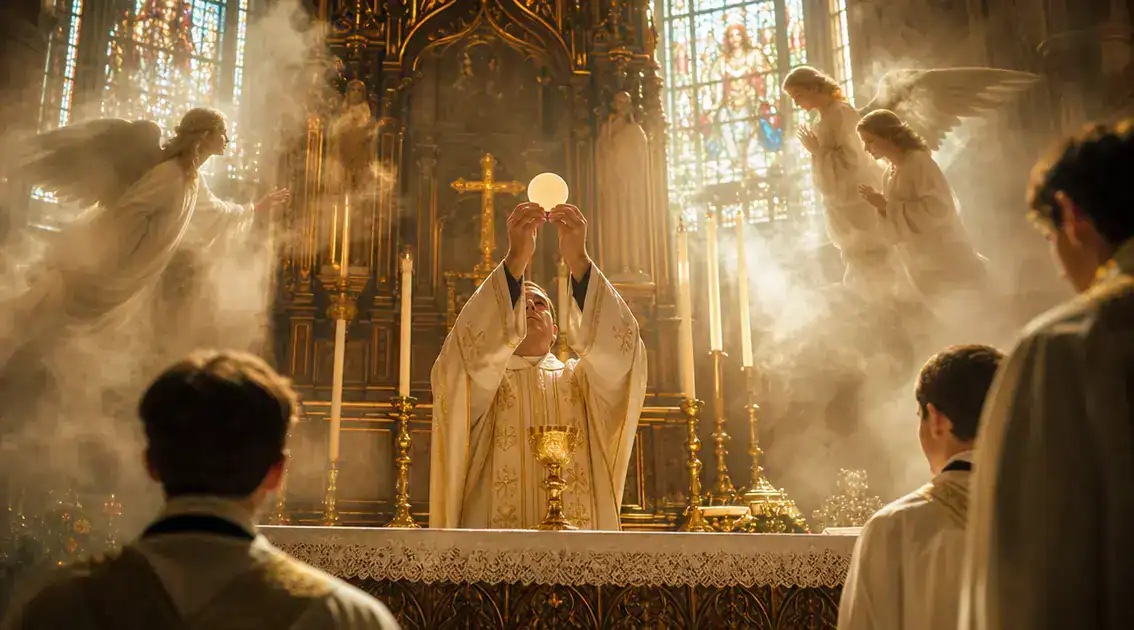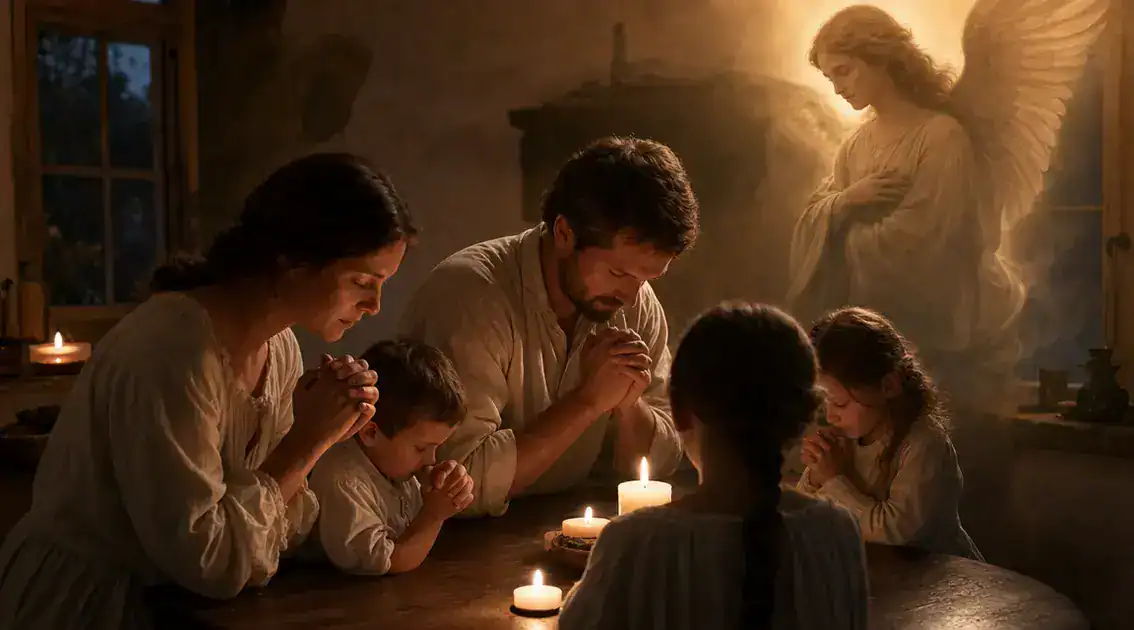

The week of the holy angels devotion invites families to observe seven days of simple, scripture-centered practices—short readings, prayers, gestures, and quiet listening—rooted in biblical passages about angelic care so that households learn to recognize God’s protective and guiding presence through guardian angels and archangels in daily life.
Have you ever wondered how a week of the holy angels devotion might change family prayer? This simple, sacred rhythm invites families to pray, listen, and notice the gentle presence of heavenly companions.
Biblical foundations: key passages that reveal angelic activity
Scripture often shows angels as close, active agents in God’s story, not distant ideas. In Genesis, we meet angels at crucial moments — Jacob’s vision of a ladder with angels ascending and descending (Genesis 28) and the visitors who come to Abraham. These scenes present angels as both messengers and signs that God breaks into human life in surprising, tender ways.
Later texts bring the promise of protection and service into sharper focus. The psalms and prophets speak of God sending help in time of need, and Psalm 91:11 is often remembered as a clear promise that God commands angels to guard the faithful. In the prophetic and apocalyptic books, angelic figures also carry revelation and direction, showing that heavenly activity includes both care and communication.
In the New Testament, angelic visits concretely shape salvation history: Gabriel’s greeting to Mary (Luke 1:26–38) announces a new dawn, and the angel at the tomb (Matthew 28:1–7) proclaims the resurrection. Hebrews reminds us that angels are “ministering spirits” sent to serve those who will inherit salvation (Hebrews 1:14). Taken together, these passages invite us to see angels as participants in God’s loving work — present at births, crises, and the quiet turns of daily life — and to listen for how that presence might be felt in our own family devotions.
Theological context: guardian angels, archangels, and their roles
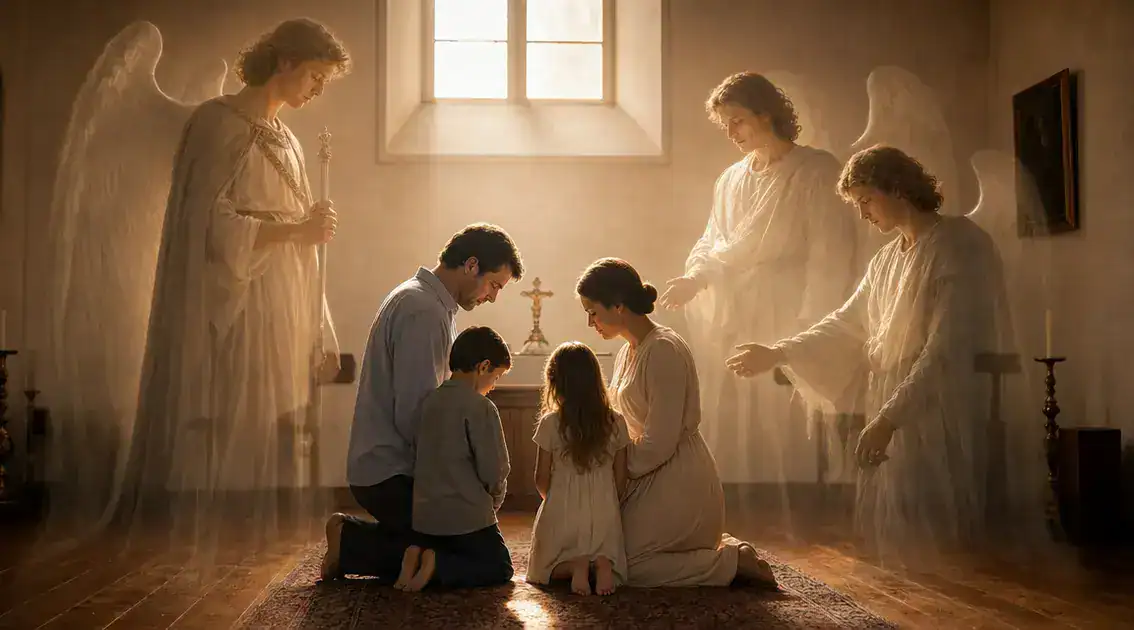
Angels appear in Scripture as God’s close helpers, not as distant legends. Many traditions speak of guardian angels who watch over people and families, offering gentle care and guidance in ordinary life. The idea is pastoral: angels are part of God’s way of staying near us, present at births, journeys, and the small moments between tasks.
Within that wider life of angels, certain figures carry special names and roles. Archangels like Michael, Gabriel, and Raphael show different aspects of God’s care: Michael often stands as protector, Gabriel brings important news, and Raphael guides and heals. These roles are not cold categories but living images that help us name how God acts—protecting, speaking, and mending—so we can pray with clearer hope and trust.
Knowing these roles can shape simple family devotions without turning prayer into a ritual of certainty. You might offer a short prayer of thanks for guardian presence, ask for guidance when choices feel hard, or quietly name an archangel as a way to focus hope. The point is humble attention: to open a little space each day where love is noticed, safety is asked for, and hearts learn to listen for the small, steady ways God shows up through these faithful companions.
Preparing your home: creating a simple sacred space for the week
Creating a small corner in your home for the week helps your family notice the holy in ordinary life. Choose a quiet spot that feels safe and easy to reach, like a table near the living room or a windowsill the family passes each evening. Keep the arrangement simple: a Bible, a candle or lamp, a small cross or icon, and one meaningful object a child can touch.
Make the space inviting by clearing clutter and laying a plain cloth or runner. Arrange items so they feel intentional, not precious — a well-loved Bible, a candle in a steady holder, a tiny bowl of water or a soft toy for little ones. You might add a picture of an angel or a card with a short verse to focus on. These small choices teach children that sacred things can be gentle and ordinary.
During the week, use the corner for a short nightly ritual that the whole family can do together. Light the candle, read a one- or two-verse passage, say a brief prayer of thanks, and invite each person to name one hope or worry for the day. Finish with a quiet moment of listening, or a simple song, and gently blow out the candle when you are done. Over time, this steady practice helps the household notice God’s presence and the quiet ways angels may walk with us in everyday life.
Daily family liturgies: short readings, prayers, and gestures to practice
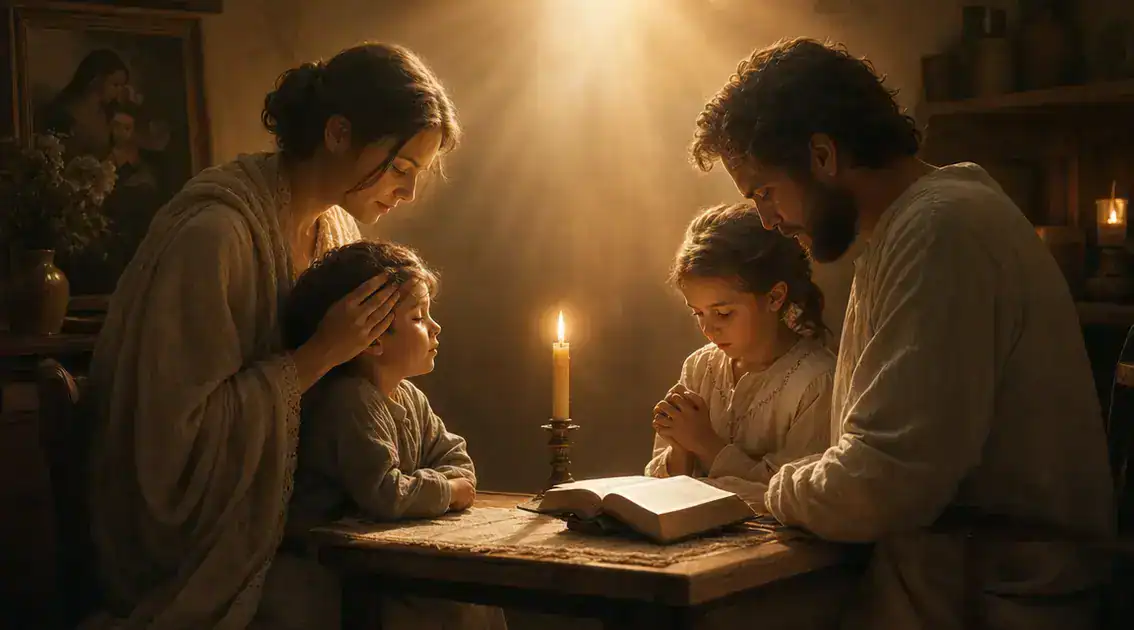
Begin with a simple rhythm the whole family can learn: light a candle, read one or two short verses, offer a brief reflection, then pray. Choose a passage that points to God’s care, such as a line from the psalms or a short Gospel verse, and read slowly so children can hear the words. After the reading, invite one person to name what they heard or felt; this turns the text into lived listening rather than a lesson.
Include a small, consistent gesture to anchor the moment. A gentle sign of the cross, a quiet blessing over each child, or a hand laid briefly on a shoulder can make prayer bodily and memorable. These acts echo biblical promises about care — for example, the image of angels sent to serve in Hebrews 1:14 — and help families feel that prayer is both word and touch. Keep prayers short and plain: a thank you, a request for help, and a moment of silence to listen.
Make the liturgy brief and repeatable so it becomes a steady habit rather than a chore. Five to ten minutes most nights is enough; consistency matters more than length. Use a simple closing, like a shared “peace” or a short song, and gently extinguish the candle together. Over time, these short, faithful acts shape a home rhythm where children learn to name needs, notice small mercies, and sense the nearness of God and his faithful companions in daily life.
Teaching children: stories, symbols, and age-appropriate practices
Stories are the first way children learn what angels mean. Tell short, simple Bible scenes — an angel visiting Mary, the shepherds hearing good news, or a small reminder from guardian angels watching over the little ones (for example, Matthew 18:10). Use plain words, a few bright images, and a calm voice so the story feels like a warm invitation rather than a lesson.
Symbols help the story stay with them. A soft feather, a small drawing of an angel, or a handmade card can make the idea touchable and real. Try a tiny, safe candle or a battery tea light for evening prayer, a simple cross they can trace on their forehead, or a short song the family repeats. These small acts become memory anchors that connect story to everyday life.
Match practices to a child’s age so prayer stays gentle and real. For toddlers, use touch and short phrases: “You are held.” Preschoolers respond to a short picture story and a gesture like a blessing on the head. Older children can read a single verse aloud, share a hope, or lead a brief prayer. Keep each practice short, repeat it often, and let children ask questions. In patient, steady ways, these simple steps teach faith as a lived habit rather than a set of rules.
Listening and discernment: recognizing angelic presence in ordinary moments
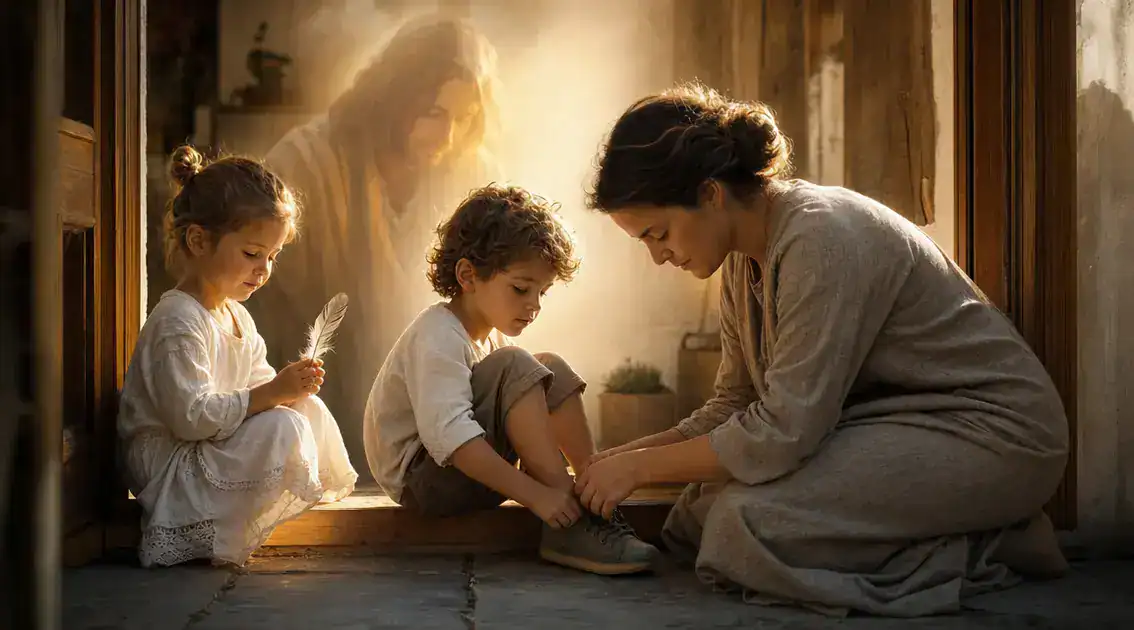
Begin by learning a habit of quiet attention in ordinary moments. Pause for a slow breath before and after family prayers, and invite God to open your eyes to small promptings. This simple practice helps the household notice a gentle nudge or a sudden sense of calm that might otherwise pass unnoticed.
Scripture helps shape what we listen for: angels are described as helpers and guides, called “ministering spirits” in Hebrews 1:14. Signs of a guiding presence are often small—a feeling of peace when a choice is right, unexpected help at the right time, a timely word from a neighbor, or a gentle image that stays with you. Test these moments with prayer, Scripture, and sober thought rather than chasing dramatic experiences; true promptings tend to bring clarity and humility, not confusion or fear.
When your family senses something, respond with simple, faithful steps: offer a short prayer of thanks, act in charity if someone needs help, or write the moment in a shared journal to remember patterns over time. Share discernment with a trusted friend or pastor when you are unsure, and avoid making every quiet feeling into a sign. Over time, these steady practices form a sensible way to recognize the sacred in daily life, teaching children that discernment is both gentle and careful.
A gentle closing prayer for the week of the holy angels
We give thanks for the quiet ways God draws near through beloved companions. May we notice their care in small moments and ordinary tasks. Keep before us the truth that we are never alone.
Lord, send your angels to guard our homes, guide our decisions, and soften our hearts. Help us listen with calm and act with charity when a gentle prompting comes. Let our trust be simple, steady, and humble.
As you walk back into the day, carry one small practice: a short prayer, a moment of thanks, or a simple sign of blessing. These little acts make the sacred ordinary and teach our children to recognize God at work.
May peace rest on your household, and may wonder lead your steps. Amen.
FAQ – Questions about the Week of the Holy Angels devotion
Do angels truly appear in the Bible and Christian tradition?
Yes. Scripture records many angelic encounters — Gabriel’s visit to Mary (Luke 1:26–38), angels at the tomb (Matthew 28), and promises of protection such as Psalm 91:11. Christian tradition, both Eastern and Western, has long affirmed these accounts and reflected on their spiritual meaning.
Does every person have a guardian angel?
Many Christian traditions teach that God entrusts each person to a loving companion. Jesus’ words in Matthew 18:10 suggest special care for the ‘little ones,’ and Hebrews 1:14 describes angels as servants sent to help those who will inherit salvation. This teaching emphasizes God’s personal care rather than an extra object of worship.
How should I pray about angels without making them the focus?
Pray to God first, asking for wisdom, protection, and openness to grace. You can briefly invite your guardian angel to accompany you—for example, a short morning or evening prayer of thanks. Keep the focus on God’s care, using angels as a humble reminder of that presence rather than as ends in themselves.
What if my family wants to teach children about angels—what is age-appropriate?
Use simple Bible stories and gentle symbols. For toddlers, short phrases and touch reassure them. Preschoolers respond well to a single picture story and a blessing. Older children can read a verse, share a hope, or lead a brief prayer. Keep activities short, repeat them, and make room for questions so belief is formed by lived practice, not fear or spectacle.
How can we discern whether a feeling or sign is truly a prompting from God or an angel?
True promptings tend to bring clarity, peace, humility, and a call to love or service. Test such experiences with Scripture, prayer, and sober counsel from a trusted pastor or spiritual friend. Avoid chasing dramatic signs; faithful discernment is patient and rooted in prayerful attention to God’s word and the fruit that follows.
Are there risks in focusing on angels during family devotions?
The main risk is letting angels eclipse Christ and the worship of God. Keep devotions Christ-centered and Scripture-based. Use angelic themes to point toward God’s care, not to trigger fear, superstition, or private revelation. If anything causes anxiety or confusion, pause the practice and seek guidance from a trusted spiritual leader.