
Paradise and the Garden of Eden connection shows Eden as the prototype of God’s dwelling with humanity, where garden imagery—trees, rivers, and divine presence—foreshadows the renewed, eternal home revealed in Christ and Scripture, calling believers to live now with restorative practices that embody that promise.
paradise and garden of eden connection; Have you ever wondered whether the first garden points toward a heavenly home? Walk with me through Scripture and tradition and notice the echoes that invite hope.
Eden’s image in Scripture: garden, river, and divine presence
The Scriptures portray Eden as a garden shaped by God’s care — orderly, lush, and quietly abundant. A clear river rises at its center and fans into channels that water the whole place, while ancient trees offer shade and fruit. This scene reads like an invitation: a natural world arranged to hold life and welcome a living presence.
That flowing water is more than a feature; it is a sign of sustenance coming from a single, generous source. When Genesis names the rivers and pictures them spreading outward, it gives us an image of life that moves from a divine center into every corner. The trees, and especially the tree of life, stand as both gift and sign — confirming that Eden’s order is meant to nourish body, soul, and relationship.
Divine presence within the scene
Above all, Eden is defined by the nearness of God, who walks in the garden and speaks with the first people. This intimacy makes the garden more than a backdrop; it becomes a home where responsibility, conversation, and blessing are possible. That felt presence shapes how we read Eden: not merely as a lost landscape, but as a portrait of what life looks like when the divine and the human dwell together with trust and care.
Theological traditions: how Jews, Christians, and Muslims see paradise
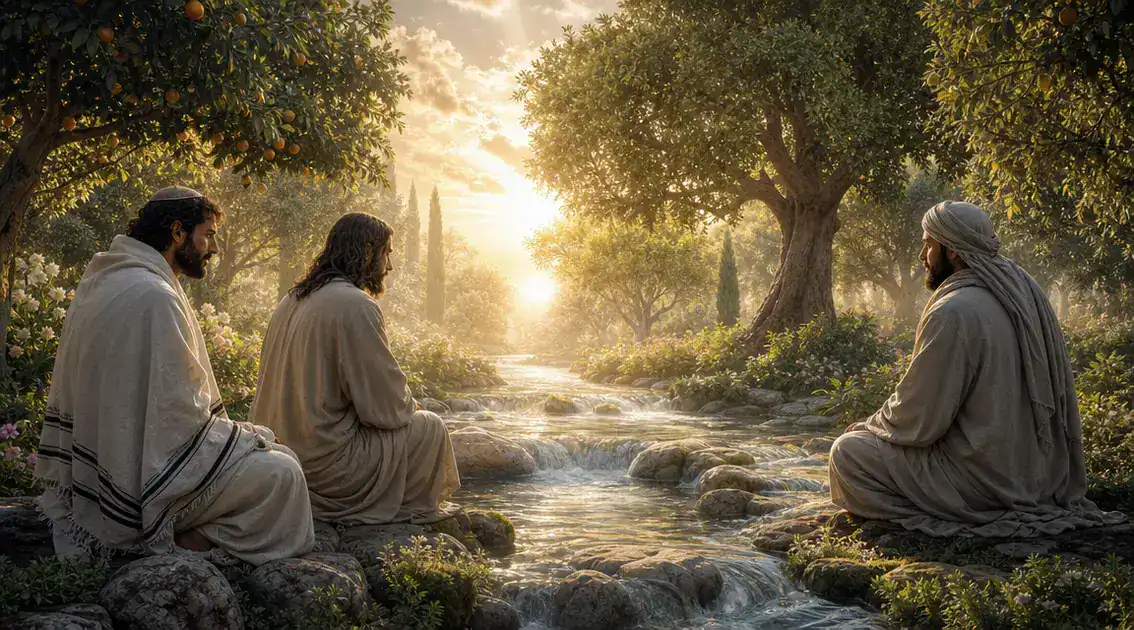
In Jewish tradition, Eden is both an ancient home and a picture of future blessing. Called Gan Eden in rabbinic writings, it stands for a life lived near God, where duty and delight meet. Poets and teachers use the garden as a model for a healed world shaped by covenant and faithful practice.
For Christians, the garden frames the story of fall and the promise of healing. The New Testament brings Eden images forward, with the river and the tree of life resurfacing in Revelation as signs of renewed creation. This restoration motif invites believers to see Christ’s work as a way back toward the life Eden first showed.
In Islam, paradise—called Jannah—is painted in vivid garden terms: flowing rivers, cool shade, and abundant fruit as signs of God’s mercy and reward. The Qur’an tells of Adam in a garden and points to an everlasting home for those who turn to God in truth. Taken together, these traditions share a language of garden, water, fruit, and divine nearness that calls the heart toward repentance, trust, and hopeful longing.
Christ and the restoration motif: Eden echoed in the New Testament
The New Testament brings Eden’s images forward to help us see what Christ began to do in the world. John speaks of a river of living water that flows from the one who believes, and Jesus calls himself the true vine that bears life for his people. Revelation answers with a vision where the tree of life stands beside a clear, healing river inside the renewed city. These echoes show Eden’s signs returning as promises of healing and deep, lasting life.
Christ’s life, death, and rising undo the brokenness that pushed the first humans from the garden. His work opens the way back toward God and restores the possibility of close fellowship, not merely as a legal change but as a healed relationship. The New Testament writers shape salvation as a kind of return—restoration of what was lost and the start of something new that keeps Eden’s promise alive in history.
For daily faith, this restoration motif gives gentle habits a sacred weight. Prayer, generosity, and quiet worship become ways to tend the garden within our lives, to keep streams of kindness flowing outward. Living with hope means practicing the small acts that mirror Eden’s care, so the promise of a renewed creation is not only future talk but a present shaping of our hearts.
Liturgical and mystical readings: imagining heaven through Eden’s symbols
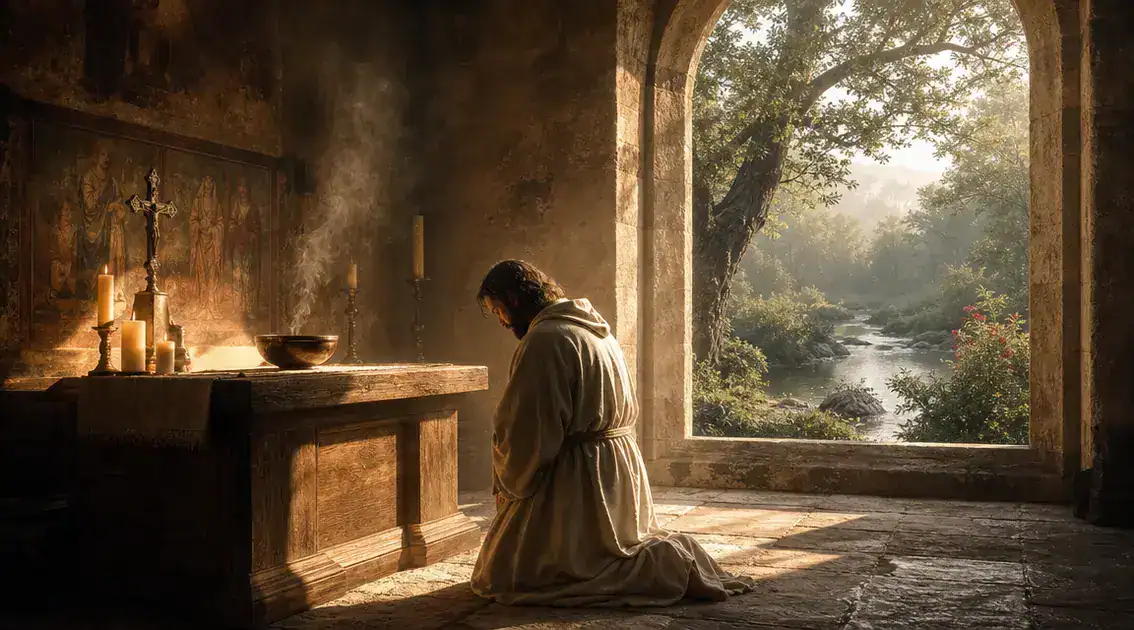
Many liturgies and hymns point us back to Eden by using simple, sensory signs. Bread and wine, water poured at a font, and the glow of candlelight become more than ritual actions; they speak of a garden where life is given and shared. These signs help worshipers enter a story where God is near and common things carry sacred meaning.
Mystical writers have long read Eden as an inner place the soul tends with prayer and silence. In that quiet work, the tree of life and the living water become images for steady spiritual growth and healing. This reading does not erase history; it offers a way to live the garden’s promise inwardly, so that worship and wonder shape how we move through each day.
When chapel candles burn and incense rises, the senses are drawn into a remembered paradise without words. Worship that leans on these symbols trains the heart to notice mercy, to value repair over blame, and to practice small acts of care. Such practices do not finish the story, but they keep the soul tending the garden, ready to receive whatever new life God may give.
Practical devotion: living between memory and hope toward eternal paradise
Remembering Eden shapes how we live each day. When we tend a small garden bed, light a candle, or sit beside running water, we touch a simple image of God’s care. Those quiet acts move memory into our bodies and make the past a practice. They help hope feel possible in ordinary moments.
Rituals such as prayer, shared meals, and setting aside rest are not mere routines. They train our hands and hearts to receive and to give. Reading scripture or blessing bread waters the soul like a gentle stream, and small habits keep the spirit rooted. Over time these practices form a steady path between memory and the promise ahead.
Practical devotion looks like forgiving a neighbor, feeding the hungry, and caring for the earth. Planting a tree, mending what is broken, or offering a simple meal are acts that signal hope at work. These choices do not finish the story, but they shape a life that waits for the promised garden while tending a small patch of it now.
A gentle prayer for the way forward
May the memory of Eden soften our hearts and the promise of paradise steady our steps. Help us to live with trust, tending small acts of care each day.
Teach us to notice the living water in quiet moments—prayer, bread shared, hands that mend. Let these plain things remind us of God’s nearness and healing.
Keep our hope rooted like a small tree beside a stream. When we grow tired, renew our courage so we may forgive, feed, and repair with patient love.
May we walk between memory and promise with gentle faith, receiving and giving mercy. Amen.
FAQ – Questions about Eden, paradise, and their spiritual meaning
Is the Garden of Eden the same as the heavenly paradise the Bible describes?
They are related but not identical in most readings. Scripture presents Eden as the original home where God dwelt with humanity (Genesis 2–3), while the New Testament and Revelation point to a final, renewed dwelling that echoes Eden’s signs — a river, trees, and restored fellowship with God (Revelation 22:1–2). Many traditions see Eden as a prototype or foreshadowing of the eternal paradise God will complete.
Was Eden an actual place on earth or mainly a spiritual symbol?
Believers have held both views. The Bible describes Eden with concrete details (a garden, rivers, trees), which supports a real geographical image (Genesis 2). Yet Jewish, Christian, and Islamic teachers also read Eden theologically, as a portrait of right relationship with God. It is pastoral and historical at once: a memory that teaches about our origins and a symbol that shapes longing for restoration.
What does the “tree of life” mean for believers today?
The tree of life functions as a sign of ongoing, sustaining life in God’s presence. In Genesis it marks divine provision; in Revelation it returns as a promise of healing and access to life for the redeemed (Revelation 22:2, 14). Christian tradition often reads it as pointing to the life given in Christ and the sacraments — ways we receive and share the life God offers.
How do Jewish, Christian, and Muslim traditions connect Eden and paradise?
All three traditions use garden language—trees, water, shade—to speak of God’s blessing and nearness. Judaism names Eden (Gan Eden) as a place of closeness and reward in rabbinic teaching. Christianity brings Eden’s images forward into a restoration motif in the New Testament. Islam describes Jannah with vivid garden imagery (flowing rivers, fruit, shade) as God’s bountiful reward. Though distinct theologies differ, the shared symbols invite repentance, trust, and hope.
In what way does Christ restore what was lost in Eden?
New Testament writers describe Christ as undoing the effects of the fall through his life, death, and resurrection. Paul calls Christ the “last Adam” who brings life where the first Adam brought death (1 Corinthians 15:45; Romans 5:12–21). Revelation then shows Eden-like signs renewed around the throne of God. The Christian hope is that Christ heals broken relationships and ushers creation toward the fullness Eden first hinted at.
How can I live now between memory of Eden and hope for paradise?
Practical devotion roots the memory in everyday habits. Scripture reading, prayer, shared meals, care for the poor, Sabbath rest, and stewardship of creation are small ways to embody Eden’s care here and now (e.g., Jesus’ teaching on mercy and service). Liturgy and silence also train the heart to receive God’s presence. These practices do not finish the story but shape a life that waits for and works toward God’s promised renewal.