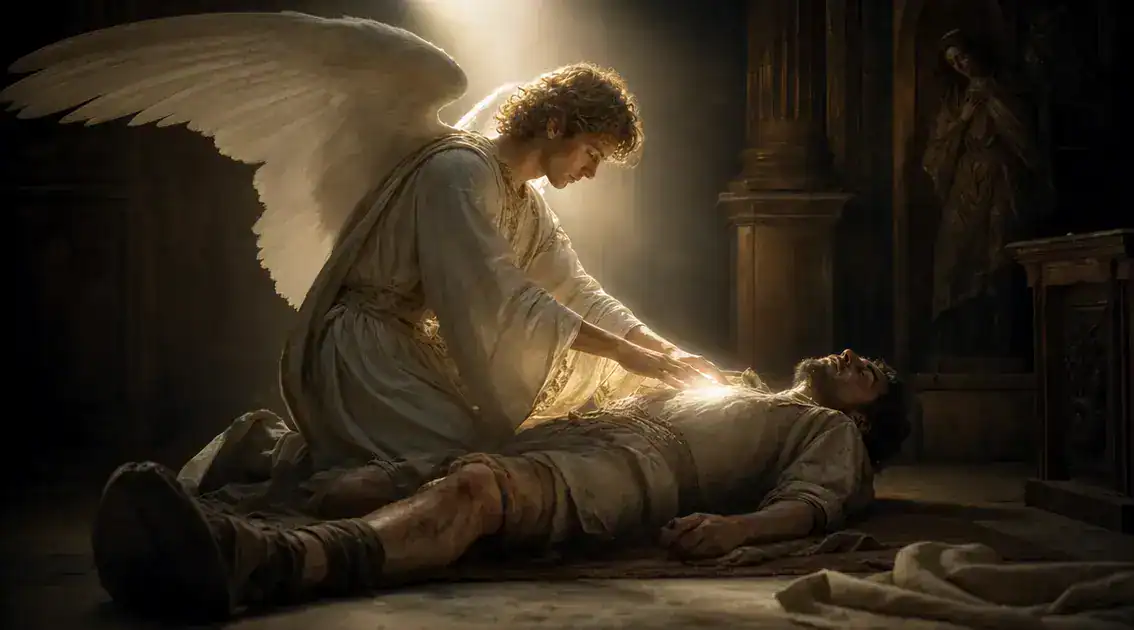

An angel message for strength and courage is a divinely sent assurance, rooted in Scripture and tradition, that arrives as a calm, clarifying prompt or presence to steady the heart, remind us of God’s promises, and empower small faithful acts in moments of fear.
Have you ever stood at the edge of fear and longed for a sign? angel message for strength and courage sometimes arrives like a soft, steady light — a nudge that calms the breath and steadies the heart.
A scriptural anchor: hope in weak moments
Scripture steadies us when our strength runs out, offering a quiet voice in the hush of fear. The psalms speak plainly about trembling and then turn to God as refuge, teaching us to move from worry into prayer. When a short verse rests on your lips in a dark hour, it can feel like a steadying hand that reminds you you are not alone.
God’s power is often revealed through our weakness, a truth that comforts rather than shames. The Bible shows a pattern: people name their fear, remember God’s past faithfulness, and find courage to keep walking. Let those stories become a steady rhythm you return to—confession, remembrance, and trust—so the heart learns a simple, faithful response to hard things.
Put a few short promises where you can reach them and speak them when breath tightens—brief psalms, a line from a gospel, a short prayer. Read them aloud, breathe with the words, and let those images pull you from isolation into a larger story. Over time this practice builds courage not as a single heroic moment but as a quiet habit of leaning on the Word that holds you in weak moments.
How angels appear in biblical narratives of courage
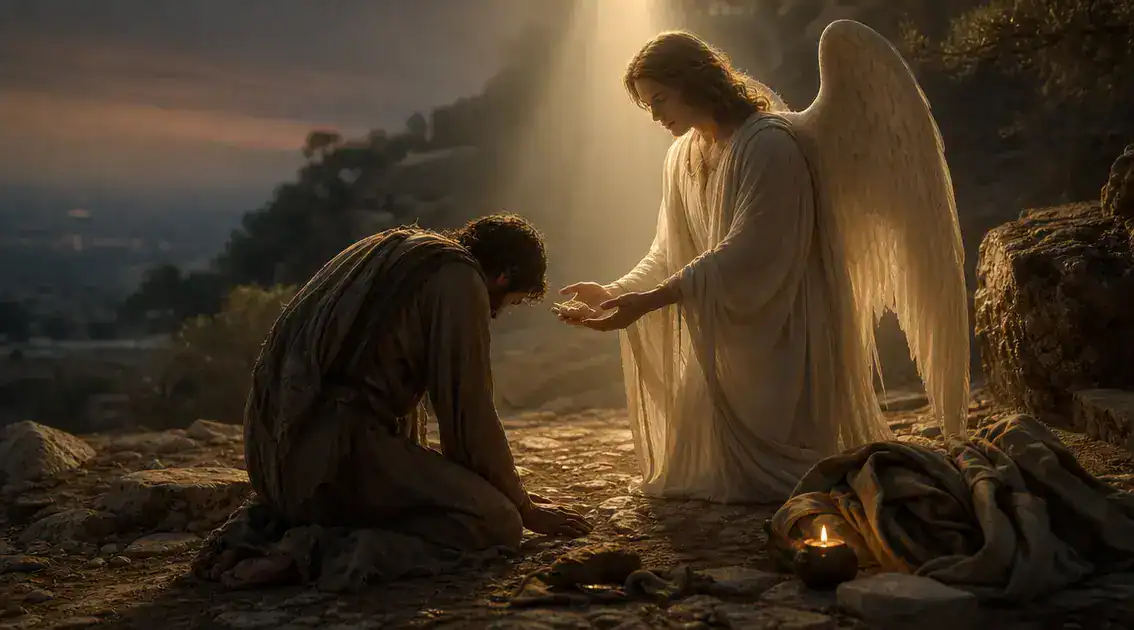
Angels often arrive in Scripture at the exact moment a person feels too small or too tired to go on. They do not only bring noise or signs; they bring steady words and simple acts that change a heart. Think of the quiet visitor to Gideon who called him a mighty warrior, or the gentle hand that woke Elijah with food and rest — these moments show how God uses heavenly messengers to turn fear into action.
The angel’s work usually looks like encouragement and care, not a dramatic miracle every time. In Acts, an angel helps Peter slip free from chains and leads him out of prison. In Luke, an angel appears to Jesus in the garden and offers strength to face what is coming. The pattern is gentle: a reminder of God’s presence, a practical aid, and a renewed courage to do what is right.
This helps us know how to pray when we are scared: speak plainly, ask for help, and remember past times God has helped you. Keep a few short passages nearby that remind you of God’s faithfulness and the ways angels acted in Scripture. Over time, those memories and small practices can become a way to recognize courage when it comes — sometimes through another person, sometimes through a quiet nudge that feels like heaven itself.
Archangel Michael and the imagery of spiritual bravery
Archangel Michael appears in the Bible as a protector and leader at moments of deep need. In Daniel he stands as a guardian for God’s people, in Jude he contends with the evil one, and in Revelation he leads the heavenly host. These brief scenes shape a clear image: Michael is a figure who stands between fear and faithful action.
Michael’s imagery—armor, sword, and steady stance—points us to spiritual bravery rooted in God, not in our own strength. The sword is a symbol of truth, the armor a sign of being held by divine power. When artists show Michael with calm resolve rather than fury, they remind us that courage often looks like quiet steadiness and faithful resistance, not showy triumph.
Devotionally, this image invites simple practices that build courage. Many find it helpful to name their fear, ask for protection, and remember a past mercy when courage rose. Keep the memory of these scriptural scenes close and let them train your heart to stand when fear comes, trusting that bravery is a gift given in the presence of God.
Prayer practices to welcome angelic strength
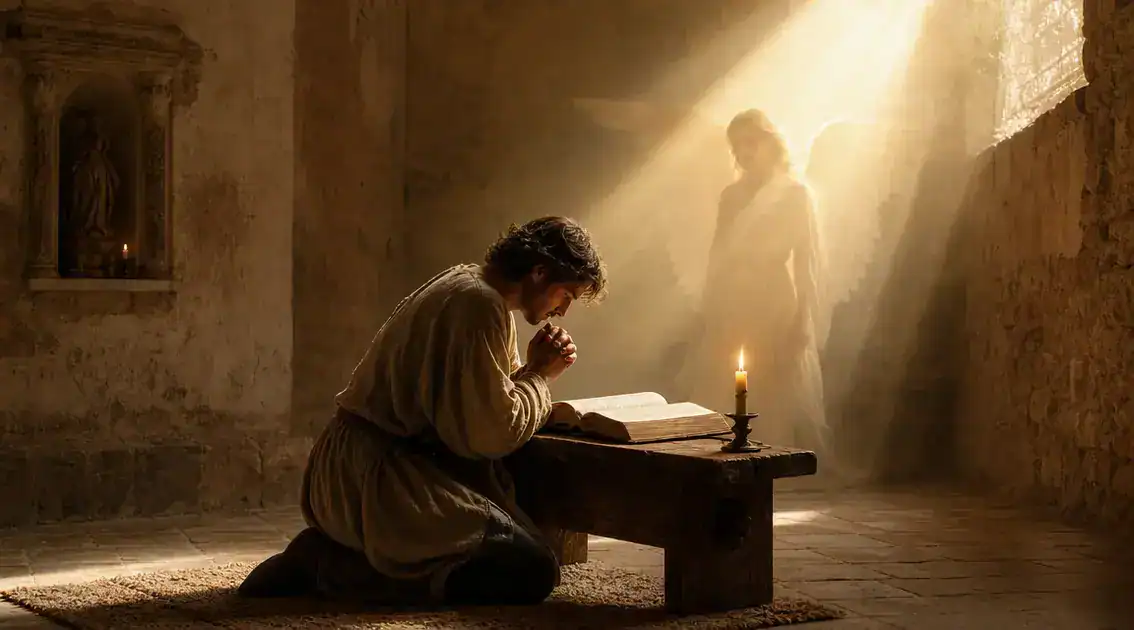
Pray simply and often, using short phrases that steady the breath and the heart. Try a breath prayer: breathe in a short line like “Be near,” breathe out “and strengthen me.” Repeat this quietly when fear rises. These brief prayers are not clever formulas but gentle habits that teach the soul to turn toward God in the moment of need.
Pair those short prayers with reading a small passage of Scripture about angels or God’s care, slowly and aloud if you can. Let the words settle as you name one fear and one remembered mercy. Speaking both your need and God’s past kindness helps faith take root; it trains you to see the angelic pattern of care in the stories you read and the mercy you have already received.
Include simple physical practices to ground the prayer: a sign of the cross, lighting a candle, or writing a single sentence in a journal after prayer. Practice listening in silence for a minute or two after you pray, expecting nothing dramatic but remaining open to a calm nudge. Over time these small, steady practices form a rhythm that welcomes angelic strength as part of your daily life.
Saints’ testimonies: encounters that bolstered courage
Saints often speak from a place of ordinary fear made holy by a gentle encounter. Think of Mary at the annunciation: a young woman faced an impossible path, then heard a voice that named her role and gave her strength. Those stories show how a single, clear visitation can change a heart from doubt into a willing step forward.
Later witnesses like Padre Pio, Teresa of Avila, and Joan of Arc described meetings that bolstered their courage in concrete ways. Padre Pio’s quiet consolations steadied souls worn by illness and suffering, while Teresa found that visions and inner encouragement helped her keep writing and reforming when opposition grew strong. These encounters did not erase fear so much as give a steadying presence that made faithful choices possible day by day.
Let their testimonies teach a simple practice: read a short passage of their lives, name the fear you carry, and remember how presence changed them. Keep those stories near as companions when small acts of bravery are needed—speaking truth, staying the course, or simply getting up to pray. Their witness becomes a quiet map for courage lived in small, faithful steps.
Discernment: telling inner promptings from wishful thinking
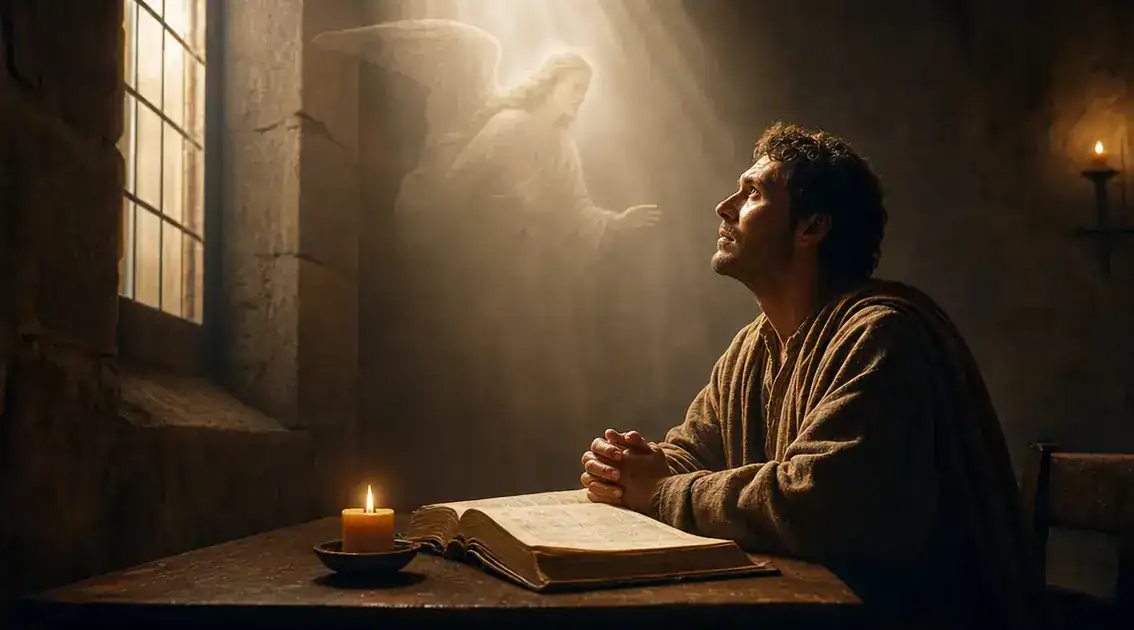
Sometimes an inner nudge feels like a gentle tug at the heart and sometimes it is simply what we wish were true. The first often brings calm and a clear sense of direction, while wishful thinking presses with haste and a one-sided hope. Learning the difference begins with quiet listening and honest naming of what you feel.
The Bible offers ways to weigh what moves us. John and the authors of the epistles warn against false promptings and urge believers to test what they sense. Test the spirits by holding promptings to Scripture, prayer, and the peace that follows, seeking harmony with God’s revealed truth rather than the pull of our wants alone.
In practice, pause before you act: note the prompt, pray a short, honest prayer, and wait for a steadying sense of peace. Seek counsel from a trusted friend or leader and keep a small journal of what you felt and how things unfolded. Over time this simple rhythm trains a calm, faithful discernment that can welcome angelic nudges and gently set aside mere wishful longing.
Living with angelic consolation: practical steps for daily courage
Begin each morning with a single, short offering that asks for help and quiet courage. Say a brief sentence like, “Be with me today,” and breathe with it. This small habit makes asking for angelic consolation ordinary and simple, so you do not wait for fear to grow before you turn toward God.
Pair that offering with two steady practices: a short scripture reading and a tactile sign to ground the prayer. Read one verse that speaks of God’s care, speak it aloud, and let it settle in your chest. Light a candle, make the sign of the cross, or touch a worn bookmark while you pray; these small actions help the heart remember the presence you invited.
Keep a tiny journal of one fear and one courage each day, and tell a trusted friend or leader when you need help deciding what to do next. Over time these little rhythms train you to notice gentle nudges and to act on them. Courage then becomes a daily practice—quiet, faithful, and held by a steady, unseen comfort.
A closing prayer for steady courage
May you know, in the hush of fear, that you are never alone. Let a quiet courage come like soft light, steadying your breath and calming your heart.
Hold to simple practices: a short prayer, a verse, a remembered mercy. Let these small habits teach you to turn toward help before fear grows and to act with gentle boldness.
May angelic consolation walk beside you each day, nudging you toward faithful steps. Go forward with peace, carry this sacred invitation into the ordinary places of your life, and rest in the steady presence that holds you.
FAQ – Questions about angelic messages, strength, and courage
Do angels really bring strength and courage according to Scripture?
Yes. Scripture shows angels arriving at moments of deep need to encourage and strengthen people (see Judges 6, Daniel 10, Luke 22:43, and Acts 12). These visits point to God’s care, using messengers to steady hearts and renew resolve.
How can I tell if an inner prompting is an angelic message or just wishful thinking?
Test the prompt against three things: Scripture, a growing sense of peace, and wise counsel. Scripture urges us to “test the spirits” (1 John 4:1), and the Spirit often brings calm clarity rather than confusion or hurry.
May I ask angels for help in prayer, or should I pray only to God?
Pray primarily to God, as Scripture teaches, but tradition also honors asking for angelic assistance as companions in God’s service. Hebrews 1:14 describes angels as ministering spirits, and many faithful practices invite their protective intercession while keeping God as the first address.
Is it safe to rely on angelic help without falling into superstition?
Yes, when done in balance and humility. Tradition warns against making angels ends in themselves; keep them subordinate to Christ and Scripture, avoid secret formulas, and test experiences by fruit and conformity to the faith (see Matthew 4 and general pastoral guidance).
Who is Archangel Michael and how does his image encourage courage?
Michael appears as a protector and warrior in Daniel 12:1, Jude 1:9, and Revelation 12:7. His imagery—steadfast stance, defense of the faithful—reminds us that spiritual bravery is rooted in God’s power, not mere human force, and invites trust rather than pride.
What simple daily practices help me welcome angelic consolation and grow in courage?
Use small, steady habits: a brief morning offering, a short scripture verse to speak aloud, a one-line journal note of fear and a remembered mercy, and a moment of silence after prayer. These practices train the heart to notice gentle nudges and to act with quiet, faithful courage (see Luke 22:43 for Christ receiving strength in prayer).