

Angelic protection for children names the biblical and devotional conviction that God assigns guardian angels to watch, guide, and intercede for the young, a care affirmed by Scripture, patristic witness, and Christian rites—expressed in simple prayers, blessings, and family practices that invite trust and tangible consolation.
Have you ever watched a child sleep and felt the hush of something holy? angelic protection for children often appears in Scripture and tradition as a tender, practical promise—prayers and rites families can learn and adapt.
Biblical roots of angelic guardianship for children
From the opening pages of Scripture to the words of Jesus, the Bible offers a steady picture of angelic care for the vulnerable. In poetic passages the presence of an angel of the Lord is shown as shelter and help, a sign of God’s nearness rather than a distant wonder. Jesus also draws attention to children, saying their angels have a place before the Father (Matthew 18:10), a phrase that has comforted parents and caregivers for generations.
Old Testament narratives and later New Testament reflections show angels working as God’s messengers who act with tenderness toward those in need. Stories like the care given to strangers and the rescue of the weak fit with the later description of angels as ministering spirits sent to serve those who will inherit salvation (Hebrews 1:14). Taken together, these texts invite us to see angels not as abstract ideas but as part of how God tends the small and the meek.
Reading these passages in prayer turns belief into plain, lived consolation. Many families draw on short psalms, bedside blessings, or a simple prayer of thanks to name this care—practices that echo the biblical images and make them real at night and in travel. These acts do not promise drama; they offer a steady hope that God’s watchful love reaches into ordinary rooms and gentle hearts.
Patristic and medieval voices on guardian angels

The early Church spoke of angels as close helpers in the life of faith. Fathers and preachers often pointed to Scripture and to simple human needs when they described angelic care. In sermons and homilies these voices helped parents see that God’s providence sometimes comes through a gentle, unseen presence watching over the young.
Medieval thinkers built on that pastoral witness while also shaping a clear theology of angels. Thinkers like Thomas Aquinas argued that God assigns angels to help lead souls toward their true end, so that care for children becomes part of a larger divine plan. This idea—that each soul has a guardian angel tasked to guide and protect—rooted devotional practice in a thoughtful hope, not mere sentiment.
That blend of thought and devotion shows up everywhere in medieval life: in liturgy, in household blessings, and in the small images carved on church fonts and illuminated in prayer books. These signs taught families how to pray simply for protection and how to name divine care at bedside and in travel. Such practices invite us to take hold of an ancient habit today: speaking a short prayer, sharing a blessing, and trusting that sacred love reaches even the smallest hearts.
How saints and mystics described protection of the young
Saints and mystics often tell simple, humble stories about how God watches over children. Figures like Padre Pio and St. John Vianney are remembered for sharing gentle accounts of angelic help around the young, and many mystics described moments where a parent or child felt a calm presence in danger or in prayer. These testimonies do not demand dramatic proof; they come as small, trusted memories that point to a larger tenderness at work.
In their writings and lives, mystics describe this care in ways that turn belief into practice. Some speak of dreams, quiet visions, or an inner assurance that a child is held; others emphasize the ordinary signs of grace—a sudden peace, a timely warning, or a neighbor’s unexpected help. With these accounts they teach that the idea of a guardian angel is not mere poetry but a devotional reality that invites our attention and gratitude.
Families shaped by these witnesses often keep very simple rituals: a short blessing at bedtime, a brief prayer on leaving home, or a taught greeting to the child’s guardian before sleep. These acts are not magic; they are ways of naming God’s care and forming a habit of hope. By repeating small prayers and gestures, households learn to trust the quiet protection the saints and mystics once described as a real part of daily life.
Prayers, blessings and simple rites from Christian tradition

Many households keep very simple prayers and gestures to ask for a child’s care. A short bedtime blessing, the gentle sign of the cross traced on a forehead, or a whispered invocation of a guardian angel can become a steady habit. These acts are small and repeatable, meant to name God’s presence in daily life rather than to create spectacle.
Christian tradition also offers modest rites parents can adapt at home: a sprinkle of holy water at the doorway, the laying on of hands with a brief blessing, or the quiet reading of a psalm such as Psalm 91 or Psalm 121 before travel. Clergy may use oil or a formal blessing for special needs or milestones, but at heart these practices point to one simple truth—God’s care is both promised and invited through prayerful gestures.
Make these rites accessible to children by keeping language gentle and actions tactile: let them place a hand over yours as you pray, teach a two-line blessing they can repeat, or sing a short hymn together. Over time, these small patterns form a spiritual rhythm in family life that comforts in fear and shapes trust. The goal is not ritual for its own sake, but a lived sense that the household stands within God’s watchful love.
Scriptural prayers and psalms parents can use
The Psalms offer parents ready words for asking God’s care. Psalms like Psalm 91, Psalm 121, and the gentle trust of Psalm 23 speak of shelter, watching, and the Lord as keeper. Saying a few verses aloud at bedtime or before a trip brings those promises into the household in a way children can hear and hold.
Short, simple prayers work best for young ears and hands. Try a two-line blessing such as: “May the Lord watch over you; may His angels guard your way.” Or a brief invocation: “Angel of God, my guardian dear, watch over [child’s name] and keep them near.” These words are not formulas but ways to name God’s protection and to teach children a habit of turning to God in trust.
Make the practice tactile and steady: place a hand on a child’s head while you speak, trace a small sign of the cross, or let the child repeat a single line. Use a psalm verse as a family refrain on travels or a short prayer at bedside. Over time this simple habit forms a quiet rhythm, reminding both parent and child that they are held within a loving care that the Scriptures promise.
Discernment: signs, encounters and pastoral guidance
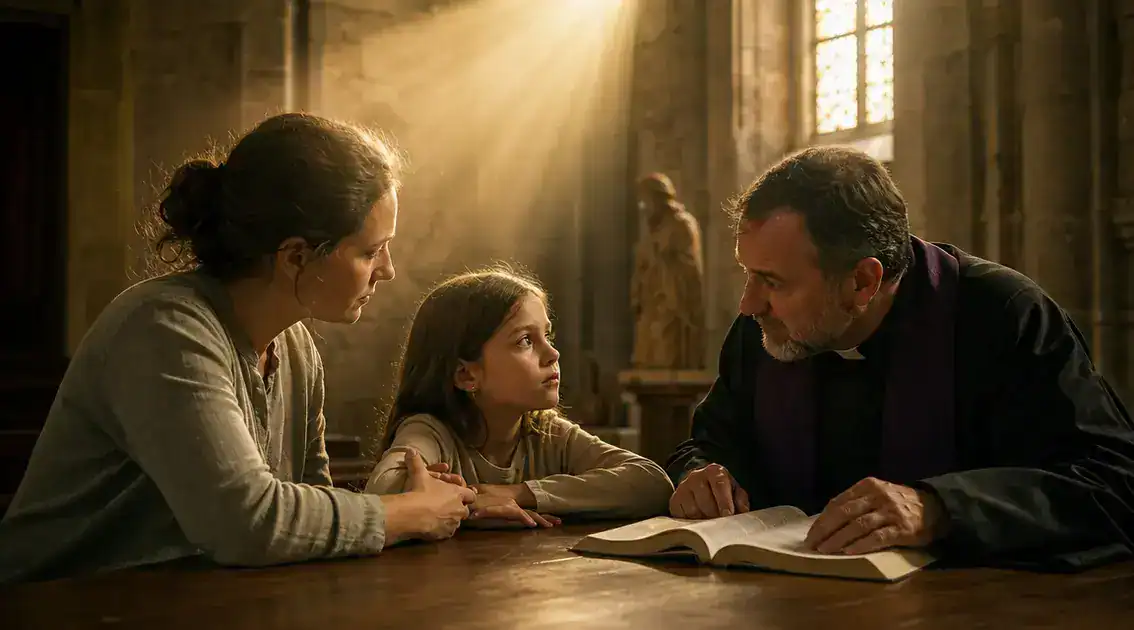
Sometimes signs and gentle encounters arrive as a dream, a sudden peace in danger, or an unexpected protection that leaves a family grateful but unsure. These moments can warm the heart and raise questions at the same time, so it helps to sit with them quietly and name what you have experienced. Prayerful attention lets the feeling be held rather than rushed, and it opens the way to honest reflection about what God may be doing.
Scripture and tradition ask us to be wise as we interpret such moments. The call to “test the spirits” and to weigh experiences against the gospel asks for calm judgment, not skepticism that closes the heart. That is why seeking pastoral guidance matters: a trusted minister or spiritual director can listen, offer prayer, and point to the rhythms of Scripture and the sacraments that help confirm God’s action.
Practical steps make discernment simple and steady: pause in prayer, name the experience in a few lines of journaling, read a short psalm, and share the story with a trusted pastor or elder. Keep to small, repeatable practices—asking for a blessing, praying a familiar verse, or returning to the Eucharist or a communal prayer—so that your experience is tested by the community of faith. Over time, this quiet process builds confidence: you learn to recognize what brings true peace and what needs further care.
Integrating devotion into family life: practices that endure
Begin with small, steady habits that fit daily life rather than large rituals you cannot keep. A short prayer before meals, a two-line blessing at bedtime, or a simple hymn on the way to school can root a child in a pattern of trust. These acts work best when they are warm and repeatable; the goal is a gentle habit of prayer that feels like breathing in the home.
Make devotion tactile and welcoming so children can join in naturally. Set a small prayer corner with a worn Bible, a candle, and a family token they can touch. Teach a single blessing the child can say aloud, let them help light the candle, or invite them to offer one sentence of thanks. When children take part, they learn the shape of prayer by doing it, not just by hearing about it.
Keep practices flexible across seasons and ages so they endure. Some days will be long and imperfect; lean into mercy and repeat what you can. Mark feast days, celebrate small milestones, and bring the family to communal worship when possible so home practices connect with the wider church. Over time, these simple, loving patterns become a living tradition that hands faith forward—rooted not in perfection but in daily faithfulness and grace.
A gentle prayer
Holy God, we thank you for the quiet care you give the young. May your angels watch over every child and every home. Help us to trust the simple prayers we speak and the small rites we share.
Teach us to notice the gentle signs of your love: a calm at night, a timely help, a warm hand. Let these small mercies shape our eyes and soften our hearts so we name your care with gratitude.
Make our household a place of blessing where children learn to pray, to trust, and to find courage in your presence. May the habit of blessing guide our words and keep our days steady in hope.
We offer this hope in quiet faith, asking that your protection come like a steady light on our path. Amen.
FAQ – Common questions about angelic protection for children
Do guardian angels specifically watch over children according to Scripture?
Yes. Jesus refers to the angels of little ones in Matthew 18:10, and Psalm 91:11 speaks of God commanding his angels to guard us. These passages, together with Hebrews 1:14 calling angels “ministering spirits,” have long supported the belief that children are lovingly watched by angelic care.
How can parents pray for their child’s angelic protection?
Simple, regular prayers are best: a short bedtime blessing, a verse from Psalm 91 or Psalm 121, or an invocation like “Angel of God, watch over [name].” Tradition also encourages tactile gestures—placing a hand on the child’s head or tracing the sign of the cross—to make the prayer concrete and nurturing.
Are there formal rites I should use to ask for protection?
Many Christian traditions offer modest rites parents can adapt: a blessing with holy water, a priestly blessing for special needs, or using the sacraments like baptism and the Eucharist to place a child within the Church’s care. These practices echo Scripture’s promises and the church’s long habit of naming God’s protection in visible ways.
What should I do if a child reports an angelic encounter or a strange dream?
Listen calmly and pray with the child, then weigh the experience in light of Scripture and pastoral wisdom. The New Testament urges believers to “test the spirits” (1 John 4:1); seeking a trusted pastor or spiritual director helps discern whether the experience brings peace and gospel fruit or needs pastoral care.
Which angels or saints are traditionally invoked for a child’s protection?
Families commonly invoke guardian angels in simple prayer and may ask for the intercession of St. Michael (protection) or St. Raphael (healing and safe travel). Many also turn to the Blessed Virgin Mary as a tender mother who leads children to Christ; these devotions sit within long-standing Christian practice.
How does a family make these practices last without becoming legalistic?
Keep rites short, warm, and repeatable so they fit daily life—bedtime blessings, a simple psalm on travel, or a small prayer corner. Emphasize gratitude and relationship over formula; the aim is to form a steady habit of trust rooted in Scripture and the church’s care, not rigid checklist-making.