

Purgatory and the angels: Christian Scripture, patristic testimony, and Catholic teaching depict angels as ministering, consoling presences who accompany and assist souls undergoing purification, cooperating with God’s mercy while the living’s prayers, Masses, and acts of charity are offered for those being purified.
Have you ever wondered whether purgatory and the angels meet at the border of sorrow and hope? I invite you to walk with me through Scripture, tradition, and tender testimonies that point toward angels visiting and comforting souls in the purifying fire.
Scripture glimpses of ministering spirits and the afterlife
The Bible gives us quiet windows into the world of angels and the life beyond. In passages like Hebrews, angels are called ministering spirits sent to help those who will inherit salvation, which paints them as near and tender helpers rather than distant powers. These images are simple but powerful: angels move at the edges of our stories, guiding, guarding, and attending to what God is doing for his people.
Old Testament scenes add another note of hope. Think of Jacob’s ladder, where heaven and earth meet in a vision of angels ascending and descending, or the psalms that speak of God’s care through heavenly messengers. Even in brief Gospel moments we glimpse a caring presence after death; such passages suggest that the life to come is not cold or empty but watched over by compassionate beings who serve God’s mercy.
When we bring these scriptural glimpses toward the question of souls being purified, the tone is one of consolation more than technical detail. Scripture does not map every mystery, but it does show a God who sends help and a heaven tender toward the fragile and repentant. Let those images nourish a humble trust: prayer, remembrance, and loving care are ways we join the long story of divine companionship and the promise of angelic comfort and aid around the soul.
Early church and patristic reflections on purification and angels
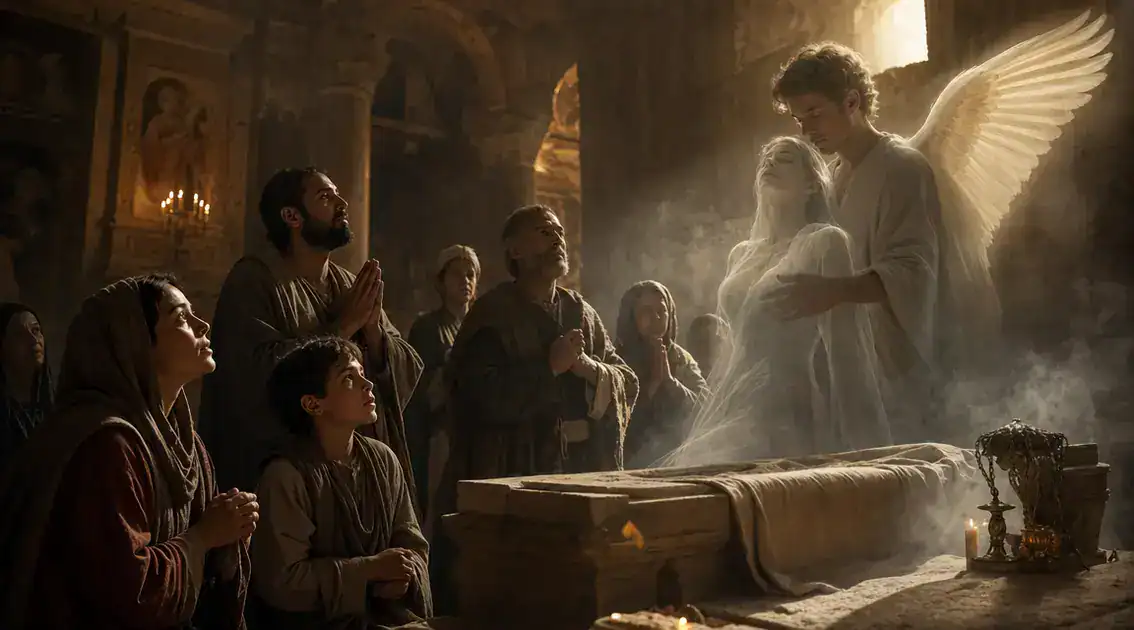
Early Christians and the church fathers wrote with care about how souls are readied for heaven. Figures like Origen, Augustine, and Gregory the Great spoke of a gentle process of cleansing that follows death, not merely as punishment but as a merciful journey toward God. In their writings, angels appear not as distant judges but as near companions who attend the soul in its weakness, offering guidance and consolation during the slow work of purification.
These patristic reflections also shaped prayer and practice in the community. The Fathers urged prayer for the dead, almsgiving, and liturgical remembrance as real help for those who have died, believing that such acts join the living to the care of the unseen. Stories and homilies from the early church often show angels receiving prayers or assisting souls, which gave the faithful a simple pastoral confidence: our prayers matter and reach beyond the veil.
That pastoral vision asks us to live with tenderness and hope today. Remembering the patristic witness urges practical acts of love—Masses, prayers, and works of charity—because they participate in the same mercy the Fathers described. Let that gentle certainty shape how we grieve and pray, trusting that angelic ministry and God’s mercy meet the soul on its path to greater light.
Angels in Catholic doctrine about purgatory
The Catholic Church understands purgatory as a merciful process by which a soul is made ready for heaven. This purification is not a distant theory but a real act of God’s love. Many writers and pastors have long pictured angels as gentle companions at this time, working quietly as ministering angels who attend the soul and help bring it into the light.
Official teaching does not give a full map of every moment, yet it does teach the close bonds between the living, the dead, and the saints in heaven. The Church speaks of the communion of saints, and within that mystery angels are often understood to cooperate with God’s mercy—carrying prayers, accompanying the dying, and standing near the soul as it is purified. Theological writers and devotional tradition fill in pastoral details that encourage trust without turning mystery into neat diagrams.
For everyday faith, this doctrine calls us to tenderness and prayer. Offering Masses, praying the rosary, giving alms, and remembering the dead are ways we join what the Church believes the angels are already doing: comforting and aiding those in need of purification. Hold this with gentle hope—angels, prayer, and God’s mercy work together to bring the soul toward greater light.
Saintly testimonies: visions of angelic consolation
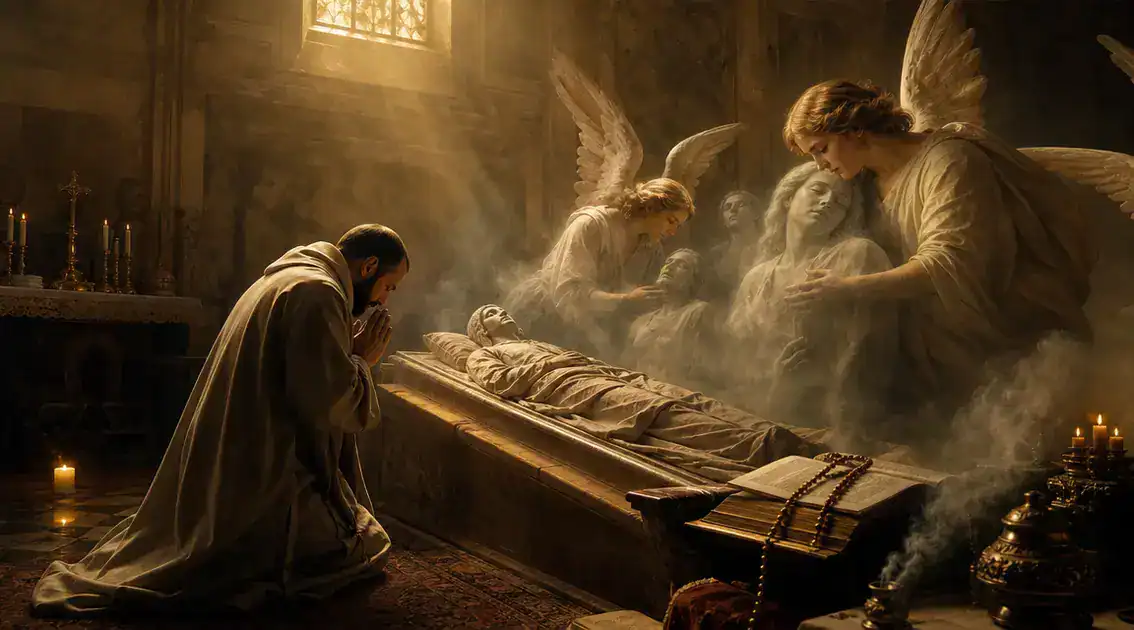
Many saints have shared intimate moments when heaven felt near and broken hearts found comfort. These testimonies often describe angels not as distant symbols but as gentle companions who draw close to ease fear and guide a soul toward peace. Hearing these stories helps the faithful see that mercy reaches even into the unknown gates of afterlife, offering a tender hope rather than cold distance.
For example, saints such as St. Catherine of Genoa and St. Gertrude the Great wrote of encounters or visions in which angels attended souls undergoing purification, comforting them with light and relief. In more recent times, figures like Padre Pio reported angelic visits that surrounded the dying and strengthened those praying for the dead. These accounts vary in detail but share the same pastoral heart: angels accompany the soul and, in many traditions, cooperate with our prayers and sacrifices on their behalf.
These testimonies shape how communities pray and remember their loved ones. Rather than serving as strict proof, the saints’ stories invite us into active compassion—offering Masses, praying the rosary, giving alms, and entrusting the departed to God’s mercy. Let such witness encourage a simple devotion: pray with hope, remember with love, and trust that angelic consolation often walks beside the weary soul.
Liturgy, prayers, and devotional practices for the departed
The Mass holds a special place in prayers for those who have died, offered with quiet love and hope. The faithful bring the Eucharist as a gift that asks God to welcome and purify, trusting the sacred action can touch what lies beyond our sight. This rite is simple and reverent, filled with scripture, incense, and the steady rhythm of prayer that moves a community toward mercy.
Alongside the liturgy, many small devotions keep memory alive: lighting candles, visiting graves, praying the rosary, and offering alms in someone’s name. These acts are not symbols only; they are honest prayers given on behalf of the departed, gestures of care that say we remain linked in love. The practice of the rosary or a short prayer at a grave lets the living join the unseen work of consolation and makes grief a shared act of hope.
Pastoral rites—committal prayers, memorial Masses, and annual remembrances—shape how families and parishes hold loss with faith. The Church’s teaching on the communion of saints invites us to see prayer as participation in a larger mercy, not as a way to fix a mystery but to accompany it. Taking part in these liturgies and devotions places us in a long tradition of love that surrounds the soul with prayer and gentle care.
Pastoral care: comforting grief with the hope of angelic aid
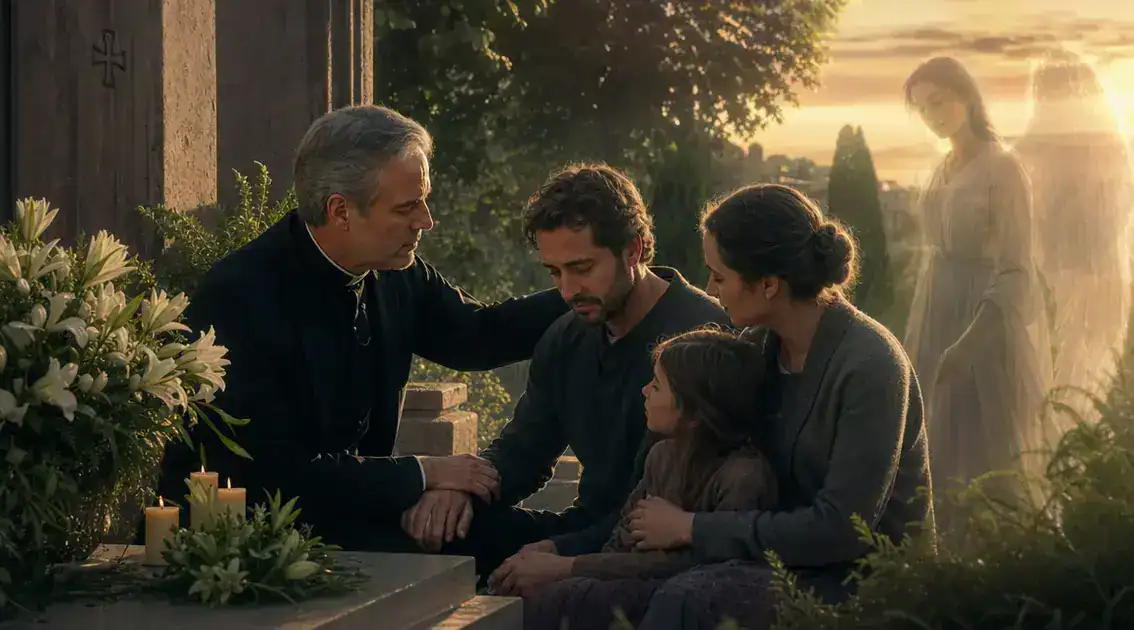
In moments of deep loss, a gentle human presence can feel like a bridge to hope. Pastors, chaplains, and caring friends often sit quietly with the bereaved, offering a warm hand, a soft prayer, and the steady witness that sorrow is not faced alone. This simple pastoral presence models a mercy that the church has trusted for centuries: we hold one another when words fail.
Rituals and small acts of devotion help shape that care into something the heart can touch. A prayer at a bedside, the lighting of a candle, anointing, or a memorial Mass gives language and shape to grief while inviting the unseen help of heaven. Many faithful find comfort in the thought of angelic aid joining these prayers—subtle, close, and tender rather than loud or spectacular.
Practical compassion matters as much as doctrine. Listening without rushing, bringing food, offering to pray, and remembering anniversaries are ways to embody hope. When we act with patience and faith, we join a tradition that believes God’s care reaches the lost through people and, in ways we cannot fully see, through ministering angels. Let such care be steady and simple, a quiet channel of consolation for those who mourn.
Spiritual practice: praying for the dead and cultivating hope
Praying for those who have died is a simple, loving practice that keeps us close to them. Many find comfort in short prayers at a grave, lighting a candle, or whispering a name at bedtime. Such small acts are real ways we offer care and hold hope for the soul.
Communal rites also join us to that care. Offering the Mass, praying the rosary, giving alms, or asking a priest to remember a loved one are all ways the living help the departed. These gestures bind our love to prayer and let the community carry memory into mercy.
To cultivate hope, form gentle habits of remembrance and charity. Pray a simple prayer each day, visit a grave on an anniversary, or do a kind deed in your loved one’s name. Trust in the communion of saints—we are not alone, and small faithful acts knit us into a larger story of mercy and light.
A closing prayer for hope and mercy
May the gentle presence of angels surround the souls we love and the hearts that grieve. May we trust in God’s tender mercy at work, even beyond our sight. Let this trust quiet our fear and steady our hands.
We hold fast to small acts: a prayer, a Mass, a candle, a kind deed. These simple offerings join us to the great communion of saints and to the care of ministering spirits. They keep hope alive and make love practical.
Walk softly, pray often, and remember that no grief is wasted when it is held with faith. May peace settle on you like a warm light, and may the promise of consolation guide your days.
FAQ – Purgatory, angels, and prayers for the departed
Do angels visit souls undergoing purification?
Many Christian traditions and the Bible describe angels as helpers sent by God. Hebrews 1:14 calls them “ministering spirits” sent to serve those who will inherit salvation. While the Church does not map every detail, patristic writings and devotional testimony present angels as gentle companions who console and assist the soul in God’s mercy.
What scriptural or traditional basis is there for purgatory?
Scripture and tradition point to a cleansing after death. 1 Corinthians 3:15 speaks of being saved “through fire,” and 2 Maccabees 12:46 (a deuterocanonical book) supports praying for the dead. The Church’s teaching (see the Catechism, nos. 1030–1032) presents purgatory as a merciful purification preparing a soul for full communion with God.
How do my prayers help those who have died?
Prayer joins the living and the dead in the communion of saints. Tradition teaches that offering Masses, prayers, alms, and sacrifices benefits the departed by asking God’s mercy on their behalf. These acts do not force a result but participate in Christ’s saving work and the Church’s intercession, trusting God to receive our petitions for the souls in need of healing.
Are there saints who reported visions of angels consoling souls?
Yes. Saints such as St. Catherine of Genoa, St. Gertrude the Great, and more recent witnesses like Padre Pio and St. Faustina left accounts of angelic presence around the dying or those being purified. These testimonies vary, but they share a pastoral message: God’s care often comes through ministering spirits and invites our trust and prayer.
My tradition does not teach purgatory—can I still pray for the dead?
Yes. Many Christians across traditions pray for the departed. Eastern Orthodoxy prays for the dead in memorial rites, and many Protestants offer prayers of remembrance and hope. Praying for the dead is a pastoral expression of love and trust in God’s mercy, and it fosters charity, memory, and hope even amid differing theological views.
What are simple, concrete ways I can pray or act for a loved one?
You can offer the Mass or ask a priest to remember a name, pray the rosary or a short nightly prayer, light a candle at a grave, give alms in their memory, or perform a small act of charity in their name. A traditional prayer you can use is: “Eternal rest grant unto them, O Lord. And let perpetual light shine upon them.” These small acts join you to the Church’s long practice of mercy and hope.