
Angels in the lives of martyrs are portrayed in Scripture and tradition as ministering companions who strengthen, console, and witness at the moment of death, serving as tangible signs of God’s presence that affirm faith, offer courage, and escort the martyr’s soul into the divine court.
Have you ever paused at the bedside of a dying saint and wondered who stood near? angels in the lives of martyrs often appear in Scripture and hagiography as quiet, luminous companions — not to erase suffering but to lend courage and sacred consolation.
Biblical images of angels at death
Throughout Scripture, angels appear at moments of deep transition, often near death. These figures show up as protectors, as agents of judgment, and as gentle ministers who draw the soul toward God. In these passages we meet the angel of the Lord who acts for God’s will and the comforting presence that steadies the heart facing its last breath.
The Bible gives a few clear scenes we can hold in mind. In Exodus the destroying angel moves across the land in judgment, while Psalm 91 speaks of angels who guard the faithful. In the New Testament an angel strengthens Jesus in the garden (Luke 22:43), and in Revelation the souls of the slain cry out beneath the altar, a vision that links martyrs to God’s court. These images show both stern duty and quiet consolation, reminding us that angels serve many roles at the border between life and what follows.
Seen devotionally, these texts invite a simple trust: angels are not distant actors but instruments of God’s care in the final hour. For martyrs, the biblical pictures suggest an escort into God’s presence—strength for courage, witness to faith, and a promise that suffering does not end alone. Holding these images helps us face death with a reverent hope that divine companionship accompanies even the last steps.
Early church witnesses and martyrdom accounts
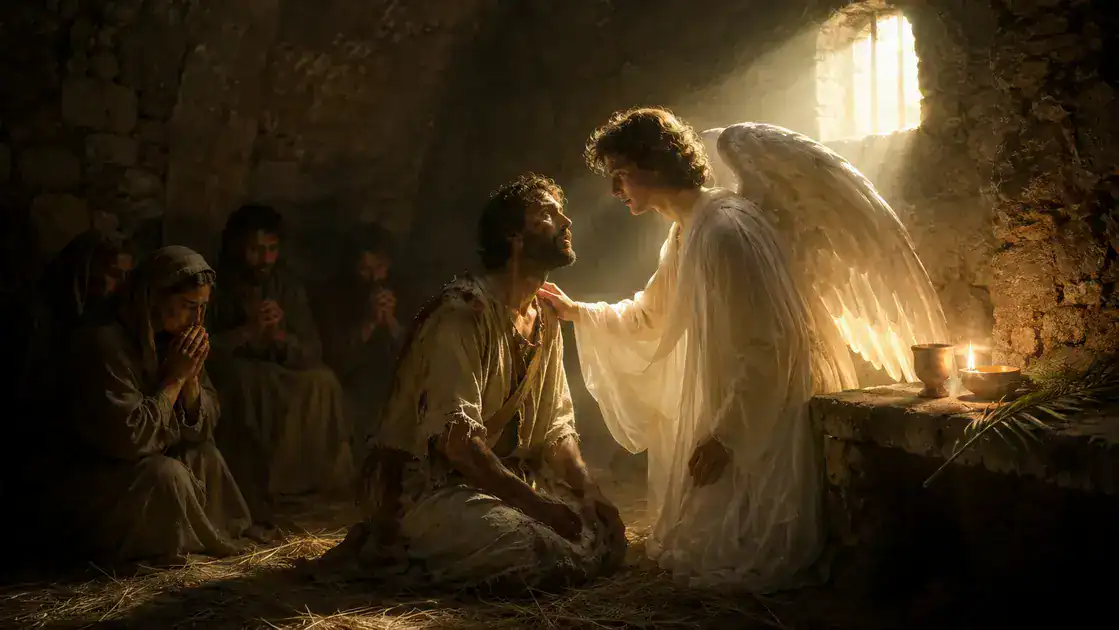
Early church witnesses wrote of martyrs who met death with a strange calm, and their stories often include heavenly signs or visitors. These accounts come from people who watched the scene and from the martyrs themselves in visions. Together they form a living memory: not a tidy report, but a warm testimony that the last hour could feel held by something beyond human strength.
Many of the great stories—like those treasured about Perpetua, Polycarp, and other confessors—describe moments when light, songs, or gentle figures appeared near the dying. Hagiographers sometimes name these as angels or simply as messengers from God, but the heart of the testimony is the same: divine presence offered comfort and confirmation to those who would not renounce their faith. These images helped early Christians see martyrdom not as mere suffering, but as a passage watched over by God’s care.
For the community, such tales did more than inspire courage; they taught a way to read suffering theologically. When believers later prayed for martyrs or placed their stories in liturgy, they leaned on this conviction that death could be accompanied by mercy and witness. That steady hope still speaks today: these accounts invite us to trust that, in the most fragile hour, faithful lives are enfolded by a faithful God and, often in their stories, by the ministry of angels.
How angels console: common motifs in hagiography
Hagiographies often return to a small set of images when they describe how angels comfort martyrs. You will find warm light falling on a quiet face, a gentle touch that stills fear, and a soft voice that says what the martyr needs to hear. These simple motifs do not dramatize death. They make it holy and near, showing care rather than spectacle.
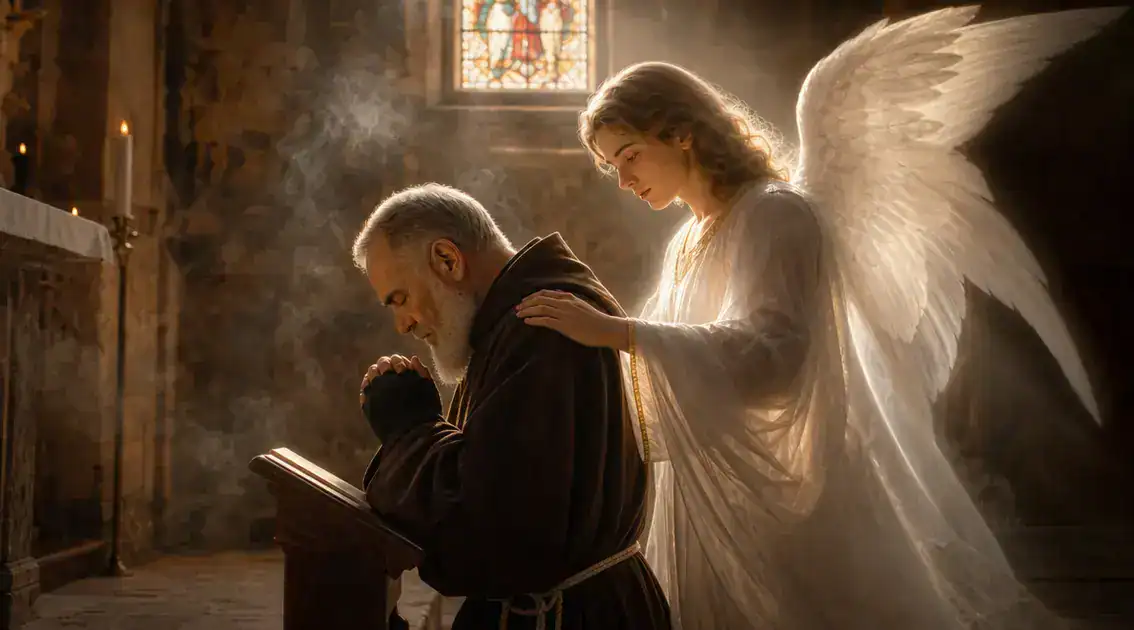
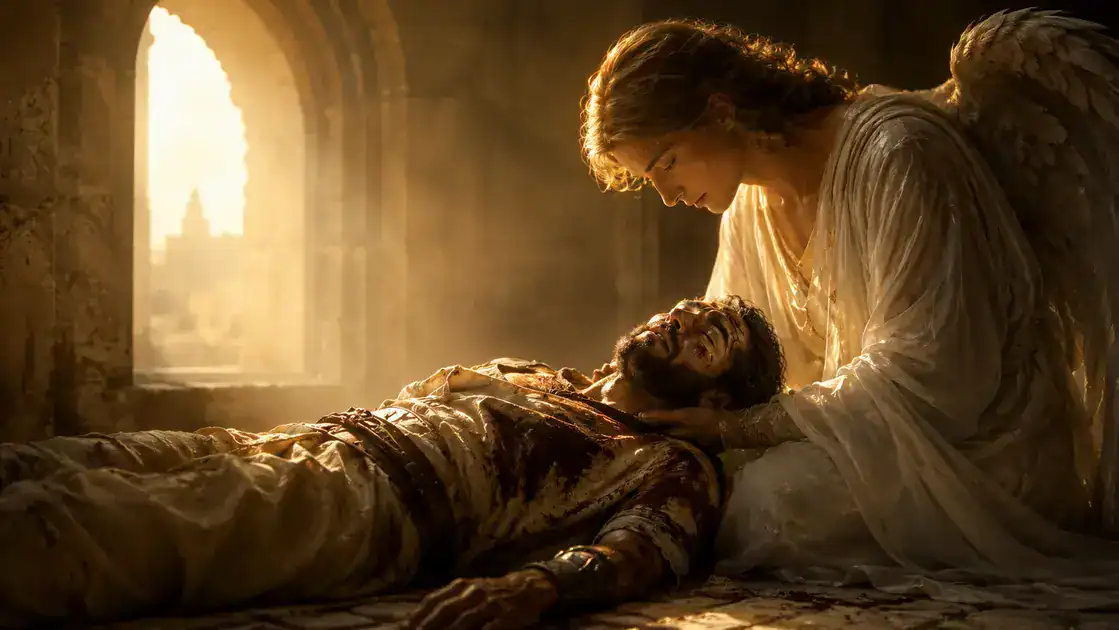
One common thread is physical consolation: an angel laying a hand on the brow, offering oil, or holding the martyr upright as courage returns. Another frequent motif is song or a hush that settles over the scene, as if heaven itself listens. Scripture gives a hint of this when an angel strengthens Jesus in Gethsemane; the same idea appears in saints’ stories as God’s help given at the last, making the dying able to bear witness with peace.
These motifs shape how communities remember martyrs. Palm branches, crowns, and gentle gestures become signs that death belonged to a larger story of faith. Far from mere ornament, they teach a devotional truth: suffering can be accompanied by mercy, and the faithful often imagine an angelic escort that meets them at the threshold. That image has guided prayers, liturgy, and personal hope for generations.
Theological meaning: angels and divine accompaniment
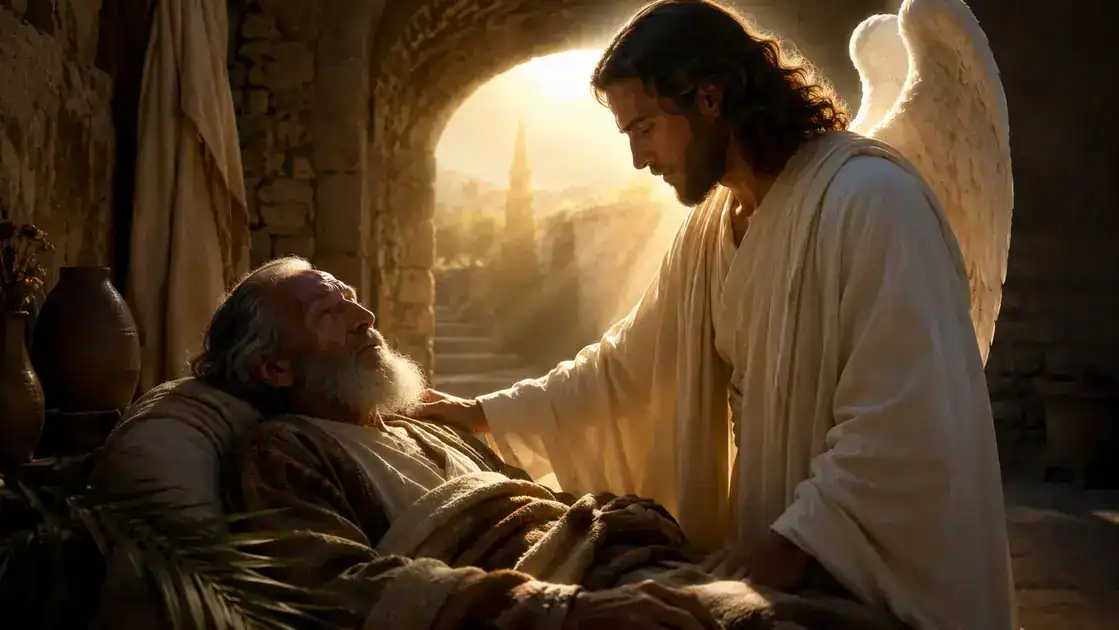
Many sacred writers and pastors have long held that angels represent God’s nearness in moments of deepest need. They are not independent saviors but instruments of divine accompaniment, sent to stand beside the dying and to carry God’s care into the last hour. This helps us name a simple truth: in the Christian imagination, death is not a lone crossing but a passage attended by God’s servants.
The Bible speaks of these beings in ways that shape this hope. Hebrews calls them ministering spirits, and Gospel scenes show angels strengthening and serving at pivotal moments. Those brief images invite a larger thought: angels act as God’s hands and voice when human courage runs thin, offering strength, witness, and a sign that the soul is not abandoned.
That theological view has tender effects on how communities pray and mourn. Believers find comfort knowing that care can come unseen, and liturgy often reflects this by naming God’s presence at death. In practice, the idea of angelic accompaniment teaches us to attend the dying with reverence, to pray with hope, and to trust that even in suffering, faithful lives are enfolded by mercy and by a faithful witness who goes before them.
Prayers, relics, and liturgy: remembering angelic comfort
For generations, Christians have used prayer to name the help believed to meet martyrs at their last hour. Short petitions, hymns, and the simple prayers parents taught their children place this hope into daily life. In many rites the church practices an invocation of angels, asking that the dying be strengthened and gently guided toward God.
Alongside words, material signs keep memory alive. Relics, palm branches, icons, and small shrines turn a distant story into a near one you can touch and see. When a community venerates a martyr’s relic or lays a palm on an altar, it is practicing a form of remembering that makes the idea of angelic care more present and real for those who grieve.
These prayers and objects shape liturgy and personal devotion. Funeral rites often include readings and hymns that speak of angels, while simple acts like lighting a candle or singing a short responsory join the community’s voice to that heavenly comfort. Such practices teach a gentle habit: to attend the dying with reverence and to trust that mercy and company may be present in the last, fragile hours.
How these stories inspire courage in our own dying
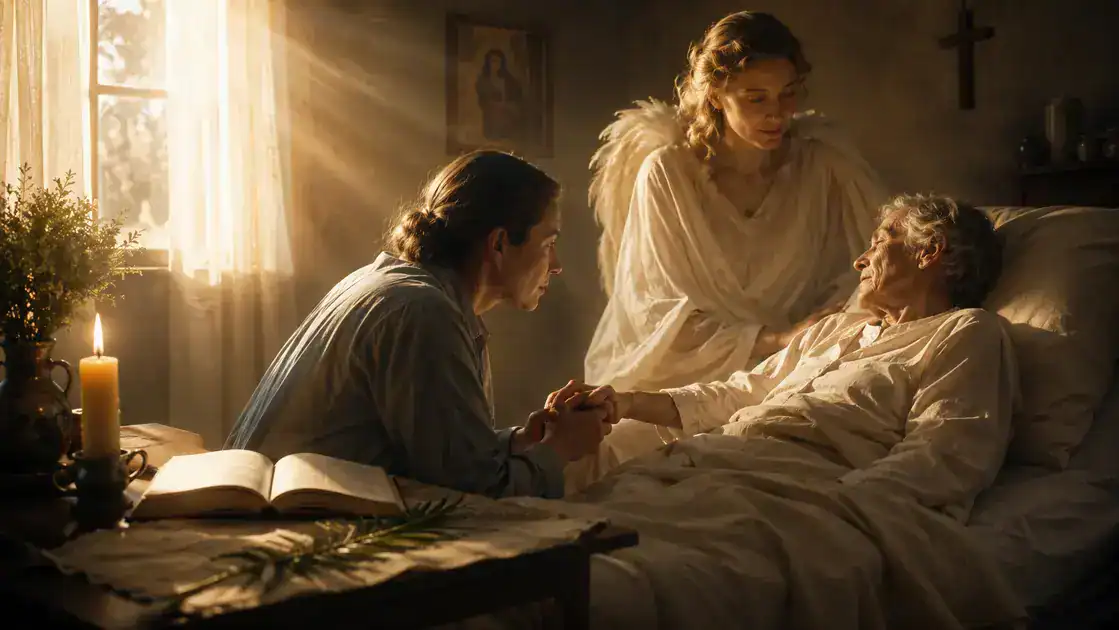
The stories of martyrs who met death with a calm heart can shape how we face our own end. When we read of angels bending close, we learn that fear need not be the last word. These accounts offer a simple lesson: courage often arrives as a quiet gift, not a loud triumph, and it can come through the felt nearness of God and his messengers.
Communities keep that courage alive by repeating the stories, singing the hymns, and holding little signs of memory. Hearing a martyr’s calm makes us less surprised when fear comes, because we see courage as a habit formed by prayer and company. Courage here is not the absence of trembling but the steadying touch that lets a person speak truth and trust in their last hour.
That means we can prepare in small, tender ways: reading these stories, praying aloud, lighting a candle, or learning a short psalm to hold at the bedside. These acts do not banish sorrow, but they remind us we are not alone, and they train the heart to receive help when it comes. Imagining an angelic presence is less about visions and more about opening our hands to accept comfort and witness.
A closing prayer of accompaniment
May we remember that we are never alone at the edge of life. Like the martyrs we read about, we are held by hands we cannot always see and by a love that will not let go.
Lord, give courage to those who tremble, calm to those who ache, and clear sight to those who must speak truth in quiet, brave ways. Let angelic comfort be felt as gentle strength and sure presence in the last hour.
May simple practices—lighting a candle, saying a short psalm, holding a loved one’s hand—teach our hearts to receive that company. These small acts train us to welcome mercy when it comes.
Go in peace, carrying this wonder into each day as a soft, steady light. May the memory of faithful witnesses and the promise of accompaniment shape how you love and how you pray.
FAQ – Questions about angels, martyrs, and divine comfort
Did angels really appear to martyrs in the early church?
Yes. Many early witnesses and hagiographies record angelic visits at martyrdom, and the church has long treasured these testimonies. Scripture and tradition place such accounts within God’s caring action—stories like those of Perpetua and Polycarp function as both eyewitness memory and pastoral witness, showing how communities understood God’s nearness in suffering.
Which Bible passages speak of angels comforting or serving at death?
Several passages are commonly cited: Hebrews 1:14 calls angels “ministering spirits,” Psalm 91:11 speaks of God’s angels guarding the faithful, Luke 22:43 describes an angel strengthening Jesus, and Revelation 6:9 recalls the souls of the slain under the altar. These texts shape the belief that angels can carry God’s care into critical moments.
Should we read hagiographies about angelic visits as literal history or devotional meaning?
Both readings are possible and helpful. Treat them with historical respect—these are testimonies from communities—but allow their devotional purpose to speak most clearly: they teach how faith frames suffering. Church tradition uses these stories to form hope and practice, while prudent readers avoid forcing every detail into a modern checklist of proof.
Can angels still bring comfort to people today at the moment of death?
Christian tradition affirms that angels remain God’s servants for human care. Hebrews 1:14 and pastoral practice encourage the hope that comfort comes in visible or unseen ways. Whether experienced as a felt presence, a sudden peace, or through sacraments and the prayers of others, the essential claim is that God’s care can reach the dying—often described in tradition as mediated by angelic ministry.
Is it proper to pray to angels or ask for their help?
Tradition draws a careful line: angels are honored as God’s servants but not worshiped. Colossians warns against angel worship (Colossians 2:18). Many churches encourage asking one’s guardian angel for help and protection while keeping prayer directed primarily to God. Practices differ across denominations, but the guiding rule is to seek God’s action, asking angels to participate in that divine care rather than treating them as ultimate recipients of worship.
How do liturgy, relics, and devotional practices keep the memory of angelic comfort alive?
Liturgy names angelic ministry in prayers, funeral rites, and hymnody, shaping communal expectation of God’s company at death. Relics, palms, and vigils make the memory tangible and form habits of hope. These practices are not superstition but teaching devices: they rehearse trust, ready communities to attend the dying with prayer, presence, and the confident hope that mercy and witness accompany the final hour.