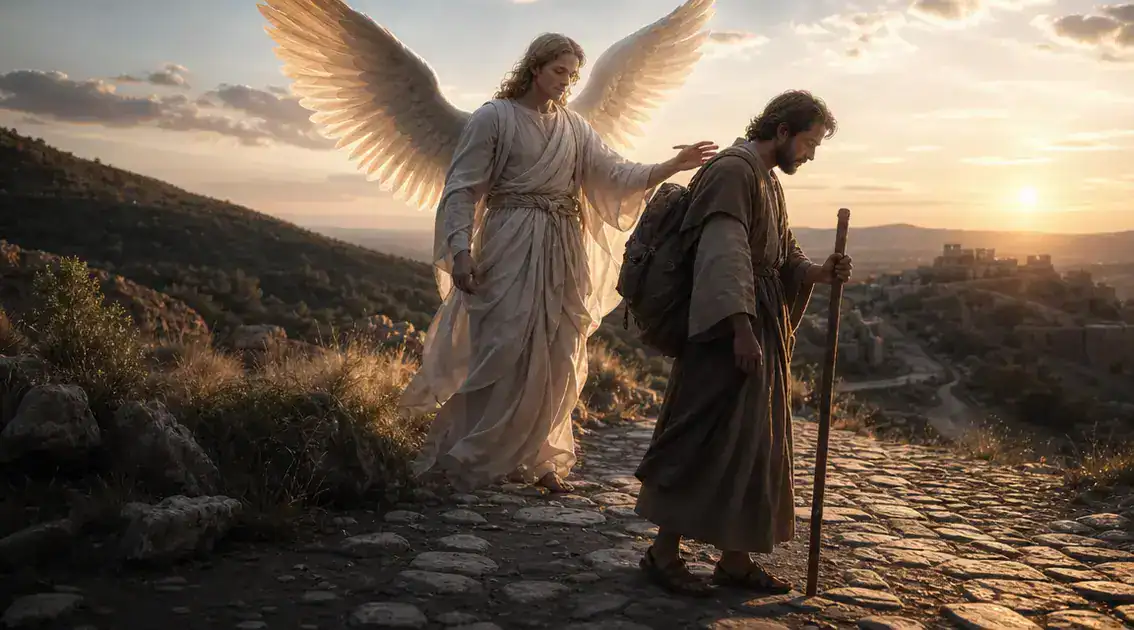

Angelic protection while traveling refers to the belief that guardian angels, appointed by God and attested in Scripture (Psalm 91, Exodus 23, Matthew 18), accompany travelers to guide, shield, and provide providential aid—often through timely help, inner promptings, or small mercies that invite prayerful gratitude and simple devotional practices for safe journeys.
angelic protection while traveling—have you ever felt a hush like the dawn at the empty tomb, as if someone unseen guided your steps? This brief reflection invites you to notice prayers, psalms, and traditions that travelers through Scripture and history have trusted.
Biblical foundations for angelic accompaniment on journeys
From the earliest pages of the Bible, travelers find they are not alone. When God prepares a road, he often sends an escort, and this idea shapes many journey stories. Exodus 23:20 promises an angel sent ahead, and Psalm 91:11 comforts those who set out with the thought that angels watch over them. These short, clear lines in Scripture give a simple, steady hope to anyone crossing a threshold.
The New Testament deepens that picture without turning it into a myth. Jesus is tended by angels after the desert (Matthew 4:11), and Hebrews names them as ministering spirits sent to serve those who will inherit salvation (Hebrews 1:14). The point is not that angels act on their own, but that they operate as God’s hands and eyes, guiding and guarding at his command.
For a traveler today, these texts become practical companions rather than distant doctrines. A brief prayer, a psalm read aloud, or simply a mindful pause before departure can turn ordinary travel into a small act of trust. Let these biblical promises steady your steps: the road you walk is held within a larger, faithful care.
Archangel Michael and protection in Scripture

In Scripture, Archangel Michael appears as a strong guardian and leader sent by God. In Daniel he is called a chief prince who stands for God’s people (Daniel 10:13, 12:1). Those brief lines give a clear image: Michael is not a distant idea but a named presence in the story of God’s care. That naming comforts travelers and exiles who read these words and look for a faithful protector on the road.
The New Testament keeps that tone while widening the view. Revelation shows Michael engaged in a heavenly struggle that ends in the defeat of forces that threaten God’s way (Revelation 12:7–9), and Jude records a sober scene where Michael acts without boast, respecting God’s authority (Jude 1:9). These passages point to a reality where spiritual opposition is real, yet also to a reality where God provides a defender who acts under his command, not by his own will.
For the believer setting out on a journey, these texts invite a simple, trusting response. A short prayer asking for protection, a psalm read aloud, or a quiet reminder that you travel within God’s care can turn anxiety into peace. Remember that Michael’s role in Scripture points us back to God’s sovereignty; his presence in the story helps us move forward with courage, not fear, knowing we walk under faithful guard.
Psalms and prayers travelers have long carried
For centuries, travelers tucked short psalms into saddlebags, pockets, or the folds of a cloak. These texts were small and steady companions on long roads. Psalm 121 lifts the heart toward help that comes from the Maker, and Psalm 91 paints the shelter of a watchful care. In the hush between towns, a few remembered lines could change fear into quiet trust.
Alongside the psalms, people learned brief prayers to speak at a gate or before a ship set sail. The simple “Angel of God” prayer or a short blessing to a patron saint could be said while fastening a pack or stepping onto a path. Those short prayers are easy to carry in memory, quick to say aloud, and they fold the traveler back into a story where God’s care moves with them.
Make space for these practices in gentle ways: keep a small prayer book or note in your pocket, choose one verse to repeat while you walk, or pause at thresholds to name your need. Over time the habit becomes less about words and more about a steady attention that reminds you you do not travel alone. Each small act turns the ordinary road into a place held by faithful presence.
How saints and tradition describe guardian angels on the road
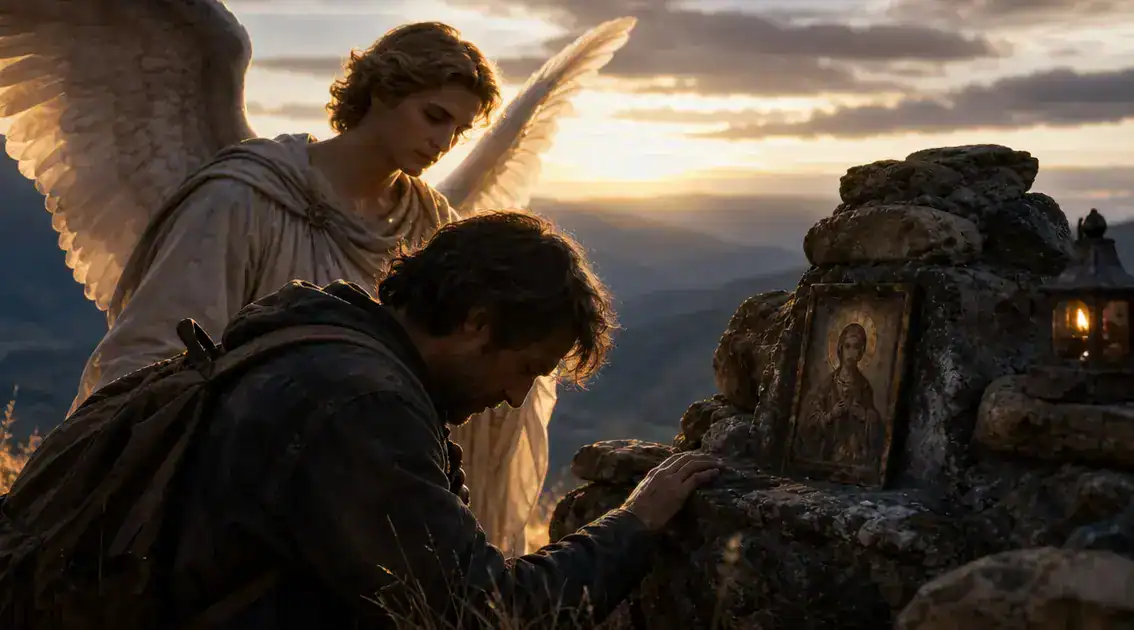
Saints and storytellers across the ages speak of guardian angels not as distant doctrines but as tender companions on the road. Stories of Padre Pio, Saint Faustina, and older monastic travelers describe moments when a presence felt like a hand on the shoulder or a calm between storms. These accounts are often simple: a gentle warning, a clear thought to turn aside, or a sudden peace that steadies the feet.
From these lives the tradition taught small, helpful practices that travelers could carry. Pilgrims would pause at a roadside shrine to say a brief prayer, trace the sign of the cross, or name a saint for guidance. Such actions are not magic but acts of attention that remind the heart it is held, and they form a habit of noticing the faithful care that often moves quietly beside us.
When you read these testimonies today, they invite a gentle trust rather than a dramatic expectation. Try a short, steady habit before you leave—a verse, a blessing, a quiet word of thanks—and notice how the road feels different. The witness of the saints shapes a faithful imagination: travel itself becomes a place where the ordinary meets a watchful kindness.
Practical blessings and ritual acts before departure
A few simple gestures before you leave can change the tone of a whole trip. Say a short blessing over your bag, make the sign of the cross, or read a single verse such as Numbers 6:24–26 that calls God’s face to shine upon you. These acts are not rituals of control but invitations to remember that your journey sits within God’s care, and that small, repeated practices steady the heart before the road begins.
Many travelers find power in modest, repeatable acts: a quick psalm, a whispered name of a guardian angel, a drop of holy water on luggage, or the lighting of a small candle at dawn. Treat these as acts of attention—ways to orient your mind and body toward trust. When you slow for a moment to perform a brief blessing, the habit trains you to notice the sacred in ordinary movement and to travel with greater calm.
Try making a short routine you can remember: choose one verse (Psalm 121 or 91), hold your bag and say a two-line blessing, or ask a loved one to lay hands on you in prayer. Keep it simple so it becomes real in the moment. Over time these small rituals become companions on the road, helping you travel with both care and quiet confidence.
Signs and subtle ways angels accompany modern travelers
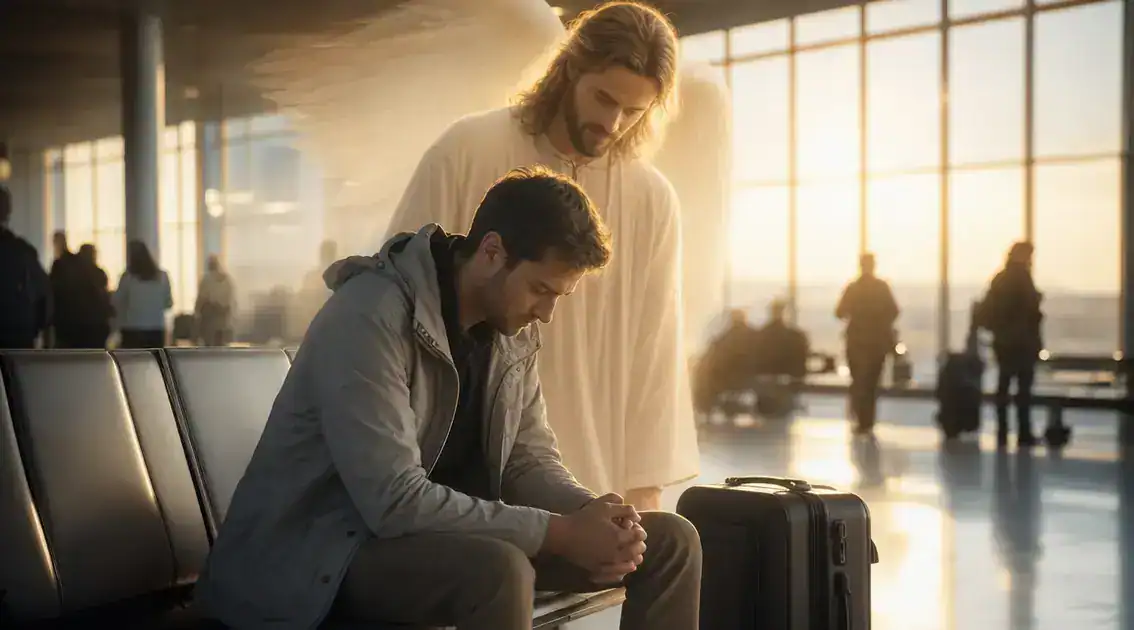
On crowded concourses and quiet highways alike, you may notice small mercies that feel like a gentle nudge rather than a loud sign. These moments—an unexpected seat, a clear thought that steers you away from a wrong turn, or the calm that settles over you when worry rises—often arrive without fanfare. Such gentle signs are the kind of subtle companionship travelers have reported across ages, small reminders that we are not simply alone in motion.
Often these quiet aids come through other people or through sudden shifts in circumstance. A stranger offers directions at just the right time, a delayed train places you next to a helpful face, or a fleeting idea prompts you to check a detail you might have missed. Scripture and tradition suggest angels can work through these ordinary means, moving through human kindness, timely events, and the clear promptings of conscience to guard a journey without drawing attention to themselves.
You can learn to notice and welcome these moments without turning them into spectacle. Pause for a breath, offer a quick word of thanks, or say a short two-line prayer when a small mercy appears; these simple habits cultivate a humble awareness. Over time, such acts of gratitude make the road feel less like a series of risks and more like a path held by steady, loving care.
A prayer for the journey
Lord, accompany those who set out today. Give them calm minds, steady feet, and a gentle sense of your care. Let fear fall away and openness grow.
May a faithful angel walk beside each traveler, offering small nudges, timely help, and quiet peace. Let these signs remind us that we are never truly alone on the road.
Help us to keep simple practices—one verse, a short blessing, a breath of thanks—so our steps become humble acts of attention that keep us aware of your presence.
Go with them in every step. May their journeys be held in mercy, and may they return with hearts grateful for the many small graces. Amen.
FAQ – Common questions about angelic protection while traveling
Do guardian angels really exist according to the Bible?
Yes. Scripture affirms angelic care in passages like Psalm 91:11 and Exodus 23:20, and Jesus’ words in Matthew 18:10 point to angels who watch over God’s children. The Bible presents them as real, ministering presences sent by God.
Does every person have a guardian angel?
Many Christian traditions, including Catholic teaching and many Protestant voices, hold that God entrusts each person to a guardian angel. Matthew 18:10 and Hebrews 1:14 are commonly cited in support: angels are described as ministering spirits concerned with the lives of God’s people.
How does Archangel Michael protect travelers in Scripture and tradition?
Scripture names Michael as a chief protector (Daniel 10:13; 12:1) and a defender in cosmic struggle (Revelation 12:7–9). Tradition views him as a powerful intercessor who acts under God’s command. Many pilgrims invoke Michael for courage and protection, while remembering that ultimate trust is placed in God, with Michael serving as God’s appointed defender.
What short prayers or psalms should I carry for safe travel?
Simple, memorable texts work best: Psalm 121 and Psalm 91 are longstanding choices, along with the priestly blessing (Numbers 6:24–26). Short devotions like the traditional “Angel of God” prayer, a two-line blessing before departure, or repeating one verse while walking are practical ways to invite God’s care on the road.
How do saints and tradition describe angelic help on the road?
Saints such as Padre Pio and Saint Faustina reported quiet, ordinary protections—sudden peace, timely warnings, or unexpected help. Pilgrim traditions encourage small practices (pausing at a shrine, a brief blessing) as ways to notice and cooperate with that care. Their testimony emphasizes steady, humble companionship rather than dramatic signs.
Are angelic protections always obvious, and how should I respond to small signs?
Not always obvious. Scripture and tradition show angels often work through ordinary events—kind strangers, timely delays, or clear promptings of conscience (Hebrews 13:2 suggests we may meet angels unaware). The wise response is gratitude and simple prayer: give thanks, offer a short blessing, and let those moments deepen your awareness of God’s care.