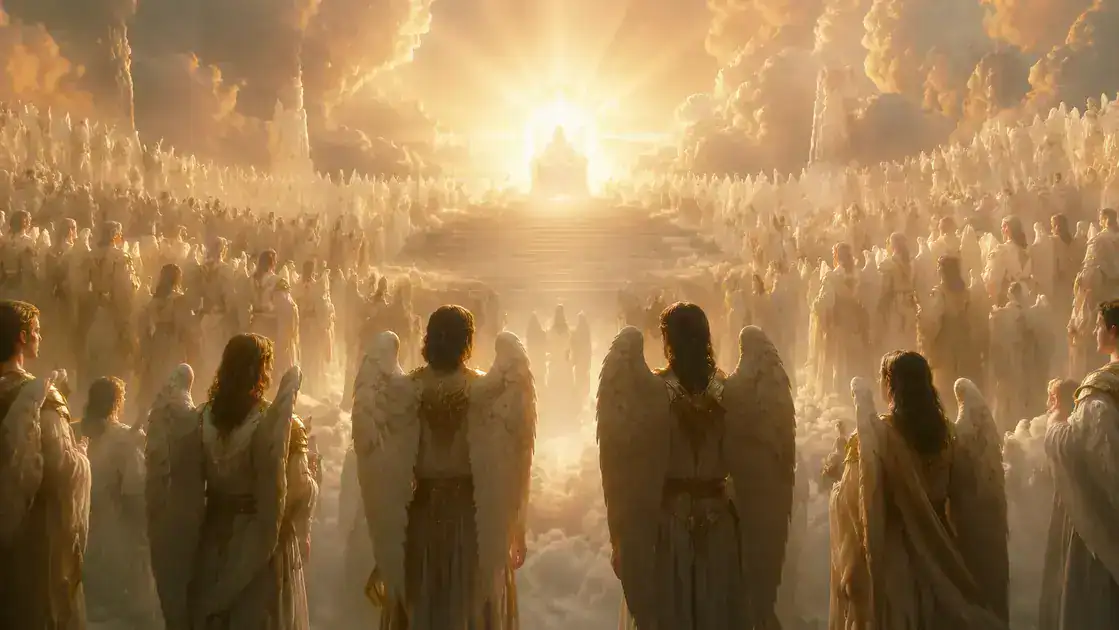

How many orders of angels exist is not definitively listed in Scripture; biblical visions and later tradition portray multiple ranks—often summarized as nine choirs by Pseudo-Dionysius—emphasizing distinct roles (seraphim, cherubim, thrones, dominions, virtues, powers, principalities, archangels, angels) rather than a single fixed number.
how many orders of angels exist? Have you ever felt a hush — a shaft of golden light through a window — and wondered who surrounds God’s throne. Walk with me as we trace biblical texts and the voices of tradition, keeping wonder alive alongside careful study.
Biblical roots: passages that suggest angelic ranks
In Isaiah’s vision we meet the seraphim circling the divine throne, calling out “Holy, holy, holy”. The prophet sees beings with six wings, reverent and close to the presence of God, and that image shapes how Scripture pictures ranks near the throne. The seraphim feel immediate, almost intimate in their worship, which points to a distinct role rather than a generic class of spirit.
Ezekiel gives us another portrait in which cherubim move with the throne and bear a mysterious, ordered form. Their imagery — wings, faces, and the wheels that accompany them — suggests a functional role: guardianship, motion, and service around God’s rule. Later New Testament language echoes this pattern when Paul names groups like thrones, dominions, principalities, and powers, words that sound less like poetry and more like categories of responsibility within the heavenly host.
The book of Daniel and Revelation add further texture: Daniel speaks of Michael as a distinct leader among angels, and Revelation depicts multitudes grouped around the Lamb and the throne in patterned ranks. Taken together, these passages do not deliver a neat catalogue. Instead they offer a living picture: Scripture points to layers of angelic service and presence, each with a recognizable way of acting, calling us to both awe and careful listening rather than to simple enumeration.
Early Jewish and Christian development of angelic hierarchies
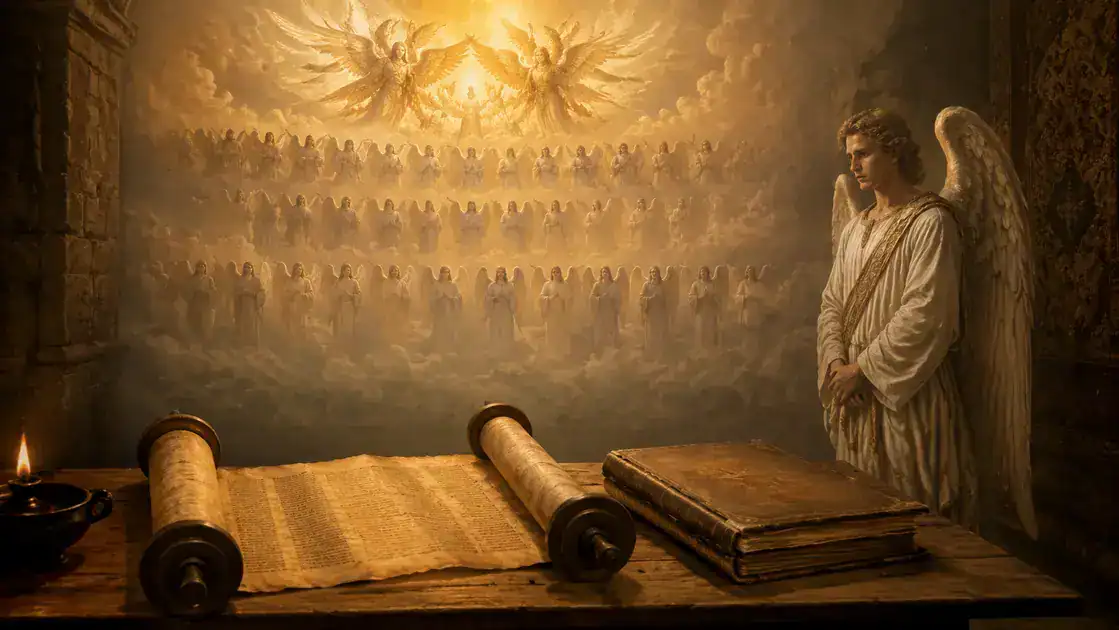
Long before later lists and charts, Jewish writers in the Second Temple era began to name and shape angelic orders. Works like 1 Enoch and the Book of Jubilees speak of chief angels and angelic councils, and they give us figures such as Michael and Gabriel who act with clear roles. These texts do not only tell stories; they show a growing sense that the heavenly world is ordered, with duties and ranks that mirror God’s care for creation.
Early Christians inherited this horizon and read it through the life of Jesus and the apostolic witness. In the New Testament Paul uses terms like thrones, dominions, principalities, and powers, language that treats angels as part of a structured reality rather than vague spirits. The earliest church writers wrestled with these images, keeping the biblical heart while beginning to name patterns of service and honor among the angels.
Over time this blending of Jewish vision and Christian reflection led believers to speak of choirs and ranks without leaving prayer behind. Learning these traditions can deepen how we pray and worship: the names and orders point us back to God’s rule and to the many ways the divine love reaches us. Rather than making us certain about every detail, these early developments invite a reverent curiosity and a quieter trust in the ordered care that surrounds us.
Pseudepigrapha and patristic voices on angelic orders
The pseudepigrapha — books like 1 Enoch and related Jewish visions — give us a vivid picture of a heavenly order where angels have names and roles. These works use dreamlike journeys and careful lists to show angels acting in offices: watchers, messengers, and leaders who shape a sense of structure around God’s throne. Reading them lets you see how people long ago tried to hold the mystery of heaven in language they could pray with.
Early Christian writers took these images into the life of the church and read them with care. Origen and other fathers looked for spiritual meaning in the visions, while Pseudo-Dionysius offered a clearer pattern that later became known as Dionysius’ nine choirs. Augustine and Gregory the Great accepted the idea of ranks but warned against turning angels into objects of worship, showing how theology and devotion moved together toward balance.
When we hold both streams — the pseudepigraphal visions and the patristic reflection — we find a devotional path that deepens wonder without certainty about every detail. The orders invite us to see creation as tended and to join in the praise that fills heaven. Let this layered witness guide prayer: it points away from mere curiosity and toward reverence, trust, and the simple practice of living under God’s ordered care.
Dionysius, the nine choirs and their symbolic meaning
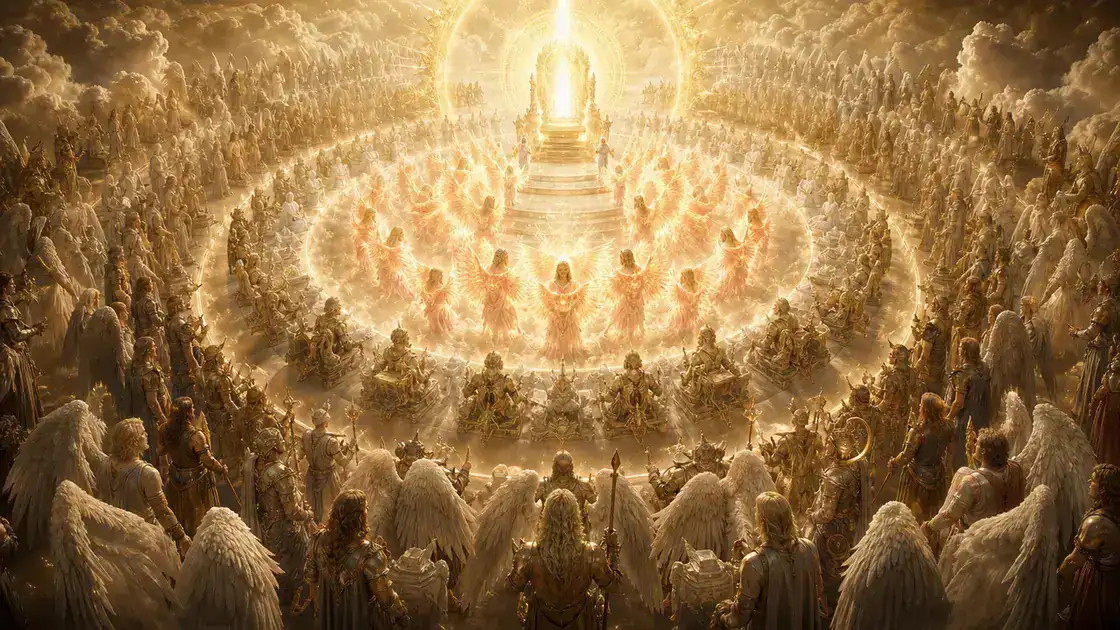
Pseudo-Dionysius offered a poetic map of heaven that many Christians have used for prayer. He described the nine choirs as a ladder of light drawing creation closer to God. His language is symbolic and meant to guide worship, not to pin down a rigid chart of facts.
The choirs are grouped in three triads. Closest to the throne are the Seraphim, Cherubim, and Thrones, figures of burning love, deep vision, and steady bearing of God’s presence. The middle triad — Dominions, Virtues, and Powers — suggests ordered governance, the flow of grace, and the resistance of evil when needed. Each name points to a way the divine care reaches the world.
The outer triad — Principalities, Archangels, and Angels — speaks of watchful care for peoples, clear messengers, and the guardianship that touches our daily life. Taken devotionally, Dionysius’ scheme helps us imagine heaven’s harmony and return our hearts to praise. It asks for humility: we honor the angels’ work without placing them above the one who alone is worshipped.
Roles and functions: how different orders act in Scripture
Scripture shows angels doing many different jobs. Close to the throne we find the seraphim and cherubim whose task is praise and worship. Other passages show angels acting as guardians, like the cherubim placed at Eden’s gate, or as messengers sent to speak God’s word, as with Gabriel in Luke. These scenes teach that angelic action often flows from being near God and then reaching outward to the world.
Some angels act in leadership and protection. Daniel names Michael as a chief defender of God’s people, and Paul lists groups such as thrones, dominions, principalities, and powers to describe ordered roles. These names point to duties: resisting harm, holding order, and carrying out God’s rule in ways we only partly see. The Bible gives us images rather than full manuals, so the focus stays on service more than on tidy categories.
Other orders meet us more directly in life. Angels bring comfort, guide travelers, and stand with those in need, as the Psalms and the Gospels suggest. Knowing these functions can deepen our prayer life; it helps us picture a world where care comes from many hands and wings. That picture invites simple trust: creation is held and tended in ways that move our hearts to praise.
Variations among traditions: naming and numbering the orders
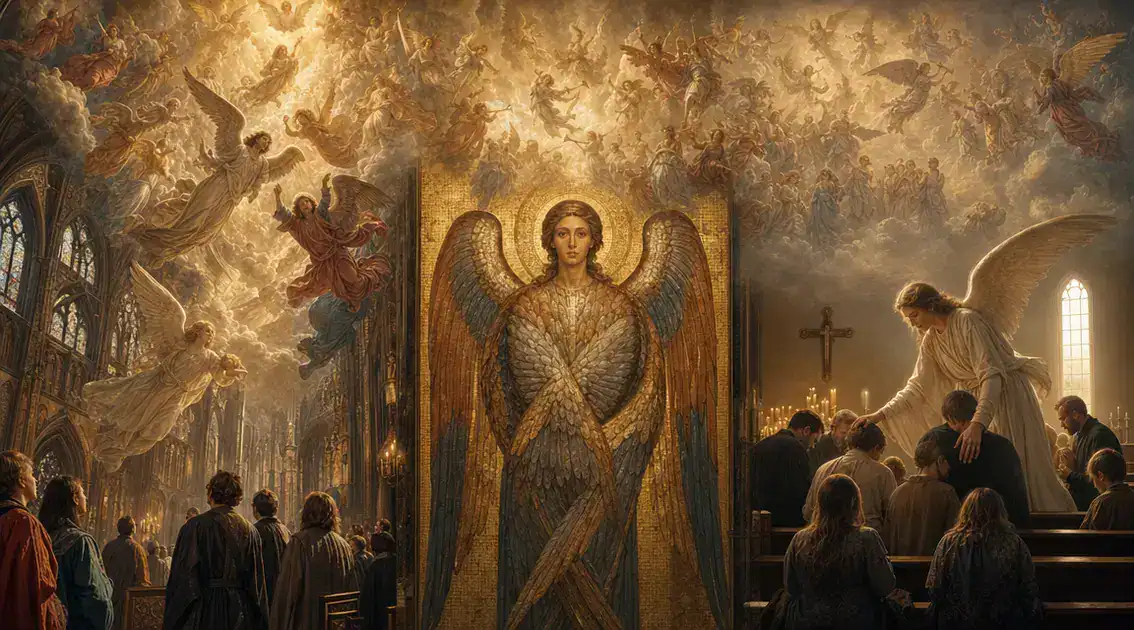
Across faiths, the way people name and count angels changes, and that change tells a story about worship and care. Ancient Jewish texts offer vivid names—cherubim, seraphim, and ophanim—that point to action and closeness to God rather than to a neat list. Rabbinic reflection often treats those names as windows into divine work, not as a fixed roster to be memorized.
In the Christian West, thinkers drew on Pseudo-Dionysius and medieval imagination to speak of a clear ladder of angels, the familiar nine choirs that shaped art, prayer, and teaching. Those patterns helped believers picture heaven’s order. The Eastern churches, by contrast, kept a more liturgical and icon-driven approach, showing angels in hymn and image and valuing their role in worship without insisting on a strict numbering.
Many Protestant communities prefer a simpler path, returning to Scripture and to the plain witness of angels in story and service, while still honoring figures like Michael. No matter the names used or the numbers counted, the shared emphasis remains: angels reveal God’s care and invite us into trust. The variety of traditions therefore becomes a gift, teaching us different ways to meet the same holy mystery with reverence.
Devotional practice: how knowledge of the orders shapes prayer
Knowing the orders of angels can shape how we pray by giving words and images to our awe. When names like guardian angels or archangel Michael come into our prayer, they do not replace God but help focus our heart on God’s care. These names invite us to live with a sense that we are accompanied, not alone, and that prayer is part of a larger harmony of praise.
Practically, this knowledge leads to simple, steady practices. Some people keep a short morning prayer asking their guardian angel for help, others pause with the words “Saint Michael, protect us” in times of fear, and many join hymns that echo the seraphim’s cry of “Holy, holy, holy”. Small habits like lighting a candle, breathing with a verse, or singing a short doxology help the imagination settle into praise and make mercy feel near.
Over time these practices change how we stand before life’s hard moments. Instead of turning inward with worry, we lift our eyes in a brief act of trust and praise, remembering the ordered care that surrounds us. This is not about certainty on every detail, but about letting prayer be shaped by a wider, gentler vision of God’s household and learning to live in that trust each day.
A closing prayer
Quietly breathe and remember that the same God who sets the stars also orders the unseen hosts around us. May this truth settle in your hands and heart like a warm light.
We give thanks for angels who praise and for those who watch and protect. May their faithful service draw your soul into worship and steady you when fear comes. Let the image of ordered care guide your prayer, not as a rule, but as a gentle comfort.
Practice small acts of trust: a short prayer in the morning, a breath of praise in a hard moment, a candle lit in quiet gratitude. In these simple gestures the household of heaven and earth meet, and your life joins a larger song of love.
Go in peace with wonder and quiet courage. May you feel always accompanied, held by a care that does not end.
FAQ – Common questions about angelic orders and sacred tradition
How many orders of angels does the Bible list?
The Bible does not present a single, neat catalogue. It names different groups — for example, the seraphim in Isaiah 6, the cherubim in Ezekiel 1 and Genesis 3, Michael as a chief prince in Daniel 12, and collective titles like “thrones, dominions, rulers, and authorities” in Colossians 1:16 and Ephesians. Revelation also shows multitudes around heaven’s throne. These passages point to layers of ministry rather than a single numbered list.
Where did the idea of nine choirs come from?
The classic scheme of nine choirs comes from Pseudo-Dionysius the Areopagite, whose work De Coelesti Hierarchia arranged angelic orders into three triads. This was adopted by many medieval theologians as a helpful, symbolic map to guide prayer and contemplation. It is a devotional and theological framework shaped by tradition, built on but not limited to the biblical images.
Do all Christian traditions agree on names and numbers of angels?
No — traditions differ. Jewish texts emphasize cherubim, seraphim, and other ancient names; the Eastern churches emphasize liturgy and iconography; Roman Catholic theology often uses Dionysian categories; many Protestant communities focus primarily on the scriptural scenes and avoid fixed enumerations. These differences reflect varied spiritual emphases rather than contradiction about God’s care.
Is it acceptable to pray to or ask angels for help?
Many traditions encourage addressing one’s guardian angel and asking angels to pray for us as fellow servants of God, while making clear that worship belongs to God alone. Scripture warns against angel worship (see Colossians 2:18), yet it also shows angels acting as ministers and protectors (Matthew 18:10; Hebrews 1:14). A warm, humble request for guidance or protection honors their role without replacing prayer to God.
What specific roles do angels play in Scripture?
Scripture shows varied functions: praise and worship (Isaiah 6; Revelation 4), guarding (cherubim at Eden, Psalm imagery), messenger work (Gabriel announcing to Mary and Zechariah in Luke), and spiritual combat or protection (Michael in Daniel and Revelation). These roles teach that angels serve God’s purposes and care for creation in many ways.
How can learning about the orders of angels deepen my prayer life?
Knowledge of angelic orders can enrich imagination and devotion by joining our prayers to the worship we see in Scripture (for example, Revelation’s scenes of praise). Simple practices — a brief morning prayer to your guardian angel, singing a doxology, or pausing with a verse when afraid — help the heart rest in the sense of ordered care. This learning is meant to turn us to praise, humility, and trust rather than to curiosity for its own sake.