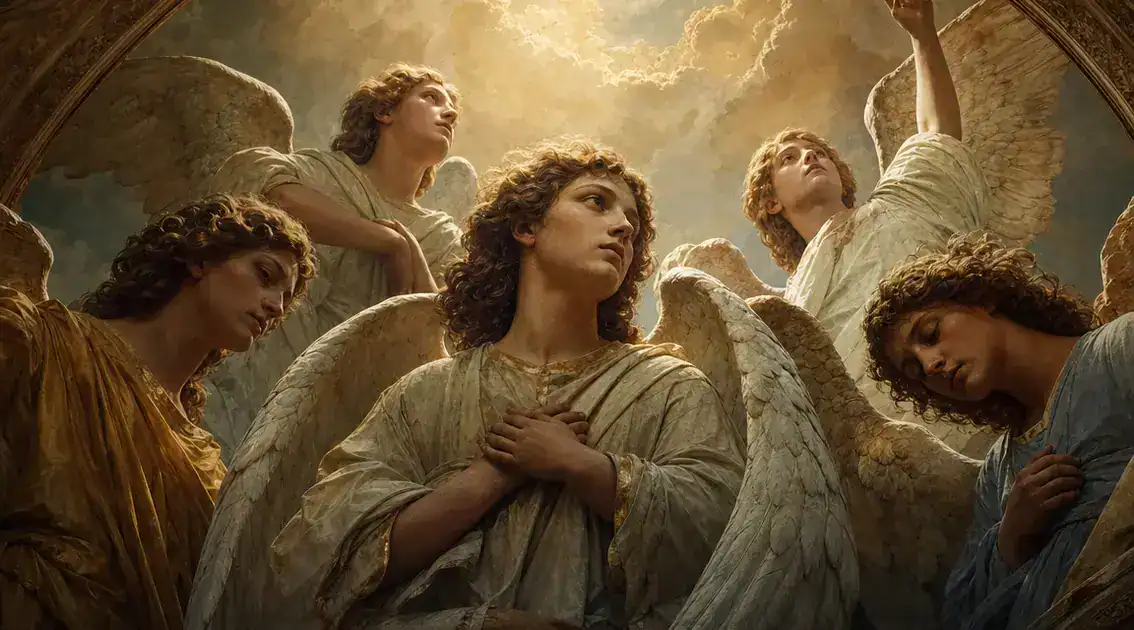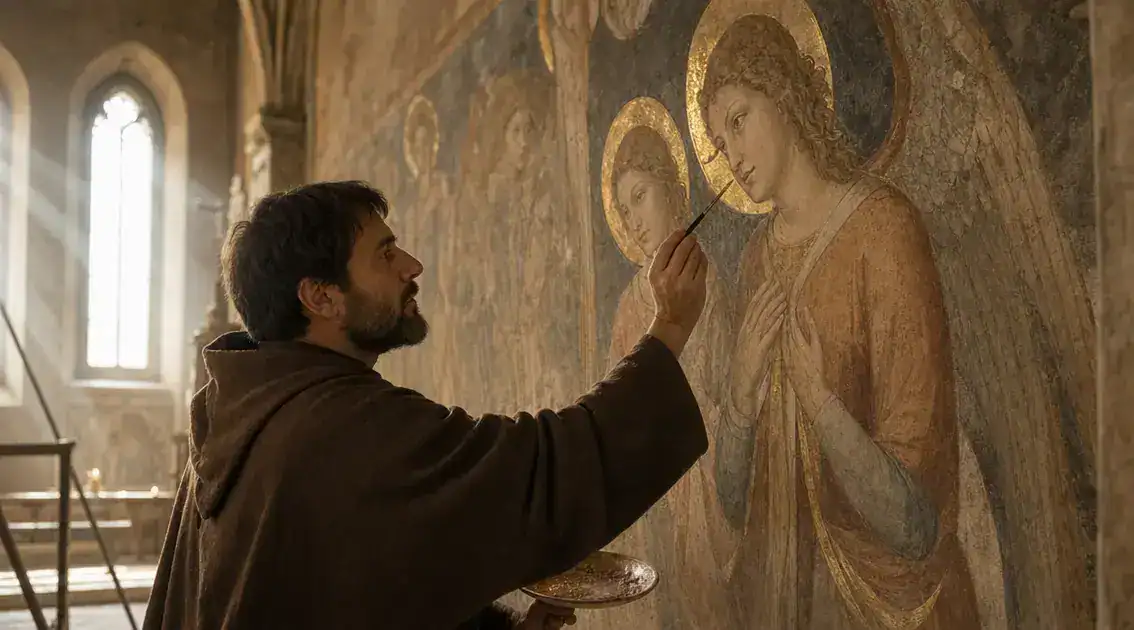

How medieval artists painted angels combined prayerful study of Scripture, liturgical rhythms, and meticulous craft—gold leaf, egg tempera, iconographic motifs, and gestures—so that panel paintings functioned as devotional windows to the divine, teaching theology, prompting worship, and carrying communal memories of saints and miracles.
?how medieval artists painted angels — have you ever wondered how prayer, scripture, and the slow rhythm of the workshop gave shape to a wing or a halo? Come with me into those quiet studios where devotion taught every brushstroke.
Iconography of angels in Scripture: models and motifs
The Bible gives us vivid models of angels that artists turned into lasting images. In passages like Isaiah 6 and Ezekiel 1, we meet beings of light with many wings, faces, and eyes. These strange, bright details became motifs — repeated signs that point beyond themselves to God’s presence and power.
Medieval painters learned to read those motifs not as mere oddities but as symbols with meaning: wings for swift service, multiple faces for God’s reach, and burning light for holiness. Halos and gold leaf grew from the same idea, a visual way to show that what we see is touched by the divine. Artists mixed careful Scripture reading with prayer so each mark could teach and lead the viewer to worship.
Over time those biblical models shaped a language of devotion on panels and in manuscripts. When you look at a painted angel from the Middle Ages, you are seeing a lived translation of Scripture — an image meant to draw your gaze upward and to invite a moment of prayer. In that quiet work of seeing, the motifs do their true work: they point the heart toward God.
Theological meanings: what halos, wings, and gestures signify
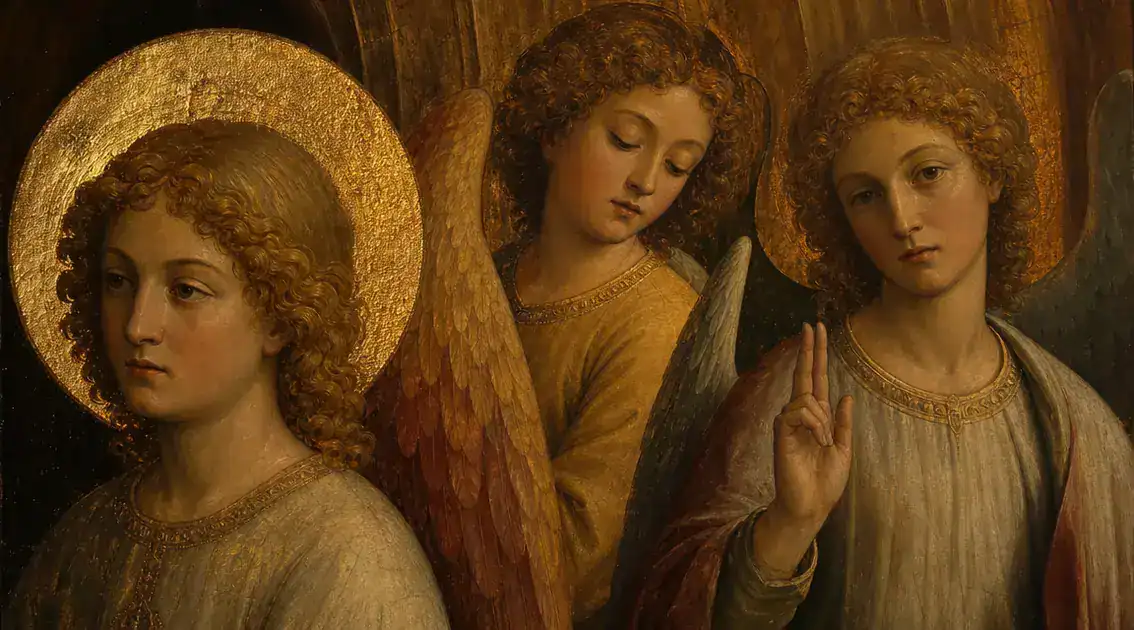
Medieval painters used the halo to show the radiant presence of God around a figure. The idea draws from biblical moments where light marks God’s nearness, such as Isaiah’s vision of the seraphim and Moses’ face after meeting God. Gold leaf and bright pigments made that light visible on a panel so a viewer could sense the sacred before speaking a prayer.
Wings tell a simple, clear story of purpose. In Scripture, angels appear as messengers and servants who move swiftly to do God’s will, and artists painted wings to show both motion and heavenly origin. Long, layered feathers and a gentle tilt of the body give the figure life, suggesting it bends toward the human listener with news, comfort, or protection.
Gestures finish the image without words: a raised hand can bless, an open palm can invite, and a pointing finger can guide the eye to Christ or Scripture. Painters combined halo, wings, and a clear gesture of blessing so the whole panel teaches one thing at once — these beings serve God and call the viewer into worship, trust, and attentive prayer.
Studio practice and prayer: how liturgy shaped pigments and process
In medieval workshops the work of painting often began like a service. Artists observed the daily hours, paused for prayer, and treated the studio as a small chapel where tools sat beside a prayer book. This rhythm made the act of preparing a panel feel like a sacred task, not merely a craft, and it shaped how painters moved, thought, and chose their colors.
Mixing pigments was part art and part devotion. Ground lapis yielded deep blue reserved for holy figures, cinnabar or vermilion spoke of sacrifice, and gold leaf shone like the light of heaven. Artists carefully ground minerals in a mortar, mixed them with egg yolk for tempera, and stretched gesso on wood with slow, steady hands. These steps were done with care and often with a short prayer, for the materials themselves carried meaning tied to the liturgical year and to the saints the paintings honored.
The painting process became a kind of prayer in motion. As a brush laid down a fine line or a halo took shape, many painters softly recited psalms or breathed a private blessing over the panel. The gestures that formed faces and wings echoed liturgical gestures of blessing and offering, turning technique into theology. In this way the workshop taught humility: each stroke served a larger purpose, inviting both maker and viewer into a shared act of reverence and attention to the holy.
Materials and technique: gold leaf, egg tempera, and gilding rituals
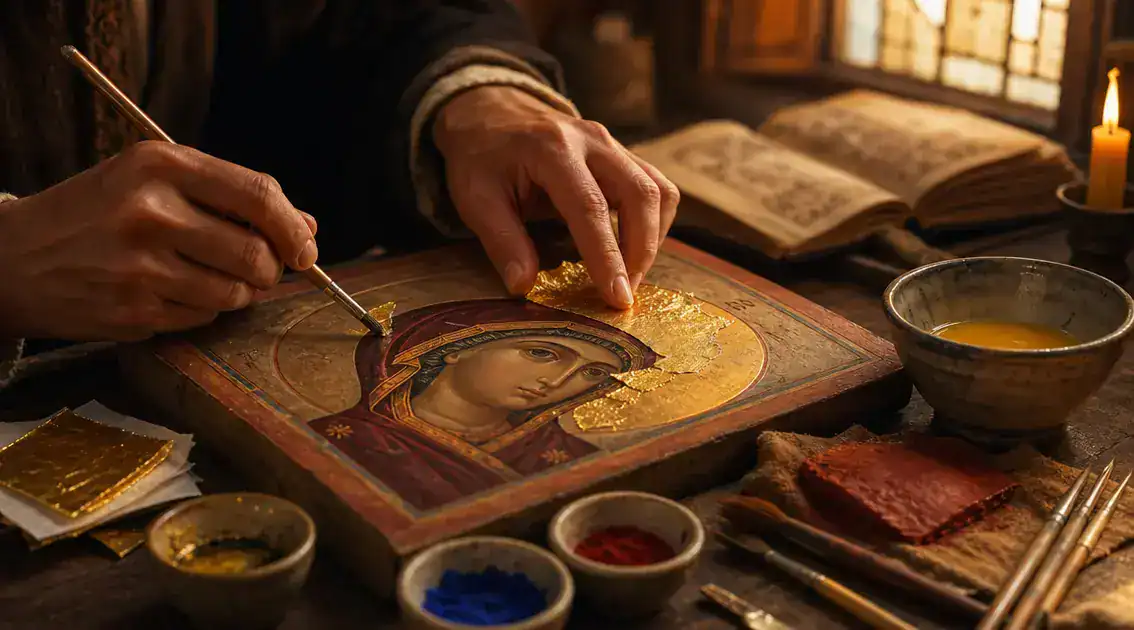
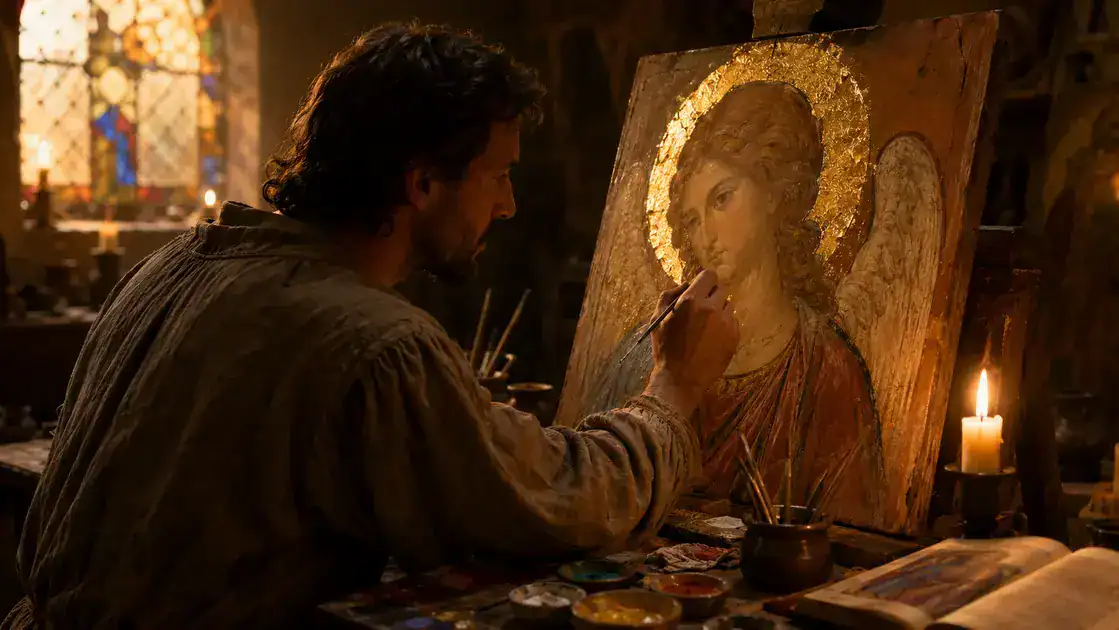
Gold leaf became a quiet voice on the panel, a way to show light rather than describe it. Painters laid down a smooth layer of gesso, applied a red or brown bole, and then lifted the fragile gold in thin sheets to press onto the surface. The thin metal would catch the candle glow and the viewer’s eye, turning a painted halo into a kind of visible blessing.
The color beneath that gold came from egg tempera, a simple but exacting medium. Artists mixed powdered pigment with egg yolk and water, building color in many thin strokes that dried quickly and held bright for centuries. Choices like deep blue for heaven or warm red for love were not random; each pigment carried a devotional sense that guided how the angel or saint would be seen and loved.
Those techniques lived inside a rhythm of prayer and care. Before gilding, a painter might pause with a short prayer, bless the tools, or quietly recite a psalm as the brush moved. This small ritual made the act of gilding more than skill: it joined maker and maker’s faith, so that every shimmer of gold and every steady tempera stroke invited the heart to pause and lift toward the holy.
Influences across Christendom: Byzantine threads and Western innovations
Many medieval painters first learned about angels through the Byzantine icon tradition. Icons used flat planes of gold, calm faces, and front-facing poses to show that the holy one stands beyond time. Those simple, powerful signs made the painted figure a window, not a portrait, so the viewer met heaven in stillness.
As artists in the West saw these icons, they began to blend those signs with new ideas of form and space. Painters worked toward naturalism—soft modeling of faces, gentle movement in drapery, and a sense that the angel bends toward the human listener. Travel, trade, and the Crusades carried motifs across Christendom, and manuscript illuminators, mosaicists, and panel painters borrowed freely, adding narrative gestures and gentle emotion to the older, luminous vocabulary.
That meeting of styles served devotion in two ways: Byzantine features called the soul to awe, while Western detail drew the heart into relationship. Together they taught worshipers to hold both mystery and nearness. When you stand before such a work, the gold asks you to bow and the tender face invites a quiet conversation of prayer—both parts of a single, lived devotion.
Patronage, saints, and miracles: devotional contexts that guided imagery
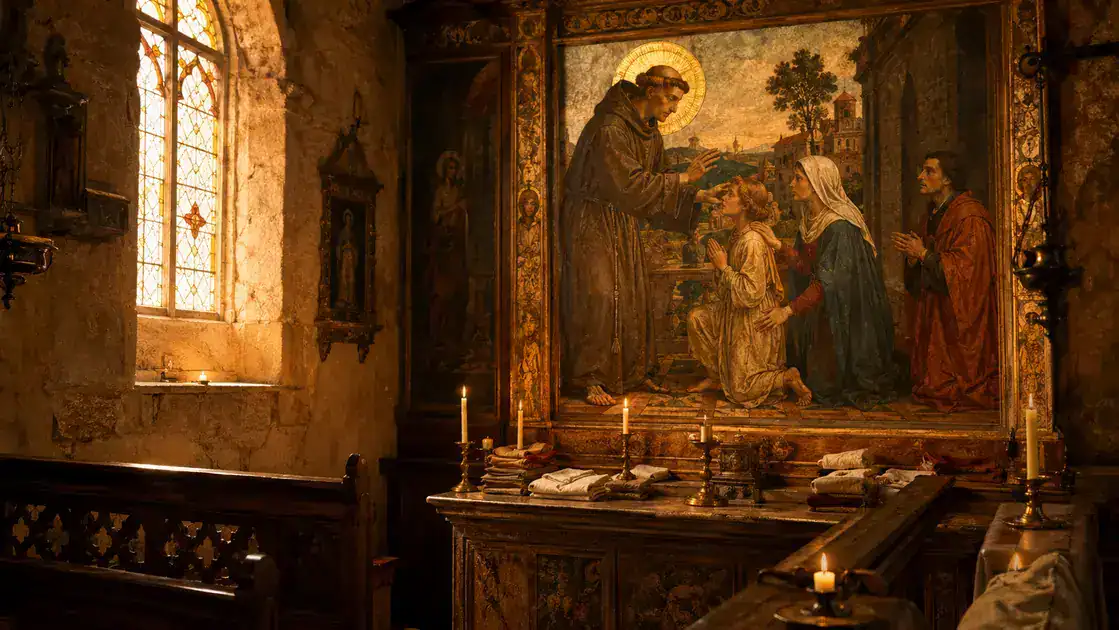
Powerful patrons shaped what painters were asked to show. Lords, guilds, and parish communities paid for altarpieces and chapels and often asked for a specific saint to appear. These choices grew from need and memory: a family healed after prayer might ask for the saint who helped them, or a town that survived a storm might honor the protector who seemed to turn danger away. The panel then became a public record of saintly intercession and communal thanks.
Artists translated those memories into clear, moving scenes. They painted a saint touching a sick child, rescuing a ship, or calming a storm, and they added small, familiar signs so viewers would know the story at once. Votive objects and candles placed before the painting completed the scene in real time, turning the image into a living place of prayer where people expected miracle stories to meet present need.
Because donors sometimes appear kneeling on the edge of the picture, the painted work also linked the giver, the saint, and the whole congregation in one sacred act. The image invited attention and action: to light a candle, to pray a short psalm, to recall a feast day. In this way, art served devotion directly, shaping how people remembered God’s care and how they sought help through the saints in daily life.
Reading sacred images today: seeing the devotional invitation in painted angels
When you stand before a medieval angel, let your eyes rest on the small things: the tilt of the head, the burnished halo, the gentle curve of a wing. Those details are not mere ornament but a quiet language the painter used to speak of God’s nearness. Looking slowly turns the image from a picture into a companion for prayer.
Notice how gesture and light work together: a raised hand that blesses, a lowered gaze that invites, gold that catches the candle glow like a visible breath of praise. These signs form a gentle invitation to worship, asking little of us but asking it truly—a short prayer, a pause, a heart that listens. The painted angel calls us to respond, not to analyze.
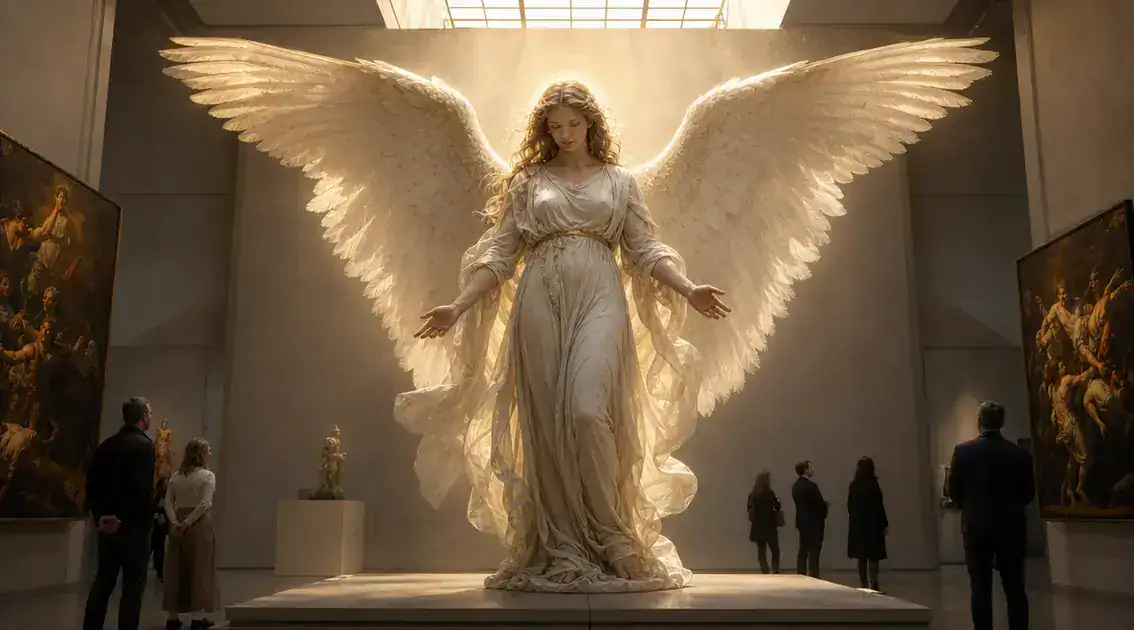
Read the image as you would a short hymn: pause, name what you see, and let the scene shape a small devotion. Whether in a quiet chapel or a museum alcove, slow looking and a humble breath can turn color and gold into a moment of grace. In that simple practice, the painted angel does its work—guiding the gaze and steadying the soul toward God.
A closing blessing
Across centuries, painted angels taught people to look, to pray, and to hope. In each brushstroke and thin leaf of gold, artists meant to point our hearts to God.
When you remember these images, let them shape a small habit: pause, breathe, and offer a short prayer. A single breath can turn a glance into worship and a view into a quiet act of trust.
May the memory of those golden halos and gentle gestures stay with you through ordinary days. Let them remind you that the holy meets us in small, steady ways.
May the light that filled those panels remain with you, guiding your steps, steadying your heart, and opening your eyes to the wonder that surrounds each day.
FAQ – Angels, medieval art, and devotional practice
Did medieval artists intend their painted angels to be devotional aids or literal portraits of angels?
Medieval artists primarily meant their images to be devotional aids. Working within the icon and altar tradition, painters used biblical descriptions (for example, Isaiah 6 and Ezekiel 1) and liturgical memory to make images that help the viewer pray. The goal was not to produce a scientific portrait but to create a window to the sacred, inviting worship and attention.
Why did painters use gold leaf and egg tempera when depicting angels?
Gold leaf served as a visible sign of divine light and presence, catching candle glow much like the Bible’s images of brilliance (see Revelation’s many references to heavenly light). Egg tempera was chosen because it builds luminous, long-lasting color that holds fine detail. In many workshops these materials were also treated with reverence and tied to liturgical meanings, so the medium itself became part of the prayerful language of the work.
Are painted angels faithful to the Bible’s descriptions of angels?
Painted angels are interpretive translations of biblical passages. Artists drew on scenes such as Isaiah’s seraphim, Ezekiel’s cherubim, and Luke’s annunciation by Gabriel, then blended those motifs with theological tradition. The images are faithful in intent—aiming to teach and to lead the viewer to God—while adapting scriptural details into a clear visual language for devotion.
How did prayer and liturgy shape the actual process of painting these sacred images?
Prayer and liturgical rhythm often framed the studio practice: artists paused for prayer, prepared materials with care, and sometimes asked for blessings on the work. Eastern and Western traditions alike treated image-making as a sacred labor, so gestures like blessing tools or quietly reciting psalms were common. This spiritual context made each stroke more than craft; it was an offering shaped by faith.
Can I use a medieval angel painting in my own prayer life today?
Yes. Many believers find that slow, attentive looking turns an image into a companion for prayer. Try a simple practice: stand before the image, notice one small detail (a halo, a gesture), offer a short scripture verse or psalm (for example, Luke 1 for the annunciation or Psalm 91 for protection), and let the image direct your heart toward worship. Treat the picture as a prompt to prayer, not an object of veneration in itself.
Do different angel types—seraphim, cherubim, archangels—carry distinct meanings?
Yes. Scripture and tradition give different roles and images: seraphim (Isaiah 6) are associated with burning love and continual praise; cherubim (Ezekiel) are often linked to God’s presence and guardianship; named archangels like Michael and Gabriel (Daniel, Luke) carry specific missions of protection or message. Medieval iconography used these distinctions to teach particular theological and devotional truths about how God acts in the world.