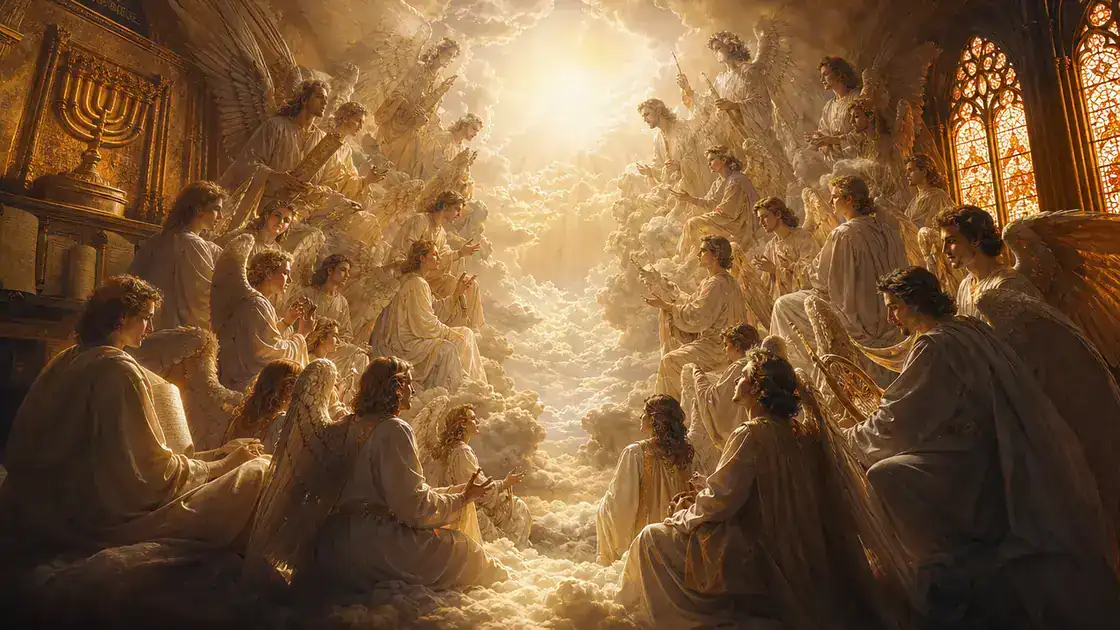

Angelic hierarchy and our spiritual life shows how the ordered ranks of angels (seraphim, cherubim, archangels, and guardian angels) mediate God’s care, shape worship and sacraments, strengthen moral perseverance, and offer personal guidance so believers live prayer, discernment, and daily choices within a loving, ordered heavenly company.
Have you ever paused at dawn and felt a presence near your prayer? angelic hierarchy and our spiritual life opens a quiet conversation about how heavenly orders shape prayer, choices, and consolation.
The biblical roots of the angelic hierarchy: texts and images
Scripture opens a window to the heavens with images that stay with the heart. In Isaiah’s throne vision, the angels who surround God are called seraphim, singing “holy, holy, holy” and drawing the reader toward awe. Those fiery, near-throne figures shape how the people of faith hear the sound of God’s holiness and learn that worship itself is a place where the heavenly and earthly meet.
Not far from that scene is Ezekiel’s vivid account of living creatures that carry the throne and move with mysterious purpose; readers name them cherubim and sense at once a weightier, guardian presence. Later books give other portraits: Daniel speaks of watchers and angelic envoys who shape history, while Revelation gathers many of these images into a liturgy of heaven. Together, these texts present different offices and roles, not as mere decoration, but as ways God orders creation through serving beings.
When we dwell on these biblical images, they change how we pray and live. Seeing angels as ordered around the throne helps us imagine worship, discernment, and protection as parts of one unfolding story. Let these visions guide a gentle practice: read the passages slowly, let the scenes settle, and allow the biblical vision to inform quiet acts of prayer and simple choices in daily life.
Angels and sacraments: how celestial order touches liturgical life
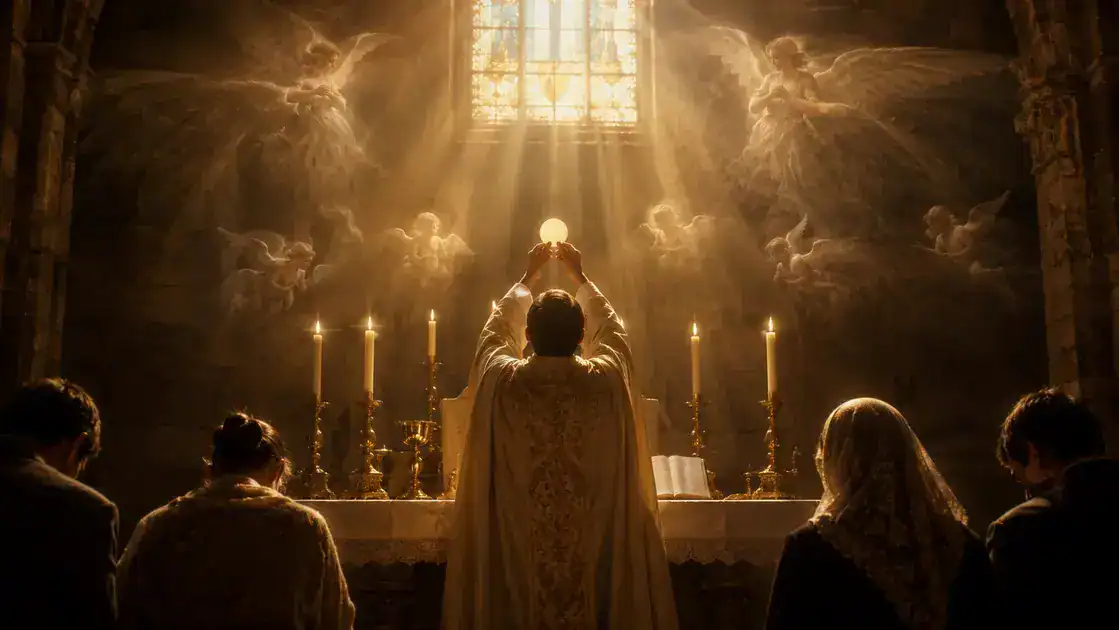
In the liturgy we meet a living bridge between heaven and earth, where the sacred actions point beyond themselves to a greater reality. Biblical visions, like the worship scenes in Revelation, show angels gathered around God’s throne, and the church has long read the Mass as a sharing in that same heavenly praise. This sense makes the sacraments feel less like private rites and more like entry into a wider, holy company.
When we receive the Eucharist or stand at the baptismal font, we join a pattern that Scripture and tradition describe as ordered and attentive. The angels are not distant ornaments but companions who attend the sacred mysteries; their presence helps the faithful see the sacraments as a real meeting with God. Let the idea sink in gently: the sacramental moment is both intimate and cosmic, a small human action caught up in heavenly praise.
Practically, this awareness can change how we prepare and how we live after the liturgy. A brief moment of silence before Communion, a simple prayer asking your guardian angel to accompany you, or a slow, grateful heartbeat after a blessing can deepen the sense of participation. These small habits remind us that liturgy is not only what we do, but who we enter with—angels, saints, and the living God—and they shape a humble, steady devotion that carries into daily life.
Archangels at work: Michael, Gabriel, Raphael in Scripture and devotion
The archangels appear in Scripture as clear, focused servants who bring God’s care into human life. In Luke we meet Gabriel announcing news to Mary, and in Daniel and Revelation we find Michael acting as a strong protector of God’s people. The book of Tobit gives us Raphael as a gentle guide and healer, and these scenes shape how the church prays and trusts in times of fear and hope.
Each archangel has a simple, holy task that people have watched and named for centuries. Michael shows strength and defense, standing between danger and the faithful. Gabriel brings God’s word, opening hearts to vocation, news, and trust. Raphael heals and guides, tending wounds and leading the lost back to safety. These roles are not distant ideas but images that help us see God at work through companions we can name and call on.
Those biblical images move into our prayer life in small, practical ways. A brief prayer asking for Michael’s protection before a hard choice, a quiet greeting to Gabriel when weighing a call, or a simple request for Raphael’s healing in times of sickness can steady the heart. Many find it helpful to keep an icon, a short written prayer, or a moment of silence to invite these archangels into daily life. Such practices are not magic; they are humble acts of trust that connect Scripture, tradition, and the lived experience of faith.
Guardian angels and daily guidance: discernment and prayer practices

Many believers cherish the simple teaching that each person has a guardian angel who walks beside them. Scripture and devotional tradition present this presence not as a distant myth but as a close companion that watches over ordinary moments. That image helps turn the everyday—choosing a word, facing a worry, stepping out the door—into occasions where grace can meet us.
Training our heart to notice such care begins with a few small practices. Start the day with a short moment of silent prayer asking for clear sight and gentle guidance, then move through tasks with attention to small consolations or cautions. A simple nightly examen—recalling what felt life-giving and what weighed you down—sharpens discernment and makes it easier to hear subtle promptings that might guide a choice.
These are not tricks to summon miracles but steady habits that open us to companionship in daily life. A quick blessing before leaving home, a whispered request for protection on a hard road, or taking a slow breath before answering a call can remind the heart that it is not alone. Over time such practices form a humble trust: often help arrives as a quiet nudge, a calming peace, or a fresh clarity rather than a dramatic sign, and living with that expectation changes how we meet each day.
The angels’ role in spiritual warfare and moral perseverance
Scripture and tradition often portray angels as companions in the midst of struggle, not as distant warriors but as helpers who steady the heart. In Daniel and Revelation, we meet figures like Michael who stand firm against forces that would harm God’s people, and in the Gospels angels minister to Jesus after his trials. These images show that spiritual warfare is less a battle for fame and more a quiet support that allows faith to hold on.
Thinking of angels this way changes our approach to temptation and moral effort. They do not fight our battles for us, but they nudge, protect, and strengthen our will when we make a choice for good. Simple signs—an inner calm that arrives at a hard moment, a sudden clarity about the right next step, or the courage to speak truth—can be read as those promptings, and they invite a humble response of prayer and steady obedience.
So moral perseverance becomes a shared practice: we cooperate with grace and with the gentle aid of those heavenly companions. Short prayers asking for clear sight, a moment of silence before a difficult choice, and the habit of returning to God after a fall help form the soul for endurance. Trusting in that company does not remove effort; it makes the effort a faithful work done with company and hope.
Living with angelic companionship: practical habits to sense their presence

Living with angelic companionship often begins with small, repeated acts that train the heart to notice grace. A morning blessing, a brief breath prayer, or a moment of silence before work are simple moves that tune attention away from noise and toward what is holy. Over time, these small acts become a steady rhythm that makes you more aware of quiet promptings and gentle consolations.
Another helpful practice is the nightly examen—slowly naming where you felt peace and where you felt resistance during the day. This guided memory helps you see patterns and invites the gentle help of your guardian angel in moments of doubt or choice. Keeping a small ritual object, like a candle, a cross, or a worn prayer card, can also anchor attention; such objects draw the mind back to prayer and remind you that companionship is both simple and near.
These habits are not about dramatic signs but about steady formation. As you practice, patience and humility grow: you learn to accept subtle nudges, calm clarity, or a sudden courage as part of a shared spiritual life. Walking this way reshapes ordinary days into places of care, where choices, prayers, and small joys are held within a larger, gentle presence.
A gentle prayer of companionship
Lord, make us aware of the quiet company that walks with us each day. We are not alone; your angels surround our small steps and our hidden sorrows.
Let their nearness bring courage when we face fear, clear thought when we are confused, and soft consolation when we grieve. May we learn to notice the small nudges that steady our choices.
Give us simple habits—silent prayer, a brief pause, a thankful breath—that help us live with this presence. Help us turn ordinary moments into chances to meet the holy.
We go now with wonder and peace, carrying this sacred company into the day, ready to respond when love calls. Amen.
FAQ – Common questions about angels and our spiritual life
Do angels really exist according to the Bible?
Yes. Scripture speaks of angels throughout both Testaments: Psalm 91:11 speaks of God commanding his angels to guard us, Matthew 18:10 points to angels who behold the Father’s face, and Hebrews 1:14 calls them “ministering spirits” sent to serve those who will inherit salvation. Church tradition has continued to affirm their real, loving presence.
How can I tell an angelic prompting from imagination or wishful thinking?
Test every prompting by its fruits and by prayer. Genuine promptings tend to bring peace, humility, and clarity, and they do not push you away from Scripture or charity. Pause, pray a short examen or Our Father, and seek the counsel of a trusted spiritual guide. Discernment is patient: repeated calm guidance that aligns with God’s word is a sign worth attending to.
Should I pray to angels or worship them?
We do not worship angels; worship belongs to God alone. Scripture and tradition caution against angel-worship (see Revelation 22:8–9 and warnings in the epistles). It is appropriate, however, to address your guardian angel in prayer as a companion and to ask for their help in guiding you toward God, always directing ultimate prayer and praise to the Father through Christ.
Do angels take part in the sacraments and liturgy?
The Bible portrays heavenly worship (for example, Hebrews 12:22 and the visions in Revelation), and long-standing tradition reads the liturgy as participation in that heavenly praise. Many spiritual writers and liturgical texts imagine angels attending the sacraments, helping lift our prayers and praise. Practically, this view invites reverence and small preparations—silence, attention, and intention—when we approach the sacred rites.
Can angels protect me from physical or spiritual harm?
Scripture shows angels protecting God’s people (Acts 12 recounts Peter’s release by an angel; Psalm 91 speaks of angelic guard). Yet tradition also teaches that angels respect human freedom and God’s providential plan. Ask for their protection in prayer, take prudent steps for safety, and trust that help may come as inner courage, timely clarity, or concrete aid.
How can I grow in awareness of angelic companionship in daily life?
Adopt simple, steady practices: a brief morning blessing asking for your guardian angel’s guidance, a nightly examen to notice consolations and corrections, short prayers at thresholds (before work or travel), regular reading of angelic passages in Scripture, and participation in the liturgy. These humble habits open the heart to companionship without seeking dramatic signs, making ordinary days places of quiet grace.