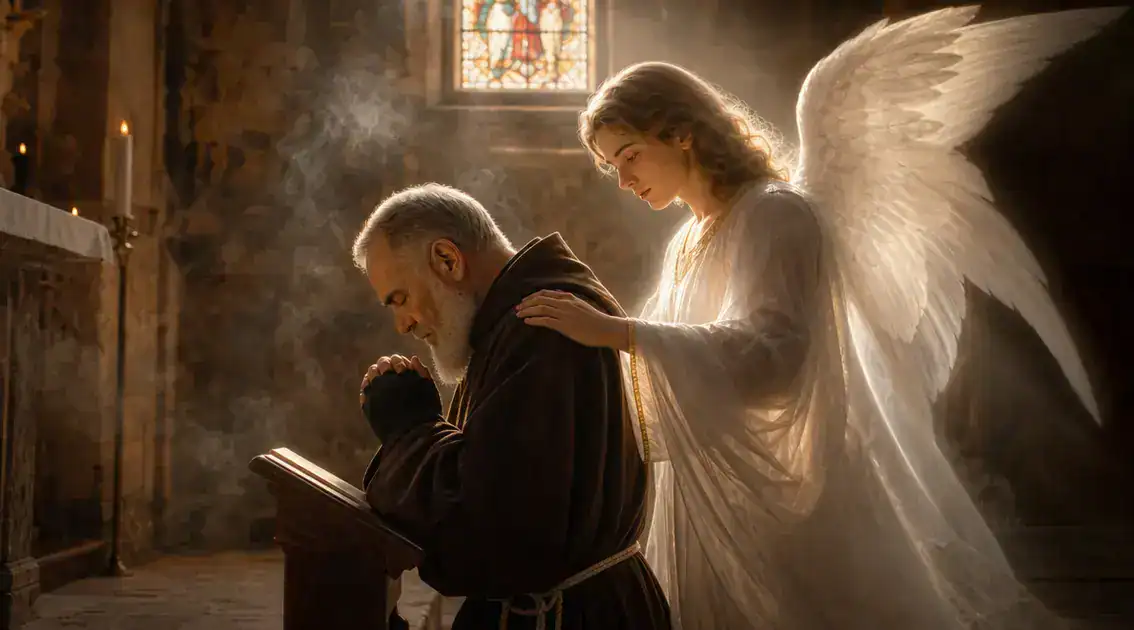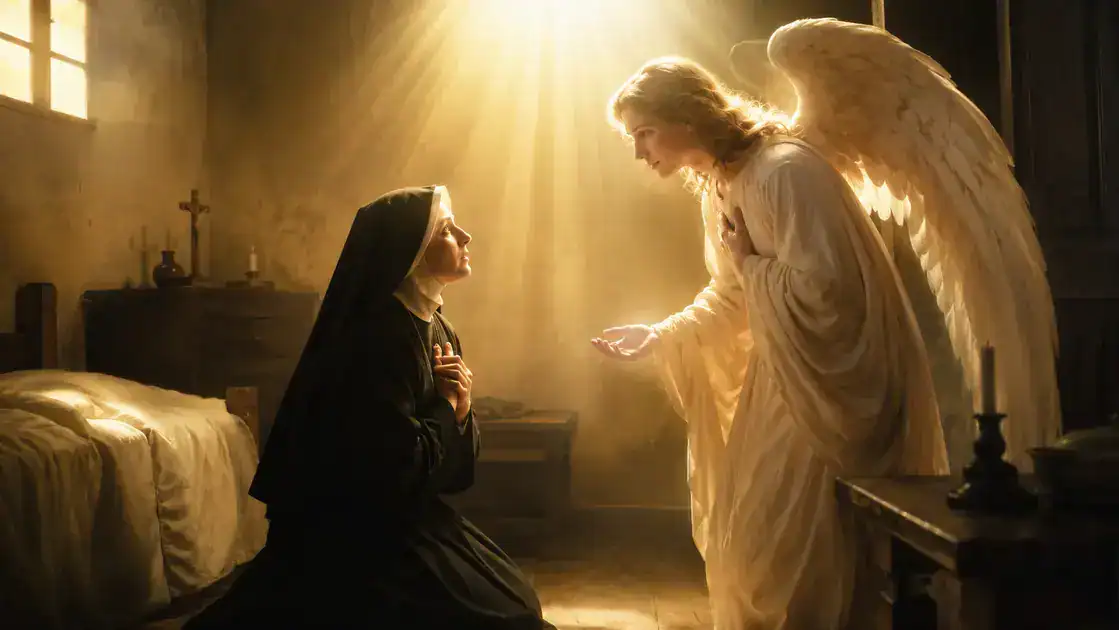

Saint Bernadette and the angels of Lourdes testify to God’s gentle presence through humble visions, a spring of healing, and signs that invite prayer, pilgrimage, and pastoral discernment, drawing the faithful into a practice of silence, humble service, and trust rooted in Scripture and approved Church investigation.
saint bernadette angels lourdes; have you ever wondered why a simple grotto became a place of light and encounter? Walk with me through Bernadette’s visions, the angelic imagery, and the quiet lessons that still speak to pilgrims today.
The historical context: Bernadette, her life, and 1858 Lourdes
Born in 1844 to a poor miller’s family, Bernadette Soubirous lived a simple, work‑filled childhood in the small town of Lourdes. She was slight, often unwell, and known for a quiet faith that trusted the small rituals of home and village life. These ordinary details matter because they set the scene for something unexpected to break into everyday life.
On February 11, 1858, at the rocky Massabielle grotto, Bernadette described seeing a luminous figure who spoke with calm kindness. She returned many times that spring and summer, reporting a total of eighteen encounters that drew neighbors, curious townspeople, and church leaders to the site. What began as a single girl’s testimony soon became a public event, met with both devotion and careful inquiry by the local clergy and civil authorities.
Seen through a spiritual lens, this history points to a familiar biblical pattern: God meeting the humble and speaking in plain ways. The lowly are chosen—a theme we find echoed in Luke’s praise of God’s favor for the poor—reminding us that sanctity can appear in unadorned places. The social facts—poverty, skepticism, and the surge of pilgrims—help us understand how a small grotto grew into a sanctuary where many continue to seek healing, prayer, and a closer sense of God’s nearness.
The grotto as sacred space: biblical echoes and theological meaning
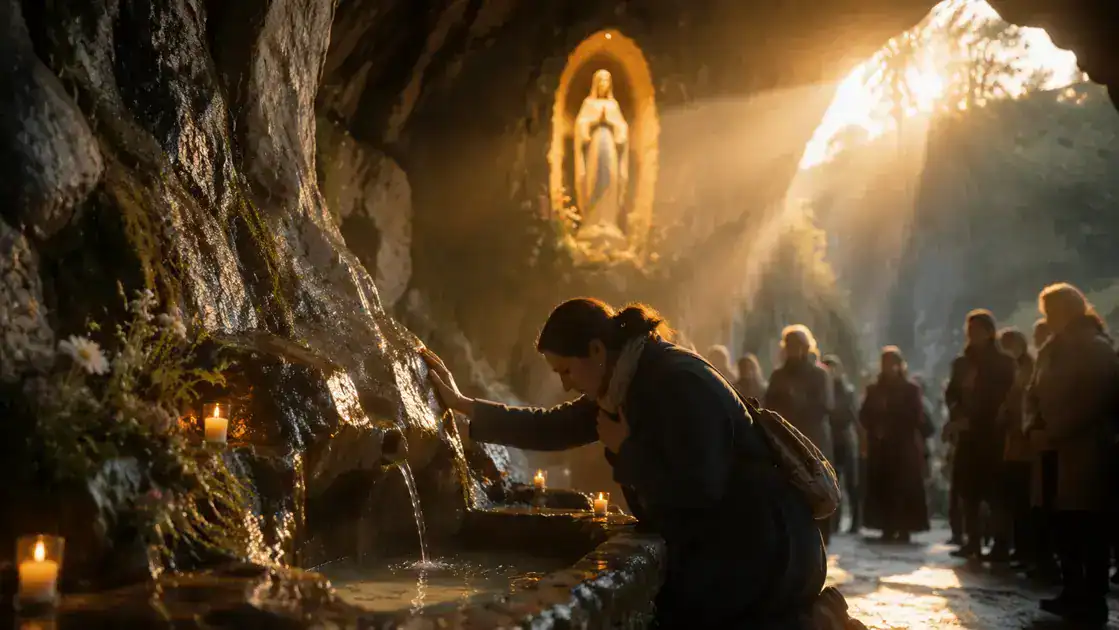
The grotto is a small, hollowed place in the stone where the world feels closer and quieter. In the Bible, caves and rock shelters are often where people meet God — Moses at the bush, Elijah in the cave — moments of hushed listening rather than loud proclamation. In that tradition the grotto becomes a liminal place, a plain, tangible site where the ordinary might give way to the sacred, and God often speaks from the margins.
At Lourdes the spring that wells from the rock brings another layer of meaning. Water in Scripture names life, cleansing, and hope, and the trickle from the grotto’s mouth recalls those older images of refreshment and renewal. Pilgrims who touch the stone or cup the water find themselves linked to baptismal themes and to the idea of grace poured into a specific place; the rock and the spring together witness to the living water that steadies small faith.
Such a space shapes how people pray. The grotto invites simple gestures — kneeling, a hand laid on cool stone, a whispered petition — actions that slowly form a community of memory and longing. It is not about spectacle but about readiness: a posture of humility and attention that lets ordinary senses become channels for prayer. In that way the grotto continues to teach the faithful how to listen, how to wait, and how to expect that God can meet us in modest, steady ways.
Accounts of the visions: angels, the lady, and the language of signs
Bernadette spoke of a gentle presence who did not thunder or command but who used small, clear actions to communicate. She described the lady’s calm smile, the folding of hands, and the quiet moment when Bernadette was guided to the spring. Alongside this figure, witnesses later spoke of angelic light and a feeling of peace that did not startle but invited attention. Those simple details mattered because they made the experience feel intimate and believable to ordinary people.
The encounters at Lourdes demonstrate a language of signs rather than a stream of words. A spring drawn from the rock, an offered prayer, or a repeated gesture can become a message when held in faith. In Scripture, signs often point beyond themselves to God’s care and to a call to change. The grotto’s water, the lady’s gestures, and the hush that fell around Bernadette worked together like symbols that encouraged prayer, repentance, and trust.
Reading these signs asks for a patient, listening heart more than a clever mind. When pilgrims return to the grotto they enter a place where actions speak louder than explanations, and where silence helps the soul name its need. Signs point beyond themselves to grace, inviting small acts of devotion that slowly shape a life. In that steady, humble way, the visions continue to teach how the sacred can appear through the simplest, most human signs.
Light and silence: how luminous imagery shapes devotion and prayer
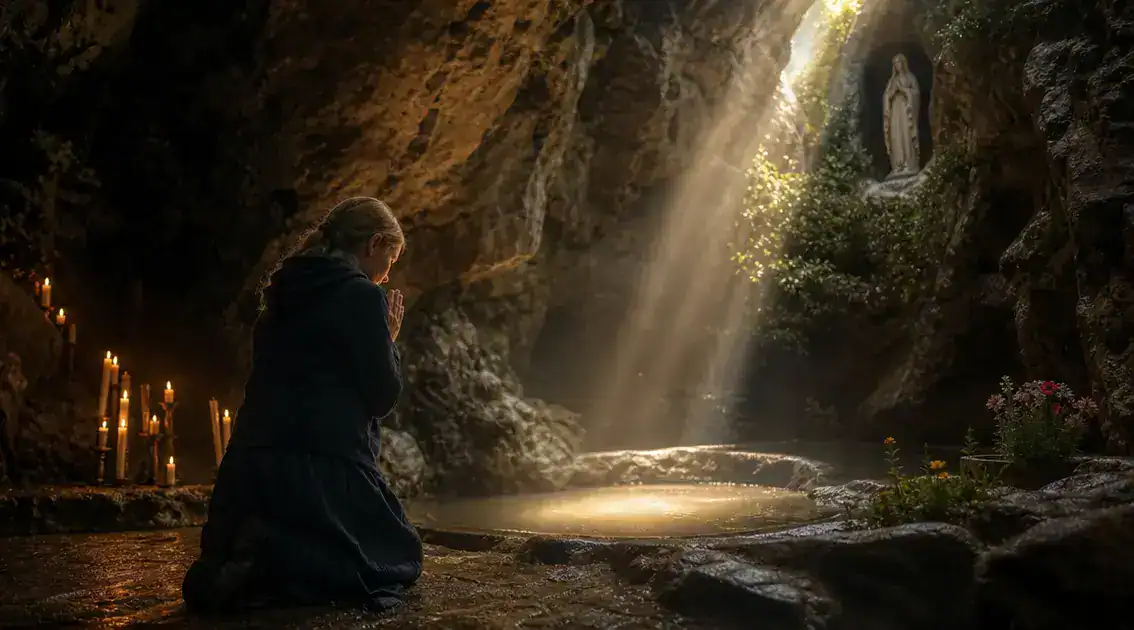
Soft, focused light can change the way a place feels. In the grotto, a single beam or the glow of many candles makes ordinary stone look alive, and that change asks the heart to pay attention. In Scripture light often signals God’s presence and truth, so when pilgrims see light here they are reminded of God drawing near in gentle ways.
Silence works with that light. The hush around a candlelit niche or the quiet that follows a prayer lets the light speak without words. People who come to pray learn to wait in that mix of sight and stillness, letting a small brightness steady their breathing and open them to memory, sorrow, or hope. The practice is simple: watch the light, keep still, and let the soul name what it needs.
Over time these moments shape devotion. The repeated act of kneeling before a glow, whispering a short prayer, and holding silence trains the spirit to expect encounter in small signs. The result is not theatrical but domestic and honest—a faith formed by light and silence that teaches patience, attention, and a trust that God often meets us in the quietest, most luminous ways.
The church’s investigation: discernment, miracles, and pastoral response
When reports of Bernadette’s encounters reached church leaders, they did not rush to a verdict. Bishops and local clergy listened to many testimonies, asked careful questions, and observed the girl herself. This patient approach was a form of discernment: the church weighed the character of the witness, the fruits of the events, and whether the story led people closer to prayer and charity.
At the same time, medical doctors and civil officials examined claims of healing and gathered statements from witnesses. These inquiries looked for honest evidence while avoiding quick assumptions. The investigation treated alleged healings as signs to be tested, not miraculous proof to be worshiped, because the church seeks truth that builds both faith and prudence.
Out of this careful work came a pastoral response that aimed to support the faithful and guide seekers. The shrine at the grotto grew under the watch of pastors who wanted to welcome pilgrims with care, encourage prayer, and guard against exploitation or sensationalism. Their ministry showed that the community of faith holds both wonder and reason together, offering hospitality to those who come in need while continuing a balanced, watchful discernment.
Popular piety and pilgrimage: how Lourdes shaped modern faith practices
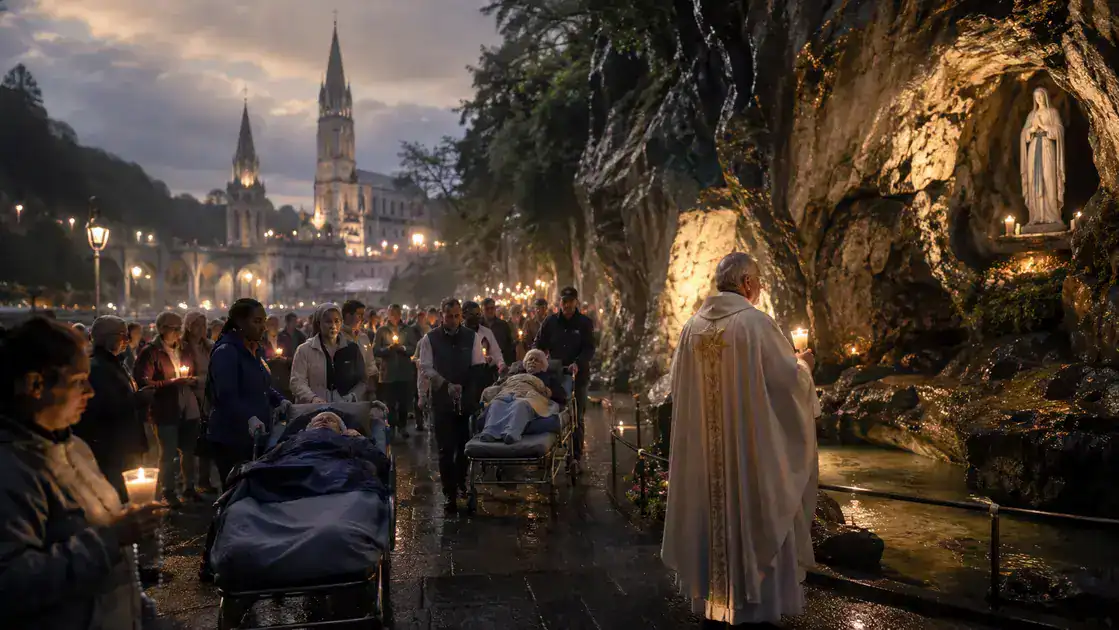
What began as a few curious visitors soon became a steady stream of pilgrims drawn to Lourdes by hope and shared need. People came with rosaries, candles, and small offerings, moving together toward the grotto as if each step were a prayer. Over time the site shaped a style of devotion that was plain and familiar: processions, communal recitation of the Rosary, and the simple act of touching the stone or drinking the spring water.
Those practices turned faith into something bodily and communal. The sick arrived on stretchers, volunteers offered water and blankets, and strangers learned to carry one another in practical ways. This is pilgrimage as embodied prayer: prayer not only spoken but lived through touch, care, and presence. Small sacramentals—candles, medals, and the water itself—became signs people used to hold hope when words felt thin.
Because of Lourdes, modern Catholic piety broadened to include accessible, popular forms of devotion that cross class and culture. Pilgrimage taught pastors how to care for the ill, how to organize hospitality, and how prayer communities can form around a shared sacred place. Today those lessons live on in parish processions, prayer groups, and the quiet habit of turning to sacramentals—reminders that holiness often moves through simple acts of compassion and shared belief.
Spiritual lessons: what Bernadette’s encounters teach about presence and humility
Bernadette’s life shows that presence often looks like small, steady attention. She moved quietly, listened with patience, and trusted simple commands even when they made little sense. Those small acts—kneeling, touching the stone, drawing water—became ways to practice being available to God and to others.
That pattern matches many biblical teachings about greatness and service. Jesus lifts up the humble and calls the lowly to faith; the Scriptures invite us to let God work through meekness rather than show. Bernadette’s example reminds us that holiness is not always loud or public, but often gentle and hidden.
In everyday life, this lesson asks for small, repeatable practices: a quiet moment of attention, a brief kindness, a readiness to listen. These habits shape the heart more than dramatic acts do. The grotto teaches a simple discipline—presence and humility—that anyone can begin today by offering small, faithful actions in ordinary places.
A prayer from the grotto
May the quiet light that shone at Lourdes find a place in your heart. Saint Bernadette’s gentle faith shows us how God meets the humble and the small. May we learn to wait, to listen, and to trust the simple signs of grace.
Carry that light into daily life with small acts: a kind word, a patient ear, a helping hand. Touching the stone at the grotto was an act of trust; our ordinary gestures become sacred when offered with love and attention.
May healing come where there is need and peace rest on restless minds. May hope rise like a spring from the rock, steady and true, giving strength for each new day.
Go in peace, strengthened by presence and humility. Keep watch for gentle signs that point toward God, and let your life be a quiet answer to that call.
FAQ – Questions about Bernadette, Lourdes, and the sacred signs
Are Bernadette’s visions at Lourdes accepted by the Catholic Church?
The local bishop conducted careful inquiries and, in 1862, declared the events at Lourdes worthy of belief, permitting public devotion. The Church treats such private revelations with discernment: approval means they may be embraced devotionally, but they do not add to the Church’s public revelation found in Scripture and Tradition.
How does the Church determine whether a healing at Lourdes is a true miracle?
Medical experts and ecclesiastical commissions examine alleged cures closely. They look for rapid, complete, lasting healings that medical science cannot explain. Only after thorough review by doctors and Church authorities is a cure declared miraculous and recommended for veneration.
Do the Lourdes apparitions contradict Scripture or Christian teaching?
No. Approved private revelations must be consistent with Scripture and doctrine. The themes at Lourdes – humility, prayer, water as a sign of life – echo biblical images (for example, John’s image of living water and Luke’s esteem for the lowly) and point believers back to the Gospel rather than away from it.
What role do angels play in the Lourdes story and in Scripture?
Angels in the Lourdes accounts appear as signs of God’s nearness and gentle service. Scripture calls angels ‘ministering spirits’ sent to help those who will inherit salvation (Hebrews 1:14) and speaks of God assigning care to them (Psalm 91:11). Tradition understands angels as servants of God who accompany and protect, especially at moments of grace.
How should I prepare spiritually before visiting Lourdes or a similar shrine?
Arrive with quiet prayer and a humble heart, seeking the sacraments if possible – especially Reconciliation and the Eucharist. Bring intentions, but also openness to simple practices: kneeling, silence, and attentive listening. Follow pastoral guidance at the shrine to honor both personal devotion and the needs of others.
Am I required to believe private revelations like those at Lourdes?
No. Catholics are not required to believe private revelations. The Church allows devotion to approved apparitions as an aid to faith, while teaching that public revelation in Scripture and Tradition is binding for all. Individuals may accept devotional fruits with prudence and obedience to Church guidance.