

satan tempts jesus in the desert narrates Jesus’ forty day fast and threefold testing, offering bread, spectacle, and earthly power, where he resists by citing Scripture, modeling trust, humility, and faithful worship that shape vocation and guide discernment and resistance to temptation today.
Have you ever felt the hush of a wilderness moment and wondered what it teaches us? satan tempts jesus in the desert invites us to listen: the scene holds Scripture, struggle, and a quiet mercy worth attending to.
The gospel accounts and how they shape the narrative
The four gospels shape the temptation story in gentle but telling ways. Matthew and Luke give the fuller sequence of the three temptations, each placed to highlight different shades of meaning. Mark mentions the experience more briefly as part of Jesus’ fasting and the start of his mission, and John does not recount the scene but unfolds Jesus’ identity in signs that follow. Taken together, the accounts invite a richer reading of the desert as a place of formation rather than a single report.
Those differences steer how we hear the message. Matthew frames the scene toward the kingly claims of power and the right use of Scripture; Luke attends to mercy, the poor, and prophetic purpose; Mark compresses the event to underline urgency in Jesus’ ministry. Yet across them all, one steady truth emerges: Jesus uses Scripture as spiritual resistance, answering temptation not with spectacle but with rooted trust and faithful words.
For a devotional reader, these gospel perspectives are not contradictions but complements that deepen our practice. The desert calls us to discernment, to return to scripture when choice narrows, and to remember that testing can shape vocation rather than simply unsettle it. Sit with each gospel voice in prayer, and let their combined witness teach you how to meet temptation with calm attention, community, and faithful obedience.
Historical and cultural context of desert fasting and testing
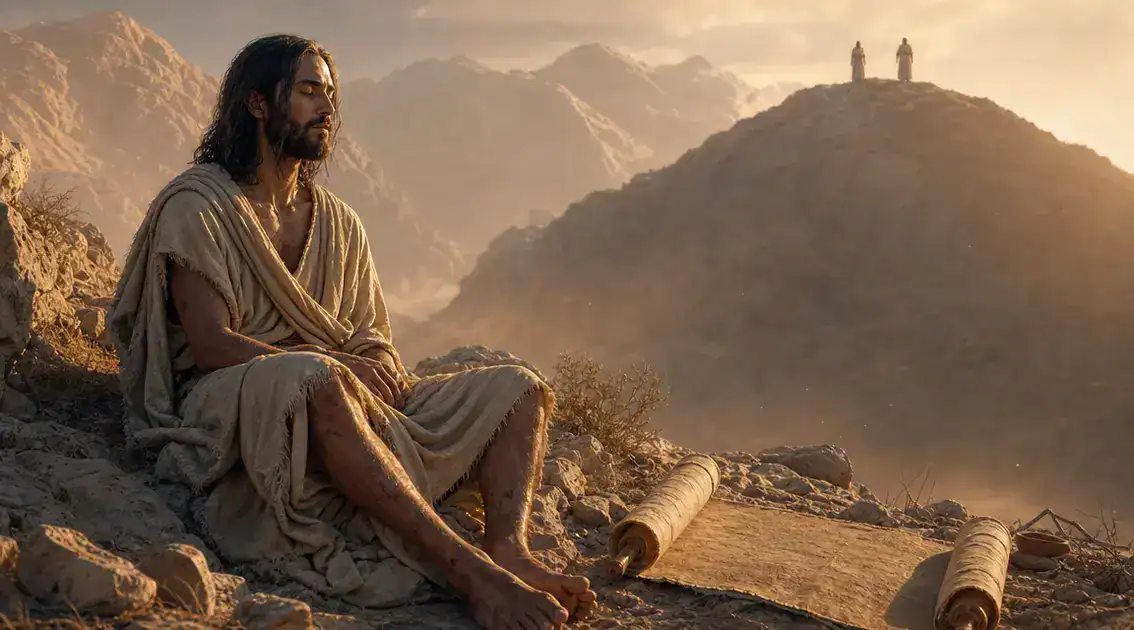
The desert in ancient Israel was more than empty land; it was a place where key figures met God and were tested. Prophets like Moses and Elijah spent long seasons on dry heights and in caves, and their stories taught later generations to expect encounter and trial in the wilderness. In that cultural memory, the wilderness becomes a stage for shaping faith, not merely a backdrop for hardship.
Fasting was a familiar discipline in the Second Temple period and in surrounding cultures, practiced as a sign of repentance, mourning, or deep prayer. People fasted to humble themselves, to show dependence on God, and to seek clarity in moments of crisis. This common practice helps explain why Jesus’ forty days of fasting would have rung with meaning: it fit into a living tradition of seeking God through bodily discipline and silent waiting.
Seen this way, Jesus’ time in the desert links him to Israel’s story and to the living practices of his day. His fast and testing point to a larger truth: the wilderness as place of formation, where conviction is tested and vocation takes shape. For readers today, this invites a gentle reflection on how trial and fasting can be tools for growth, drawing us toward trust, humility, and deeper reliance on God rather than on quick answers.
Close reading of the three temptations and their theological meanings
The first temptation asks Jesus to turn stones into bread after forty days of fasting. He faces a real, aching hunger and a simple fix is offered. Yet he refuses and leans on Scripture, showing that trust in God must shape how we meet our needs. This moment teaches that spiritual formation holds body and soul in balance, and that quick solutions can pull us away from patient dependence on God.
The second test sets Jesus on the temple’s highest point and dares him to throw himself down so God will prove his care. This is a temptation toward spectacle and proof, a call to make faith a performance. Jesus refuses again and refuses to make God a tool for self-glory. Here we learn the value of humility and the danger of seeking signs instead of steady trust.
The final temptation offers kingdoms in exchange for worship. It asks Jesus to trade obedience for power and to bow to a shortcut that avoids the cross. He answers by worshiping the Father alone and by choosing faithful service over crown and throne. Taken together, these three scenes show a clear pattern: rely on God rather than on instant relief, honor God rather than seek spectacle, and serve God rather than grasp worldly power. They guide us to meet trial with Scripture, steady faith, and a heart turned toward faithful worship.
Jesus’ use of Scripture as spiritual resistance

When Jesus is tested, he answers each challenge with the voice of Scripture. Rather than debate or display power, he repeats what God has spoken and lets that steady truth shape his choice. This is not a clever argument but a quiet reliance on the living word, a practice that shows how Scripture functions as spiritual resistance in moments of trial.
Scripture meets temptation by correcting the false story the tempter tells and by offering a truer story to live by. Jesus does not wage war with words that shock; he stands on words that ground. In that stance we see a pattern: prayerful listening to holy text, simple memory of God’s promises, and a calm refusal to swap faith for shortcuts.
For those who follow him, this invites a steady practice rather than a single tactic. Memorize short passages, read them slowly in prayer, and let trusted community help the words take root. In everyday life, using Scripture as a first response trains the heart to turn toward God, so that when temptation comes the soul already knows what to trust and how to answer with faithful love.
Satan’s strategies and what discernment looks like today
The tempter in the Gospels works by gentle offers that sound wise. He appeals to real need with the lure of comfort, to pride with public proof, and to ambition with promises of quick power. These three moves—an offer to meet our hunger, an offer to make faith a show, and an offer to trade service for control—are simple on the surface and dangerous in result. Remembering these patterns helps us name the shape of the lure when it comes.
Today those same strategies arrive in new clothes. The appeal to need may come as a quick fix—a promise that a purchase, a shortcut, or a headline will heal an ache. The call to spectacle shows up as pressure to prove ourselves online or to seek signs that our faith is true. The offer of power can look like compromising our values to gain status or control. Each temptation feels practical at first. Each one asks us to place something else before God.
Discernment is a slow, steady practice that rewires how we respond. Start by naming the offer and testing it against Scripture and prayer. Keep short passages in your memory and let them rise when a decision presses; Scripture as guide helps reveal the false story behind a lure. Walk your choices with a friend or a trusted community, rest in silence, and make small habits that resist haste. These simple practices teach the heart to pause, to ask “what story am I believing?” and to choose faithful love over quick gain.
Devotional practices and spiritual lessons drawn from the desert

The desert gifts a simple lesson: silence and small hunger shape the soul. In the wilderness, fasting and solitude are not punishment but classrooms where the heart learns to listen. The practice of quiet fasting—whether for a day, a meal, or longer—helps unclench the appetite for quick fixes and opens space for God to speak.
In that emptied space, Scripture and prayer become steady companions. Slow reading, memorized verses, and short breath prayers help the mind return when distractions come. These habits are not tricks; they train attention so that, in the moment of choice, we already know what to trust.
Finally, the desert life is meant to shape how we live among others. Retreats, Sabbath rhythms, shared confession, and simple worship keep solitude from becoming isolation. Put another way: combine solitary practices with communal supports and small, steady disciplines—daily pauses, brief prayers, and weekly rest—to carry the desert’s formation into ordinary days.
A prayer from the desert
Lord, meet us in our quiet places and teach us to listen. When hunger or hurry presses, remind us of the calm trust that held Jesus through the forty days. Let Scripture be our steady companion and your gentle voice our true guide.
May the memory of the desert shape our small choices each day. In moments of need, help us pause before a quick fix. In moments of pride, steady us toward humble service. Let us learn to choose faithful love over ease, and obedience over applause.
Give us simple practices that root the heart: a short prayer morning and night, a line of Scripture to carry, and a friend to walk with us. Let solitude form us, and community keep us gentle, so the lessons of the wilderness live in our ordinary tasks.
Send us forth in peace and wonder, holding the desert’s quiet like a lamp along the way. May we meet temptation with hope, answer with prayer, and walk each day closer to your love.
FAQ – Questions about the desert temptation and spiritual practice
Why did Jesus go into the desert to be tempted?
The Gospels say the Spirit led Jesus into the desert (Matthew 4:1; Luke 4:1–2) as a time of fasting and testing that prepared him for ministry. The wilderness echoes Israel’s history (Moses, Elijah) and shows that trial can shape vocation and trust in God.
What are the three temptations and what do they teach?
The three temptations—turning stones to bread, throwing himself from the temple, and trading worship for kingdoms—point to hunger, spectacle, and power. Jesus answers with Scripture (Deuteronomy passages), teaching reliance on God, humility instead of show, and faithful service over worldly gain.
How did Jesus use Scripture as spiritual resistance, and can I do the same?
Jesus replied to each temptation by citing God’s Word (e.g., Deut. 8:3; 6:16; 6:13), showing Scripture both corrects false claims and grounds faithful choice. Practically, memorize short verses, pray them when tempted, and let Scripture shape your first response to pressure.
Is fasting necessary to resist temptation?
Fasting is not a required test for everyone but has long been a spiritual practice for clarity and humility (Jesus’ forty days, and prophetic precedents). When guided by prayer and moderation, fasting can remove distractions and make the heart more attentive to God.
How can I discern modern forms of Satan’s strategies today?
Look for familiar patterns: promises that solve needs instantly, pressure to prove faith in public, or offers to gain influence at the cost of integrity. Discernment grows by prayer, testing offers against Scripture, and seeking counsel from a trusted community or spiritual mentor.
How do I bring desert practices into ordinary life without retreating from others?
Combine brief practices—short fasts, daily quiet time, memorized Scripture, and simple breath prayers—with communal rhythms like Sabbath, confession, or small groups. Solitude forms the heart; community keeps that formation humble and rooted in love.