
The cherubim in Solomon’s temple were gilded, winged figures placed above the Ark to signify God’s throne, to guard the Holy of Holies, and to mediate divine presence, inviting reverent worship, awe, and disciplined access to God in Israel’s cultic life.
Have you ever imagined the hush of the Holy Place when golden figures caught the priestly torchlight? The cherubim in solomon’s temple hold that hush — living artworks that point beyond themselves to God’s nearness, inviting quiet attention and thoughtful wonder.
Biblical descriptions of the cherubim in Solomon’s temple
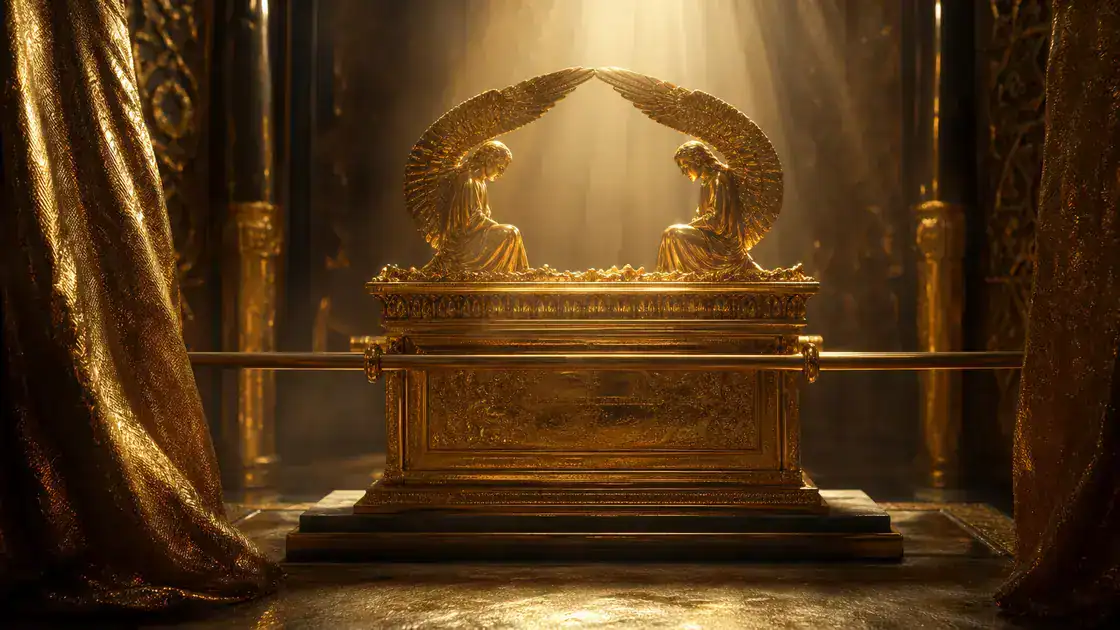
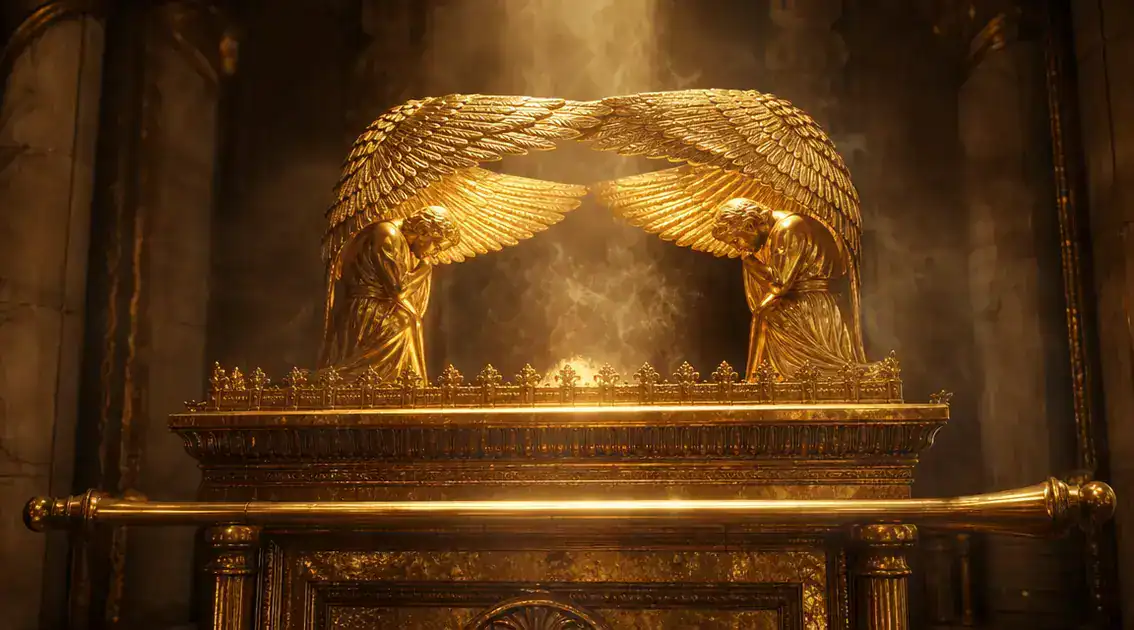
Scripture gives us a clear and simple picture of the cherubim set within Solomon’s temple. In the inner sanctuary, two great figures stood with wings outstretched so that their tips nearly touched above the ark. The description is matter-of-fact but it invites a hush: these figures were not mere ornaments, but signs placed at the heart of Israel’s worship.
The text asks us to see them as pointers toward God’s presence. Their posture—faces turned, wings spread—frames the place where heaven and earth meet. That framing comforts and restrains at once: it speaks of nearness and of the holiness that holds that nearness.
Other biblical visions, like those in the prophets, deepen the image and give it motion, but the temple scene keeps the image quiet and centered. The cherubim in Solomon’s temple invite the worshiper to stand before mystery with reverence, to let the carved wood and gilded light draw attention to the One they silently honor.
Symbolism of the cherubim: throne, presence, and mystery
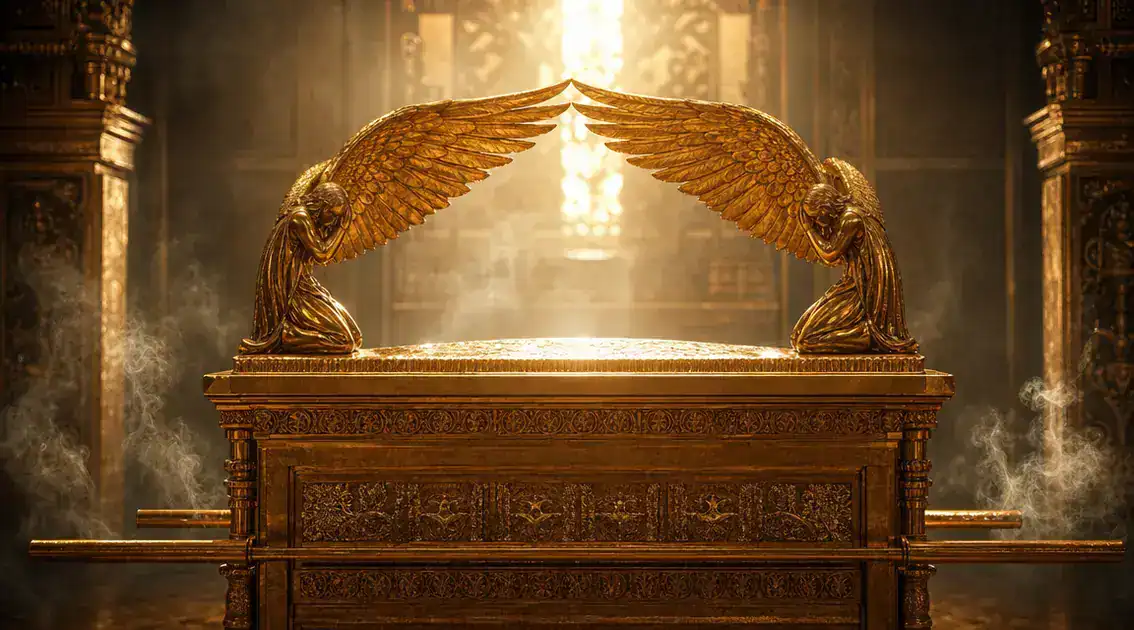
The cherubim in Solomon’s temple speak first of a throne. Carved and gilded, they stood above the ark so their wings formed a kind of canopy. This arrangement draws the eye to the center and reminds us of God’s throne—not a distant seat but the place where heaven touches the earth.
They also show what it means for God to be present with his people. The cherubim mark the spot where worship meets encounter, where the mercy seat points beyond itself to a living presence. That sense of divine presence is both inviting and careful: it welcomes approach while calling for reverence and quiet attention.
At the same time, the cherubim keep a respectful mystery. Their form suggests guardianship, worship, and a holiness we cannot fully name, which invites a devotional posture of wonder and humility. Letting that mystery breathe in our hearts can turn worship into a gentle longing for more of God’s nearness.
Craftsmanship and sacred art: the making of the golden cherubim
Skilled hands shaped the cherubim long before they stood in the temple. Craftsmen carved figures from dense wood, smoothing each curve until the forms felt alive to the touch. Then the work turned to gold: thin sheets were carefully laid and hammered so the light would catch every feather and fold.
The making was both craft and prayer. Artisans worked with patience and care, knowing their labor served worship. They used simple tools, steady blows, and steady breath, and often held a quiet blessing for the place where the pieces would rest. This is a reminder that skill offered in faith becomes a form of devotion, where the maker’s craft points beyond itself to God.
When the cherubim were finished, their shine changed the room. Gold softened by touch and time held the glow of lamp and incense. In that light, the work of human hands became a sacred sign, calling worshipers to wonder and to humble approach. The craft did not hide the divine; it helped people notice it.
Theology of presence: what the cherubim teach about God’s nearness
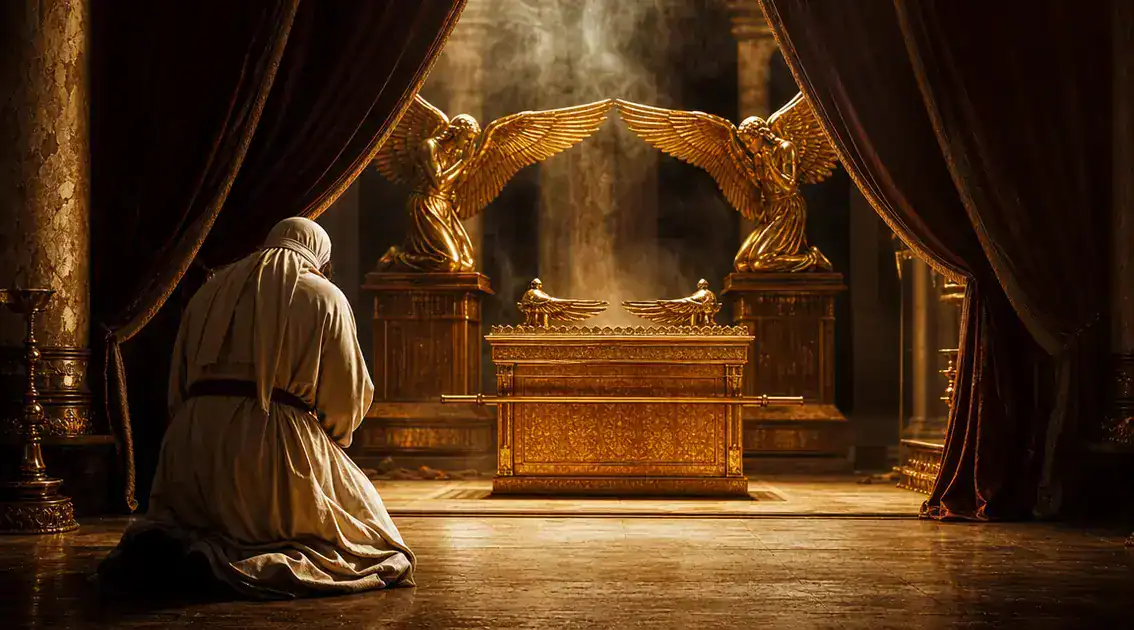
The cherubim stand as a visible frame for the holy place, pointing worship toward a presence that is not far off. In their posture—wings outstretched above the mercy seat—they act as a sign that invites attention. This simple image helps worshipers hold in mind God’s nearness as both gift and reality.
At the same time, their form teaches that nearness asks for care. The cherubim mark a space held by holiness, where ritual and reverence govern approach. That balance—welcome joined with restraint—shows that intimacy with the divine is tender and serious at once.
For spiritual life, the cherubim model a posture of watchful longing. They call us to quiet prayer, steady attention, and humble waiting rather than haste. By following that rhythm we meet a mediated and gracious presence that draws the heart deeper into love without demanding we rush past reverence.
Liturgical and devotional responses in Jewish and Christian traditions
In Jewish worship the cherubim belong to the space of the Holy of Holies and to the heart of ritual memory. Priests remembered them when they approached the ark and when the community marked sacred days. The carved figures served as a visual reminder of God’s presence and of the careful awe that shaped Israel’s prayer.
Christian traditions drew on that visual language and made it part of church art and liturgy. Early mosaics and later altar canopies borrowed the image of winged beings to speak of heaven touching earth. In prayers and hymns the cherubim became a way to name a sacred encounter that the assembly hoped to share, especially around the table of bread and cup.
Today both traditions invite simple devotional responses: quiet liturgy, slow gestures, and attentive seeing. Spending a few moments with an image or a line of worship can retrain the heart to expect nearness. Such practices turn art and ritual into bridges—small, faithful ways to live toward the mystery the cherubim have long guarded.
Seeing cherubim today: spiritual practices to encounter divine presence
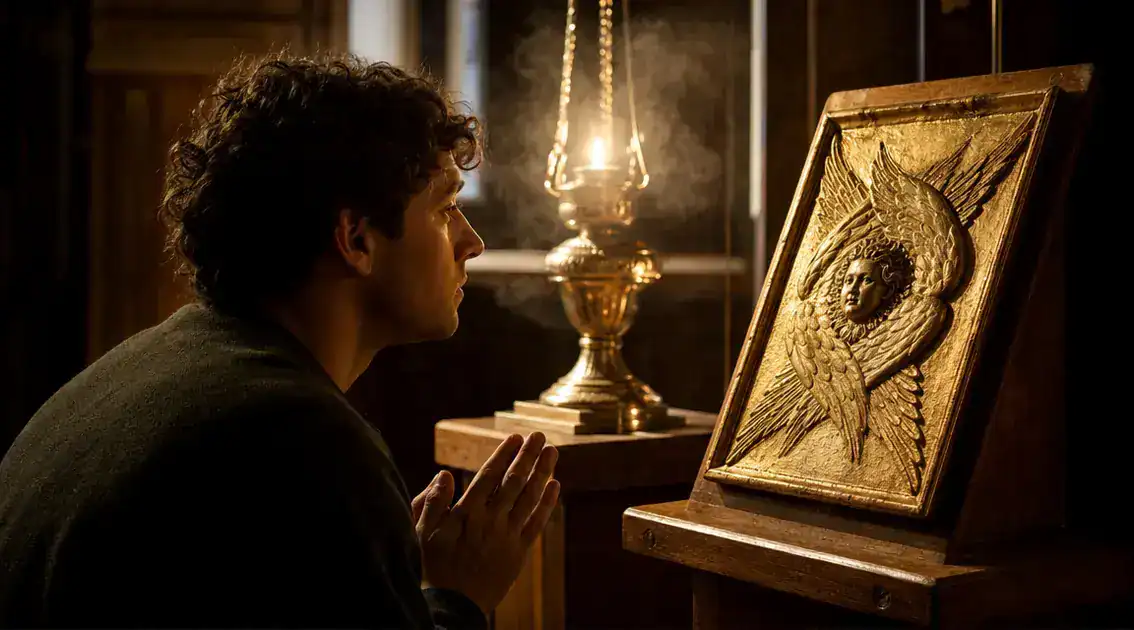
Close your eyes and imagine standing before a small image of the cherubim. You do not need to see a grand temple to feel invited; a simple carved panel, a book passage, or a quiet corner can call you to pay attention. This gentle attention helps you notice God’s presence as something near enough to touch with prayer and quiet thought.
Try a slow, steady practice: breathe in for four counts, breathe out for four, and let your eyes rest on an image or a short verse about the cherubim. Let each breath become a small prayer and each breath out a soft act of reverence. Over time this calm rhythm trains the heart to expect holy closeness without rushing or demanding signs.
Invite ordinary rhythms of life into this watching: a morning cup of tea while reading a short temple text, a brief pause before meals to recall mercy and nearness, or a few moments of silence at day’s end. These small patterns shape a lasting habit of wonder rather than one quick experience. In such simple ways, the old images of the cherubim can help us live toward a steady, humble practice of encountering the divine.
A gentle closing prayer
May the memory of the cherubim rest softly in your mind and lead you into a quiet wonder of God’s nearness. Let the image of wings and the mercy seat remind you that holiness can be close, gentle, and kind.
May your hands learn again the habit of offering small things—work, words, and time—as acts of devotion. In simple practices of attention, you will find the sacred returning to ordinary days.
Walk with steady breath and a calm heart. Let worship shape the small choices you make, so that reverence becomes a quiet rhythm rather than a rare event.
Go in peace, held by a presence that watches with love. May your life be a slow yes to wonder and to the nearness that calls you home. Amen.
FAQ – Cherubim in Solomon’s Temple
What do the Bible passages actually say about the cherubim in Solomon’s temple?
The Bible places two great cherubim in the Holy of Holies, their wings spread over the mercy seat above the Ark (Exodus 25:18–22; 1 Kings 6:23–28; 8:6–7). Hebrews also refers to the inner sanctuary and the images set above the ark (Hebrews 9:3–5). These texts show the cherubim marking the very spot where God’s presence was honored.
Are the cherubim the same as the angels we read about elsewhere in Scripture?
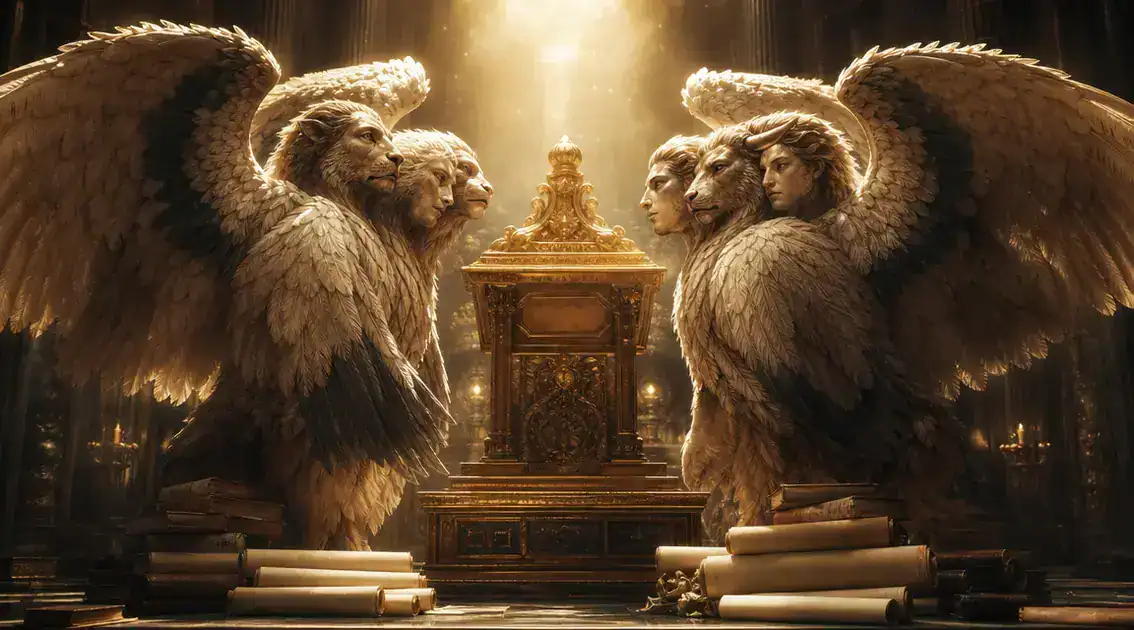
Cherubim are a kind of heavenly being, but the Bible presents them in varied ways. Temple cherubim are carved and stationary, while prophetic visions (Ezekiel 1 and 10) describe living, complex cherubim in motion. Tradition treats them as part of the heavenly court—related to angels but described with unique roles and imagery.
What do the cherubim symbolize theologically?
They point to God’s throne and guarded presence. The cherubim form a canopy over the mercy seat, signaling both nearness and holiness. Theologically they speak of divine kingship, guardianship of the sacred, and the mystery of meeting God—inviting reverence, not casual familiarity (Exodus 25; Hebrews 9).
How have Jewish and Christian traditions used the image of the cherubim in worship?
In the temple era, the cherubim framed ritual access to God and shaped priestly worship. Later Jewish memory and Christian art borrowed the imagery: early mosaics, altarpieces, and the Eastern Cherubic Hymn recall the sense of heaven near the assembly. These uses keep the idea that worship joins earth to heaven in humble reverence.
Can the cherubim teach us anything for personal prayer and devotion today?
Yes. They invite practices of quiet attention, reverence, and humble waiting. Simple habits—pausing before prayer, using a short Scripture about God’s throne, or slow breathing in the presence of an image—help form a steady readiness to meet God. The cherubim model awe paired with loving approach, a balance helpful in daily devotion.
Do we know exactly what the cherubim looked like?
No single, precise portrait exists. Temple texts describe carved, gilded figures with outstretched wings, while prophetic visions show multi-faced, mobile beings (Ezekiel 1,10). Art and tradition offer many images, but Scripture leaves room for mystery, inviting faithful imagination rather than exact replication.