
The Feast of Saint Michael on September 29 honors the archangel Michael as heavenly warrior, protector, and intercessor in Scripture and tradition, tracing roots to the Monte Gargano devotion and expressed through liturgy, hymns, litanies, and a novena that invites the faithful to prayerful trust, moral courage, and concrete acts of charity.
feast of saint michael september — have you ever wondered why the church marks September 29 with such solemnity? This brief guide traces the feast’s origin, its liturgical meaning, and a simple novena to enter the mystery with reverence.
Biblical roots: Michael in Daniel and Revelation
In the book of Daniel, Michael appears within visions that shape the people’s hope. He is named as a heavenly prince who stands for the community in times of trial. In simple terms, Daniel shows Michael not as a distant idea but as a guardian and protector for Israel when nations press hard and the future looks unclear.
Revelation brings that image into cosmic light. There the scene widens: Michael leads the host of heaven against the dragon and his angels, and the dragon is cast down. This is powerful picturing—evil confronted and overcome by a faithful, ordered force. The vision gives the faithful a sure sign that God acts through the angelic realm to carry out divine justice and deliverance.
Seen together, Daniel and Revelation invite trust rather than fear. Michael’s role is both warrior and watchful guardian, a reminder that struggle has a divine horizon. Believers are invited to pray with courage, to seek protection, and to stand firm in hope, all while remembering that worship belongs to God alone and that angels point us back to the Lord.
Origins of the September 29 celebration in the early church
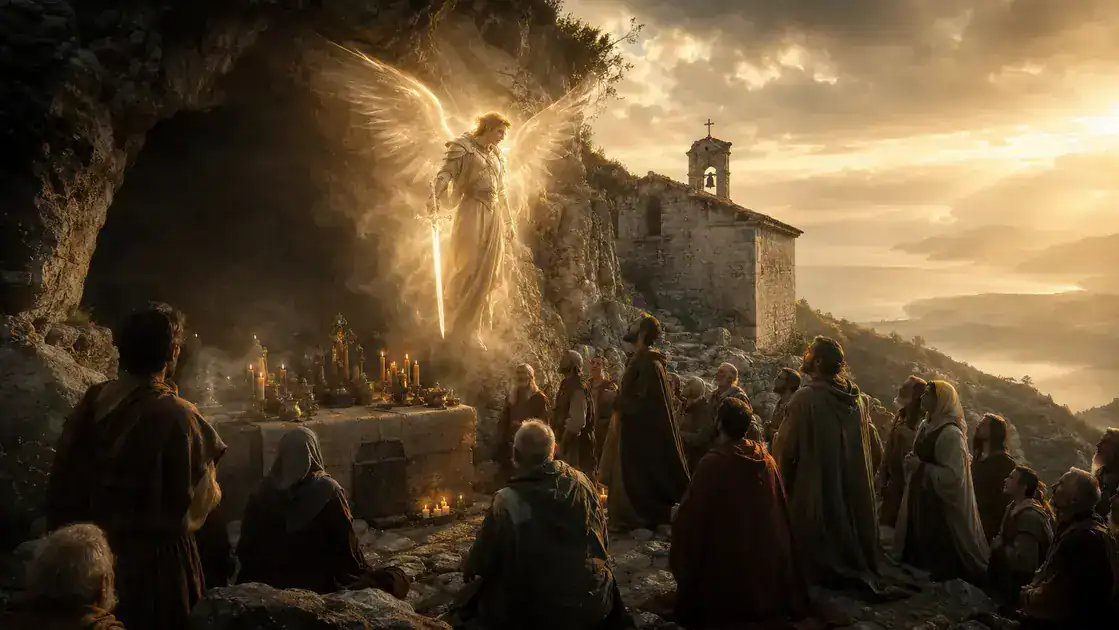
From the earliest centuries, Christian communities honored Michael as a guardian who stands beside the people in times of trial. Scripture gave shape to this devotion, but it found its living home at shrines and in local memory. One memorable moment was the story tied to a rocky sanctuary in Italy, where a vision of the archangel defended the faithful; that event, known as the Monte Gargano apparition, drew pilgrims and rooted a local celebration in popular devotion.
Over time, these local observances moved into the wider church calendar and took on a seasonal rhythm. In the West, the autumn date settled into public worship and became known as Michaelmas on September 29, a day that gathered prayers of protection, harvest offerings, and church dedications. The East developed a related commemoration on October 8, showing how devotion to the archangel could wear different liturgical clothes while pointing to the same spiritual truth: heavenly help meets human need.
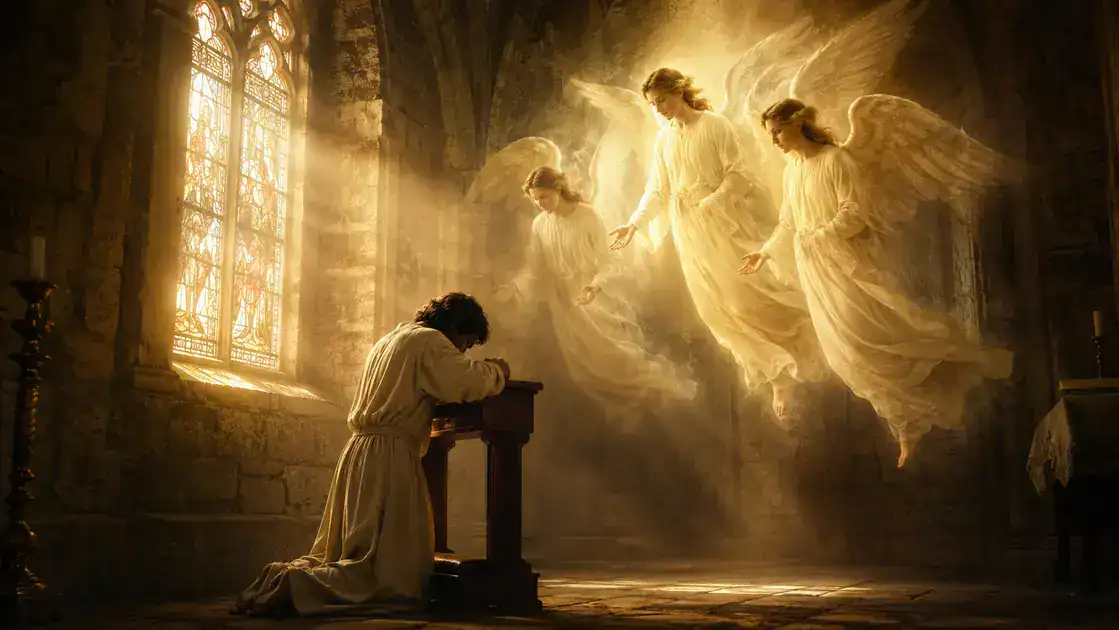
Those early feasts shaped prayer, processions, and the life of parish communities. People lit candles, sang hymns, and placed votive offerings at altars, not as mere ritual but as signs of trust that the divine care reaches into daily life. Such practices teach a simple and steady lesson: the archangel is both protector and guide, calling the faithful to courage and prayer. When we remember that ancient date today, we join a long line of believers who found comfort and purpose in that same holy story.
Theological significance: Michael as warrior, protector, and intercessor
The figure of Michael invites us to see three close roles he plays for the faithful: a warrior who contends with evil, a protector who watches over the vulnerable, and an intercessor who brings our needs before God. These roles are not separate boxes but ways to name how heavenly help meets human fear. Each name points us back to God’s care and to a pattern of faithful service we can imitate.
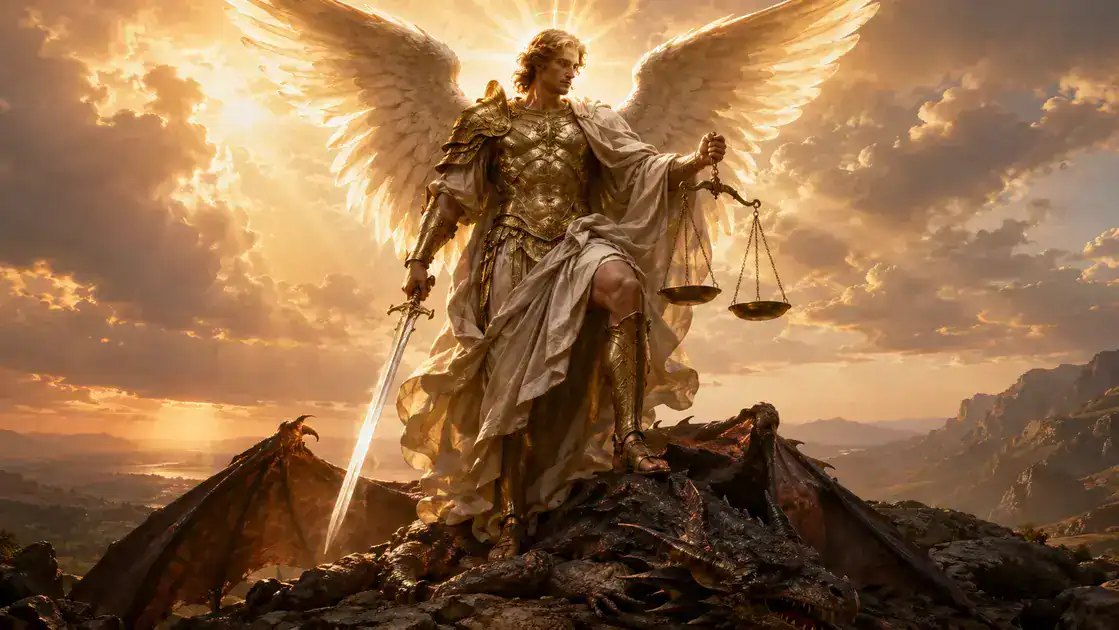
As warrior, Michael stands against what harms the soul. Scripture images of combat help us understand spiritual struggle in clear ways: temptation, injustice, and fear are met not by raw force but by courage that trusts God. In this sense, Michael’s battle is ordered by love and truth. His armor and sword are signs that God’s justice and mercy work together to protect life and restore what is broken.
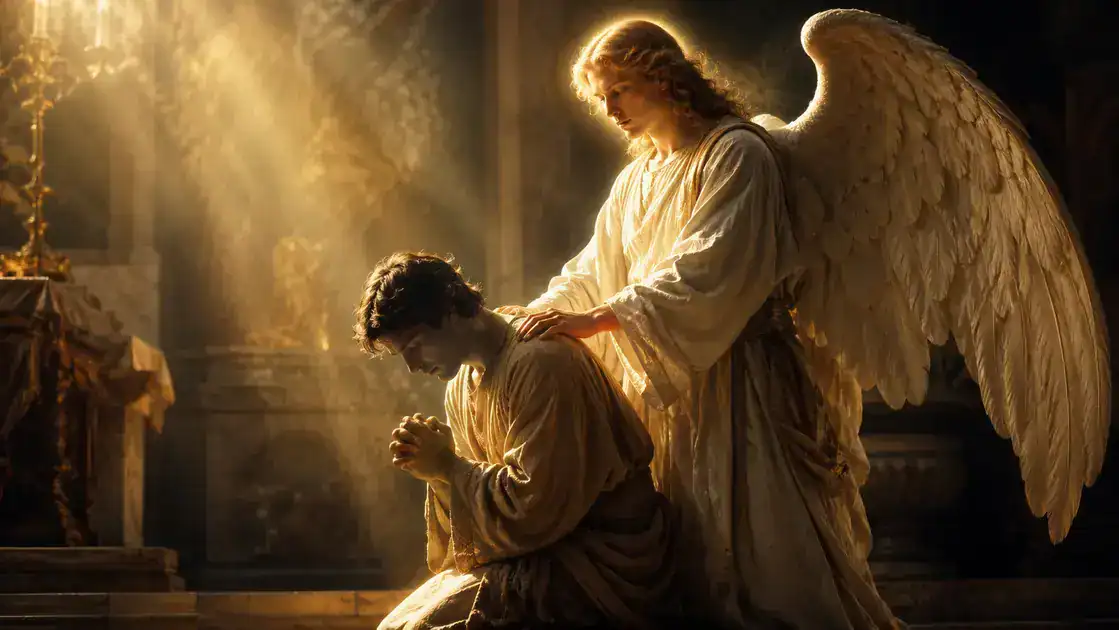
As protector and intercessor, Michael draws attention to prayer and presence. He protects by standing at the threshold of danger and by encouraging the faithful to persevere. He intercedes by pointing our need toward God and by reminding us that prayer changes hearts. Practically, believers turn to him for courage, for help in times of trial, and for a steady reminder that we are never abandoned; in every moment of fear or hope, his example invites us to trust and to pray.
Liturgical traditions and prayers linked to the feast
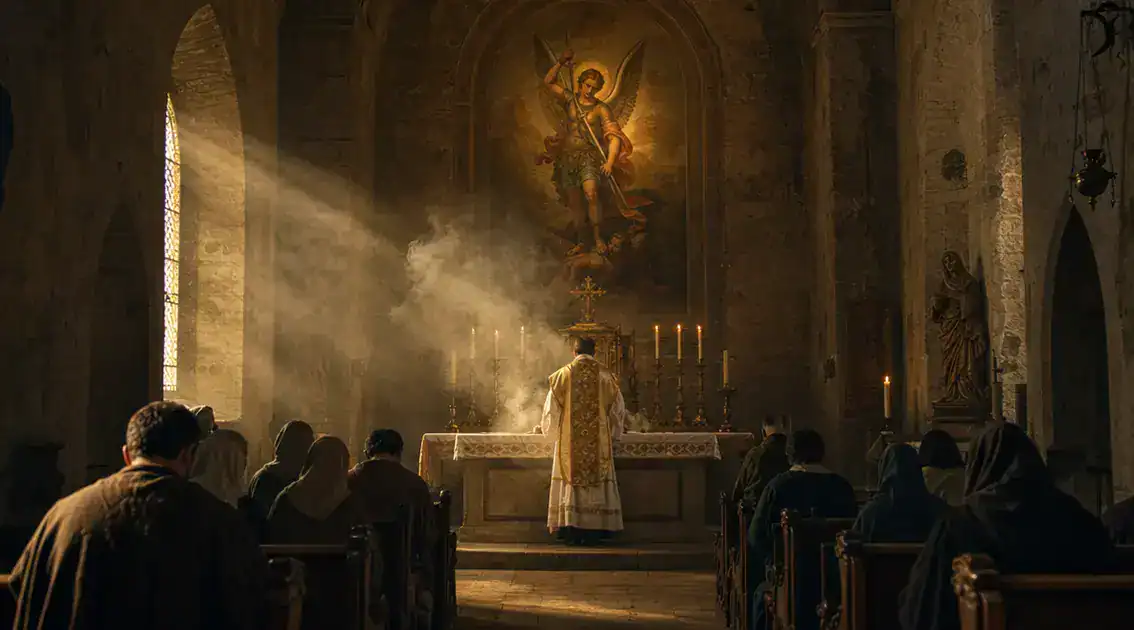
The feast of Saint Michael on September 29 is set in the church calendar as a day of solemn memory, celebrated in the Mass and the Divine Office. Readings and antiphons often draw from Daniel and Revelation, casting Michael’s role as protector and victor in clear biblical images. The collect and responsories gather these themes into prayer, so worship becomes a living echo of those ancient visions rather than a mere story from the past.
Alongside the official liturgy, popular prayers and rites grew up around the feast. Rural and urban parishes kept processions, votive Masses, and special hymns, while devotional texts like the well-known Prayer to Saint Michael and shorter litanies gave people simple words to ask for help. Incense, candles, and sacred music deepen the sense that the celebration joins heaven and earth, and local shrines often offered a focal point for these practices, drawing families and pilgrims into communal devotion.
For those who wish to live the feast today, the path is straightforward: take part in the liturgy, learn the readings, and join the prayers that the community raises. Lighting a candle, singing a hymn, or saying a short prayer in the morning can make the day feel holy without ceremony. In all of this, the point remains the same: participation in the liturgical life trains the heart to trust, reminds the faithful of heavenly assistance, and sends each person back into daily life with renewed courage and prayer.
The novena to Saint Michael: structure, texts, and spiritual practice
A novena is nine days of steady prayer meant to focus the heart on a need and to deepen trust in God. The novena to Saint Michael usually follows a simple daily pattern: an opening invocation, a short Scripture reading that recalls Michael’s role, a time of quiet reflection, a petition, and a closing prayer. Repeating this rhythm each day trains the heart to return to hope and to notice small movements of grace.
Common texts used in the novena include the traditional Prayer to Saint Michael, brief litanies, and Psalms that speak of refuge and deliverance. Many people pair readings from Daniel or Revelation with Psalm 91 to hold both the biblical image and personal trust together. If possible, joining the Eucharist, celebrating Mass, or making a brief confession during the nine days will help the novena connect with the wider life of the church.
Prayer habit matters as much as words. Light a candle, slow your breathing, and read the passage aloud before a few minutes of silence. Give each day a concrete intention and then offer a small act of charity in its name, so prayer leads to action. Use a brief daily examen to notice where you met God and where you still need help; over nine days, this gentle practice shapes courage, steadies faith, and teaches you to rely on heavenly help in ordinary life.
Devotional expressions: litanies, hymns, and popular piety
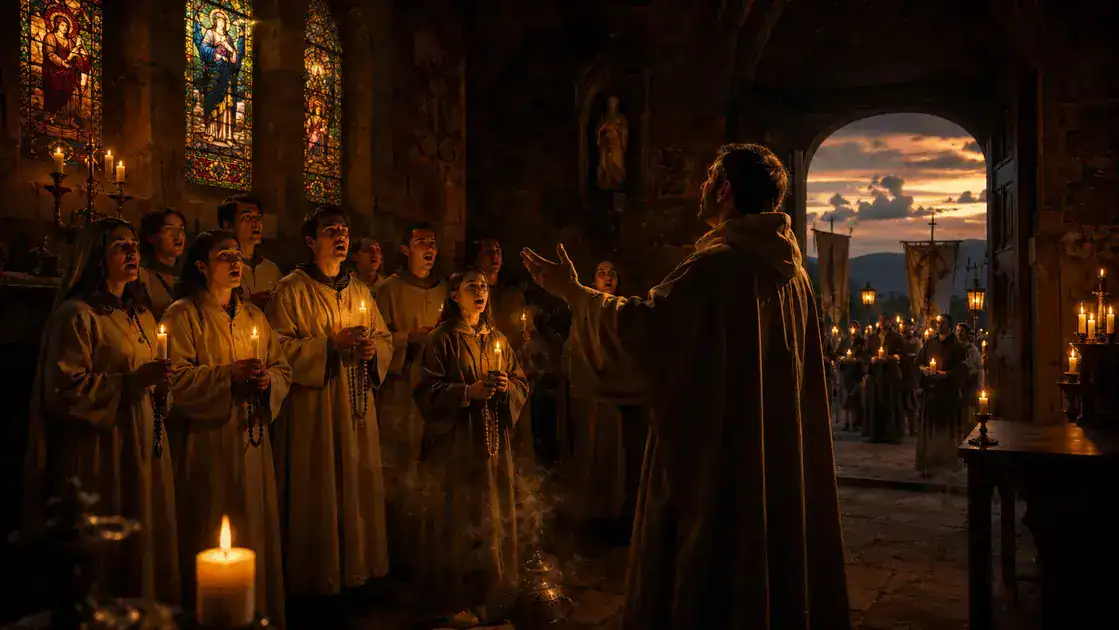
Litanies give voice to a simple, repeating trust. In small groups or in public worship, people call out short petitions and the community answers, creating a rhythm that steadies the heart. This form of prayer is not about clever words but about calling on the saints and angels together, and it helps the faithful name needs they might not otherwise speak aloud.
Hymns shape how a people feels and remembers the story of salvation. Singing a verse about Michael’s protection or a chant that lifts the soul makes belief move from the head to the body. When voices join, the text becomes a shared memory and a prayer that carries beyond the building into daily life.
Popular piety ties these practices into everyday devotion: processions through streets, votive candles left at shrines, small acts of charity done in the saint’s honor. These gestures are not mere folklore but ways ordinary believers live out a trust in heavenly help. Through repeated prayer, song, and humble offerings, the feast becomes a living habit that trains courage, charity, and prayerful attention in the routine of life.
Art, symbols, and how to live the feast in daily life
Artists have long given Michael certain signs so we can read his role at a glance: the gleaming sword or spear for victory over evil, the scales for divine justice, the armor for steadfast protection, and the small defeated dragon as a reminder of evil’s downfall. These images are not mere decoration; they are visual theology, teaching us how Scripture names spiritual realities. When we look at a painting or statue, we meet a story about God’s care that words alone sometimes cannot carry.
Within churches and homes, such art invites prayer and reflection. A simple icon or a modest statue can frame a moment of stillness, calling us to remember the archangel’s watch. In that space, the symbol of the sword may turn our fear into courage, and the scales may move our heart toward justice for others. Making room for one image and a candle helps the feast enter everyday life without ceremony, turning memory into a practiced posture of trust.
Living the feast means letting those symbols shape small choices: a short morning prayer asking for courage, a deliberate act of charity toward a neighbor, or choosing patience in a difficult hour. These gestures are not dramatic; they are steady ways the feast becomes habit. In this way, art and symbol do their work by nudging our actions—so the image of Michael leads not only to admiration but to a lived trust that protects, serves, and prays in ordinary days.
A gentle closing prayer for the feast of Saint Michael
As we leave this reflection, may the memory of the archangel stay near our hearts. In times of doubt or fear, remember that heaven reaches down with care. Let that reminder bring calm and a quiet courage to the day ahead.
Lord, through the intercession of Saint Michael, grant us strength to face what scares us and peace in the small moments. May the archangel stand at our side as protector and guide, drawing our eyes back to the Lord in every trial. We ask for the courage to act with justice and the gentleness to serve with love.
Make the feast a habit of the heart: a short prayer each morning, a small act of charity when you can, a candle lit for those in need. These simple gestures turn memory into life and teach us to live with steady hope.
Go in peace, held by a love that will not let go. May wonder and trust walk with you today, and may the care of heaven shape every ordinary hour.
FAQ – Common questions about the Feast of Saint Michael and devotion
What is the origin of the Feast of Saint Michael on September 29?
The feast grew from early Christian devotion to Michael, especially the Monte Gargano tradition in Italy where the archangel was believed to have appeared to protect the people. Over centuries the local celebrations entered the wider liturgical calendar and became a regular day of prayer and dedication in the Western Church.
Why is the feast celebrated on September 29 in the Roman Rite?
Various local dates once marked Michael’s memory, but the Western Church gradually fixed September 29 as the date for honoring the archangel. That date became known as Michaelmas in medieval practice and was used in the Roman liturgical calendar to unite biblical memory with communal worship.
Where is Saint Michael named in Scripture?
Michael appears in key biblical passages: Daniel 10:13 and 12:1 name him as a protector of God’s people; Jude 1:9 recalls his dispute with the devil; and Revelation 12:7–9 shows him leading heaven’s hosts against the dragon. These texts shape the church’s understanding of his role.
Is the Prayer to Saint Michael an official church prayer and may I use it?
Yes. The popular Prayer to Saint Michael was composed by Pope Leo XIII in the late 19th century and entered popular and private devotion. While its placement in public liturgies has changed over time, it remains a recognized and consoling devotional prayer that many faithful continue to pray.
What does Saint Michael represent theologically?
Theologically, Michael points to three realities: the reality of spiritual struggle, God’s care for his people, and the ordered service of the heavenly host. He is a symbol of divine justice and protection, always directing honor back to God rather than to himself.
How can I observe the feast in a simple, faithful way today?
Attend Mass or pray the appointed readings if possible, read Daniel or Revelation and Psalm 91, say a short novena or the Prayer to Saint Michael, light a candle, and do a small act of charity. These practices root the feast in prayer, Scripture, and service, helping the commemoration shape everyday life.