
The hierarchy of heaven—angels and saints—is a theological map in Scripture and tradition that describes ordered ways God’s presence, praise, and aid flow: choirs of angels nearest the throne offering worship and governance, archangels as messengers and defenders, and saints as participatory citizens who intercede and model holiness for the church.
Have you ever looked up and felt the world hush? hierarchy of heaven angels and saints unfolds like a quiet map—angels, archangels, and the cloud of saints forming a living order that touches our prayer and hope.
Angels in Scripture: roles and appearances
Have you noticed how the Bible shows angels in many different ways? In some scenes they arrive as travelers at a tent, in others they stand with swords, and sometimes they appear as a calm voice. These varied appearances point to a single truth: angels act as messengers and servants of God’s will, sent to guide, warn, protect, and praise.
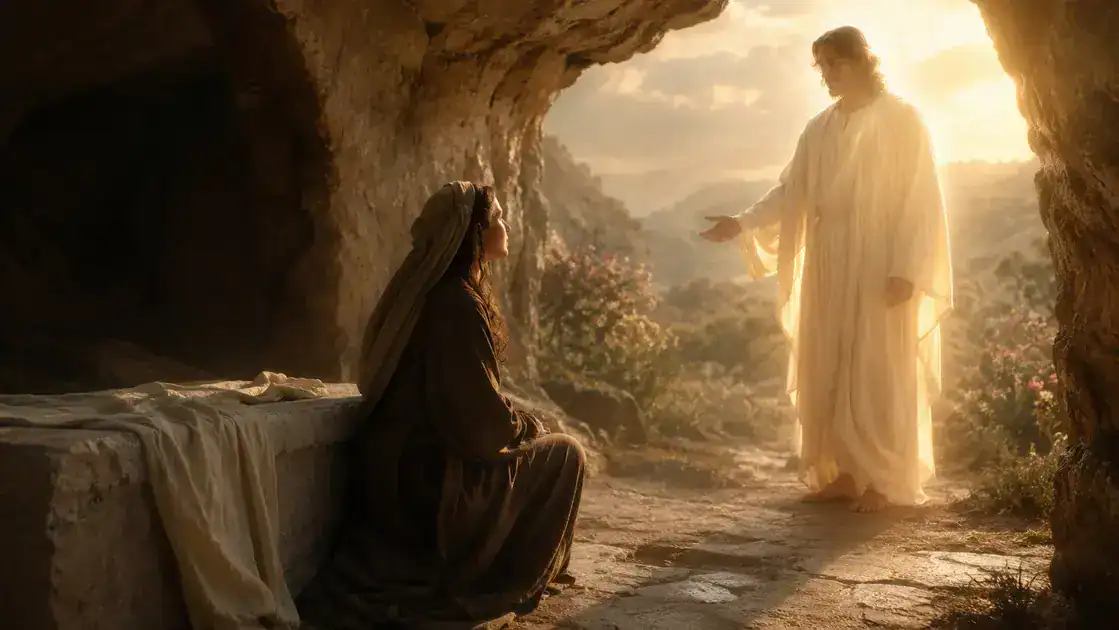
We see this across Scripture: visitors who share a meal with Abraham, the angel who leads Israel through the wilderness, Daniel’s visions that explain God’s plans, Gabriel bringing news to Mary, and the bright figures at the empty tomb. Each story shows a role more than a costume—some angels bring word, some bring strength, and some simply stand in awe before God. These moments invite us to read each appearance as a part of God’s work in the world.
For the faithful, these accounts are not distant curiosities but signs of care. The angelic ministry points us back to God’s presence in daily life—guiding choices, bringing comfort, and calling creation to worship. We do not chase visions; rather, we grow in quiet attention, trusting that the same God who sent those messengers still moves in gentle, ordered ways around us. This trust turns Scripture’s images into a living comfort for prayer and hope.
The nine choirs: a concise theological map
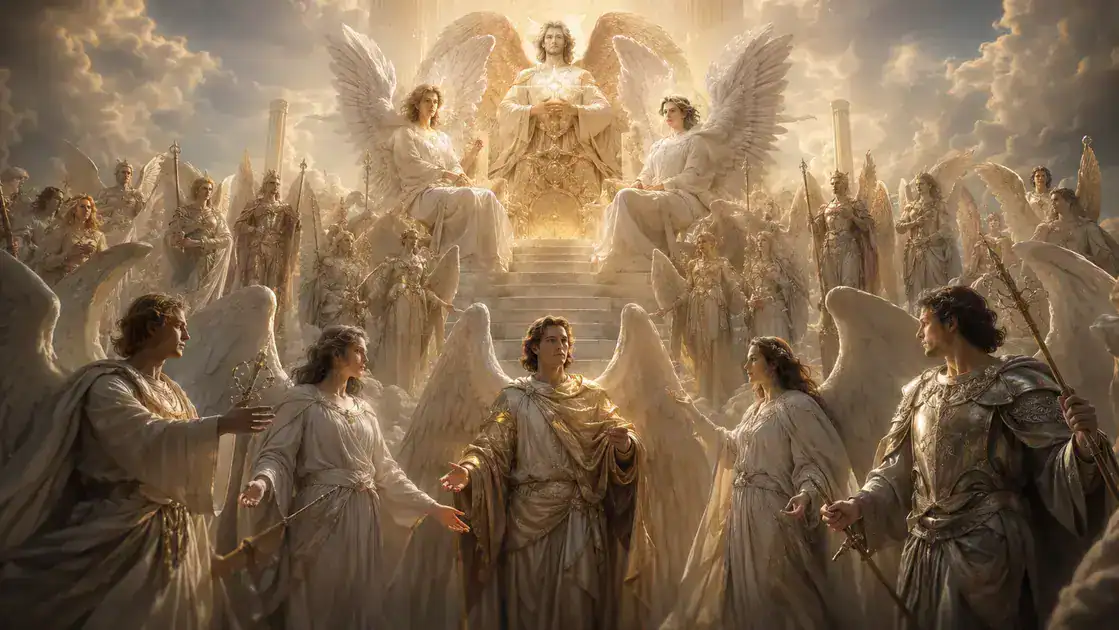
Imagine heaven sketched not as chaos but as an ordered choir, each voice and movement set in a holy pattern. The tradition of the nine choirs invites us to see angels as distinct yet united in one work: worshiping God, carrying out divine will, and aiding creation. This map is not a rigid chart; it is a way to name how grace flows from the source to the world.
The choirs are often grouped by closeness to God’s throne. At the highest level stand the Seraphim, Cherubim, and Thrones, beings of intense love, deep seeing, and settled justice who dwell near God in constant adoration. The middle rank—Dominions, Virtues, and Powers—holds cosmic order, supports miracles, and guards the balance of creation. The lower tier—Principalities, Archangels, and Angels—moves in the world to govern communities, bring decisive messages, and tend to individual lives. Each name points to a role, not to a status that shuts others out; every choir serves the same single, merciful purpose.
How this map meets prayer
When you pray, this theological map can shape the way you imagine care around you. Calling to mind the choirs is not about imagining ranks or robes, but about trusting that God’s love reaches us through many ways—through the purity of praise, the wisdom that orders life, and the gentle hands that guide us. Let these names deepen your wonder and steady your hope, so that worship becomes not only what we say but the quiet trust that we are held within a larger, ordered love.
Saints as citizens of heaven: biblical foundations
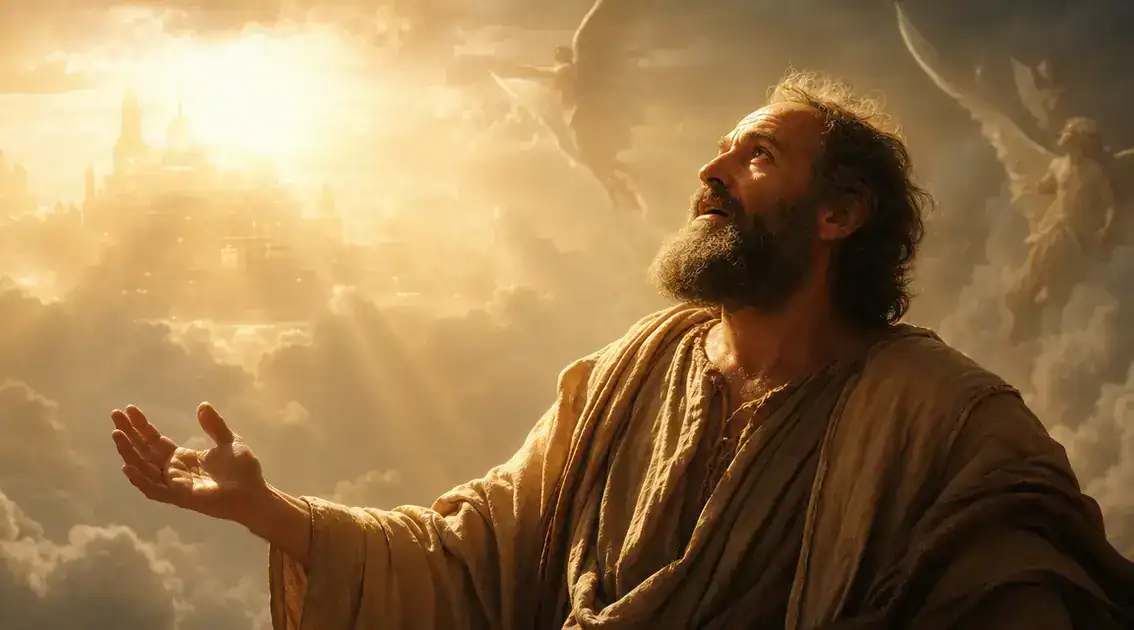
The Bible speaks of a home beyond this life and calls believers to a different kind of belonging. Our citizenship is in heaven, as Paul reminds us, and that simple truth shapes how we see the saints. They are not distant shadows but members of a living community that shows what God’s home looks like—gentle, just, and steady.
Scripture gives images that help us feel this reality, like the cloud of witnesses who surround every faithful pilgrim. These witnesses include ordinary people and holy ones whose lives tell of patience, courage, and mercy. Reading their stories helps us learn how to keep faith in hard days and how to celebrate small acts of love as part of a larger story.
To live as citizens of heaven means practicing the habits of that home now: prayer that opens the heart toward God, small acts of kindness that mirror divine care, and worship that binds us to the larger family of saints. These practices do not erase struggle, but they change how we carry it—so hope grows steady and community becomes both a promise and a present help on the road.
Archangels and named messengers: Michael, Gabriel, Raphael
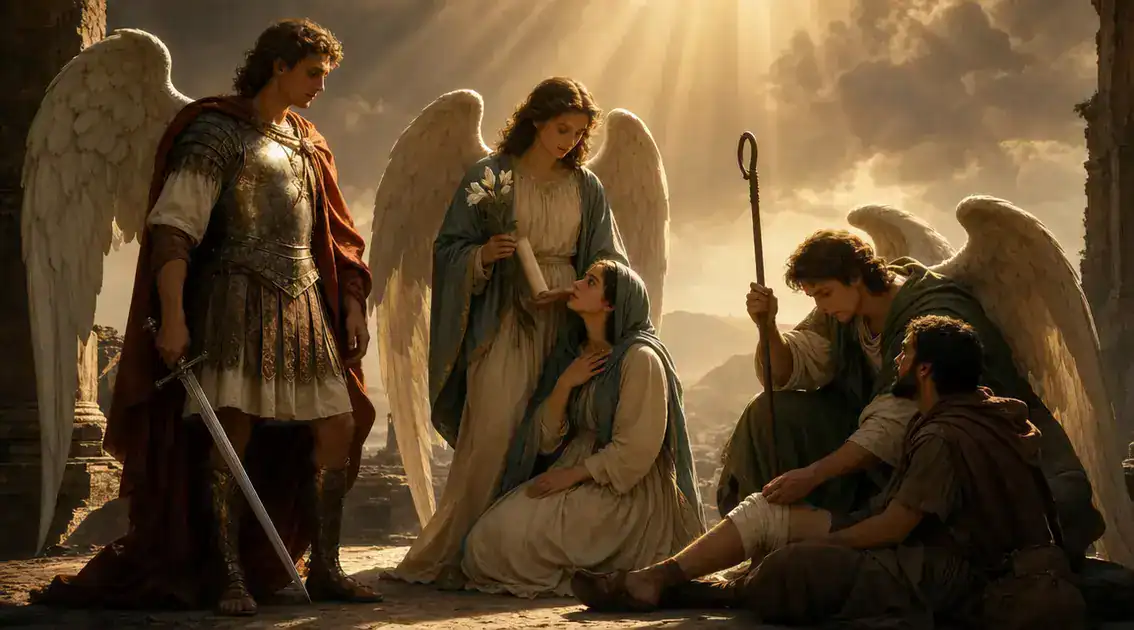
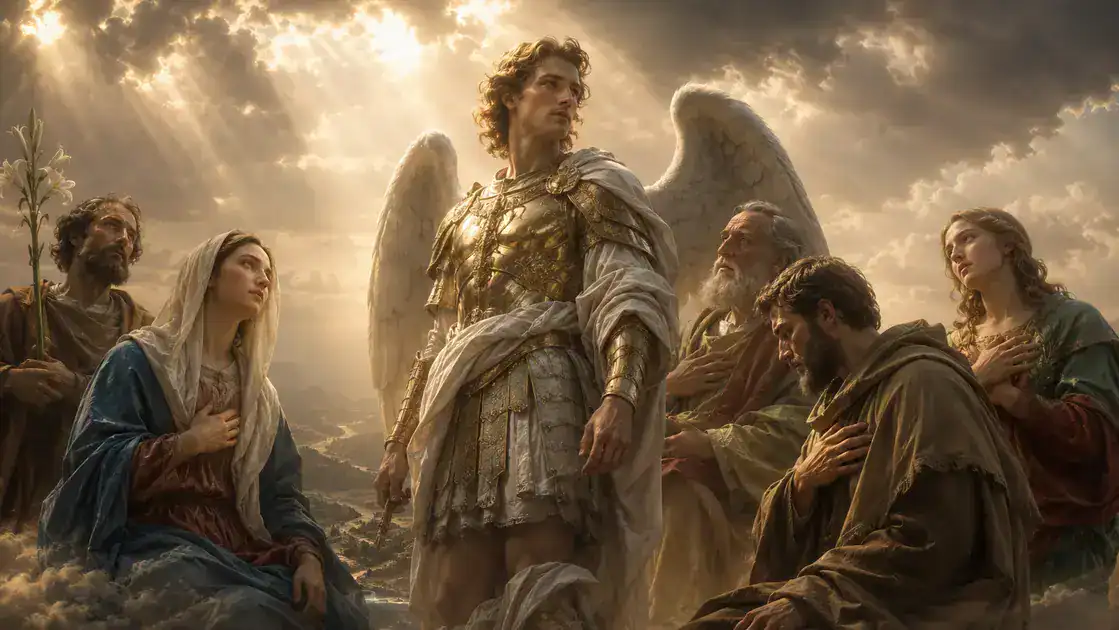
The three named archangels in Scripture and tradition arrive like friends with different gifts. Michael appears as a protector and guardian, a figure who stands firm when danger comes (see Daniel 10–12, Jude, Revelation 12). Gabriel is the clear messenger who brings good news and understanding, speaking words that change lives—most famously to Mary at the annunciation (Luke 1). Raphael shows up as a gentle guide and healer in the book of Tobit, walking beside a young traveler and mending what is broken.
Each archangel points to one aspect of God’s care: safety in trials, clarity in calling, and healing for body and heart. These stories do not ask us to seek signs or strange visions; they invite a steadier trust. When we read Daniel or Luke or Tobit, we meet God’s care made visible—bold when courage is needed, tender when a wound must be healed, clear when a message must be heard.
Practical ways to keep their witness near
You can let these images shape simple, faithful practices. Ask for Michael’s courage when you face hard choices, request Gabriel’s clarity when you need to hear God’s will, and open your heart to Raphael’s healing when you are tired or wounded. Short prayers, quiet imagination of the biblical scenes, and small acts of mercy in the day help these names become ways to live—reminders that God sends help in many faithful forms.
How heavenly hierarchy shapes prayer, discernment, and hope
When we hold the hierarchy of heaven in our prayer, we do not lift a ladder to God but name the many ways grace reaches us. Thinking of angels and saints as a living circle helps prayer feel less like a lone cry and more like entering a larger conversation. That image gives our petitions shape: protection, guidance, healing, and praise all move toward God through many faithful hands and voices.
This outlook also steadies discernment. Remembering that some angelic roles bring clarity while others bring strength helps us learn to listen for different movements in the heart. A quiet, steady peace may point to guidance; sudden calm courage can be a gift of protection. The saints’ lives teach patience—God often answers by shaping us slowly, and reading their stories helps us recognize gentle promptings amid noise.
Practical habits that deepen hope
Simple, steady habits make this vision practical: a short prayer asking for guidance, a moment recalling a saint’s example, or a small act of mercy that echoes heaven’s care. These practices do not promise dramatic signs, but they frame each day as held and watched. Over time, they train the soul to trust so hope grows quiet and sure, even when the path is unclear.
Patristic and medieval visions of angelic order
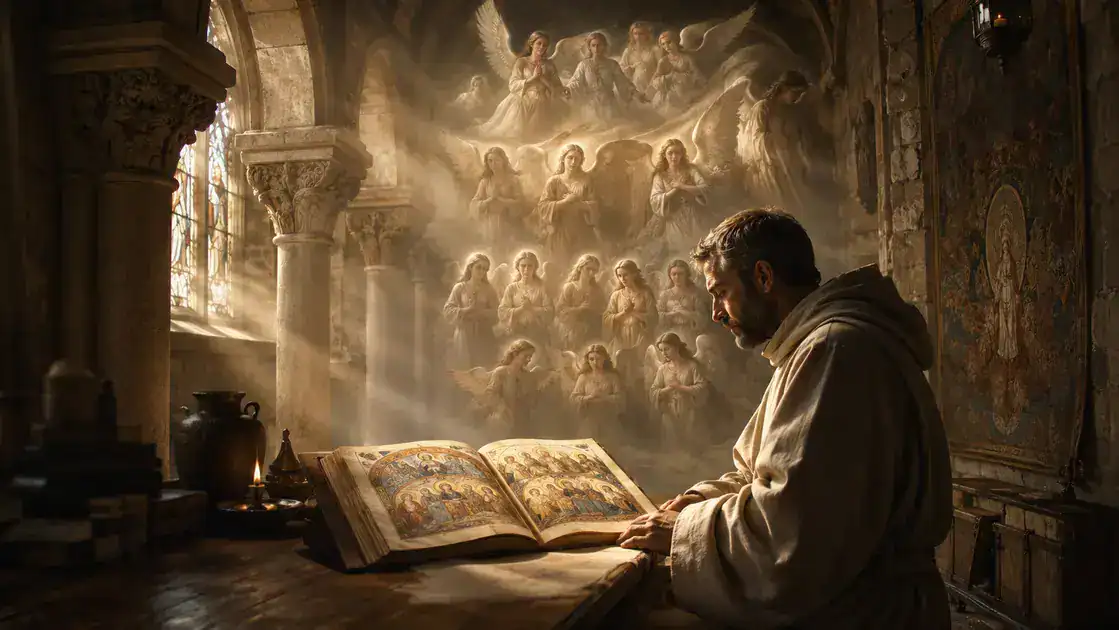
The early church Fathers and later medieval writers helped shape how Christians imagine the angelic order. Writers like Pseudo-Dionysius used careful language to name the nine orders, not as social rank but as ways that divine love and service flow outward from God. Their aim was devotional: to give believers a gentle map for worship and wonder, not a rigid chart to argue over.
Medieval theologians and mystics then wove those names into prayer and art. Thinkers such as St. Thomas Aquinas treated angels as real spiritual beings whose roles point to God’s care, while mystics like Hildegard and Bonaventure spoke of them in music, vision, and symbol. In cathedrals, illuminated manuscripts and choir chants made the idea tangible, so people could sense the ordered praise that surrounds the throne.
Living with their witness
Those ancient and medieval visions changed how believers prayed and remembered. Litanies, feast days, and sacred images invited people to join a wider chorus of praise and to trust in ordered care when life felt chaotic. The point was always practical and pastoral: the angels and saints show us that God’s love has depth and form, and that our small prayers enter into a vast, caring life.
Today, these traditions can still steady the heart. Naming an angelic role in a short prayer, pausing by sacred art, or reading a simple passage from a Church Father can turn worry into awe. These practices are not about seeking marvels but about learning to rest in the fact that the divine household is full, patient, and at work for our good.
Living in the communion of saints: practices of participation
The communion of saints is a simple, consoling thought: the faithful living and the faithful who have gone before us form one family. When Scripture speaks of a cloud of witnesses, it gives us an image of company rather than solitude. This company shapes how we pray and how we bear suffering, because we join a story larger than our single life.
One way this mystery becomes real is in shared worship and the sacraments. The Eucharist gathers the living and remembers the holy ones who trusted God before us; it turns private longing into a communal bread broken for all. In daily prayer we can ask saints to pray with us, not in place of Christ, but as members of the same body who point us back to God’s mercy and example.
We also take part by small, steady practices: keeping feast days, reading a saint’s life, offering a quiet act of service in their memory, or visiting a simple shrine. These acts train the heart to live as a citizen of heaven now, shaping patience, charity, and hope. Over time, such habits make the unseen nearer and the ordinary day a place where heaven’s compassion is practiced and received.
A gentle sending forth
May the memory of angels and saints rest quietly in your heart as you go about your day. Trust that you are held by a gentle order of love, not by laws but by faithful care that watches over small moments.
When worry comes, breathe and recall a saint’s simple courage or an angel’s quiet keeping. Let those images steady you and turn ordinary tasks into soft prayers, so that daily life becomes a place where grace can be practiced and received.
Try one small sign today—a brief prayer, an act of kindness, a moment of silence—and imagine it joining a larger chorus. In this practice, hope grows steady and your steps begin to match the calm rhythm of heaven’s care.
Go in peace and wonder, with the quiet confidence that the same mercy filling the heavens walks with you now. Amen.
FAQ – Questions about angels, saints, and heavenly order
Do angels really exist according to the Bible?
Yes. Scripture names angels as real, ministering beings sent by God (Psalm 91:11; Hebrews 1:14). Jesus and the apostles speak of angels who serve God’s purposes and watch over people, so belief in angels has deep biblical and apostolic roots.
What does “the communion of saints” mean and where does it come from Scripture?
The communion of saints means the living and the holy who have gone before us belong to one family in Christ. Hebrews 12:1 calls the faithful a “cloud of witnesses,” and Revelation pictures the saints gathered before God in praise. This idea grows from the Bible’s sense that the people of God are joined across time in prayer, worship, and love.
Can I ask a saint to pray for me?
Yes; asking a saint to pray is asking a brother or sister in Christ to pray for you, much like asking a friend to pray (cf. 1 Timothy 2:1). Scripture shows the prayers of the redeemed offered before God (Revelation 5:8; 8:3–4). Tradition holds this as intercession, distinct from worship which belongs to God alone.
How can I tell if an experience is from an angel or from my imagination?
Discernment matters. Test the experience by Scripture and the fruits it bears (1 John 4:1; Galatians 5:22–23). An authentic movement will lead to humility, charity, and deeper trust in God, and will not contradict Scripture or encourage pride. Seek counsel from a trusted pastor or spiritual director and allow time for prayerful reflection before drawing conclusions.
Who are the named archangels and what are their roles?
Christian tradition commonly names Michael, Gabriel, and Raphael. Michael appears as protector and defender in Daniel and Revelation; Gabriel brings clear messages from God (Luke 1; Daniel); Raphael, in Tobit, is a guide and healer. Their stories point to protection, revelation, and healing as ways God cares for the world.
How can I live more fully in the communion of saints in everyday life?
Simple, steady practices help: join communal worship and the sacraments (especially the Eucharist), read the lives of saints as encouragement, keep feast days, offer short prayers asking for the saints’ intercession, and practice small acts of mercy. These habits root you in a larger story (Hebrews 12:1; Philippians 3:20) and make the unseen care of heaven a present comfort.