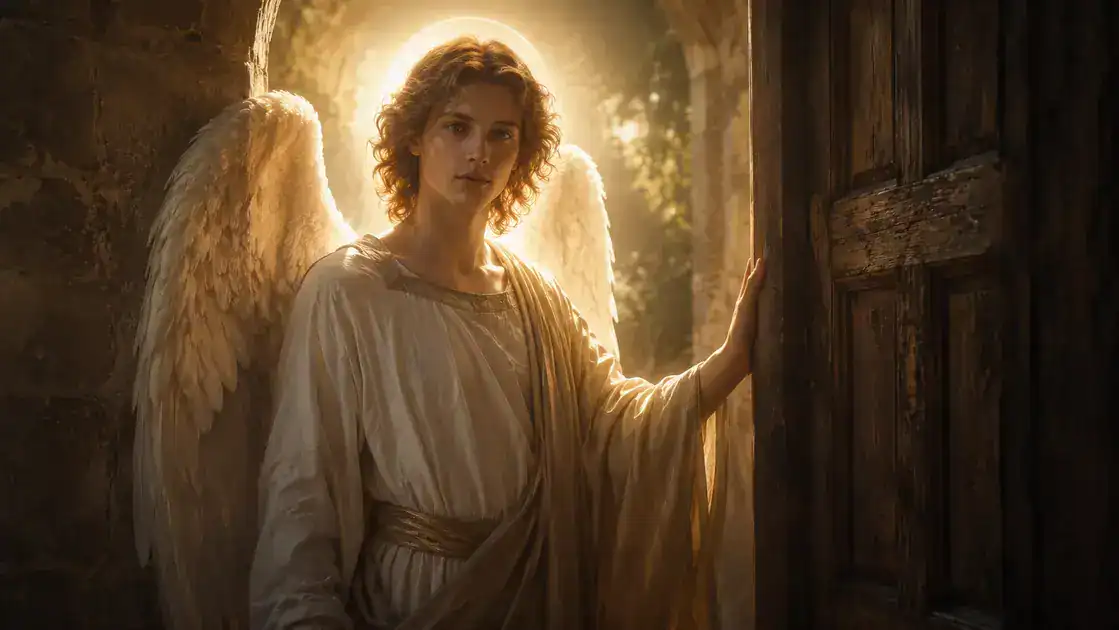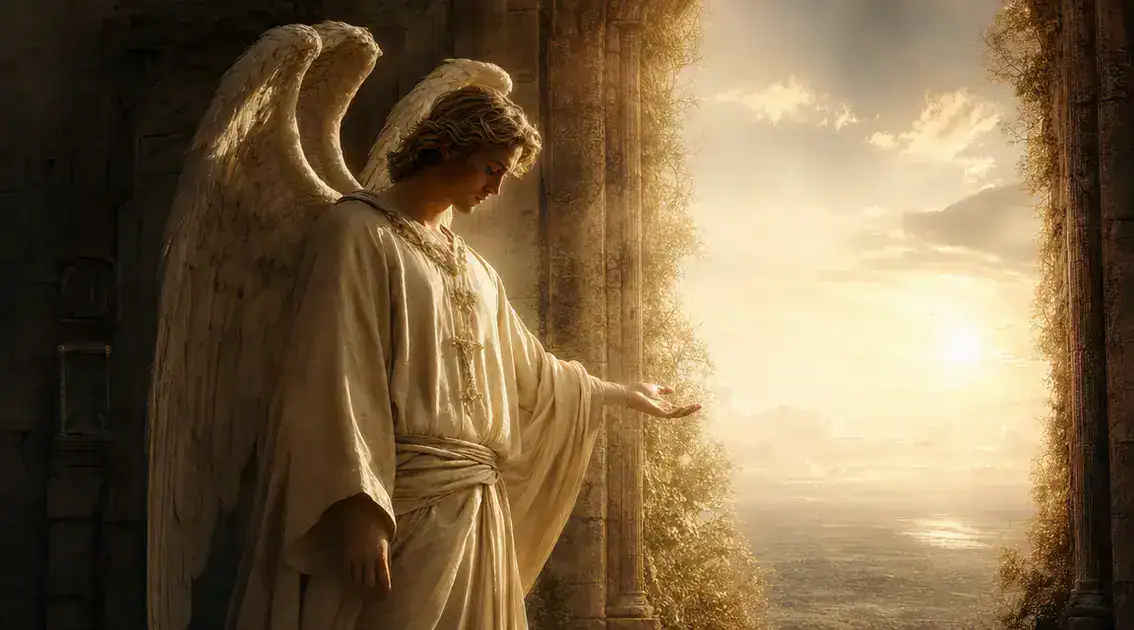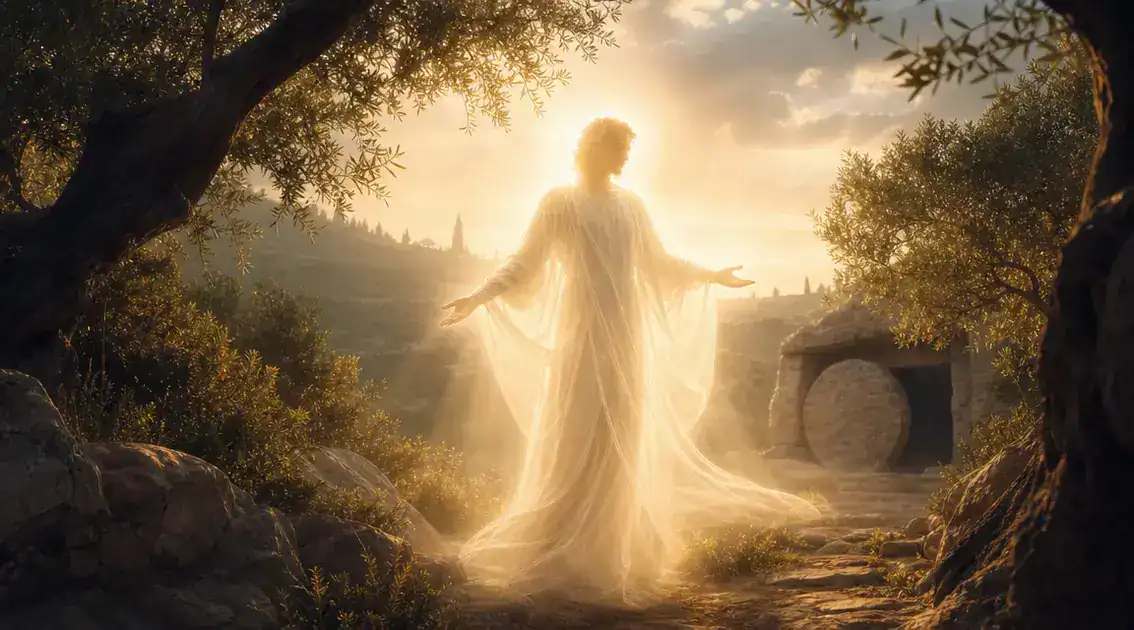

The nature of angels as pure spirit, in Scripture and classical theology, describes created, non‑corporeal persons whose intellect and will operate without matter, acting as ministering spirits who serve God’s providence and assist humans while remaining wholly dependent on the Creator.
Have you ever wondered about the nature of angels pure spirit? I invite you into a gentle exploration of how Aquinas and Scotus describe angels — not as bodies, but as intellects and wills, companions that shape prayer and moral vision.
Scripture and the idea of spiritual, non-corporeal beings
Throughout Scripture angels appear as messengers and guides, yet the Bible often points to their deeper, non-corporeal reality. Psalms and the prophets speak of beings sent from God who serve by will and purpose rather than by flesh, and passages like Hebrews 1:14 name them explicitly as “ministering spirits.” Even when an angel is seen, the text leaves room for a difference between what we perceive with our eyes and the spiritual life they possess.
Luke’s strange but clear remark — that a spirit does not have flesh and bones — helps the reader hold two truths together: angels can act in our world and yet are not bound to bodies as we are. Scripture shows them appearing, speaking, comforting, and protecting, but these appearances read as acts of accommodation so that human beings can meet a reality beyond senses. This way of seeing invites a humble awe: angels operate by intellect and will, serving God’s purposes and assisting people without sharing our material limits.
For prayer and devotion, the biblical portrait of angels as non-corporeal beings calls us to reverence and quiet trust rather than curiosity for signs or spectacle. When Scripture names a heavenly messenger at a cradle, a tomb, or a battlefield, it asks us to notice God’s care behind the scene — a care enacted by spiritual agents whose mode of being is different from ours. Holding that image softly can deepen worship and steady the heart, reminding us that many of God’s faithful works happen in a realm that cannot be fully measured by sight.
Aquinas on angels: intellect, will and pure spirit
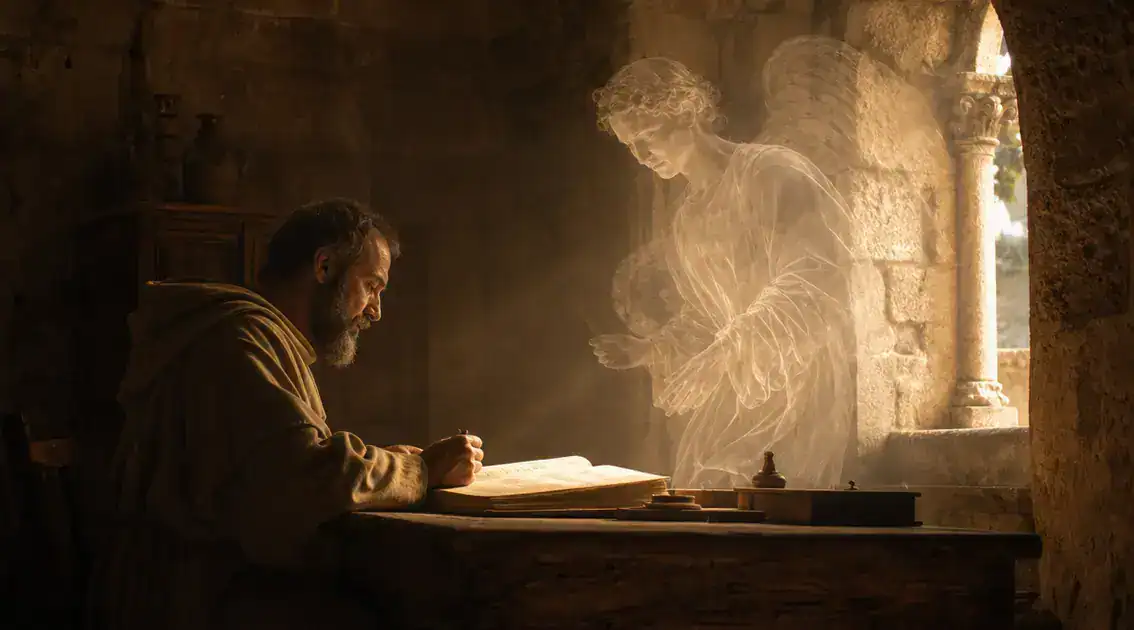
For Thomas Aquinas, angels are created as pure spirits. They are real and personal, yet they do not have bodies. This means they do not change like living bodies do. Their identity rests in mind and will rather than in flesh. Aquinas helps us picture beings who exist by thought and choice more than by shape or size.
Aquinas teaches that an angel knows by direct understanding rather than by senses. Their intellects grasp truths quickly, often described as receiving light from God. Their will follows what the intellect understands, so their actions are focused and swift. This model shows how thought and love can act without the slow steps that come with matter.
Keeping this vision can deepen prayer and devotion. To imagine angels as intellects and wills reminds us that God makes helpers suited to every part of life, seen and unseen. Their presence invites quiet trust, not spectacle, and it points us back to God as the source of all wisdom and care. Let that reminder steady the heart and open the mind to a deeper sense of wonder.
Duns Scotus: individuality, contingency and the created spirit
Duns Scotus invites us to see angels as fully individual created spirits. He uses the word haecceity, or “thisness,” to name what makes one angel distinct from another. This is not a matter of body or place, but a simple, personal uniqueness given by God. Each angel is a definite someone, not a copy or a mere role.
Scotus also stresses their contingency: angels exist because God wills them and they depend on God for every moment of being. Their freedom and intellect are real, yet always given and sustained by the Creator. Thinking this way helps us avoid imagining angels as tiny gods; they are powerful and personal, but their life is a received gift.
For prayer and devotion, Scotus’s view invites both warmth and humility. We may feel comforted that God gives unique spiritual companions, yet we are reminded to honor God alone while respecting the angel’s role. Such a vision deepens trust: the world is filled with distinct, created spirits who reflect God’s care without replacing him, and that truth can steady our hearts in times of wonder and fear.
Comparing Aquinas and Scotus: unity, hierarchy and personhood
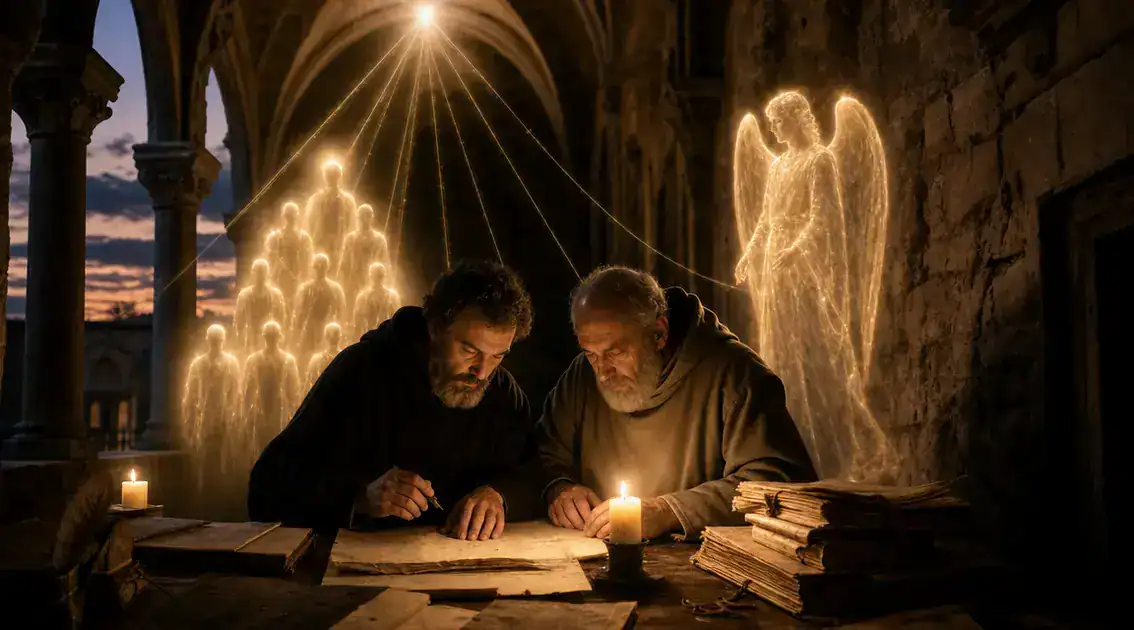
Aquinas and Scotus agree that angels are spiritual persons, yet they draw different pictures of how those persons relate to one another. Aquinas leans toward a vision of ordered unity: angels belong to ranks or orders that share common natures and roles. This creates a sense of hierarchy, where many serve together under a larger, harmonious order that reflects God’s providence.
Scotus, by contrast, insists on the deep, irreducible individuality of each angel — what he calls haecceity, or “thisness.” For him, unity does not erase personhood. Two angels may hold similar tasks, but each is a distinct someone with a unique identity given by God. This emphasis keeps the focus on the personal face of each spirit rather than only on its place in a system.
For prayer and devotion, these perspectives work together gently. Aquinas helps us see the beauty of a divinely ordered heaven that supports human life, while Scotus invites us to attend to the unique presence that may touch our own story. Holding both views can deepen reverence: we honor the grand pattern of God’s care and we also bow before the singular presence that meets us in moments of need.
Biblical scenes that reveal angelic nature
Scripture gives us short, bright scenes where the angelic nature shows through. At the Annunciation, an angel speaks into Mary’s life and yet the account reads as a meeting between a human and a spiritual messenger. The shepherds on the hillside hear a choir of angels in Luke’s gospel, and the brilliance of that moment tells us the beings announce God’s work rather than act as ordinary people.
Other stories deepen the picture: Jacob’s dream of a ladder reaching heaven shows angels moving between God and earth, not bound by stone or distance. Prophetic visions, like those in Daniel, present angels as protectors and interpreters who act by authority given from God. Hebrews calls them “ministering spirits,” a phrase that helps us see how their service is real, gracious, and non-corporeal.
These biblical scenes shape how we pray and live. They invite a quiet wonder that stays with the heart more than a hunger for signs. When Scripture shows angels at a birth, a grave, or a vision, it asks us to trust that God works through spiritual helpers. Holding those images softly can make prayer calmer and faith steadier, since we remember that much of God’s care comes from a realm we do not fully see.
Devotional practices that honor angels as pure spirits
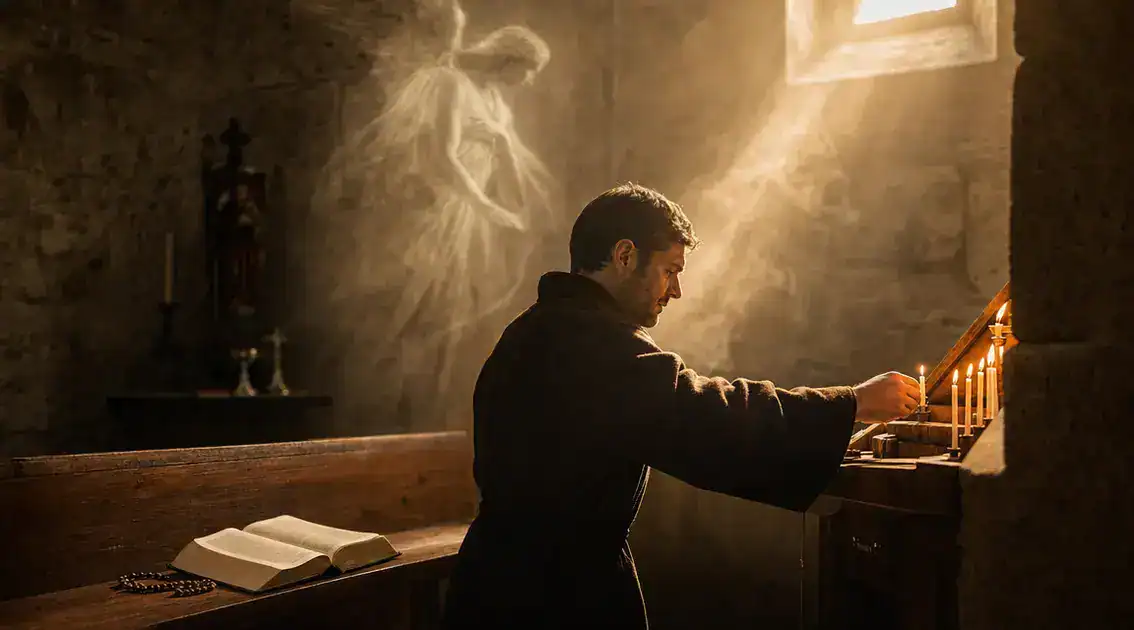
Many devotional practices honor angels with simple, steady acts: lighting a candle at dawn, offering a short prayer on waking, or saying a brief invocation to one’s guardian. These practices do not seek signs or wonders but cultivate a quiet habit of attention. By naming the presence of angels as pure spirits in prayer, believers remember that help often comes from a realm beyond sight.
Silence and Scripture help deepen this awareness. Sitting for a few minutes with a psalm or a Gospel passage invites a soft listening. In that stillness we learn to attend to the movement of intellect and will—ways angels are often described—rather than to flashes of feeling. This practice trains the heart to trust God’s care and to welcome guidance without needing proofs.
Communal acts also honor their service: joining a liturgy that remembers angelic ministry, marking feast days, or doing simple acts of mercy in someone’s name. These outward deeds flow from inner reverence and keep the soul focused on service rather than on spectacle. Practiced gently, they form a steady life of prayer that opens us to the quiet work of God through spiritual companions.
How belief in pure spirits shapes prayer and moral life
Belief in pure spirits shapes prayer by widening our sense of who listens. When we think of angels as minds and wills, prayer becomes less about emotion and more about offering our thoughts and choices to God. This view invites a calm attentiveness: we speak, then we wait in quiet for the movement of understanding and consent that prayer can bring.
That same belief affects moral life because it reminds us that our choices are noticed within a larger spiritual order. Angels, as ministering companions, are pictured in Scripture not as judges but as witnesses and helpers. Holding this gently can encourage small acts of service and honesty, since our deeds take part in a network of care that includes beings who reflect God’s will.
Practically, the view of angels as pure spirits helps shape simple habits: brief morning prayers that name guidance, moments of silence before decisions, and acts of mercy offered without show. These practices train the will to choose what is loving and steady the mind to see moral choices as part of a sacred story. In living this way, prayer and action feel linked — thought and will moving together toward the good.
A gentle prayer for accompaniment
Lord, thank you for the unseen companions who keep watch and guide our steps. Help us to notice their quiet care and to welcome their help without seeking signs or spectacle.
May the thought of angels as pure spirits deepen our wonder and steady our hearts. Teach us to bring our thoughts and choices to you, trusting they join a larger work of love.
Give us simple practices—brief prayers, moments of silence, small acts of mercy—that shape our will toward what is kind and true. Let these habits make our days calmer and our service firmer.
Carry this peace with you as you go: live with gentle curiosity, honest kindness, and a calm trust that God’s care surrounds every small detail. Amen.
FAQ – Questions on angels as pure spirits, Scripture, and tradition
Do angels really exist according to Scripture?
Yes. Scripture speaks of angels repeatedly as God’s messengers and servants. Passages such as Psalm 91:11 and Hebrews 1:14 describe them as ministering spirits sent to serve those who will inherit salvation. The biblical witness, held by the church through centuries, affirms their real and holy existence.
Are angels bodily beings or pure spirits?
The Bible and theological tradition present angels as non‑corporeal by nature. Luke remarks that spirits do not have flesh and bones (Luke 24:39), and theologians like Thomas Aquinas explain angels as pure spirits whose mode of knowing and acting is intellectual and volitional rather than sensory and material.
What is the difference between Aquinas’s and Scotus’s views on angels?
Both affirm angels as created spiritual persons, but Aquinas emphasizes ordered unity, intellect, and the role of angelic orders in God’s providence, while Duns Scotus highlights each angel’s unique individuality or haecceity. Together their views help us see a heavenly harmony that still honors each angel’s distinct personhood.
Does every person have a guardian angel?
Many streams of Christian tradition, including Catholic teaching, hold that each soul is entrusted to a guardian angel. Jesus’s words in Matthew 18:10 and the long pastoral practice of the church support the comforting belief that God provides personal help through ministering spirits assigned to people.
Should we pray to angels or only to God?
Prayer is directed to God alone, yet tradition encourages asking for angelic help in the sense of requesting their protection or companionship while keeping God as the ultimate focus. Devotional petitions to a guardian angel are meant as calls for service and care, not as worship, which is due to God alone (cf. Revelation 19:10).
How does belief in angels as pure spirits shape everyday prayer and moral choices?
Seeing angels as minds and wills widens prayer into an offering of thought and choice, not only feeling. It can cultivate quiet habits—brief morning prayer, moments of silence before decisions, simple acts of mercy—that steady the will. Scripture’s depiction of angels as ministering spirits (Hebrews 1:14) encourages a moral life lived with humble awareness of God’s wider care.