
Cherubim angels are exalted, throne-attending heavenly beings in Scripture who serve as guardians of sacred space, bearers of God’s presence, and symbolic embodiments of wisdom, strength, service, and heavenly vision — calling worshippers to reverent attention, just living, and protection of the vulnerable.
what are cherubim angels? Have you ever paused at Ezekiel’s vivid vision — those multi-faced, winged beings beside the divine throne — and felt the pull of mystery? I’ve traced their appearances through Scripture and tradition, and what emerges is less about cute images and more about a sacred language that invites worship and moral vision.
Cherubim in scripture: visions from Ezekiel to Revelation
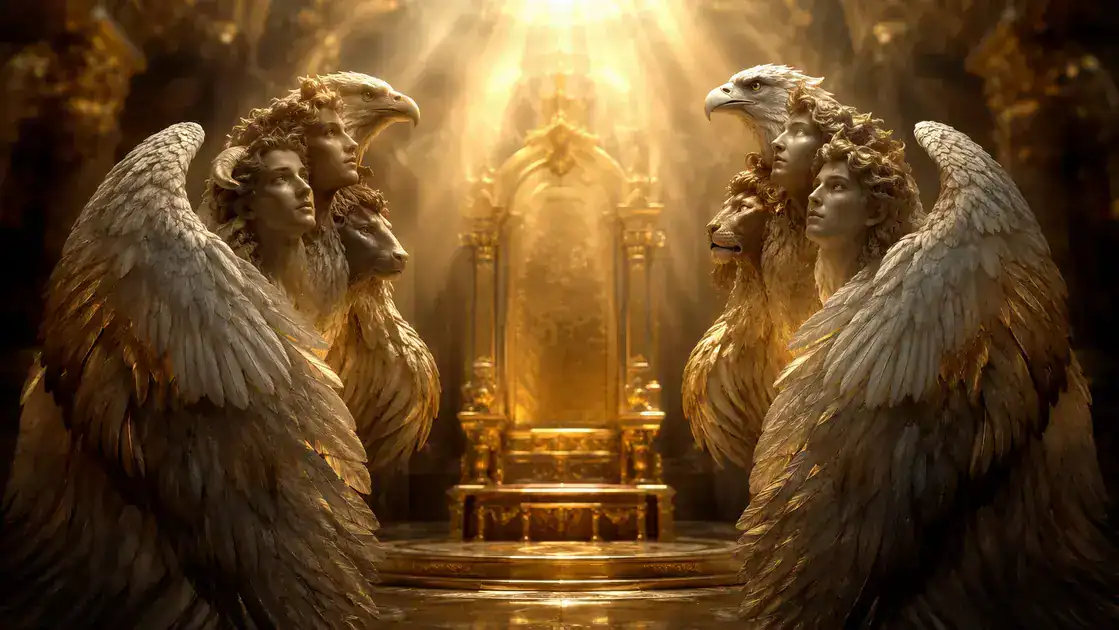
Ezekiel’s vision opens like a thunderous prayer. The prophet sees living creatures with four faces — man, lion, ox, and eagle — and each moves with a strange, holy coordination. Their wings and wheels appear close to the brightness of God’s presence, so that the sight itself becomes a language of glory and motion, pointing to the throne that carries divine presence.
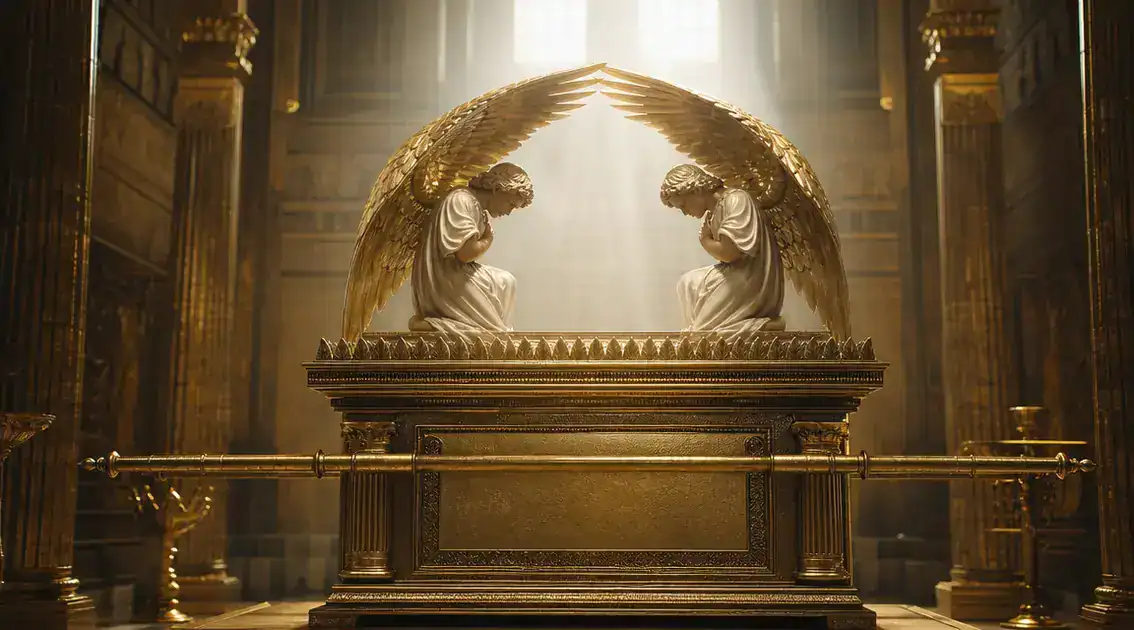
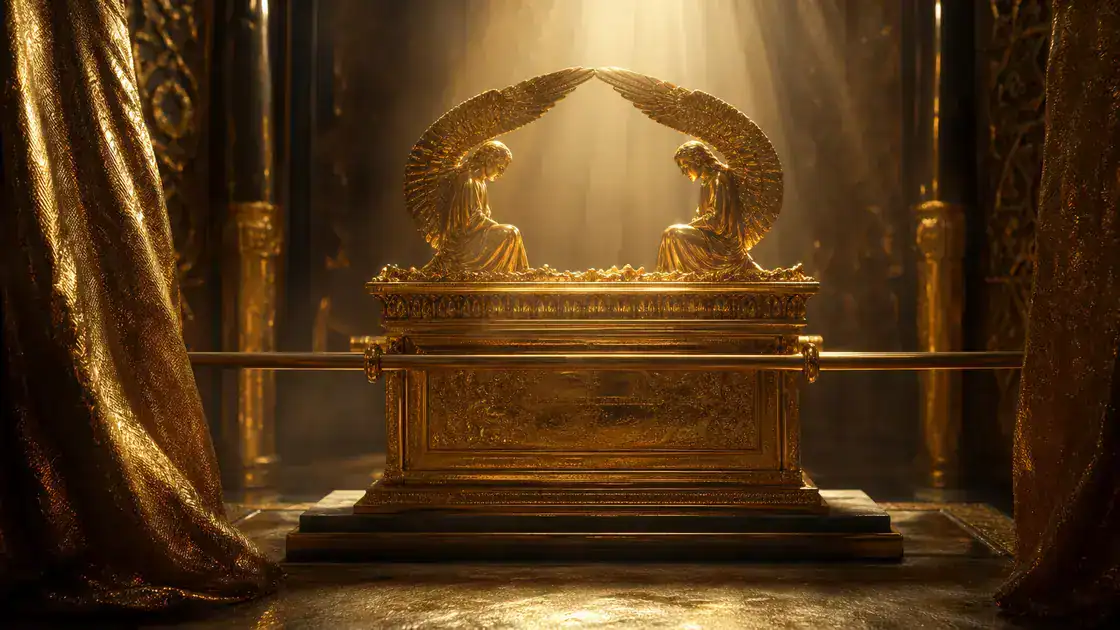
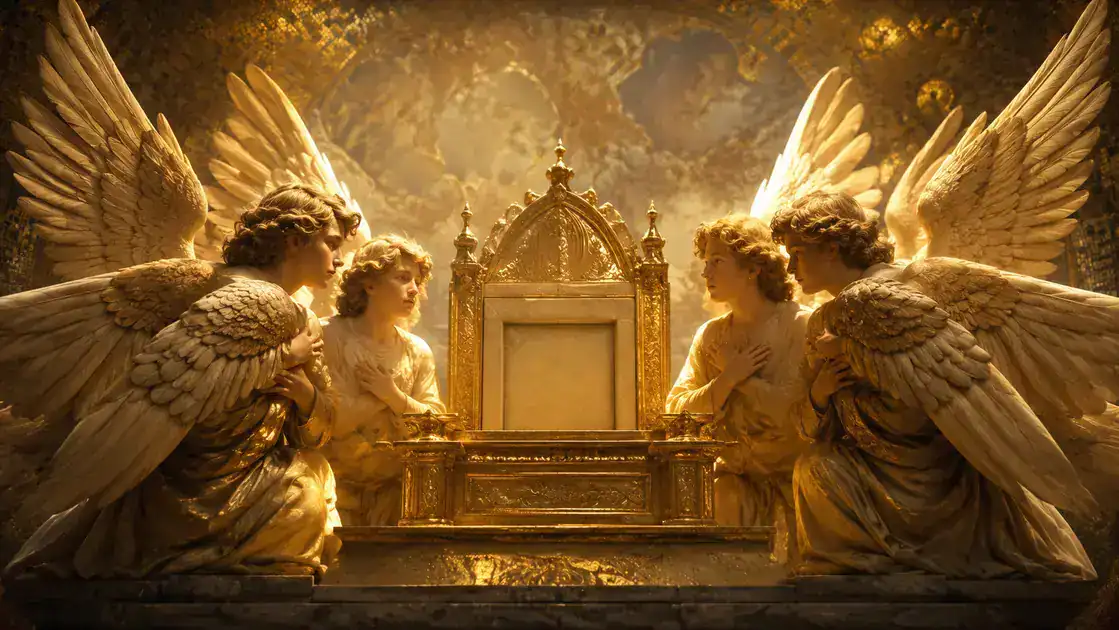
These images are not only strange art; they teach vocation. In other books, cherubim mark the edges of sacred space: they guard Eden’s gate, rest above the mercy seat, and stand as signs that God’s holiness demands care. The repeated pairing of cherubim and the throne shows they serve as both guardians and bearers of meaning, inviting the faithful to recognize where God dwells and how reverence is shaped.
The book of Revelation returns to the same vision in cosmic light, with four living creatures around the throne who never cease their praise. That continuity ties the prophetic encounter to the church’s worship across ages, making the cherubim a bridge between heaven’s movement and our liturgical voice. Reading these scenes gently calls us into prayerful attention — to watch, to honor, and to let our lives answer the song that surrounds the throne.
Symbolism and function: faces, wings, and the throne
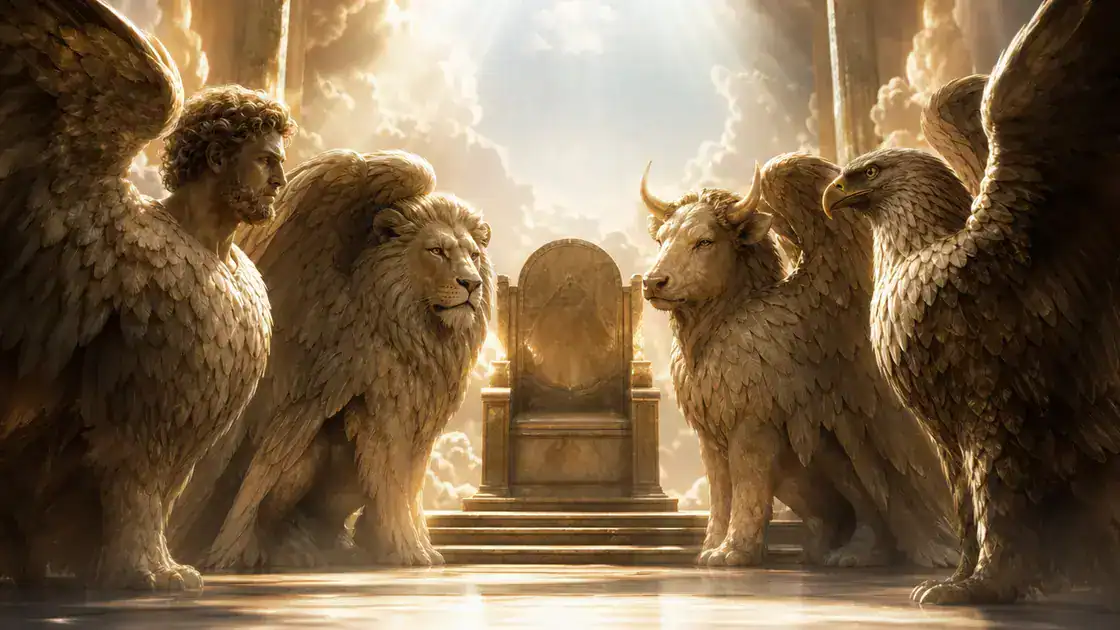
Scripture’s description of cherubim gives us a sacred picture to hold. The many faces — human, lion, ox, and eagle — are not random details but a woven message about how God relates to the world: the face of the human speaks of wisdom and relationship, the lion of courage and kingship, the ox of service and strength, and the eagle of swiftness and heavenly vision. Together these faces invite us to see God’s rule as wise, just, sacrificial, and lofty all at once, a truth we can carry into prayer and life.
The wings of the cherubim deepen that message by showing movement and care. Wings suggest both motion toward God and shelter over what is holy; they are the language of closeness and protection. In moments of fear or doubt, the image of wings can steady us — not as a distant image but as a vivid reminder that the divine presence both approaches and covers the world with purpose.
All of this gathers around the throne, where the cherubim serve as guardians and bearers of divine presence. They do not exist for spectacle but to mark and hold sacred space, calling worshippers into reverent attention and ethical living. When we meet these images in Scripture, we are invited to let our worship reflect the same balance of wisdom, service, courage, and vision that the cherubim embody, living more faithfully under the weight and wonder of God’s presence.
Theological interpretations across traditions: Jewish, Catholic, Protestant
In Jewish tradition, cherubim appear as part of the sacred story rather than as objects of devotion. They guard Eden and rest above the mercy seat on the ark, marking where God meets the people. This focus keeps attention on God’s holiness and on the way sacred space is ordered for encounter and covenant.
Catholic reflection often names cherubim among the higher ranks of angels and uses their image in art and worship to lift the heart toward mystery. You will find cherubic images in altars, mosaics, and liturgy that point not to the beings themselves but to the throne they attend. The tradition treats them as signs of God’s majesty and as a reminder that the sacraments open us to a living, unseen reality.
Protestant views are varied but usually simple and scriptural: some read cherubim as vivid symbols that teach about God’s presence, while others keep the older angelic order in sermonic and devotional language. Across these differences, the shared thread is practical and pastoral: cherubim call believers to reverence, worship, and moral faithfulness, urging us to live under the weight of God’s glory with humble hearts.
Cherubim in liturgy and sacred art: shaping prayer and image
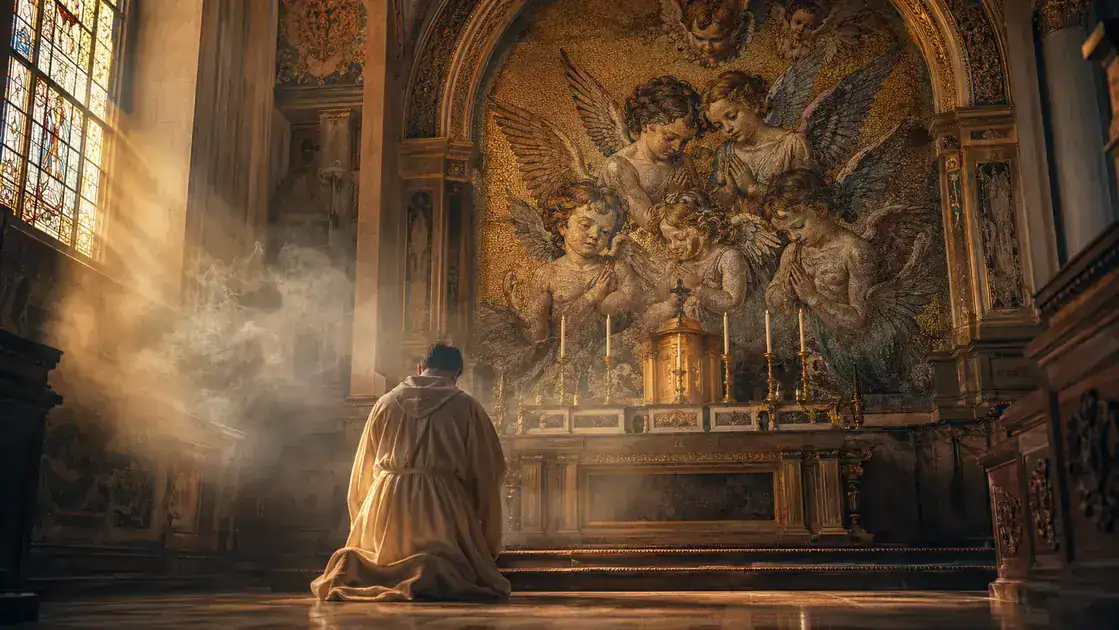
In sacred spaces, artists place cherubim near the most holy spots—above the ark, over the altar, or painted on the dome—so worshippers see a visual sign of God’s nearness. These images are meant as signs that point to God’s presence, not objects to be adored. Simple mosaics, carved stone, and gentle frescoes guide the eye and shape a posture of reverence.
The liturgy carries that visual language into sound and action. The Eastern churches sing the Cherubic Hymn while preparing the bread and wine, inviting worshippers to join the silent praise of heaven. In Western rites, music, incense, and altar art echo the same truth: worship is shaped by images that remind us we stand before the throne.
Seeing cherubim in art can change how you pray in small, steady ways. A carved wing or a painted face can steady the heart, calling us to silence, to awe, and to faithful living. These images help us enter into heavenly worship—not by drawing attention to themselves, but by drawing us into the song that surrounds the throne.
Encountering their message today: protection, justice, and worship
When we meet the cherubim in Scripture and art, their message reaches us today as a simple call: to live under God’s care and to mirror that care for others. The images of wings and throne ask us to trust that the holy presence watches over the fragile and the fearful. This is not a distant promise but a near, daily comfort that can steady our hearts in small moments of worry.
The same scenes that show protection also press for justice. Cherubim appear beside the throne where right and mercy meet, reminding us that worship and justice are linked. If the throne holds both glory and judgment, then our response must include tending those who lack power, speaking for the voiceless, and acting with fairness in our homes and communities.
Living their message
So how do we carry this into life? Begin with prayer that asks for both shelter and courage. Let quiet times before God shape the way you move in public: care for a neighbor, defend someone treated unfairly, give time or resources where need is clear. These acts are small echoes of the cherubim’s task—protecting the sacred in everyday people.
Finally, bring this vision into worship and work alike. When we sing, serve, or speak, we join the song that the cherubim keep. Worship that leads to compassion and service honors their role around the throne, and living with justice and mercy becomes an ongoing prayer that the world can both see and receive.
A prayer to carry the vision
As we leave these pages, may the image of the cherubim rest gently in our hearts. May we remember that the holy presence watches and holds us with care. Let that quiet thought bring calm and steady courage for the day.
Grant us grace to protect the vulnerable and to speak for justice in small, steady ways. Let our worship shape our hands and feet so that mercy and truth meet in how we live. May simple acts of kindness become real prayers offered for the world.
Teach us to move with awe, to let praise guide our choices, and to stand with compassion in our homes, streets, and workplaces. May the vision of wings and throne shape how we love and serve one another.
Go in peace, held by a presence both near and vast. May wonder be your companion and service your song.
FAQ – Common questions about cherubim and their sacred role
What are cherubim according to the Bible?
Cherubim are depicted in Scripture as powerful, holy beings associated with God’s presence. They appear guarding Eden (Genesis 3:24), crowning the mercy seat on the ark (Exodus 25:18–22), and in Ezekiel’s and John’s visions as multi-faced living creatures (Ezekiel 1, 10; Revelation 4:6–8). The Bible presents them less as playful children and more as solemn guardians and attendants around the throne.
Are cherubim the same as guardian angels?
They are both angelic, but tradition usually distinguishes their roles. Guardian angels are pictured as personal companions assigned to individuals (see Matthew 18:10). Cherubim appear in Scripture primarily as attendants of the divine throne and guardians of sacred space. In short, both protect and serve, but their biblical functions are different in scope and setting.
Why do cherubim have multiple faces and wings? What does that mean?
The faces (human, lion, ox, eagle) and wings in Ezekiel and Revelation are symbolic, not random decoration. They communicate qualities of God’s rule—wisdom and relationship (human), kingship (lion), strength and service (ox), and heavenly sight or swiftness (eagle). Wings suggest motion toward God and protective presence. These images invite worship and moral response rather than literal anatomy.
Do Jewish, Catholic, and Protestant traditions agree about cherubim?
They share core reverence but highlight different emphases. Jewish reading centers on cherubim as markers of sacred encounter and covenant. Catholic tradition often places cherubim within the higher angelic orders and uses their image in liturgy and art to lift the heart to mystery. Protestant approaches vary from symbolic, scripture-focused readings to liturgical uses in some churches. Across traditions, cherubim consistently call believers to awe, holiness, and justice.
How have cherubim shaped Christian worship and art?
Cherubim appear in mosaics, altars, icons, and hymns to signal God’s nearness and to shape worshipful attention. The Eastern Church’s Cherubic Hymn, altar cherub imagery, and the depiction over the mercy seat all direct worshippers toward the throne of God. In art and liturgy they function as visual and musical aids that move congregations from observation into reverent participation.
How can I live out the cherubim’s message today?
Let their presence inspire practical devotion: cultivate trust in God’s care, act for justice, and make worship lead to compassion. Prayer that asks for shelter and courage, small acts of service for the vulnerable, and worship that shapes daily choices are faithful responses. These steps echo the cherubim’s role—guarding the sacred and calling the world toward mercy and right living.