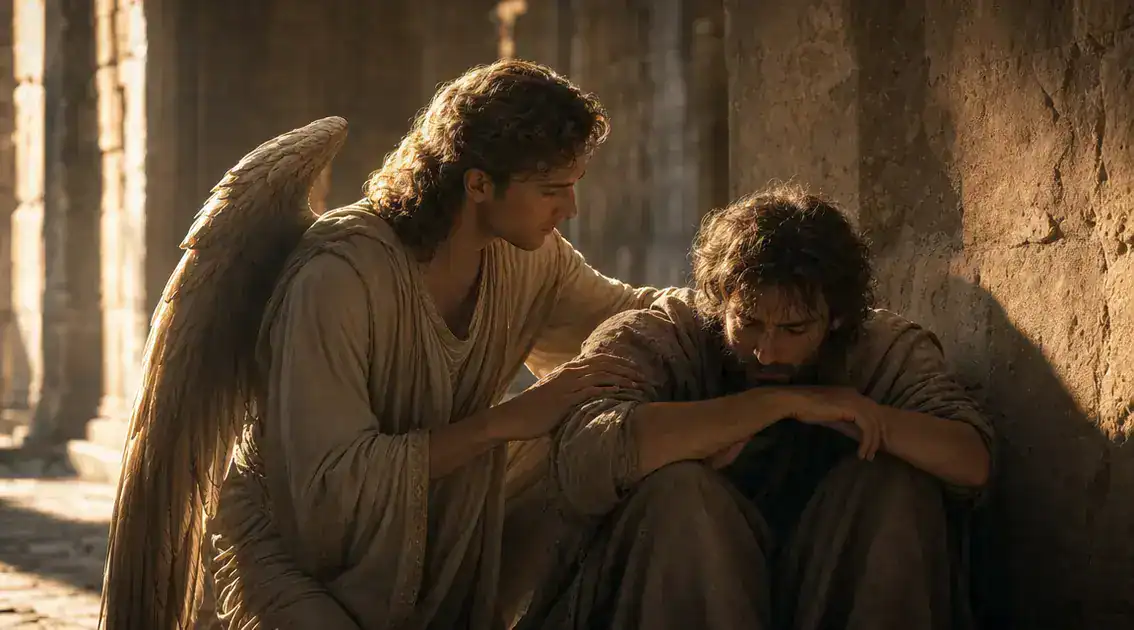

Heavenly message in difficult days is the biblical assurance that God sends a steady, intimate angelic presence and whispered guidance—comforting the anxious, guarding the faithful, clarifying next steps, strengthening endurance, and pointing toward patient hope grounded in Scripture, prayer, and faithful community.
heavenly message difficult days — have you ever noticed a sudden calm in the midst of sorrow? I’ve studied biblical moments where angels arrive to illuminate a path, and here I invite you into those quiet yet profound encounters.
Angels in the Bible: messages amid darkness
In Scripture, angels most often arrive in the places where people feel most lost and afraid. They do not come with grand parades but with clear, tender words that cut through panic — commands to fear not, promises that life will be redirected, or practical steps to follow. These brief visits change the course of a story: a promise given to a barren woman, a warning that saves a household, a vision that calms a troubled heart.
The Bible gives us familiar faces for these moments. Gabriel brings news that opens a new future, as when he speaks to Mary and Zechariah; Michael appears as a strong protector in texts like Daniel and Revelation. Their roles remind us that divine messages often carry both comfort and purpose — words to soothe the soul and instructions that invite faithful response.
For readers today, these scenes teach a simple practice: listen with Scripture and stillness. The message you seek may not arrive as a vision but as a sudden peace, a clear sentence in a prayer, or a guiding conversation with a friend. Keep your heart attentive, ask for discernment, and allow those quiet promptings to lead you forward; in that way, the biblical pattern of angels bringing light into darkness remains living and real.
Psalm 91 and divine protection in hard times

Psalm 91 has long been a quiet companion in nights of fear and days of weariness. The language invites you into a shelter that is simple and close at hand, a refuge you can name when life narrows. People read it to feel steadied, and the words tend to settle the chest when storms press in.
The psalm paints its promise with gentle images: ‘He will cover you with his feathers, and under his wings you will find refuge.’ That image is not a clever slogan but a felt reality meant to calm and to hold. It also speaks of angels given to guard the faithful, so the promise reaches both the heart and the life around it.
Make the psalm a companion by speaking one line slowly and pausing to breathe into it. Let the words shape a short prayer you can return to in the middle of a hard day. Over time, the practice trains the spirit to notice small signs of care and to step forward with quiet courage.
Gabriel, Michael and the language of comfort
Gabriel appears as a careful, gentle messenger in Scripture. In Luke he speaks to Zechariah with clear, patient words and then to Mary with a startling promise. These visits show that God’s news often arrives in human moments, not with loud signs but with a simple sentence that can change a life. Gabriel brings news that opens a new future, and his arrival usually asks for a quiet, faithful yes.
Michael shows a different side of God’s care: steady strength close at hand. In Daniel and Revelation he stands as a defender and leader against forces that threaten God’s people. His presence comforts because it says suffering is not the final word and that divine power watches over the fragile. Michael defends God’s people and his role reminds us that protection and courage accompany promises.
When these two figures meet us in Scripture, they teach a whole language of comfort made of word and action. The messenger calms the heart and points the way; the protector secures the path so that the way can be walked. In prayer, practice listening for soft promptings and for the steady assurance that follows; let Scripture and silence shape a patient trust that can endure hard days.
How prophetic visions teach trust when hope fades

Prophetic visions often come when a person feels the road has ended and hope is thin. They do not always give a clear map. Instead, they offer images that steady the heart and widen the view, helping you to see your trouble as part of a larger promise.
Biblical witnesses show this again and again. Daniel’s dreams gave him courage in exile, Ezekiel’s visions brought life to a field of dry bones, and John’s images in Revelation held a future light for a suffering church. In each case, the vision uses symbol and story to point beyond the moment, so that faith learns to wait on what God is making rather than on quick fixes.
You can bring that practice into your own life by remembering, praying, and acting in small, steady ways. Keep a short memory list of hopeful images or verses, speak them aloud in quiet moments, and follow the next simple step you believe is right. Over time, trust grows through small acts of faith, and the vision that once seemed distant becomes the path you walk day by day.
Saints’ encounters: lived experiences of angelic consolation
Many saints described moments when a presence entered their ordinary day and turned fear into peace. Padre Pio spoke of a steady closeness in prayer, Saint Teresa of Avila wrote of consoling visions that made prayer feel like a warm room, and Saint Faustina recorded gentle promptings that brought clarity in suffering. These accounts are not meant as spectacle but as testimony that angelic consolation can arrive as quiet support in the harshest seasons.
Those encounters often changed how the saints lived. The consolation they received did more than soothe feelings; it gave comfort and courage to act with charity, to endure illness, and to keep praying when outcomes were unclear. Their stories show that spiritual help can be practical: a renewed patience, a clear next step, or the calm to forgive when hurt runs deep.
You can learn from their example without expecting dramatic signs. Practice short, steady acts: name a single line of Scripture, sit in five minutes of stillness, or write one sentence about what you feel. Test what you sense by Scripture and wise counsel, and let small, repeated choices form a trustworthy habit of listening to the quiet care that often accompanies hardship.
Practical devotions to welcome heavenly guidance

Begin with a very small prayer you can keep in your pocket. A simple breath prayer—one short line repeated on the in-breath and out-breath—brings attention back to God when worry rushes in. Try a line from Scripture or a short plea like “Lord, be near”. This steady, gentle rhythm makes room for calm and helps you notice the quiet promptings that often feel like a heavenly message in hard days.
Make reading the Bible brief and slow. Choose one verse, read it aloud, and sit with the phrase that stays with you. Write one sentence about what it might ask of you today, then do one small, concrete thing in response. This pared-down form of lectio and journaling trains the heart to listen and to act, and it opens a shared space where the spirit of Scripture and the hush of prayer can meet.
Set a simple daily rhythm: light a candle, speak your breath prayer for a minute, and close the day with a short examen of gratitude—name one mercy you saw and one step you can take tomorrow. Add small acts of service as prayer lived out. Over time these small acts of faith form a steady path; they do not always bring dramatic signs, but they invite a quiet, trusted sense that you are not alone in the dark.
Reading suffering through promise: hope as spiritual practice
When we read suffering through promise, we let pain meet a steady hope. The Bible does not erase sorrow, but it frames suffering inside a larger story. That story holds the truth of God’s promises, which point us toward healing and a future light.
Scripture shows this again and again. Prophets spoke of a coming newness; the psalms name lament that moves toward trust. Jesus himself promises life that outlives death—resurrection and new creation—and that promise changes how we wait. It does not make pain small, but it gives a direction to our days.
Make hope a practice. Choose one promise or short verse to repeat when worry comes. Join someone in honest prayer and say the hard words together. Do a small, faithful act—feed a neighbor, plant a seed, light a candle—and let that action be prayer. These steady habits shape a heart that sees suffering through promise, and they teach patience, courage, and a quiet trust that can hold you in dark times.
A gentle closing prayer
Come, Lord, and fold us in your quiet. In the hard hours, remind us we are never alone. Let your presence feel near like a warm hand on the shoulder.
Help us notice small signs of care: a calm thought, a kind voice, a sudden peace. Teach us to listen, to breathe, and to answer with a small, brave step.
May we carry this hope into our days. When fear returns, speak a short verse, light a candle, or reach out to someone in need. Let these small acts become our steady way of trust.
Go with a softer heart and steady feet, held by promise and by care. Amen.
FAQ – Questions about heavenly messages, angels, and hope
How do angels bring messages in dark times?
Scripture shows angels arriving in fragile moments with simple, calming words—often to say ‘fear not’ or to point a person toward faithful action (see Luke 1). They tend to bring comfort and clear guidance rather than drama. Listen with prayer, Scripture, and quiet discernment to recognize these promptings.
Is Psalm 91 a promise I can claim for protection?
Psalm 91 is a biblical prayer of trust that speaks of God’s shelter and of angels who watch over the faithful, including the line that God will command his angels to guard you (Psalm 91:11). Tradition uses it for consolation. It comforts without denying hardship—its aim is to steady faith and draw us into dependence on God’s care.
What specific roles do Gabriel and Michael play in Scripture?
Gabriel appears primarily as a messenger who brings life-changing news (Luke 1; Daniel 8–9), while Michael shows as a protector and leader in spiritual struggle (Daniel 10–12; Revelation 12). Both act as God’s servants: one to announce hope, the other to guard and strengthen the people of God.
Can prophetic visions be trusted when hope fades?
Biblical visions (Daniel, Ezekiel, Revelation) often steady faith by widening the view beyond present pain. They must be tested by Scripture and wise counsel, and their worth is shown by whether they lead to faithfulness, charity, and endurance. Visions build trust when they point back to God’s promises and the Gospel.
Did saints really receive angelic consolation, and how should we regard those stories?
Many saints—Teresa of Avila, Padre Pio, Faustina, among others—reported consoling encounters. Church tradition honors these testimonies while practicing discernment: genuine spiritual consolation bears good fruit (humility, prayer, charity) and aligns with Scripture rather than promoting self-exaltation.
What practical steps help me welcome heavenly guidance each day?
Begin small: a short breath prayer (e.g., “Lord, be near”), one slow verse of Scripture, a minute of stillness, and a simple act of service. Keep a short journal of promptings and test them by Scripture and trusted spiritual counsel. These steady practices form a habit of listening and open the heart to quiet, guiding presence.