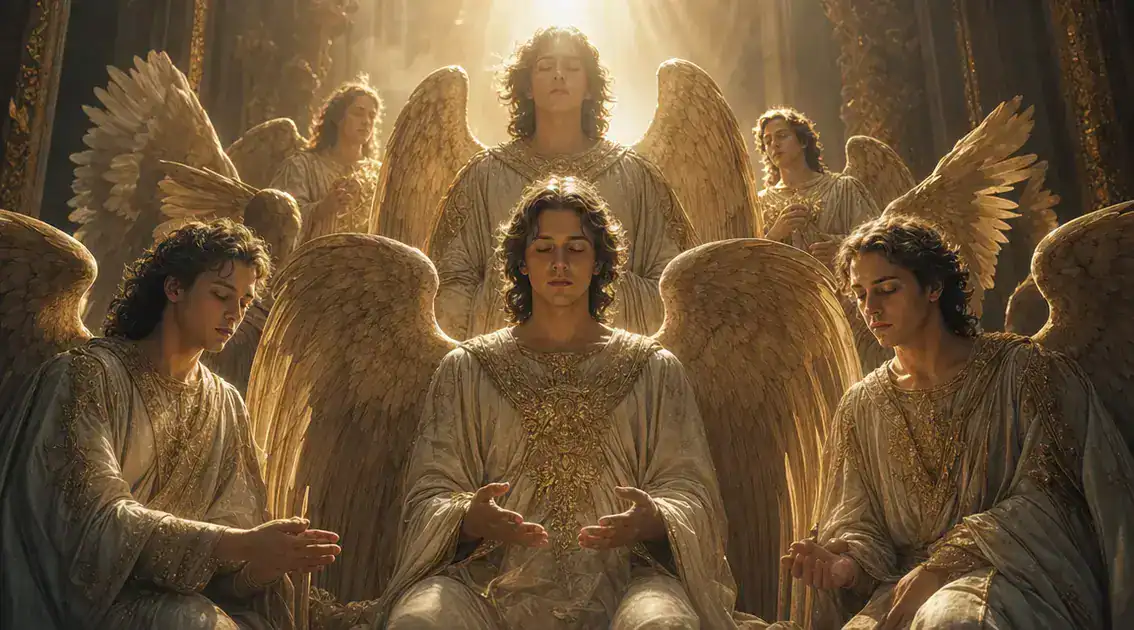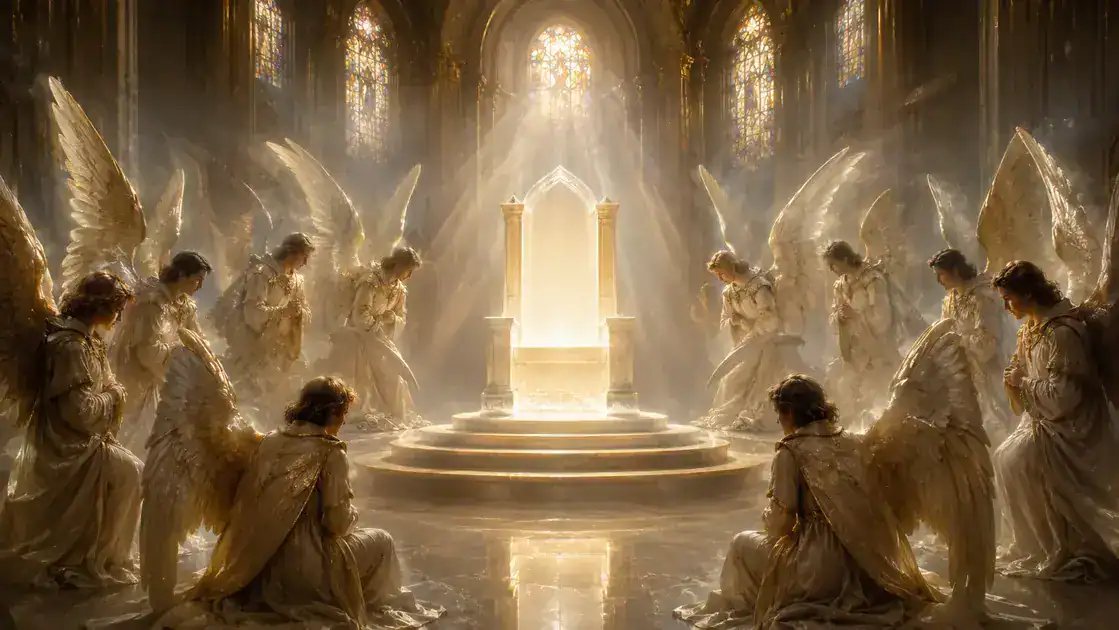

Thrones divine contemplation describes the angelic order portrayed in Scripture and patristic tradition as throne‑bearing attendants whose vocation is sustained, reverent attention to God, modeling contemplative presence in heaven and serving as a spiritual pattern for silent prayer, steady watchfulness, and interior formation in the life of believers.
thrones divine contemplation: have you ever felt Scripture fall silent, as if heaven itself listened? I invite you to explore an angelic order known for watchful, prayerful presence — through Bible images, Church writers, and simple practices that open the heart.
Thrones in biblical imagery: traces from Ezekiel and Revelation
A sound like rushing waters and a flash of light open the scene in Ezekiel’s vision. He watches living creatures whose faces shift between man, lion, ox, and eagle, and he sees a wheel within a wheel carrying the throne. Those images give a sense of motion and presence, as if the divine seat itself travels through the life of the world rather than remaining fixed.
John’s view in Revelation brings the scene to a focused throne-room where heaven gathers in steady worship. A brilliant throne rests beneath a luminous rainbow; four living creatures and twenty-four elders surround it, offering unending praise. The throne here becomes the center of still attention, a holy silence full of reverence.
When we hold these visions together, the moving imagery of Ezekiel and the concentrated worship of Revelation reveal the throne as an expression of attentive, watchful being. The angels and living creatures are not merely attendants but participants in a contemplative presence that keeps the gaze upon God. This sacred watching invites us into the same posture: to listen, to be held in silence, and to let our hearts learn a steady, prayerful attention.
The thrones as angels of contemplative presence in patristic thought
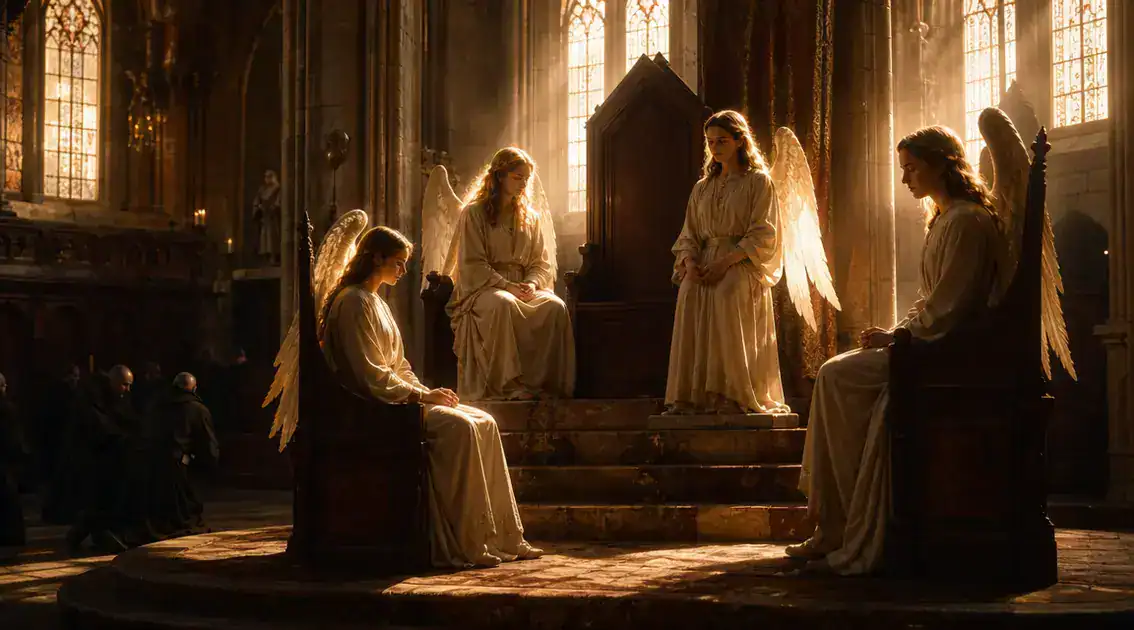
Early Christian writers shaped the way the church imagines angelic ranks, and among them Pseudo-Dionysius and Gregory of Nyssa stand out for how they speak of the Thrones. They do not describe these beings as busy messengers, but as figures of still attention who hold the divine seat. In their words, the throne-area of heaven becomes a school of silence where faces are turned steadily toward God.
That steady attention carries a theological weight: the Thrones model what it means to keep one’s heart fixed on God. This is contemplative presence in action — not dull passivity but a patient, receptive waiting that lets God’s gaze shape the soul. The Fathers invite us to see the heavenly court as a pattern for prayer, where listening and being-held matter as much as speech.
Such images lead naturally to simple spiritual practice. If the Thrones teach us to rest in God’s sight, then we can begin with short, regular pauses, with fixed-hour prayer or a single breath prayer that returns the heart to attentive silence. These modest habits tune the spirit to the same calm, watchful posture that the Fathers saw in the Thrones, turning ordinary moments into small acts of Godward attention.
Medieval and scholastic accounts: Aquinas and the hierarchy of angels
Medieval thinkers loved to name and order the unseen world so it might teach the living how to pray. They read Scripture alongside Pseudo-Dionysius and Church fathers, then shaped systems that linked heaven and earth. These thinkers did not treat angels as mere curiosities. Instead, they used the angelic ranks to point toward habits of the soul that help us stay close to God.
Aquinas and his scholastic peers placed the Thrones among the highest choirs in the famous hierarchy of angels. For them, Thrones are not loud actors but steady holders of God’s presence. Aquinas notes that they bear a kind of ordered stillness that supports divine rule, showing how God’s authority can be displayed without force, simply by fixed attention and right ordering.
That teaching becomes practical for prayer. If Thrones model quiet, steady attention, then our own spiritual life can learn from that posture: short, regular pauses, an openness to be formed rather than to command. These small practices shape a heart that receives God’s will with calm trust, turning learned theology into lived prayerful attention.
Thrones, divine contemplation, and the practice of silent prayer
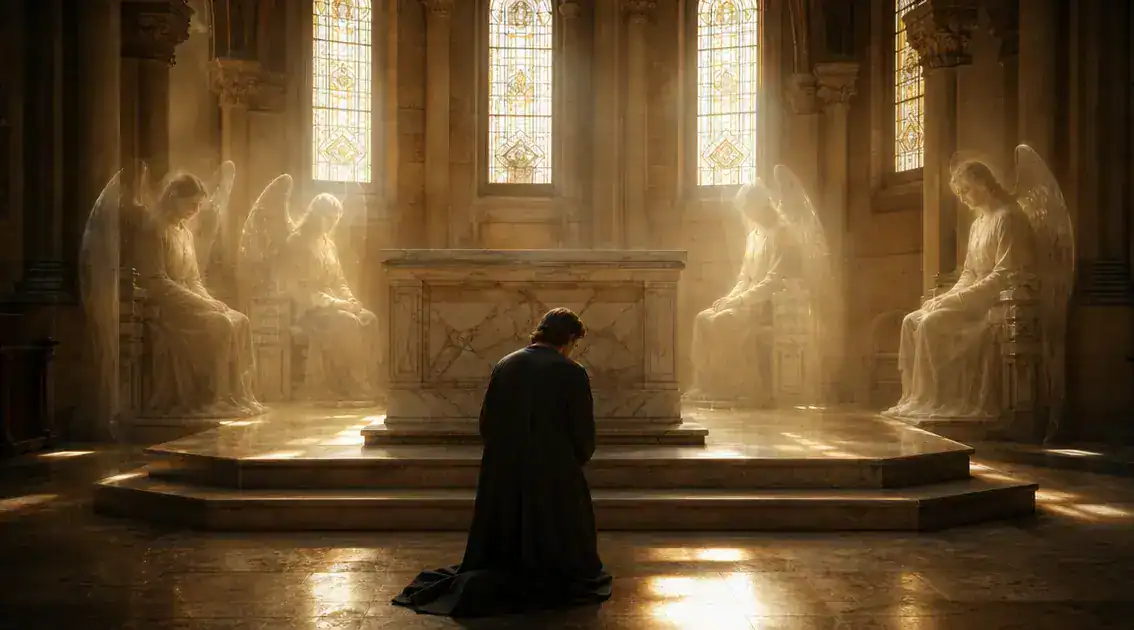
The Thrones invite us into a kind of prayer that is quiet and steady. They are pictured as bearing God’s presence with calm attention, and that image can shape how we pray. When we think of prayer this way, it is less about talking and more about keeping a contemplative attention that rests on God.
Silent prayer often begins with a short, simple act: a slow breath, a word breathed inward, a pause between tasks. These small moments teach us to return the heart again and again. The goal is not emotion but a steady posture of listening, a way to be held in God’s sight even in ordinary life.
As this habit grows, it changes everyday choices and softens the rush of the day. Decisions start from a place of quiet rather than haste, and ordinary work becomes a chance to remain present to God. Practicing short, regular silence helps the soul learn the same patience and watchful love we see in the Thrones.
Iconography and liturgy: how the church portrays contemplative angels
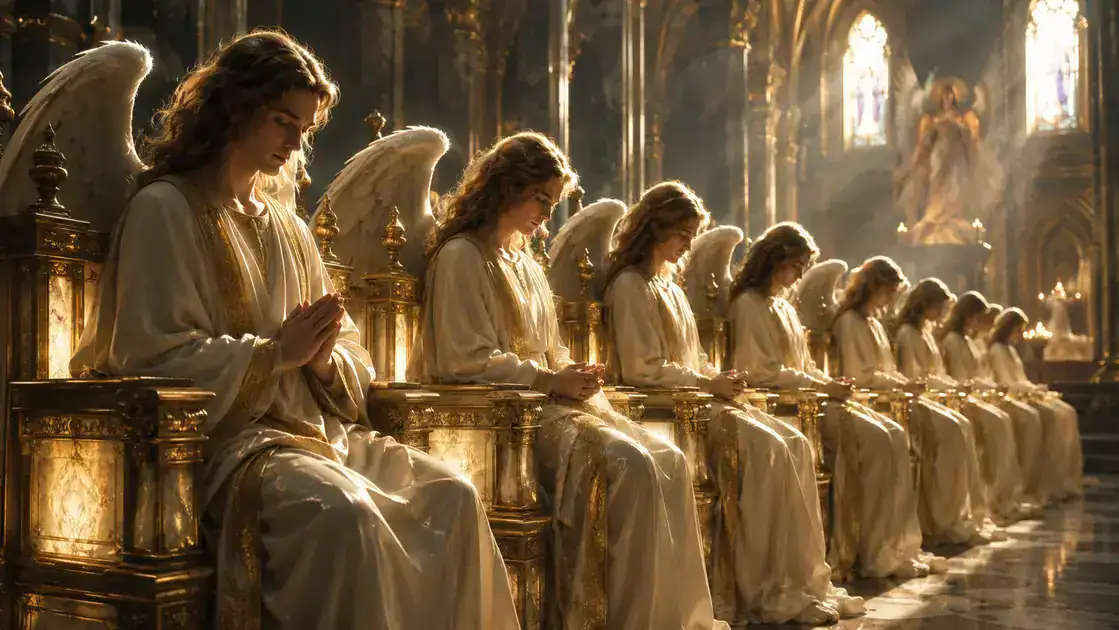
Church art often shows contemplative angels with calm faces, folded hands, and quiet posture. In Byzantine icons and Western frescoes alike, these figures sit or stand near thrones, their eyes lowered or fixed gently on the divine presence. Such images do not rush; they invite a stillness that models what prayer feels like when it is steady and patient.
Liturgy frames those images with sound and scent so the whole worship space becomes a teacher. Incense rising, a slow chant, dimmed candles, and the ordered movements of the rite shape the heart to listen. In both the Divine Office and the Mass, moments of silence and repeated responses train us in contemplative attention as surely as any painted face or carved throne.
When we stand before an icon or sit in a quiet service, we join a long practice that links sight and worship. Let the image hold you rather than demand an answer; breathe with the prayers and let the silence steady your thoughts. This simple, repeated habit turns church gestures into a lived, watchful habit—an ordinary way to learn the same steady love the Thrones portray.
How to cultivate a contemplative posture that welcomes angelic presence
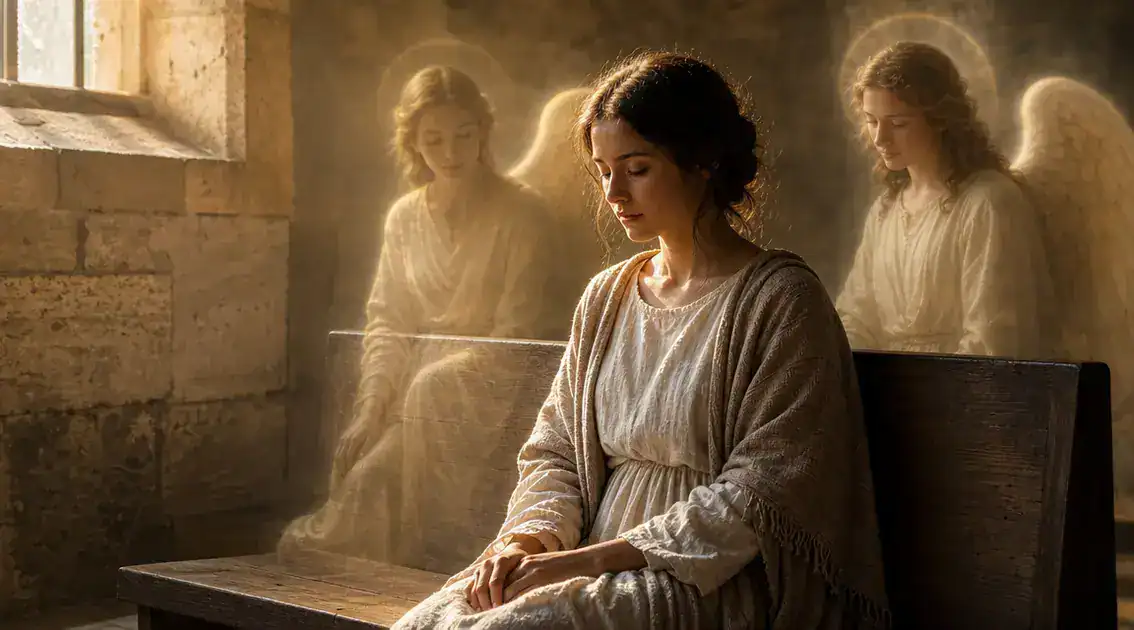
Find a simple seat, soften your shoulders, and let your hands rest where they can be still. Begin with a slow, steady breath and let your eyes fall softly, not fixed on a thought but open to the room. This small outer calm helps the heart settle and opens a space where prayer can be gentle rather than forced.
Try a brief practice you can repeat: one quiet breath, a single short phrase breathed inward, or a two-minute pause at mid-day. These habits are not about achieving feeling but about training attention. As you return to the breath or the word, you practice a contemplative posture that is receptive and patient, a way of keeping the heart ready to notice the subtle movement of grace.
Over time, let that quiet shape your day. Bring the same stillness to small decisions, to listening to another person, or to the tasks you do by hand. When prayer becomes a habit of attention, it creates room for the felt sense of company that many call angelic presence—not as a spectacle, but as a steady, comforting nearness that helps you live with more care and gentleness.
A prayer to carry with you
May the quiet of heaven teach your heart to listen. May the steady watch of the Thrones shape your days so you can rest in gentle attention. Let that calm be a refuge when worry rises.
Practice a slow breath or a single inward word each morning. These small acts train your spirit in contemplative attention, turning ordinary moments into prayer. Over time, silence will feel like a companion rather than an absence.
Go now with a soft, watchful hope. Be open to small signs of grace, and let wonder guide your steps. Amen.
FAQ – Thrones, contemplative angels, and sacred practice
What does the Bible mean by the term “Thrones”?
The word appears in Scripture (for example, Colossians 1:16) and in visions like Ezekiel and Revelation, where a sovereign throne is surrounded by living creatures and attendants. The biblical pictures point less to a job title and more to a way of bearing God’s presence—an ordered, watchful nearness around the divine seat.
Why are the Thrones called angels of contemplative presence?
Patristic writers such as Pseudo-Dionysius and later theologians read the Thrones as an image of steady, reverent attention to God. This tradition sees them not as noisy actors but as models of silent worship that reflect the heart of contemplation in Scripture and the Church’s prayer life.
Does Scripture invite the same kind of silent, contemplative prayer the Thrones suggest?
Yes. Passages like Psalm 46:10, “Be still and know that I am God,” and scenes of Christ withdrawing to pray show that Scripture values quiet attention to God. The Desert Fathers and monastic tradition drew on these texts to shape practices of patient listening and simple, repeated prayer.
How can I begin a practice of silent prayer that welcomes this presence?
Start small: choose a short time, sit quietly, breathe slowly, and repeat a single inward word or phrase. Follow the example of Jesus withdrawing to pray and the monastic rhythm of fixed-hour pauses; these simple habits train attention and make room for a steady, watchful heart.
Can church art and liturgy help me sense contemplative angels?
Yes. Icons, hymnody, incense, and liturgical silence form a whole environment that trains the heart to listen. The Church’s visual and ritual languages are meant to shape interior attention, helping worshippers share the same calm, reverent posture the Thrones represent.
If I pray quietly, will I see angels or have visions?
Scripture records varied angelic appearances, but the tradition warns against seeking signs as the main goal. Hebrews 1:14 calls angels ministering spirits, often experienced as support or peace rather than dramatic visions. In most cases, contemplative practice yields a deeper sense of God’s presence and inner peace rather than constant sensory phenomena.