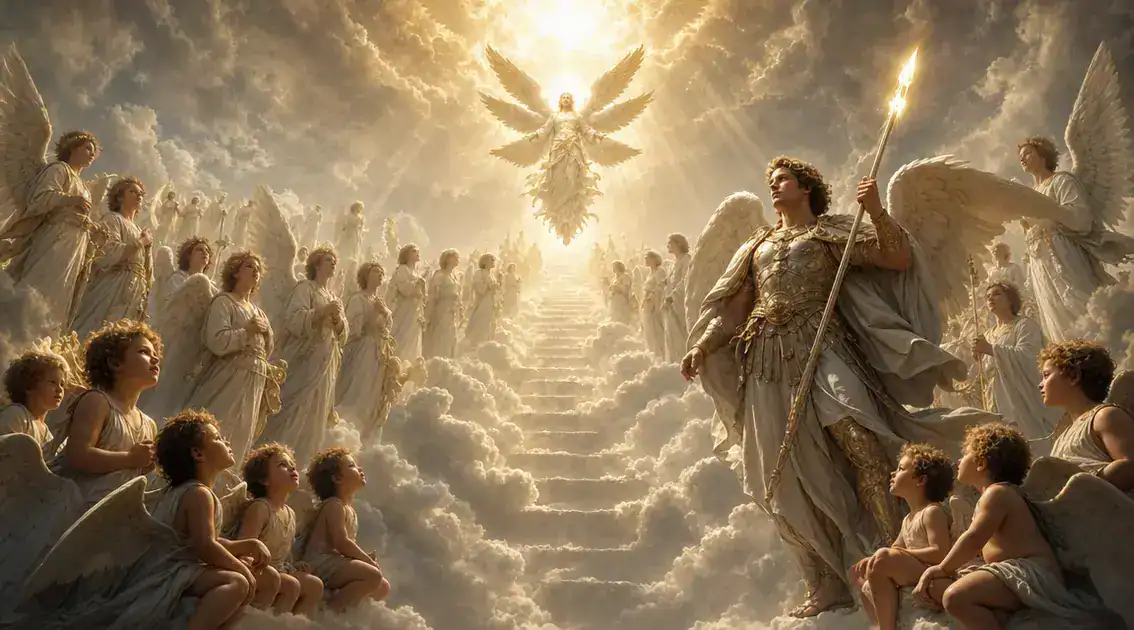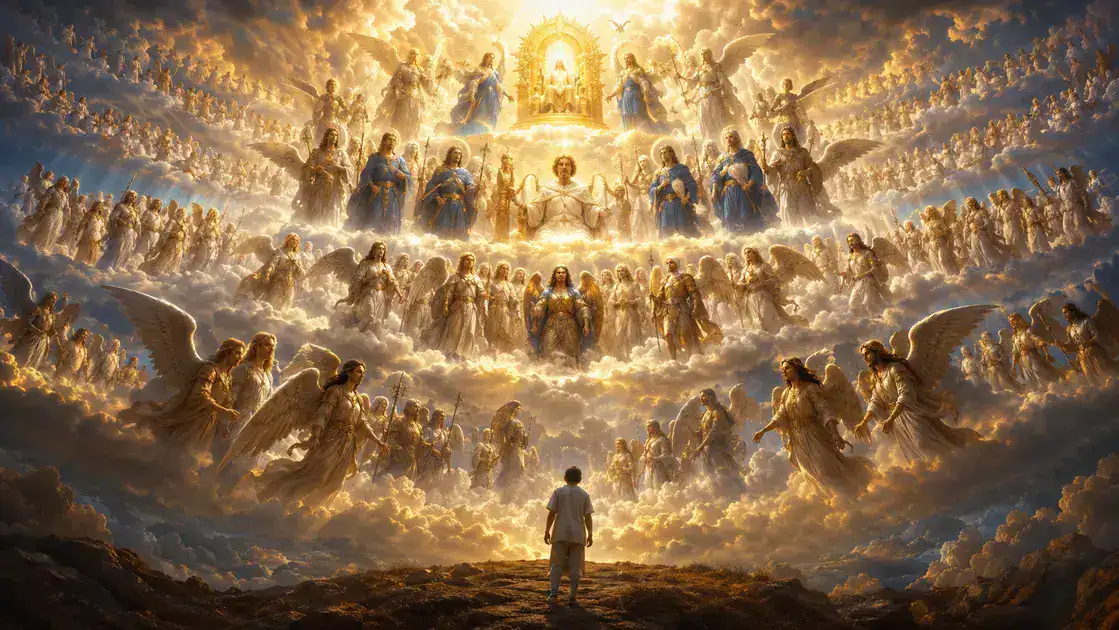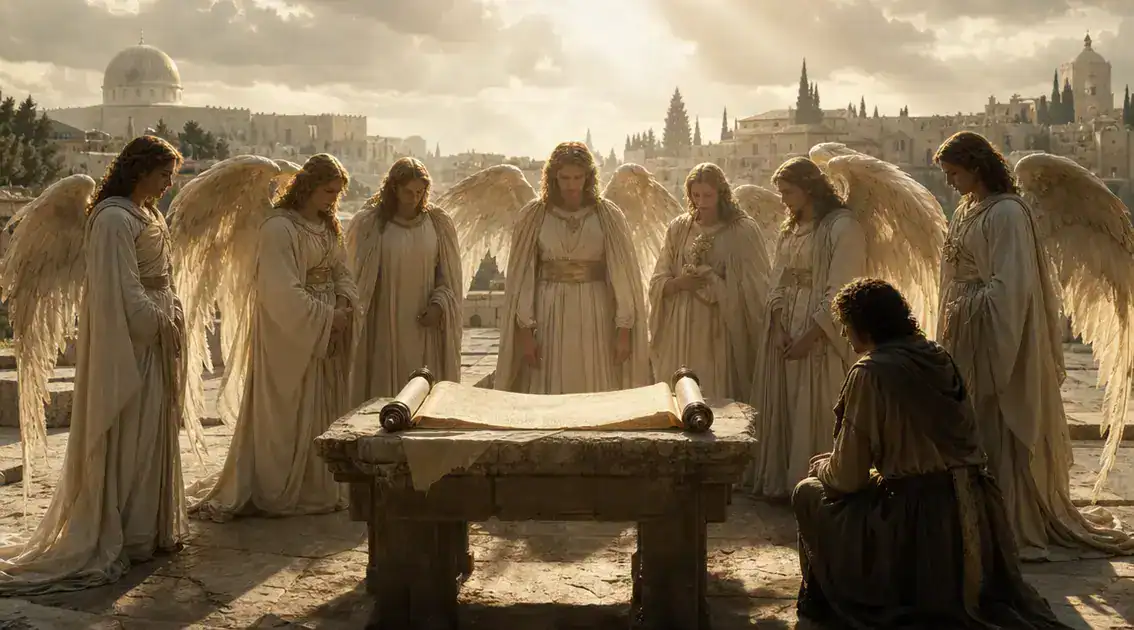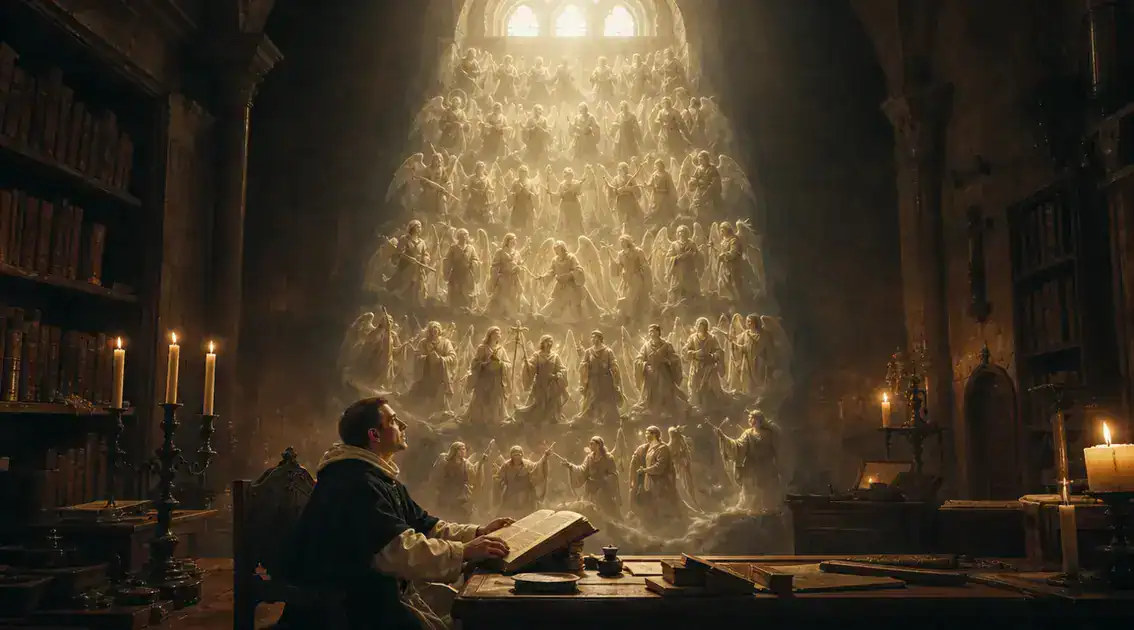

thomas aquinas angelic hierarchies present a theologically ordered vision in which created, immaterial intellects are arranged in nine choirs—seraphim, cherubim, thrones, dominions, virtues, powers, principalities, archangels, and angels—each embodying degrees of contemplation, governance, and ministerial service that mediate God’s providence, shape spiritual life, and invite human cooperation in prayer and charity.
thomas aquinas angelic hierarchies; have you ever stood before a stained-glass window and felt the hush of heaven? Aquinas gently guides that hush into language, revealing how angelic orders reflect divine order and invite us into deeper prayer.
Aquinas’s theological framework for angelic orders
Have you ever felt the hush that comes when a chapel grows very still? Thomas Aquinas begins with a clear, gentle claim: angels are pure spirits, created minds without bodies who know and love God. He brings together Scripture and careful reason to explain why such beings are both distinct from us and intimately near to God’s work in the world.
For Aquinas the order of angels is not a mere list but a living pattern. The higher choirs draw nearer to God in contemplation, reflecting divine light and love, while the lower choirs carry that light into action, guiding and governing creation. This movement from contemplation to service helps us see each choir’s purpose—how seraphim glow with love, cherubim hold deep insight, and guardian angels attend to our daily needs.
Learning this framework invites a different kind of prayer: one shaped by wonder and trust. If angels function as instruments of divine providence, then their hierarchy points us toward humility and cooperation with God’s plan. We can quietly ask for aid, watch for small signs of care, and let the ordered harmony of heaven inform how we live, love, and pray each day.
Scriptural roots: how the Bible suggests angelic ranks
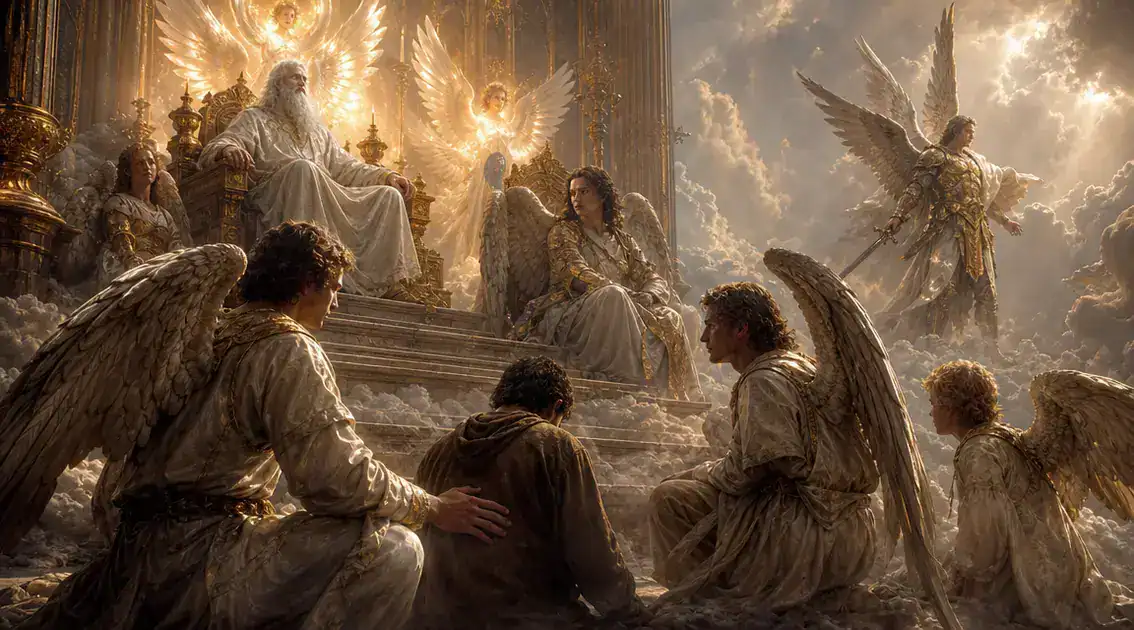
The Bible provides vivid images that suggest a layered life among the angels. In prophetic visions we meet beings who stand closest to God and others who serve at the edges of human life, and these images point toward an ordered company rather than a single kind of spirit. Reading those scenes together helps us see why later theologians spoke of ranks.
Isaiah’s vision shows the burning intensity of the seraphim around God’s throne, calling out holiness in a voice that shakes the temple. Ezekiel, by contrast, paints cherubim with multiple faces and wings who move the divine presence across the world; their form speaks of closeness to God and of active governance. These passages offer a pattern: some beings dwell near God’s light in worship, others carry that presence into creation.
The New Testament adds more notes to the pattern—angels announce birth, stand as ministers to Jesus, and the book of Revelation reveals many kinds of heavenly attendants around thrones and altars. Stories of Michael as a warrior and of guardian angels watching over ordinary people show different tasks within the same household of heaven. Taken together, these scriptural images give us a simple, prayerful map of how holiness can be both contemplative and practical in the angelic orders.
The nine choirs: names, roles and symbolic meanings
The nine choirs form a poetic map of heaven, each name carrying a simple, rich meaning that helps us pray. At the highest levels we find the closest attendants to God; as we move down, their work turns more toward guiding, governing, and serving creation. These names are not cold labels but invitations to see how holiness expresses itself in different ways.
The top triad—seraphim, cherubim, and thrones—speaks first of sheer love, deep knowledge, and steady justice. Seraphim burn with love before the throne, drawing our hearts toward worship. Cherubim remind us of intimate knowledge of God’s mysteries, while thrones suggest a calm, ordered authority that reflects God’s justice into the world.
The middle and lower choirs—dominions, virtues, powers, principalities, archangels, and angels—show how that heavenly love reaches us in daily life. Dominions guide rulers and order, virtues are linked to grace and miracles, and powers guard the cosmic harmony against disorder. Principalities watch over nations and communities, archangels deliver decisive messages and protection (think of Michael), and the angels closest to us act as guardian companions in our small days. Seeing these roles together helps us live with hope, knowing the heavens are ordered not for their own sake but to bring God’s care into ours.
Angels, providence and the governance of creation

Thomas Aquinas teaches that angels act as instruments of divine providence, carrying God’s care into the world without replacing his will. They are not rivals to God but helpers, ordered beings who bring guidance, grace, and protection where needed. In Aquinas’s vision, this work is quiet and steady, like hands that shape light without drawing attention to themselves.
The angelic hierarchy works as a chain of service: higher choirs bend the will toward God in contemplative union, while lower choirs bring that union into action across creation. Aquinas calls their activity a form of secondary causes, meaning angels cooperate with God to move events while respecting the order he sustains. This helps us see how storms calm, leaders are guided, and small mercies reach ordinary lives without being forced or mechanical.
For spiritual life, this teaching invites trust and attention. We can pray with the sense that God uses holy beings to care for us, and we can look for gentle signs of that care in the day. Simple acts—an answered prayer, timely help, a sudden peace—can be read as part of a good order where angels join our honest seeking. Such awareness leads to humility, steady hope, and a calmer prayer that lets God’s governance shape our choices.
What the hierarchies teach about prayer and spiritual growth
Prayer grows richer when we imagine it as a conversation that reaches beyond our sight. The angelic hierarchies teach that prayer is both looking up in wonder and reaching out in care. When we speak to God, we join a larger chorus—some voices drawn to pure worship, others sent to help the world below.
Higher choirs show us the practice of contemplation, holding steady before God in silence and love, while lower choirs show the shape of faithful action. Seeing both together helps a prayer life that balances quiet listening with simple service. We learn to rest in God’s presence and then to let that rest shape small acts of kindness and honesty.
There are gentle ways to live this teaching day by day: ask your guardian angel for help in the morning, bring a short moment of silence to midday work, and end the day noting where you felt a small mercy. These habits train the heart to expect God’s care, to notice quiet prompts, and to grow in trust without needing grand experiences.
Reading Aquinas today: devotional and pastoral reflections
Reading Thomas Aquinas today can feel like sitting with a wise, patient friend. He turns big ideas into help for prayer and care. Aquinas invites us to see prayer as an ordered conversation where the heart listens and responds. This view makes spiritual life less about facts and more about a humble, steady posture before God.
His thought gives a pastoral map: angels are companions and servants of divine care, not distant curiosities. Ask your guardian angel for help in small things, use short moments of silence, and let the liturgy shape your hopes. These simple practices make theology useful; they teach us to expect gentle guidance rather than dramatic signs.
At the same time, Aquinas warns against turning heaven into mere speculation. The true measure is how wisdom changes our actions and our love for others. Let his writings lead you toward humility and wonder, and toward small acts of mercy that shape parish life and daily choices.
A final blessing on the path
May the quiet order of the angelic choirs draw your heart into simple praise, and may you know you are never truly alone. The same God who arranges the heavens also holds your steps.
Like Aquinas taught, let this order shape your life into humility and wonder. Trust that angels serve God’s mercy and bring small goods into your day.
When you pray, breathe slowly and name one small need or one small joy. In that gentle habit you join heavenly worship and the work of grace among us.
Go forward with peace, expect quiet help, and let each act of kindness answer the love you have received. Amen.
FAQ – Questions on Saint Thomas Aquinas and the angelic hierarchies
Do angels really exist according to Scripture and Christian tradition?
Yes. Scripture speaks of angels throughout—Psalm 91:11, Isaiah 6 (seraphim), Ezekiel 1 (cherubim), and Hebrews 1:14 calls them “ministering spirits.” The Church and the Fathers have long affirmed their reality, and theologians such as Saint Thomas Aquinas treat them as real, created beings who serve God and aid creation.
Does each person have a guardian angel?
According to long-standing Christian tradition and the teaching of the Church, each soul is entrusted to a guardian angel. Jesus’s words in Matthew 18:10 and pastoral practice support this belief. The Catechism of the Catholic Church also affirms the personal care of angels toward believers.
Are the nine choirs found exactly in the Bible, or where do they come from?
The Bible gives vivid images of different heavenly beings, but it does not lay out a formal ninefold list. The nine choirs (seraphim, cherubim, thrones, dominions, virtues, powers, principalities, archangels, angels) trace back to Pseudo‑Dionysius the Areopagite, whose pattern was later used and refined by Aquinas in the Scholastic tradition. Aquinas reads Isaiah, Ezekiel, Daniel, Luke, and Revelation together with that patrimony to explain their roles.
How do angels relate to God’s providence and human freedom?
Aquinas teaches that angels act as instruments or “secondary causes,” cooperating with God’s sovereign will without replacing it. They help order creation and bring God’s care into particular situations, while human freedom remains real. This view preserves God’s sole source of power while acknowledging the real, subordinate agency of created spirits.
May I pray to angels or ask them for help?
Yes—many Christian traditions encourage addressing one’s guardian angel in brief, humble prayer, asking for guidance or protection. Such prayers are understood as requests that angels intercede or assist while the ultimate prayer is directed to God. Devotional practice (for example the traditional “Angel of God” prayer) is rooted in both Scripture and pastoral custom.