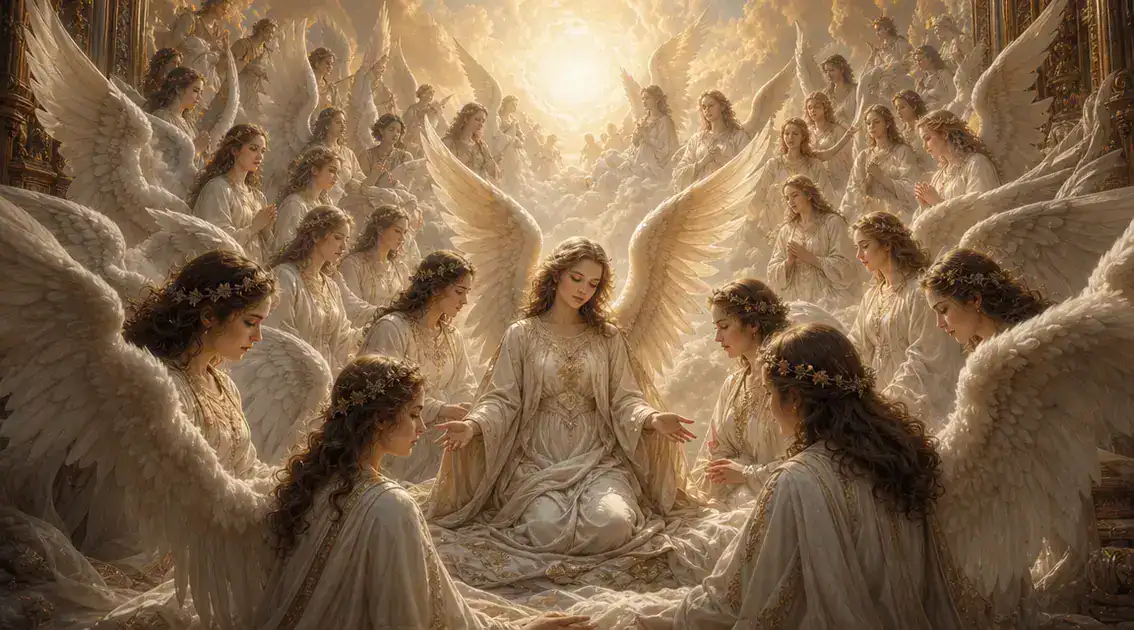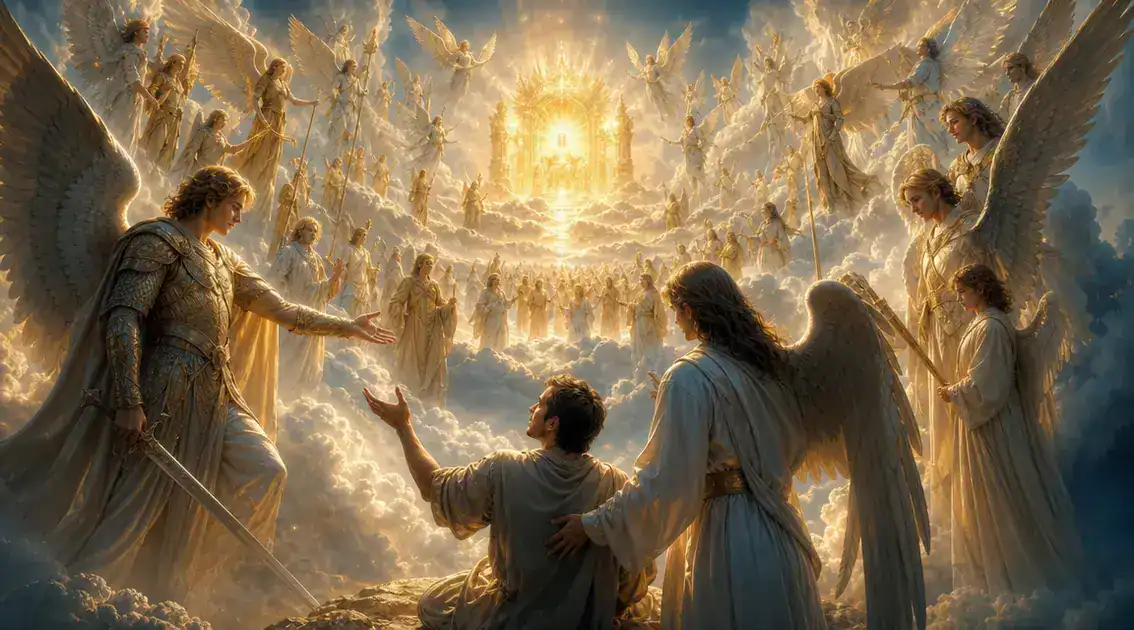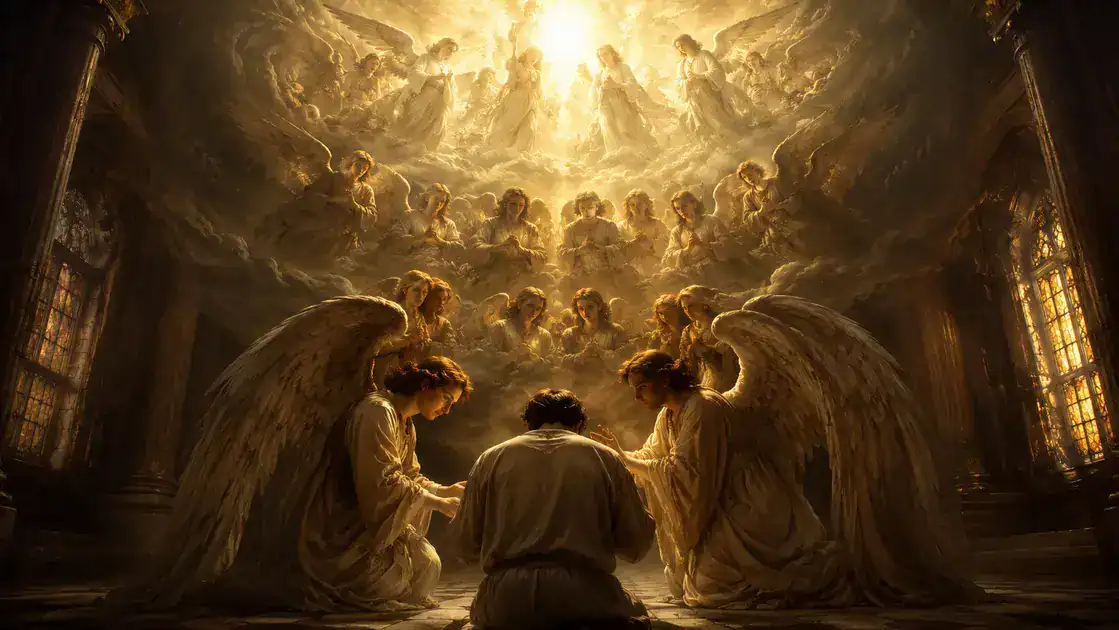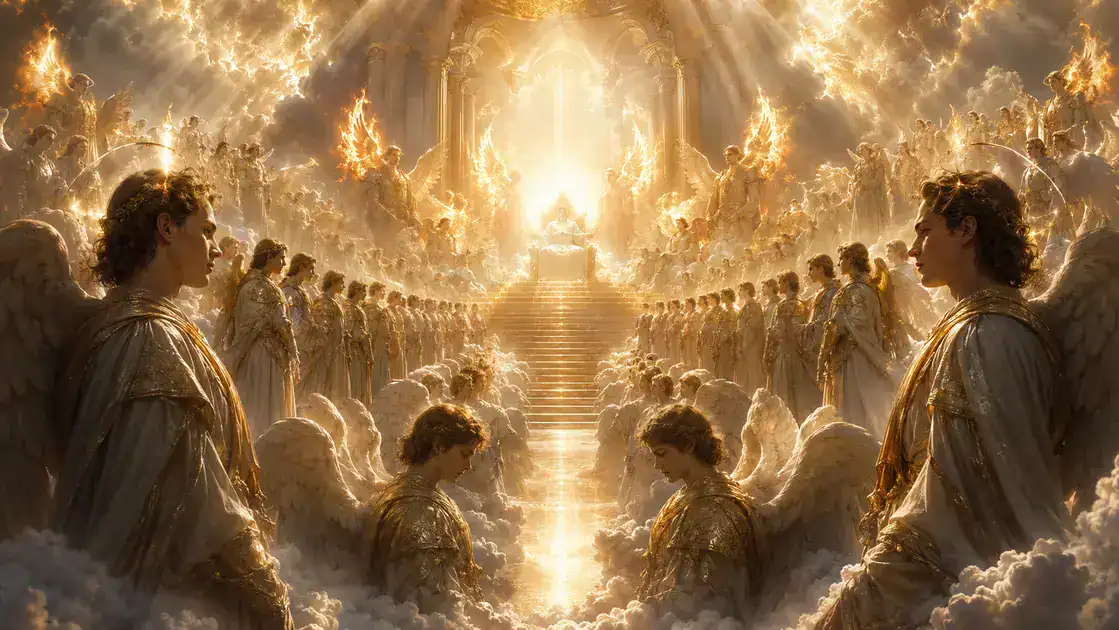

God created a hierarchy of angels to manifest and administer his ordered care: some beings dwell in ceaseless worship before the throne, while others are sent as messengers, guardians, and agents of providence, enabling praise, protection, and justice to move from the divine center into the world in coherent, loving patterns.
Have you ever wondered why did god create hierarchy of angels? Picture Isaiah’s vision: seraphim encircling the throne. Let’s trace scripture, theology, and devotion to see how that celestial order invites us closer to God’s purpose.
Biblical roots of angelic orders
The Bible introduces angels not as one flat group but as beings who serve in different ways and places. In Genesis we meet visitors who bring word and promise, and Jacob sees a ladder with angels going up and down—small scenes that show movement and role. These early stories teach that angels act as messengers and attendants, each with a purpose tied to God’s plan.
Later visions make that variety more striking. Isaiah stands before the throne and sees seraphim calling out; Ezekiel watches cherubim in motion about the divine chariot; the book of Revelation surrounds the heavenly court with living creatures and elders who worship. Together these passages place certain beings nearer the throne and others sent outward, suggesting an ordered arrangement rooted in worship and service.
That biblical ordering helps us see why a hierarchy appears in later theology: it names different ways the created world takes part in God’s rule. Rather than a prideful ranking, it reads as a map of service—who praises closest to the source of light, who carries messages, who protects and guides. Held gently, this tradition invites us into a disciplined vision of care and praise, where every role points back to God’s love and purpose.
Patristic and medieval formulations

Early church writers looked to Scripture and to prayer when they spoke of angels. Fathers such as Augustine and Gregory named angels as servants, messengers, and guardians, but a decisive shape came from Pseudo-Dionysius. He offered a clear map: angels ordered in three triads and nine choirs, each choir nearer or farther from God by the way it praises and serves.
Medieval thinkers built on that map and made it easier to hold in the mind and heart. Thomas Aquinas gathered the old teachings and explained how some choirs dwell in constant worship near the throne, while others are sent out to guide, protect, or govern. This ordering helped preachers, artists, and monks turn abstract ideas into images and prayers the whole church could use.
The result was not mere theology but a devotional lens for seeing the world. Naming ranks showed a cosmos arranged by purpose and love, where each created being plays a part in God’s care. Far from lifting some above others for pride, the tradition invites us to learn humility, to join in praise, and to trust that order itself points us back to God’s mercy and design.
What hierarchy reveals about God’s governance
When Scripture shows angels arranged around the throne, it points to a God who rules by order rather than chaos. This heavenly ordering is not a cold hierarchy of rank for its own sake, but a sign of ordered care: each being has a role that helps sustain creation, praise, and the flow of God’s mercy. Seeing that structure in the Bible invites us to read divine governance as purposeful and nurturing.
Those roles also help explain how God governs with wisdom and love. Some angels stand closest in worship, keeping steady attention on God; others move outward as messengers, guides, or guardians. That pattern shows a working system—communication, service, and protection—that links heaven and earth, so that God’s will reaches into daily life in practical ways.
For devotion, this view gently shapes how we live and pray. Recognizing a celestial order can calm our worry about meaning and direction, and it calls us to humble service rather than rivalry. If the universe is held by a wise, loving arrangement, then our small acts of care and praise fit into a larger chorus, each gesture echoing the same purpose we see in the angels’ work.
Roles of choirs and their symbolic meanings
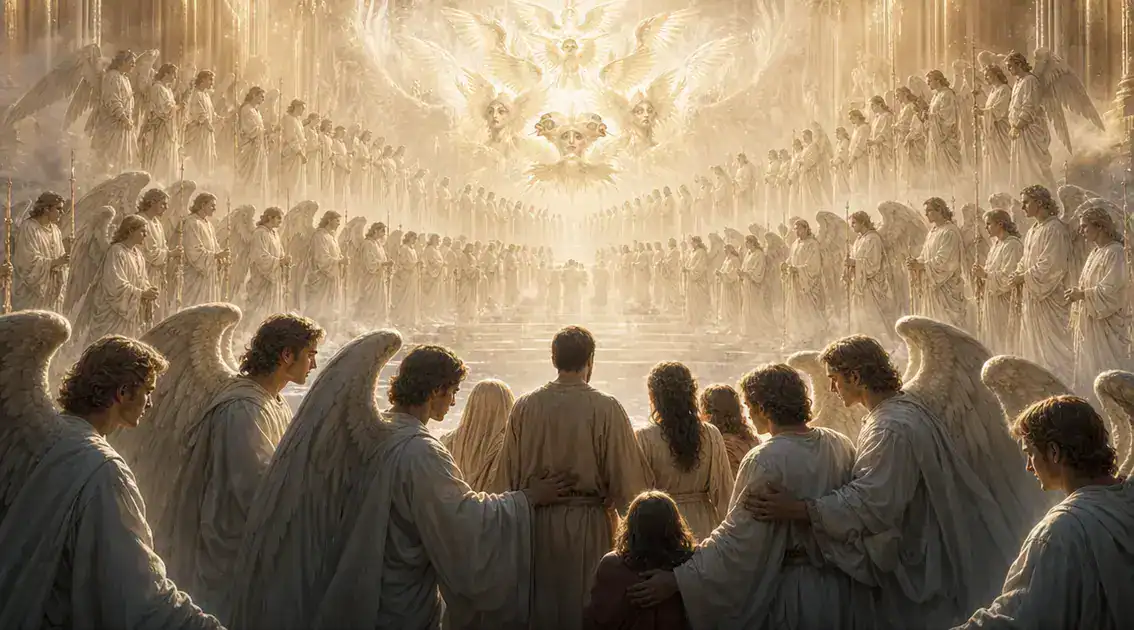
The choirs of angels give shape to how heaven both worships and works. Close to the throne are the seraphim and cherubim, figures we meet in Isaiah and Ezekiel who show us what pure praise and deep knowledge look like. Seraphim often symbolize a burning love for God, while cherubim remind us of wisdom and watchful presence. These images teach that some beings are ordered primarily for worship and the purification of the world around the divine light.
Moving outward, other choirs speak of governance and power. Thrones, dominions, virtues, and powers suggest different ways God’s care reaches the created order: justice and right judgment, steady rule, and the strengthening of the world against chaos. In this middle ring the symbolism is practical—these angels represent God’s provision for law, order, and the flow of grace through history. Seeing them helps us trust that spiritual order supports the messy life we live.
The outer choirs—principalities, archangels, and the simple angels—remind us of closeness and mission. They are the messengers and guardians sent into the world, the ones who touch ordinary days and guide communities and hearts. When we reflect on these roles, we find a devotional map: worship near the center, governance in the middle, and loving mission reaching into our streets. That map invites us to find our own small role in praise, service, or care, echoing the choirs that hold the world in prayer.
Archangels, seraphim and cherubim in Scripture
The Scriptures give us clear, simple portraits of different angelic kinds that move in and out of God’s story. In Isaiah’s vision the seraphim appear near the throne with six wings, calling out in steady praise. That image shows their heart: they burn with love for God and point our attention to holiness, not to themselves.
Elsewhere the Bible shows the cherubim as guardians and living symbols of God’s presence. Ezekiel describes strange, powerful creatures with many faces and swift motion around a throne, and Genesis places cherubim at Eden to guard the way to life. These images carry weight: cherubim speak to wisdom, watchfulness, and the mystery of God’s nearness that both protects and reveals.
Archangels bring the life of heaven into our day. Figures like Gabriel appear as messengers in Daniel and Luke, bearing news that changes lives, while Michael stands as protector and advocate in Daniel and Revelation. Together these roles—seraphim in praise, cherubim in watchful presence, and archangels in mission—invite us to see a living, caring heaven that touches our prayers, our struggles, and our hope.
How hierarchy aids human worship and prayer
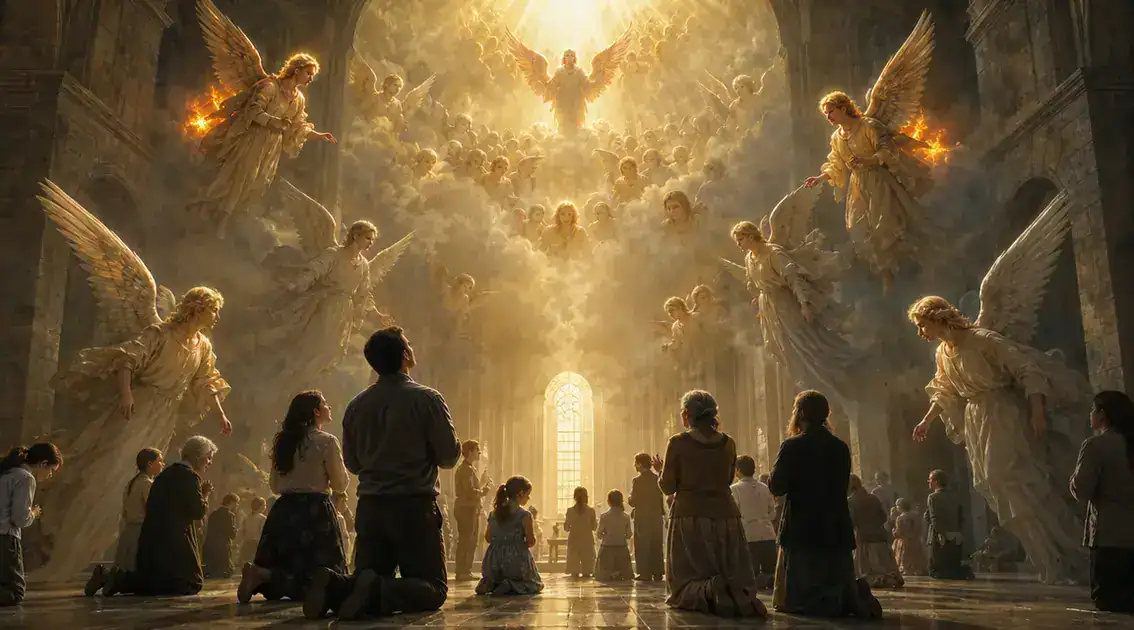
The vision of heaven in Scripture shows angels gathered in ceaseless praise. Isaiah and Revelation picture hosts around the throne, singing and bowing without end. When Christians pray together, the church borrows that gentle rhythm. Liturgy and hymn echo the heavenly liturgy, shaping our words and breath toward God.
Hierarchy helps prayer by naming roles that link heaven and earth. Some angels serve as messengers who bring word; others guard and guide the faithful along daily paths. That picture comforts us: prayer does not disappear into silence but finds a caring passage. Belief in guardian angels and archangels makes intercession feel like a shared task with the heavenly host.
On a practical level, this order teaches humility and a steady posture in worship. We learn to listen, to respond, and to place God at the center, following the pattern of the choirs. Ritual, silence, and steady praise help our prayers rise with purpose, inviting each heart to join the same chorus without seeking the spotlight.
Contemporary spiritual and pastoral implications
In our time, the idea of an angelic order can still speak into daily church life and personal faith. When pastors and laypeople picture heaven’s ordered praise, it gently shapes worship, prayer, and ministry so they point toward service and humility. This image helps communities form rhythms of prayer and care that mirror the steady love we see in Scripture.
Pastorally, the hierarchy offers a model for shared responsibility rather than a license for control. Ministers can learn to name roles, delegate well, and protect the vulnerable while avoiding pride or domination. When leaders remember that heavenly order is about mission and care, not power, they are better equipped to shepherd with compassion and justice.
For personal spirituality, this tradition invites trust and vocation. Believers may find comfort knowing that messengers and guardians are imagined as bridging heaven and earth, so prayer connects to a larger life. At the same time, the modern call is clear: imitate the angels’ praise by serving others, welcome differing gifts, and resist any use of hierarchy that harms; let the pattern lead us into worship, mercy, and shared work for the good of all.
A gentle sending forth
As we close this reflection, let the images of heaven remain simple companions for the day. The ranks of angels are not meant to make us anxious, but to comfort us with a sense of steady order and care. When you picture that chorus, let it become a soft reminder that the world is held by love.
May the idea of ordered care shape how you pray and act. Let your praise mirror the steady worship you read about, and let your service echo the angels who guard, guide, and send. Small acts of kindness join that larger chorus more than we often know.
Carry this wonder into ordinary moments: a breath before a hard word, a quiet thanks at dawn, a help offered without show. These are small ways to live the heavenward rhythm we have been given. May peace accompany you, and may awe keep your heart open to God’s tender work in the world.
FAQ – Questions about the hierarchy of angels and its meaning
Do the Bible and tradition really teach ranks or choirs of angels?
Scripture shows different kinds of angelic beings (see Isaiah 6; Ezekiel 1; Revelation 4–5) and describes varying roles near the throne and toward the world. Early Christian tradition, especially Pseudo‑Dionysius and later thinkers like Thomas Aquinas, organized these hints into nine choirs. That ordering is a theological way to name the Bible’s distinctions, not a suggestion that angels are proud—rather it explains different functions of praise, governance, and mission.
Why would God create a hierarchy among angels?
Theological reflection understands the hierarchy as an expression of God’s ordered care. Scripture and tradition suggest God governs by wise ordering: some beings dwell in constant worship, others carry messages or guard the world. The hierarchy shows how praise, protection, and providence flow from God to creation, revealing divine wisdom and loving governance rather than arbitrary rank.
Can I pray to or ask my guardian angel for help?
Scripture emphasizes prayer to God, yet it also portrays angels acting on God’s behalf. Many Christian traditions encourage addressing one’s guardian angel in brief devotional prayer as a companion who intercedes or assists, while keeping God as the ultimate focus. This practice is rooted in pastoral tradition and passages like Matthew 18:10 and Psalm 91:11 that speak of angelic care.
Who are the archangels named in Scripture and what do they do?
The Bible names Michael and Gabriel (Daniel, Luke, Revelation) with distinct roles—Michael as protector and warrior, Gabriel as messenger of important revelations. The book of Tobit (in the Catholic and Orthodox canon) also names Raphael as a healing companion. These figures show how specific angels carry particular missions within God’s plan.
Does every person have a guardian angel watching over them?
Many Christian traditions affirm that individuals are entrusted to angelic care. Jesus’ words in Matthew 18:10 and the Psalms’ promises of God commanding his angels (Psalm 91:11) have been read pastorally to mean personal protection. While theological opinions vary about how this care is experienced, the practical comfort is that God’s care can include appointed heavenly assistance.
How should the idea of an angelic hierarchy shape my faith and practice today?
Let the tradition guide worship, service, and humility. Seeing heaven’s ordered praise can shape liturgy and personal prayer, and the model of service (not domination) can inform church leadership and daily actions. Avoid speculation or sensationalism; instead let the image of angels inspire steady worship, compassion, and trust in God’s ordered care.