
Angels in Michelangelo’s Sistine Chapel are painted embodiments of biblical roles—messengers, worshipers, and guardians—where posture, gesture, and light translate scripture into a visual theology that invites prayerful attention and guides worshippers toward humility, attentive listening, and a lived encounter with the divine presence.
angels michelangelo sistine chapel — have you ever felt the hush that falls beneath those painted wings, as if brushstrokes became a bridge between heaven and our prayer? This small theological reading opens a way to listen to what the images themselves seem to say.
Michelangelo’s depiction of angels: visual theology
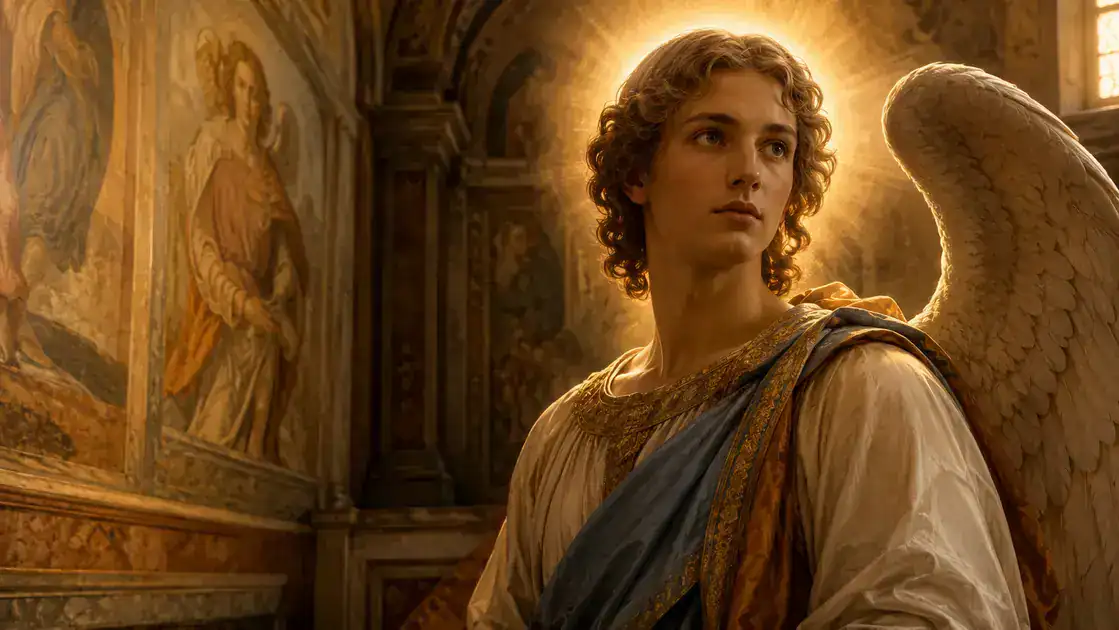
Look up at Michelangelo’s painted angels and you are met with a gentle sermon in color. Their poses, eyes, and wings speak in a calm language: these figures are not mere ornament but a kind of visual theology that teaches by sight. In scenes where Gabriel announces good news or angels hover near prophets, the painter lets gesture and tilt of the head carry the meaning.
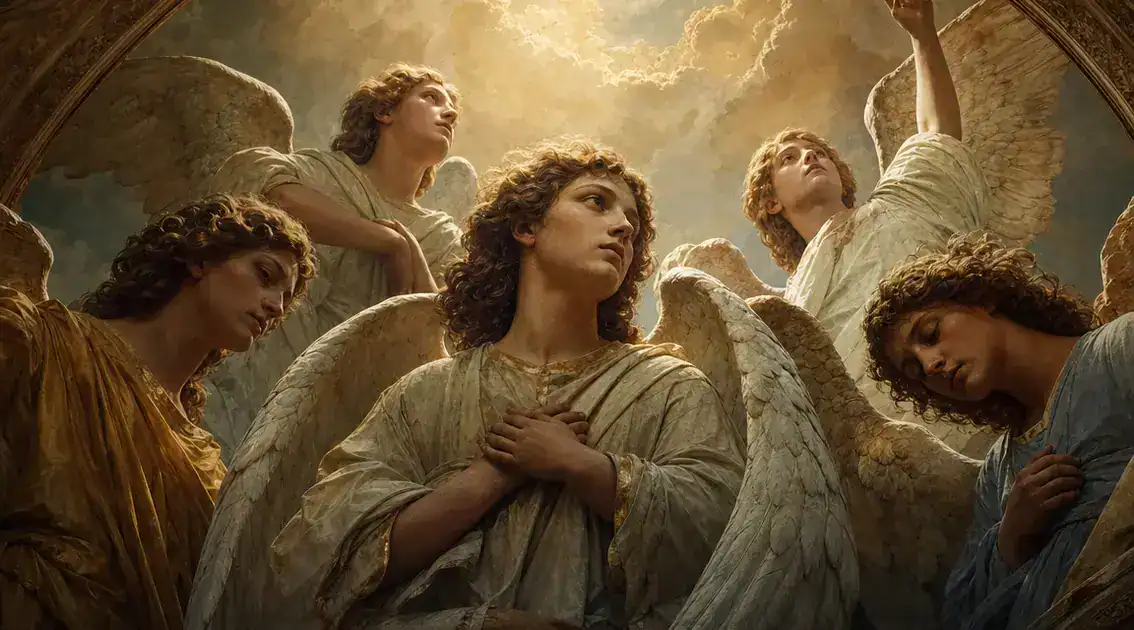
Michelangelo often gives his angels soft, focused faces and humble postures, inviting the viewer to listen rather than to marvel at power. This quiet dignity reads like scripture in paint — angels as messengers who point us toward God rather than toward themselves. Seen from below on a vaulted ceiling, their bodies seem shortened as if moving between worlds, a painted bridge between heaven and earth.
The color and light deepen that lesson: warm flesh tones, worn pigment, and subtle gold highlights make the scene feel both human and sacred. Standing near these images, you sense the hush of a chapel, a call to prayer rather than a display of drama. The painted angels become teachers of attention, urging a gentle, watchful presence before God.
Biblical sources behind the angelic imagery
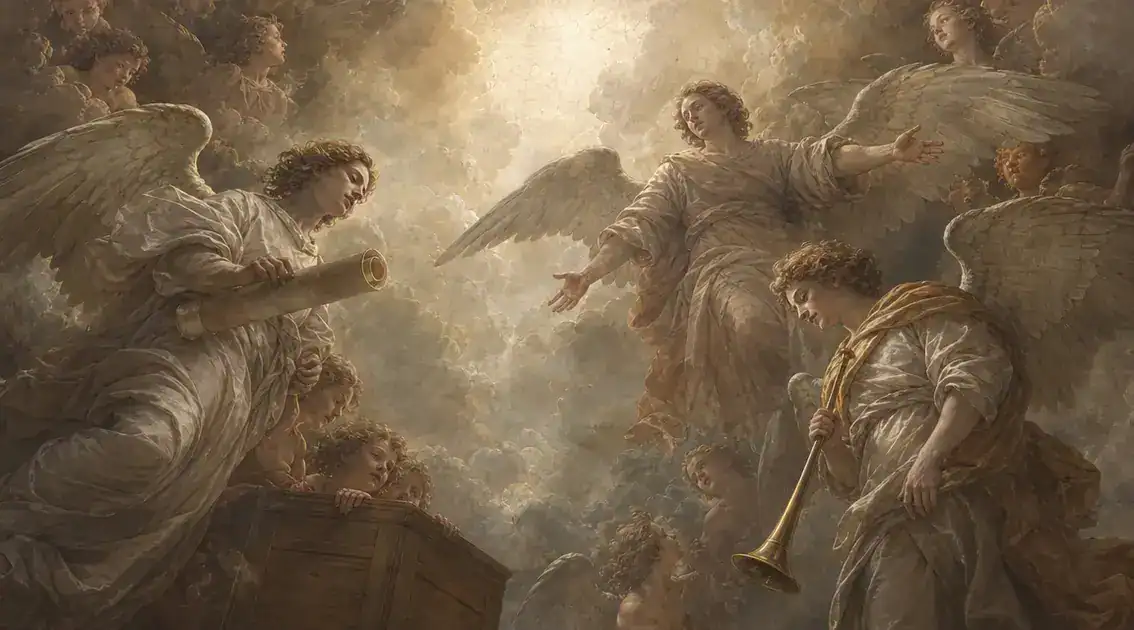
The Bible supplies the images that Michelangelo and other painters used to shape their angels. Stories from Genesis, Isaiah, Ezekiel, and the Gospels give distinct scenes and roles: visitors at Abraham’s tent, the fiery seraphim around God’s throne, the multi‑faced cherubim in vision, and Gabriel’s announcement to Mary. These texts do not only name beings; they shape how artists imagine posture, gaze, and gesture. When you read those passages slowly, you begin to see why an angel might bow, hold a scroll, or stand in quiet watchfulness.
Each biblical passage gives a different purpose for angels: they are messengers who bring word, worshipers who encircle the divine, and sometimes protectors who guard a people or a place. Isaiah’s seraphim cry “holy,” Exodus places cherubim atop the ark as a sign of God’s presence, and Daniel and Revelation portray angels guiding visions or sounding trumpets. Michelangelo borrows these roles as visual clues, so wings, trumpets, and lowered eyes all point back to scripture rather than mere decoration.
Seen devotionally, the painted angels invite you to read scripture with eyes and heart together. A hand raised toward heaven echoes prophetic speech; a bowed head answers the call to worship. By tracing these motifs to their biblical roots, you begin to use the fresco as a tool for prayer—seeing the angels not as distant creatures but as living signs that draw the Word into our sight and our silence.
Angels as messengers and intermediaries in scripture
Scripture shows angels bringing word and help in clear, simple scenes. In Genesis, three visitors speak with Abraham and a messenger speaks to Hagar; in Luke, an angel tells Mary she will bear a child; in Acts, an angel opens Peter’s prison door. These moments show a steady role: angels as messengers who carry God’s voice into human life.
The Bible also shows angels acting between heaven and earth to guide and protect. They lead, warn, and serve so that God’s will reaches people. They are not replacements for God but signs that point toward him, showing care without replacing the divine hand. Seeing them this way helps us pray with both awe and trust.
When Michelangelo paints an angel leaning forward or holding a scroll, he is making that simple theology visible. The gesture becomes a lesson in listening and response. Let these painted figures guide a small devotional practice: notice the posture, receive the message, and offer a quiet prayer, learning to hear God’s word in color and light.
Liturgical and devotional readings of the painted angels
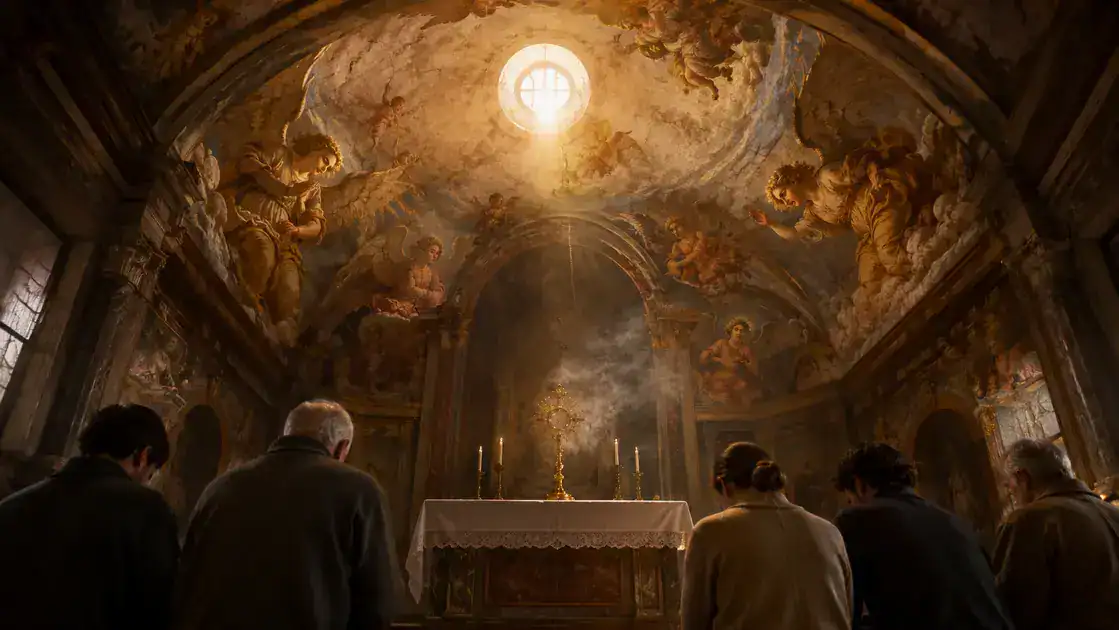
When you stand under Michelangelo’s painted angels, you can read them like a liturgy in color. Their raised hands, bowed heads, and turned gazes echo the movements of worship: praise, silence, and readiness. In many Christian traditions, images like these remind the assembly that the liturgy joins earth to heaven, where angels are seen as joining the song around the altar.
Devotional readers have long used such frescoes as aids to prayer. A slow, steady look at a painted angel can be a way to breathe with scripture: notice a hand, hold a verse, offer a short prayer. This gentle practice turns seeing into listening, and it invites simple acts—lighting a candle, reciting a psalm, or making the sign of the cross—to become small steps toward the sacred.
Seen together, the liturgical and devotional readings shape how a community or a single heart moves in worship. The painted angels teach posture and attention, and they encourage us to approach the altar with quiet reverence. By allowing the image to guide prayer, worshippers discover that these figures are not only art but companions who point us back to God’s presence in both communal rites and private devotion.
Symbolism of posture, gesture and facial expression
In Michelangelo’s angels, posture is a clear language that teaches without words. A turned shoulder or a bent knee shapes the eye and suggests movement between heaven and earth, while a bowed head often signals humble worship rather than defeat. These small shifts of the body act like a sermon: posture points us toward prayer and humility, reminding the viewer that the figures exist to direct attention outward to God.
Gesture adds another layer of meaning. An outstretched hand can invite, a finger raised can mark authority, and a clasped hand can show reverent waiting; when an angel holds a scroll or trumpet, the object becomes part of the message. Faces complete the lesson—gentle, attentive expressions teach compassion and attentive listening, and in scenes of sorrow or awe those expressions become an invitation to share feeling. Together, gesture and face shape a quiet theology of service and witness.
For devotional use, these visual signs are practical guides: notice the tilt of a head, the calm of a gaze, the way a hand opens and closes, and let them teach how you might stand or pray. The painted angels serve as a kind of Christian grammar of posture and attention, giving simple models for how to approach God with both boldness and reverence. In seeing them, we learn to let body and face join our words in a small, faithful practice of worship.
The role of angels in Renaissance theology and patronage
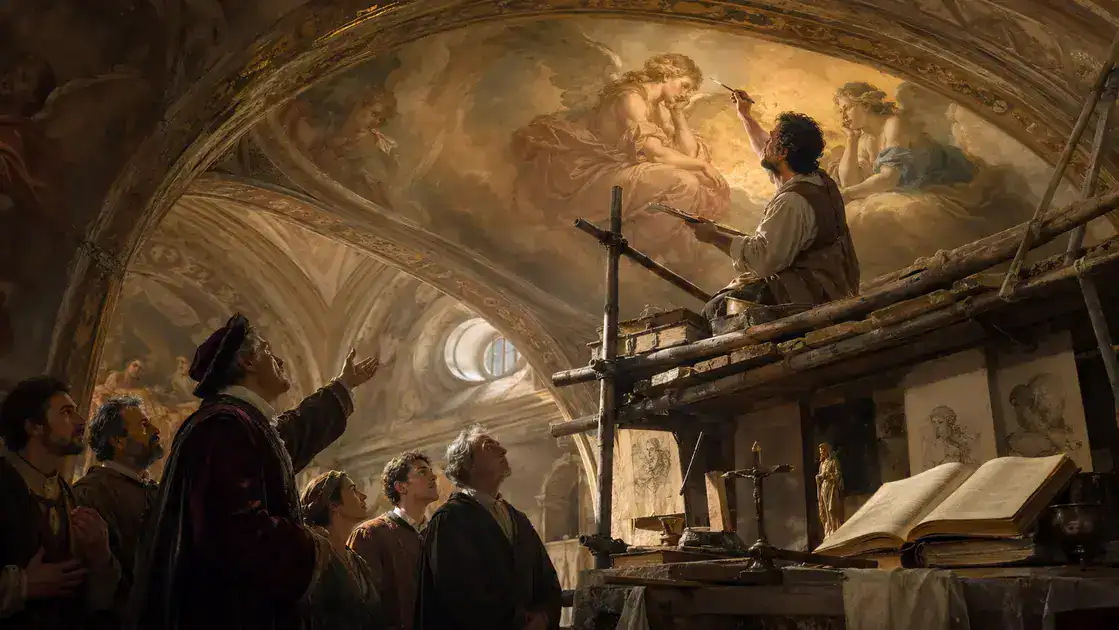
Renaissance theology held angels as part of a living, ordered world that points back to God. Artists and patrons worked from a shared faith: angels were not mere decoration but signs of a cosmos in which heaven and earth meet. In many churches, the painted angel taught the faithful a simple truth—the created world can reflect the Creator—and this teaching came through image as much as through words.
Patrons played a quiet but vital role in shaping that visual theology. A family, a confraternity, or a pope would commission a chapel or a ceiling with a clear devotional aim, and the artist would translate those aims into posture, light, and color. In that collaboration the angel became a bridge between a patron’s prayerful intent and the community’s worship, so a fresco answered both private devotion and public belief as a kind of sacred commission.
Seen devotionally, these painted angels invite a practice of seeing that leads to prayer. The work of theology and the care of patrons gave the fresco a voice: it called people to humility, to hope, and to watchfulness. When you stand beneath such imagery, you are held within a long conversation—between scripture, church life, artist, and patron—that teaches the heart how to look toward heaven with quiet reverence.
How these painted angels invite contemporary prayer and contemplation
Standing beneath Michelangelo’s painted angels, a modern worshiper can find a gentle doorway into prayer. The figures seem to slow time: wings held in quiet, faces turned toward the divine, and gestures that ask for attention rather than applause. This stillness can be a simple teacher, reminding us that prayer often begins not with words but with a moment of being present before God.
Try a small practice that uses what the frescoes offer. Pause for a slow breath while you look at a painted hand or a bowed head. Offer a short verse or a single line of a psalm, and let the image hold that prayer for a few beats. Such practices make the angels into companions in attention, helping the heart learn a steady rhythm of listening and response without needing elaborate technique.
These gestures translate easily into daily life: a morning glance toward a sacred image, a brief pause before a meal, or a breath of thanks at the close of day. In community worship, the painted angels can guide posture and stillness, while in private devotion they can be quiet reminders that we are held. Let the fresco teach you a small habit of returning to God, again and again, with simple acts of attention and a soft, patient heart.
A final prayer beneath painted wings
May the hush of those painted angels stay with you as you go. Let their gentle faces teach you to pause and listen. In that small pause, find the presence of God that holds and steadies your heart.
Carry a simple practice into each day: one slow breath before a task, a quiet word of thanks, a brief moment to look upward. These small acts keep prayer near and make ordinary time a place of care.
May the quiet they invite give you peace, gentle courage, and a fresh way to see others. Walk softly, listen often, and trust that you are accompanied every step of the way.
FAQ – Angels in Michelangelo’s Sistine Chapel and Christian Tradition
Do angels really exist according to the Bible?
Yes. Scripture records many angelic appearances—Psalm 91:11 speaks of angels who guard us, Hebrews 1:14 describes them as ministering spirits, and narratives in Genesis, Luke, and Acts show angels acting in real ways. Jewish and Christian tradition have read these passages as testimony to a real, spiritual order that meets human life.
Does every person have a guardian angel?
Many Christian traditions affirm a personal guardian angel. Jesus’ words in Matthew 18:10 suggest care for ‘the angels’ of little ones, and the long history of the Church — expressed, for example, in the Catechism of the Catholic Church — holds that God entrusts angels to protect and guide individuals. This teaching invites trust rather than fear.
What is the difference between archangels and guardian angels?
Archangels (like Michael and Gabriel) appear in Scripture with particular missions: Michael as protector and leader (Daniel 10:13; Revelation 12:7), Gabriel as messenger (Luke 1:26–38). Guardian angels are described more as personal companions and ministers (Hebrews 1:14). An archangel can be sent on a wide or public task, while guardian angels are understood as attentive companions assigned to people or communities.
Can I pray to angels or ask for their help?
Tradition encourages asking angels to intercede or to accompany us in prayer, but not as a substitute for prayer to God. Many Christians use simple prayers to their guardian angel (for example, the short nightly or morning prayers found in devotional practice) while directing ultimate worship and petitions to God alone, following the scriptural pattern of seeking God through prayer.
How do Michelangelo’s painted angels reflect biblical sources?
Michelangelo borrows biblical motifs—Gabriel’s announcing posture (Luke 1), the worshiping seraphim of Isaiah 6, and the cherubic signs of God’s presence in Exodus and Ezekiel. He translates these texts into posture, gesture, and light so that the viewer can ‘read’ scripture visually. The frescoes make theological roles—messenger, worshiper, guardian—visible in a way that aids prayer and reflection.
How can I use these images in personal devotion today?
Use them as aids to attention: pause, take a slow breath while looking at a painted hand or gaze, offer a short verse or a line of a psalm, and let the image hold that prayer for a moment. Churches and saints have long used images to direct the heart toward God (see the practice of lectio divina and the Church’s teaching on sacred art). Small, regular acts—one quiet breath before work, a brief glance of thanks at day’s end—make the painted angels companions in a steady life of prayer.