
Seraphim and divine fire signify heavenly beings around God’s throne whose burning coals purify and empower human speech and service, enact divine holiness in worship, and symbolize the Spirit’s refining presence that readies prophets and believers alike for faithful witness and ceaseless praise.
seraphim and divine fire — have you ever wondered what those luminous figures tell us about holiness and purification? Studying Isaiah’s vision, I found less spectacle than a quiet invitation to be refined and to enter unending praise.
Biblical roots: seraphim in Isaiah’s vision
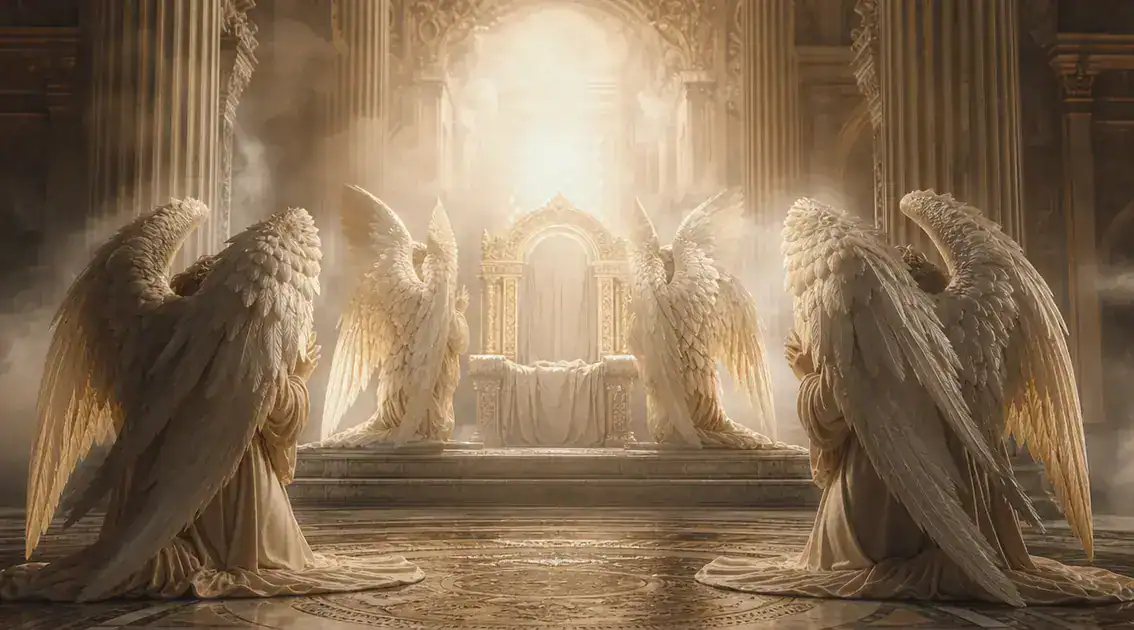
In Isaiah’s vision he sees the Lord seated high and the temple filling with light and sound. Above the throne stand the winged beings we call the seraphim, each moving with swift reverence while they sing, “Holy, holy, holy”, a refrain that makes the whole place feel sacred and alive.
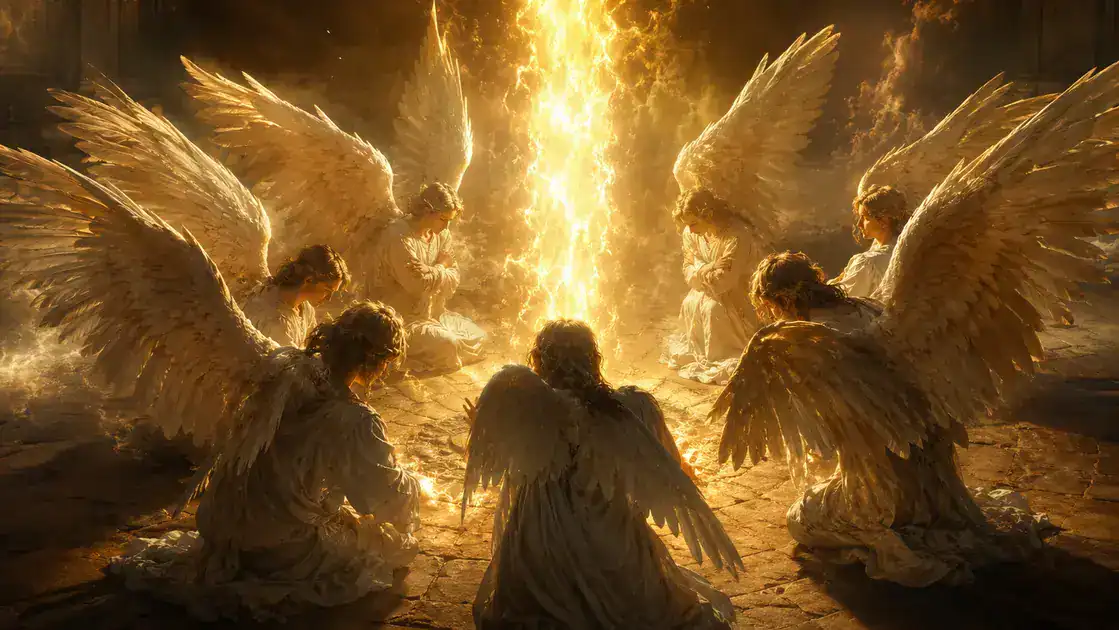
One seraph takes a live coal from the altar and touches Isaiah’s lips, an act that both astonishes and heals. That coal cleanses his speech and removes guilt, showing how the divine fire works as quiet purification—not destruction, but renewal so the prophet can speak what is true.
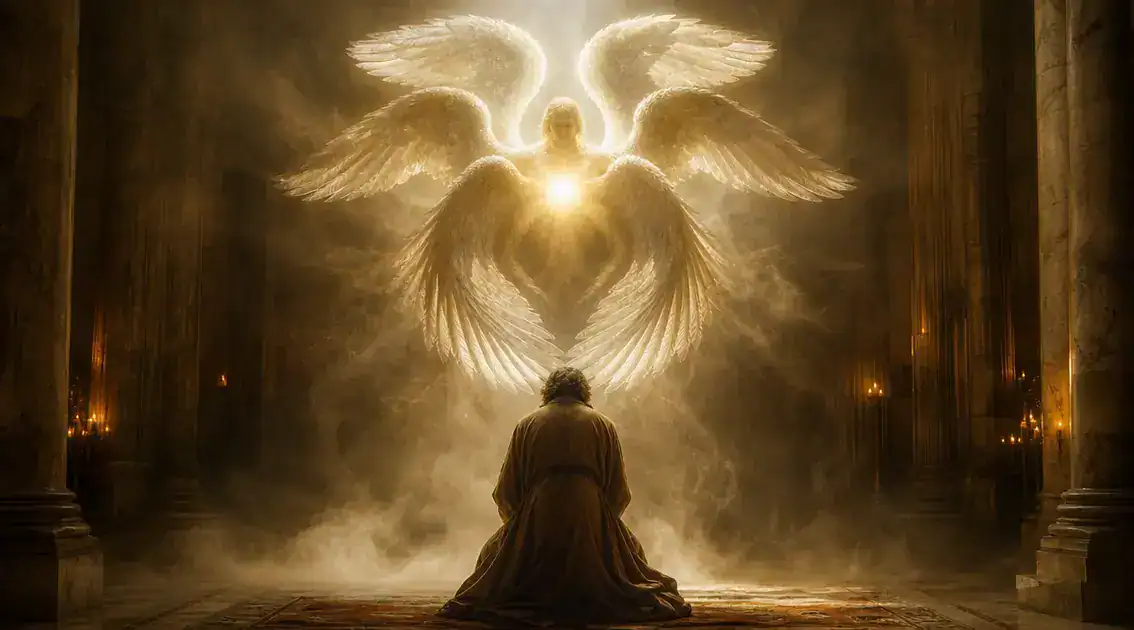
The vision leads naturally from awe to commission: Isaiah is both humbled and sent. The seraphim and the coal reveal a God who refines words and courage, making the prophet ready for service. This scene invites us to see heavenly worship as a force that prepares ordinary people for holy tasks through gentle, sanctifying touch.
The symbolism of divine fire in Scripture
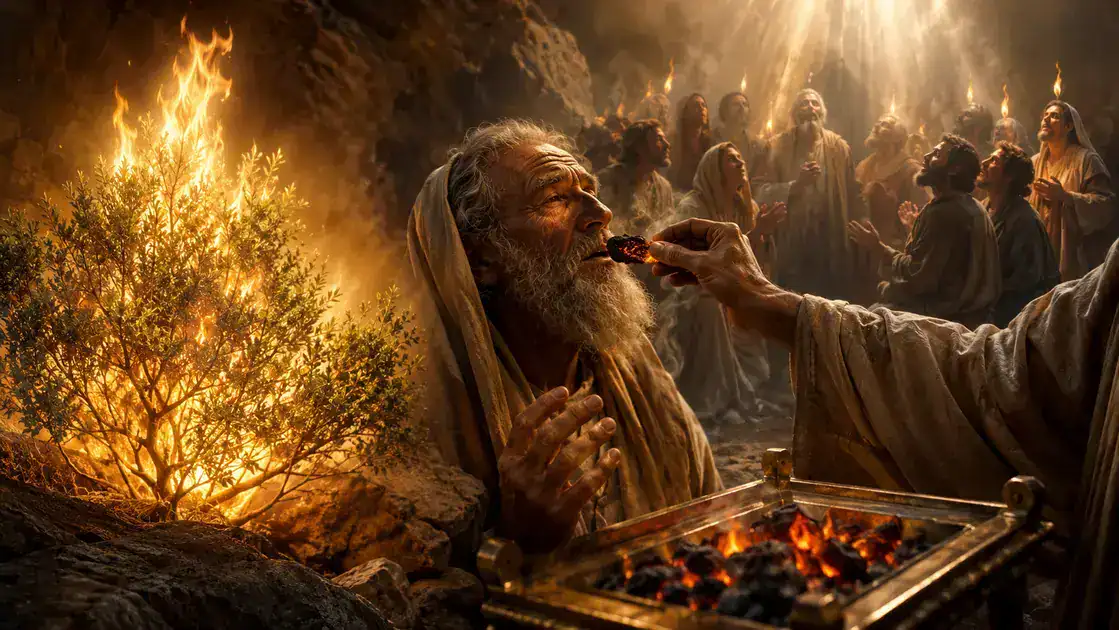
Scripture uses fire again and again to show God’s presence. In Exodus the bush burns without being used up, and a pillar of fire leads the people at night. Those images tell us that where God acts, light and heat make the meeting feel alive and immediate.
Fire also works as a gentle, strong purifying force. Isaiah’s coal touches the prophet’s lips to cleanse speech, and altar coals and sacrifices speak of holiness made plain. At Pentecost, tongues of flame rest on believers, not to burn them away but to give power and word—so Scripture links purification and empowerment together.
At times the flame warns or judges, as in scenes where fire separates what is worshipful from what is not. Yet even that stern use of fire points back to a holy purpose: ordering life toward what is true and good. These threads invite us to see divine fire as a living sign that both heals and calls, lighting the path where we must walk with care and trust.
Theology: purification, holiness, and the angelic liturgy
Theology often reads the seraphim as leaders of heavenly worship. In Isaiah they cry ‘Holy, holy, holy’, and that refrain pulls our attention to God’s utter otherness and beauty. Their song makes holiness feel like something we can hear and join, not a distant idea.
The image of fire and a coal ties worship to inner change. A seraph touching Isaiah’s lips with a live coal shows purification that cleanses speech and opens service. This refining is not mere punishment but a healing touch that prepares us for faithful work. Theological writers call this a form of participation in God’s life, where divine action shapes human action.
In practice the angelic liturgy teaches us how to pray and sing with honesty and reverence. Our liturgies, hymns, and sacraments echo the seraphim and the refining flame, inviting quiet transformation. Picture entering worship and feeling that gentle warmth steady your words and steady your heart; that steadying is a small, graceful work of the divine fire at work in the church and in the soul.
Liturgical and artistic traditions portraying seraphim and fire
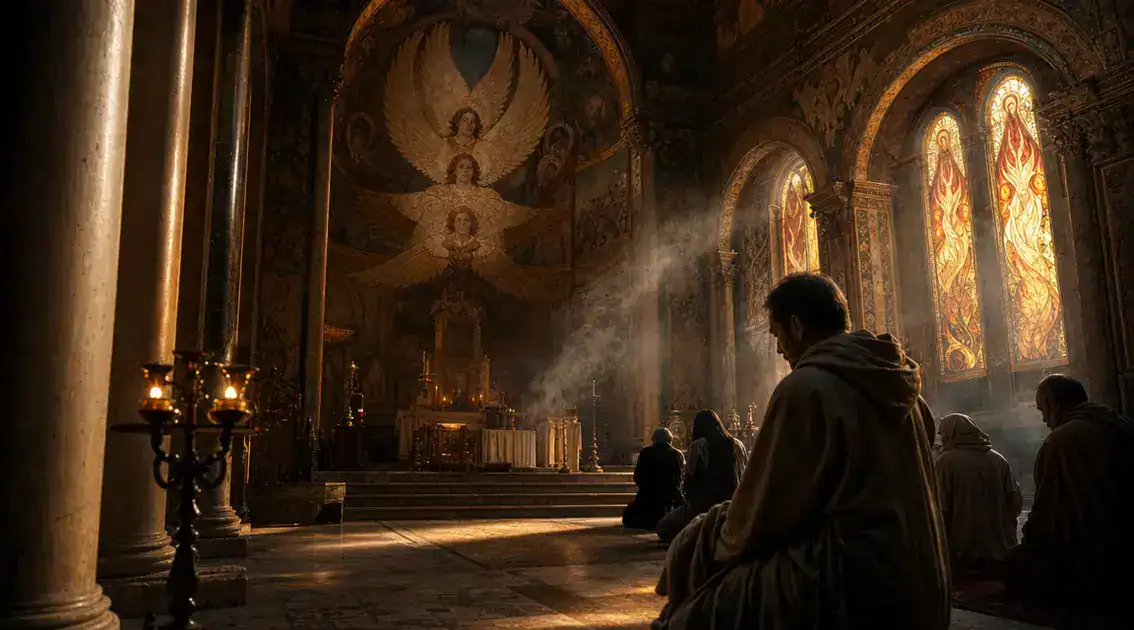
In many liturgical rites the voice of the church echoes the seraphim through the ancient refrain “Holy, holy, holy”. That line shapes our prayers and brings the sense that worship crosses a threshold into heaven. Incense, altar lamps, and candlelight are simple, physical ways that communities recall the image of divine fire during the service.
Artists have long translated those liturgical images into visual language. Byzantine icons show seraphim with layered wings and luminous faces, while Renaissance painters used warm glows and careful anatomy to make the scene feel near and real. Stained glass, mosaics, and altar pieces often include small flames or coals to signal sanctification, so viewers understand fire as both light and refining presence.
When you sit before such art or stand in a liturgy that leans on these images, the two traditions meet. The art trains our eyes; the liturgy trains our voice. Together they invite a quiet inner change, a gentle turning toward holiness, where worship becomes a shared step into the heavenly song and a trust in the refining work of divine fire.
Personal devotion: encountering purification and praise today
There are moments in quiet prayer when we feel small and steady, like Isaiah gathering breath before he speaks. Sitting with a verse, a short prayer, or a hymn can make a room feel warmer, as if a gentle flame is present. That warmth is not loud; it is a calm invitation to be made ready for honest speech and faithful service.
Practices such as confession, a brief examen, or lighting a candle ask us to be candid and open before God. In those acts we meet the work of purification: words grow clearer, old resentments soften, and our speech can be offered in truth. The tradition links this refining with the life of praise, showing how the same fire that cleanses also stirs the heart to sing.
Try one small discipline today: breathe a short prayer between tasks, hum a simple chant, or keep a tiny flame nearby as a visible reminder of God’s refining love. These modest habits teach patience and steady courage, helping ordinary people enter the heavenly song. In such steady, humble devotion we learn that praise and purification move together, shaping both our voice and our way of life.
A prayer of refined praise
Holy One, kindle in us the gentle flame that purifies and warms. Touch our lips and make our words true. Let the quiet fire reshape our fears into courage and our doubts into wonder.
May the example of the seraphim draw our hearts to steady praise. Teach us to sing with honest voices and to offer small acts of kindness as living prayer. Help us welcome correction and healing as part of your loving work.
Grant us patience to walk each day with soft courage and the trust to let your light refine us. May our lives become small altars of praise, fed by mercy and carried into the world. Amen.
FAQ – Seraphim, divine fire, and their place in Scripture and devotion
Who are the seraphim in the Bible?
Seraphim appear most clearly in Isaiah 6:1–7 as six‑winged beings around God’s throne who cry “Holy, holy, holy.” They function as heavenly attendants whose presence highlights God’s absolute holiness. In that scene a seraph touches Isaiah’s lips with a live coal to cleanse and commission him, linking the seraphim to worship and spiritual preparation.
What does divine fire mean in Scripture?
Divine fire appears in several biblical images: the burning bush that is not consumed (Exodus 3), the pillar of fire guiding Israel (Exodus 13), the coal that purifies Isaiah (Isaiah 6), and the tongues of fire at Pentecost (Acts 2). These images point to God’s presence, purifying love, empowering Spirit, and sometimes judgment—always aimed at restoring right relationship with God.
How do the seraphim connect with worship and liturgy?
The seraphim’s cry of “Holy, holy, holy” became a model for liturgical praise because it draws worshipers into a sense of the divine otherness and beauty. Christian and Jewish worship traditions echo that heavenly song in prayers, hymns, and the sanctus, inviting congregations to join the angelic liturgy and to be shaped by its focus on holiness.
Can the idea of divine fire apply to personal spiritual life today?
Yes. Tradition reads divine fire as a symbol of inner purification by God—seen in practices like confession, turning to the Spirit, and sacramental life. Acts 2 shows the Spirit coming as tongues of fire to empower believers; likewise, prayer and repentance open us to the Spirit’s refining work so our speech, choices, and courage are renewed.
Are seraphim the same as archangels or guardian angels?
No. Seraphim are a specific, high‑order presence around God’s throne in prophetic and visionary texts. Archangels (like Michael or Gabriel) appear with particular missions in Scripture, while guardian angels are the tradition that God assigns care to individual persons. Each role is distinct though all are part of the broader angelic reality in Scripture and tradition.
How can I welcome the refining work of seraphim and divine fire in daily practice?
Begin small and steady: pray brief daily prayers asking for truth in your speech, practice an examen or confession to name what needs refining, sing or recite the sanctus (“Holy, holy, holy”) in private devotion, and receive sacraments with openness. These acts, rooted in Scripture and long tradition, create space for the Spirit’s purifying and empowering presence to shape your life.