

Powers are a rank of angels that protect humanity from demonic forces by restraining hostile spirits, safeguarding God’s ordered creation, and assisting in prayerful resistance—trusted in Scripture (Daniel, Ephesians, Revelation) and the church fathers as God’s ordained guardians who uphold justice, peace, and the faithful life.
powers angels protect from demons — have you ever paused at a psalm and felt an unseen strength shielding the faithful? This piece invites gentle reflection on the moments Scripture and tradition reveal angelic ranks stepping between us and darkness.
The biblical role of powers in the angelic hierarchy
The New Testament names a rank called the powers among the heavenly host. In brief, passages like Colossians 1:16 and Ephesians 6:12 place powers within a woven order of angels who belong to God’s rule. They are not distant ideas but living agents whose work supports the shape of creation and the life of the faithful.
Scripture shows their role most clearly when the cosmos seems at risk of unravelling. Powers act to restrain chaos, guard holy boundaries, and resist those spiritual forces that aim to harm people and nations. Their action is often quiet and orderly: steadying what is good, holding back what would destroy, and making space for God’s will to reach human hearts.
For prayerful life, knowing about the powers gently changes our posture. We do not replace faithful vigilance with complacency, but we accept that God deploys care beyond our sight; this gives courage to those who pray and serve. Remembering the powers invites a humble trust that God’s governance is both tender and firm, and it calls us into cooperation with the unseen care that surrounds us.
Scripture passages where powers confront demonic forces

Scripture names moments where angelic ranks stand between God’s people and hostile spiritual forces. In letters like Ephesians 6:12, Paul speaks of “rulers, authorities, cosmic powers of this darkness,” reminding us that the battle is real but not only human. This language points to an ordered host who serve God’s purposes, acting where human sight cannot reach.
The narratives give us clearer images. In the book of Daniel, the angel Michael assists an envoy against the “prince of the kingdom of Persia” (Daniel 10:13,21), showing how heavenly beings can restrain hostile powers that press against nations. Revelation offers a different scene where Michael leads the heavenly host against the dragon (Revelation 12:7), and Jude records Michael’s measured contest with the devil over Moses’ body (Jude 1:9). Together these texts form a portrait: powers act to defend God’s order and to hold back forces that would undo human flourishing.
Reading these passages softly shapes how we pray and live. We are invited to trust in Christ’s victory — remembered in Colossians 2:15 where Christ disarms hostile spirits — and to join in steady, faithful resistance through prayer and righteous living. Rather than seeking spectacle, the faithful posture is humble reliance: believing that God’s appointed beings watch and work, and that our part is steadfast prayer, simple obedience, and quiet hope.
Archangel Michael and the defense against evil
Archangel Michael appears in Scripture as a clear, commanding defender of God’s people. In Daniel he stands as a protector over Israel, and in Revelation he leads the heavenly host against the forces that would harm the faithful. These images do not glorify war but show a holy order that resists what would pull the world away from God.
Michael’s posture is one of steady authority rather than fury. He is pictured with classical armor and a raised sword, but these are symbols of protection and rightful rule more than violence. When we see him in the texts, we are invited to trust that God appoints care and leadership in the unseen realm, a care that gently keeps destructive powers at bay so life can continue and grow.
For prayerful people, Michael’s presence shapes courage and vigilance. Simple prayers and liturgical traditions that honor him help focus the heart on God’s sovereignty and on faithful action in daily life. Rather than seeking signs, we practice steady obedience, moral clarity, and humble dependence, knowing that such living shares in the same defense Michael embodies under God’s command.
How tradition and the church fathers describe powers’ protection

Early Christian writers and the church fathers often spoke of the powers as part of a sacred, ordered host that helps guard creation. Augustine taught that angels serve God’s plan by keeping order and restraining chaos, while Gregory and other fathers described these ranks as humble servants who stand between God and earthly harm. Their words frame the powers not as distant spirits but as purposeful caretakers under divine authority.
For the fathers this teaching was deeply pastoral, not merely speculative. They connected the powers’ protection to the life of prayer, the sacraments, and simple acts of charity, suggesting that unseen help often comes through ordinary worship and faithful service. When communities gather in prayer, the fathers believed they join the movement of heaven itself, aligning human life with the celestial order the powers uphold.
That tradition invites a steady, hopeful devotion today. Rather than stirring fear or seeking signs, the fathers urge humble trust and faithful practice: regular prayer, communal worship, and moral courage. These small disciplines open us to the quiet guardianship the powers provide, reminding believers that God’s care reaches us through both visible and invisible ways.
Recognizing signs of angelic intervention in personal life
Sometimes angelic help is quiet and personal, like a sudden calm that settles in the chest during danger or a narrow escape that has no clear explanation. Many believers remember moments when fear lifted at once or a timely person appeared to help. These small mercies can feel like a loving hand at work, and the Bible speaks to this care in passages such as Psalm 91 and Jesus’ warning that angels watch over little ones (Matthew 18:10).
Other signs are inner: a gentle prompting to act, a clear thought that brings peace, or a dream that comforts rather than alarms. Help may also come through ordinary means — a neighbor’s kindness, an opened door, or an answer to a simple prayer. Rather than chasing wonders, faithful people learn to notice these quiet patterns and to name them with gratitude when they point to God’s care.
When you sense such help, respond with simple faith: offer a prayer of thanks, share the moment with a trusted friend, and live with humble obedience. Practice discernment by checking feelings against Scripture and the fruit they produce — peace, charity, and hope. These steps keep us rooted in truth while staying open to the gentle ways heaven touches our daily life.
Prayers and practices that open us to angelic help
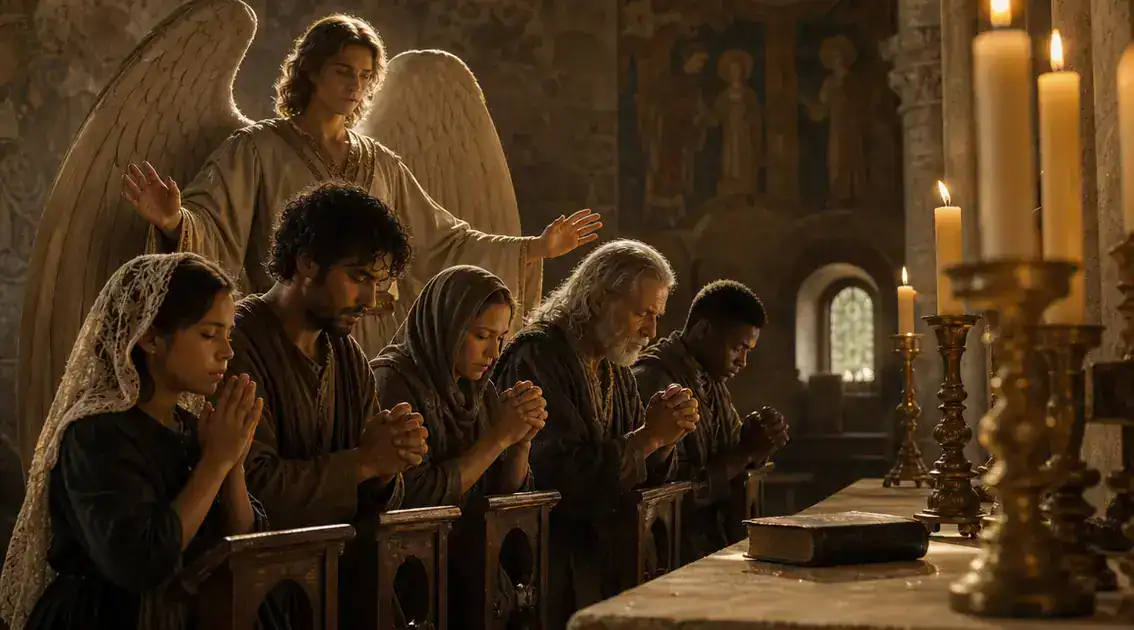
Short, simple prayers open the heart to angelic care. Begin with a quiet moment each day, a Psalm like Psalm 91, or the Lord’s Prayer, spoken with attention. These small acts place you where heaven can meet you, not by magic but by faithful listening.
Regular practices deepen that openness: communal worship, silent examen, reading Scripture slowly, and acts of mercy. The sacraments and shared prayer bind our lives to the church’s prayer, and in that shared life we often find help coming through ordinary people and timely grace. When worship and service shape our days, the unseen guardians move in ways we learn to recognize.
Keep discernment gentle and humble: test feelings against Scripture, the fruit they bear, and wise counsel. Offer a simple prayer of thanksgiving when you sense help, and repeat the habits that form you — morning prayer, brief examen, and kind service. Over time these steady practices cultivate a quiet trust that angels serve God’s care for us, joining our faithful smallness to heaven’s ordered love.
A gentle closing prayer
Lord, we thank you for the quiet ways you guard us. In your kindness, let the powers and angels stand near, not to alarm us but to protect and guide each step we take.
Help us to live with simple faith, to pray with an open heart, and to notice the small mercies you send. May our daily acts of love and service become the very place where heaven meets the ordinary.
When fear or darkness presses in, remind us of your steady rule and the unseen care that holds us. Give us courage to walk humbly, to choose kindness, and to trust your faithful protection.
May peace go with you now, and may wonder keep your heart. Go in gentle hope, and let the promise of God’s care shape each day.
FAQ – Questions about powers, angels, and spiritual protection
What are the “powers” mentioned in the Bible?
The New Testament names powers as one rank within the heavenly host (see Colossians 1:16 and Ephesians 6:12). Scripture and tradition portray them as ordered, purposeful beings who serve God by guarding creation and sustaining divine order rather than acting as chaotic spirits.
Do powers actually protect people from demons?
Yes. Biblical scenes show heavenly beings restraining hostile spiritual forces—Daniel 10 describes angelic assistance against a hostile spirit, Revelation 12 shows Michael opposing the dragon, and Jude 1:9 speaks of measured contest. Tradition understands powers as instruments of God’s protection when darkness presses in.
How is Archangel Michael connected to the powers and defense against evil?
Michael appears as a chief defender in Daniel and Revelation, leading God’s host against adversaries. While Michael is a distinct archangel, his role exemplifies how God appoints leaders among angels to hold back evil and protect God’s people under divine authority.
Can I pray to angels or ask the powers to help me directly?
Scripture invites prayer to God while affirming angelic ministry (Psalm 91:11). Many traditions encourage asking God to send angelic help and may pray to one’s guardian angel as a companion. Always center prayer on God’s will, asking that angels act as God’s servants on our behalf.
How do I tell angelic intervention from coincidence?
Signs often include a sudden, lasting peace, timely provision, or moral fruit like courage and charity. Test any experience by Scripture and the good it produces; authentic encounters lead to humility, prayer, and love rather than fear or self-exaltation (Colossians 2:15 helps locate Christ’s victory at the heart of all such encounters).
What daily practices open us to angelic protection?
Simple, steady habits help: reading Psalms (especially Psalm 91), morning prayer, communal worship, acts of mercy, and the sacraments in traditions that observe them. The church fathers taught that faithful worship and service invite the ordered care of heaven, so devotion and right living are the surest ways to cooperate with angelic guardians.