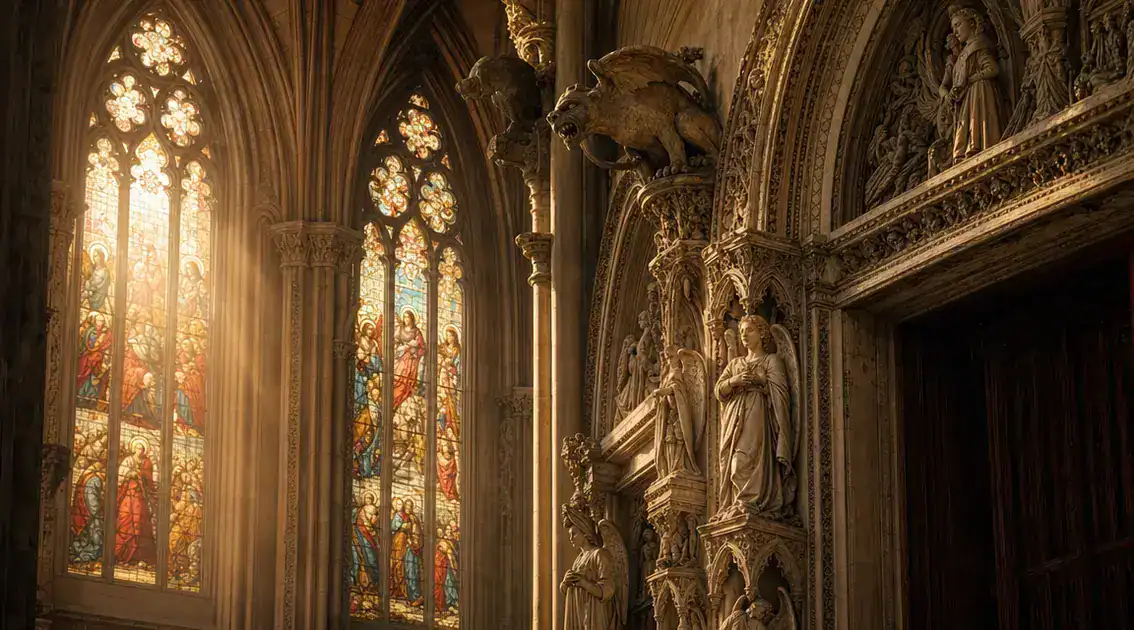

Angels in Gothic cathedral architecture appear as carved reliefs, gargoyles, and stained-glass figures that translate biblical witness into visual catechesis, teaching of angelic guardianship, and liturgical companionship, inviting worshipers to read Scripture in stone and light and to enter prayer with the assurance of unseen, ministering presence.
angels in gothic cathedral architecture — have you ever wondered how carved wings and stained glass seem to speak of Scripture and protection? This quiet encounter with stone and light invites reflection and renewed wonder.
Angelic imagery and biblical roots in cathedral art
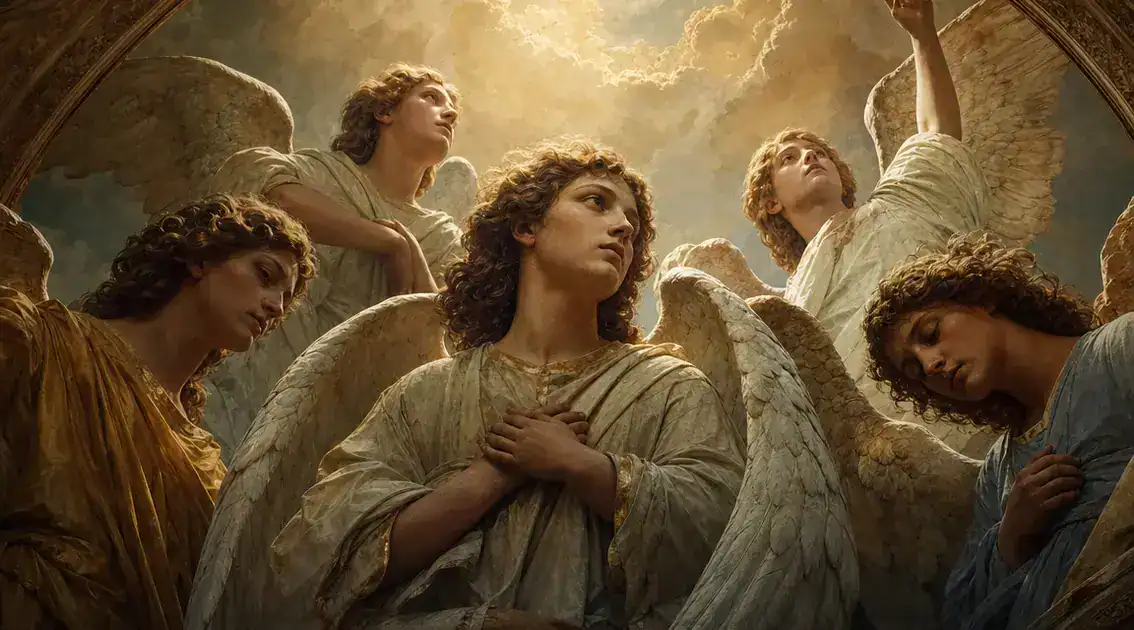
The presence of angels in cathedral art grows directly from the Bible’s living scenes: cherubim guard Eden, Isaiah’s seraphim circle the throne, and the angels of Revelation cry, “Holy.” These stories show angels as close to God and near to people — not distant myths but active parts of the sacred story. Seeing those biblical moments helps us read stone and glass as a kind of Scripture written in light and relief.
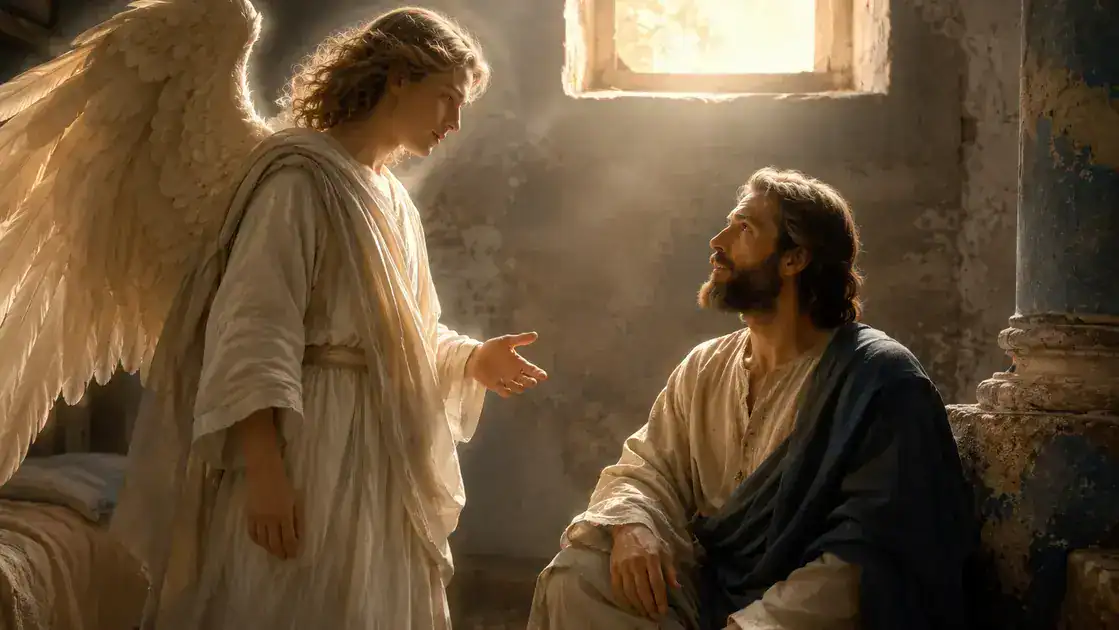
Artists and craftsmen translated these texts into visible forms so that worshipers could learn and pray. Stained glass often shows angels delivering messages or praising in bright color, while carved reliefs and portal figures show winged beings as protectors of the holy place. In these works, angels as messengers and angels as guardians become teaching tools, inviting the faithful to remember both God’s presence and God’s care.
When we stand before an angelic window or trace a stone wing with our eyes, the image can move us inward toward prayer and wonder. These figures are meant to guide devotion, to point our hearts to worship, and to remind us of the biblical promise that the unseen helps the seen. Holding that thought gently can change how we move through a cathedral — not merely as tourists, but as people invited into a living faith.
Gargoyles, angels and the theology of protective figures
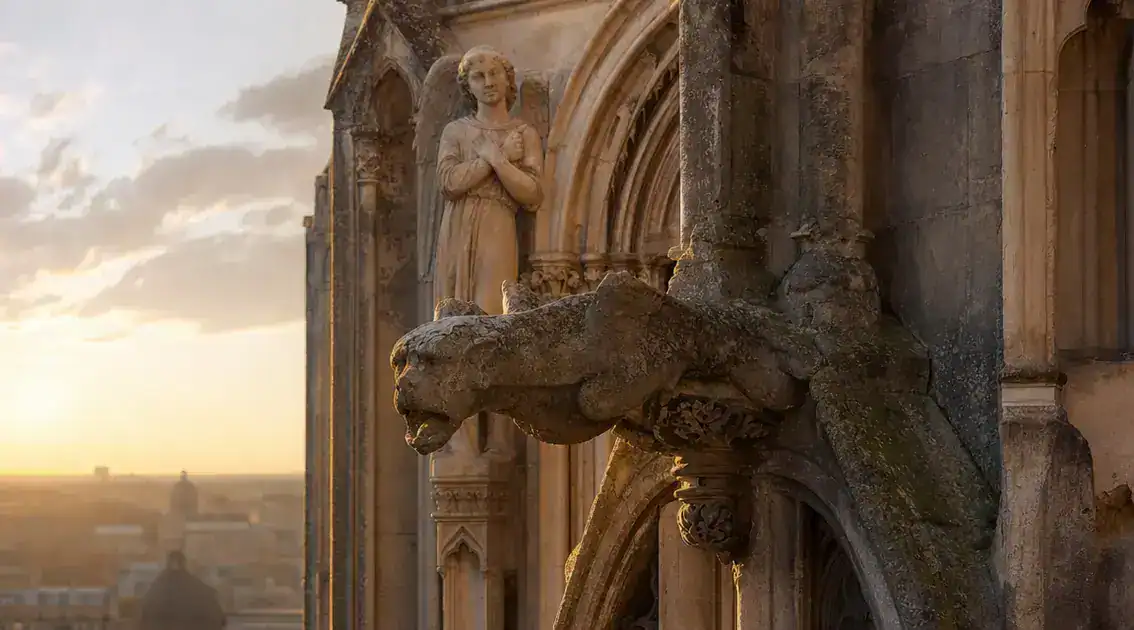
Gargoyles and angel carvings stand guard along the edges of cathedrals, where stone meets sky. Many gargoyles served a practical use as waterspouts, but their fierce faces also marked a spiritual border. Nearby angels carved in relief or perched above portals present a gentler witness; together these forms tell a single story about care and boundary, about what is kept safe inside the sacred space.
Medieval builders used these figures as visual theology. Scripture speaks of angels who watch over the faithful, and that promise is echoed in stone. When we read those carvings, we see more than ornament: we see a sign of God’s care. Psalm 91’s promise of angelic guardianship and Gospel images of messengers echoed in these sculptures, turning practical architecture into spiritual teaching.
Looking at a gargoyle beside a calm angel can move a worshiper into a quiet, trusting posture. The contrast—fierce protection and gentle presence—invites a small act of prayer or a moment of trust. These figures do not replace faith, but they point to it, reminding us that the divine watches, guards, and invites our hearts to rest in sacred care.
Reliefs and portals: storytelling through carved angels
Carved angels on reliefs and portals tell whole stories in stone. As your eye follows a sequence of panels, you read events much like pages in a book. These images often show moments from the Bible—an annunciation, a heavenly choir, an angel at the tomb—so that the faithful could learn Scripture while they entered the sacred space.
Stone carvers used gesture and face to make meaning clear. A bowed head or an outstretched hand points the viewer to a moment of mercy or message. When we name scenes like Gabriel’s announcement or the angels at the tomb, we connect the carved image to the living text of Scripture. The sculpted angels become teachers, turning the threshold of the church into a place of sacred memory.
Standing before a portal, try reading the stones slowly as if you were reading a prayer. Let each carved wing and gaze guide your breath and attention toward worship. These figures do more than decorate; they invite a small devotional practice—pause, look, and let the biblical story move your heart toward trust and wonder.
Stained glass angels: light, scripture, and catechesis
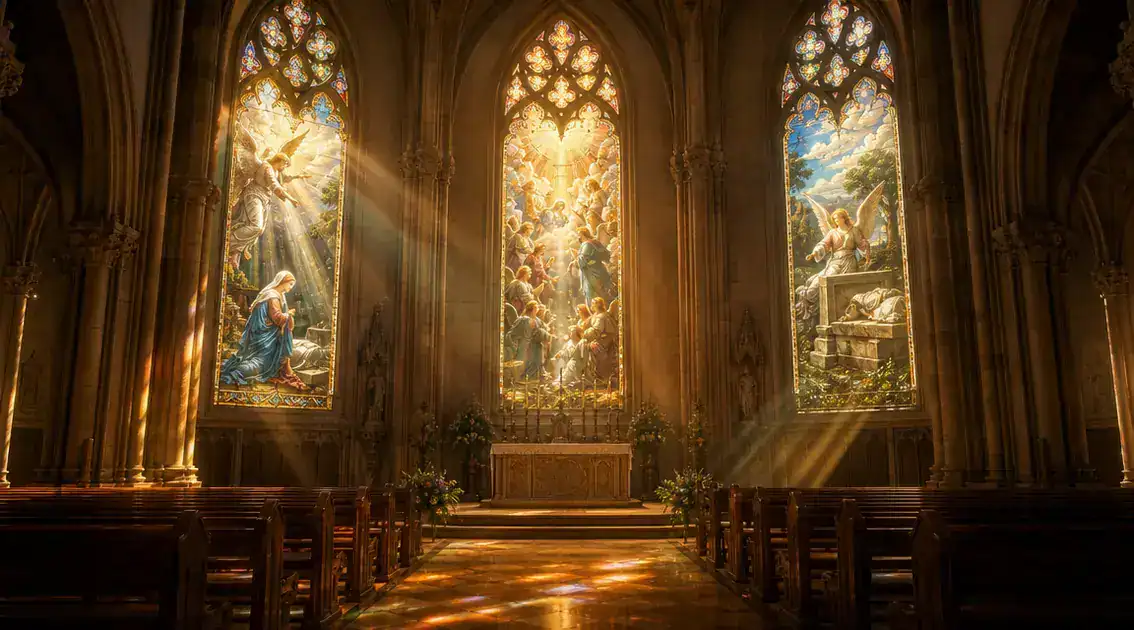
Stained glass angels teach through color and light, turning scripture into living sight for everyone who enters. In medieval cathedrals, windows showed scenes like the annunciation, angels singing at the nativity, and the angel at the tomb so that people could learn stories of God in a form that spoke to the heart. These images made the Bible visible and gave the faithful a way to remember and retell sacred events.
The glass itself becomes a kind of sacrament: sunlight passes through painted figures and pours onto stone, bathing the nave in color. That moving light can feel like Scripture come alive, where angels point us to God’s word and to the mystery of Christ. Standing in that light asks us to slow down, listen, and let the painted story shape our prayers.
When you pause before a window, try reading it as a short lesson—note the gestures, the instruments, the scriptural scene—and let each color hold a phrase of prayer. These windows do not preach with words but invite devotion through sight and silence. In that quiet watching, the faithful are invited to learn, remember, and join the chorus the angels begin.
Medieval devotional practice and the role of angels in worship
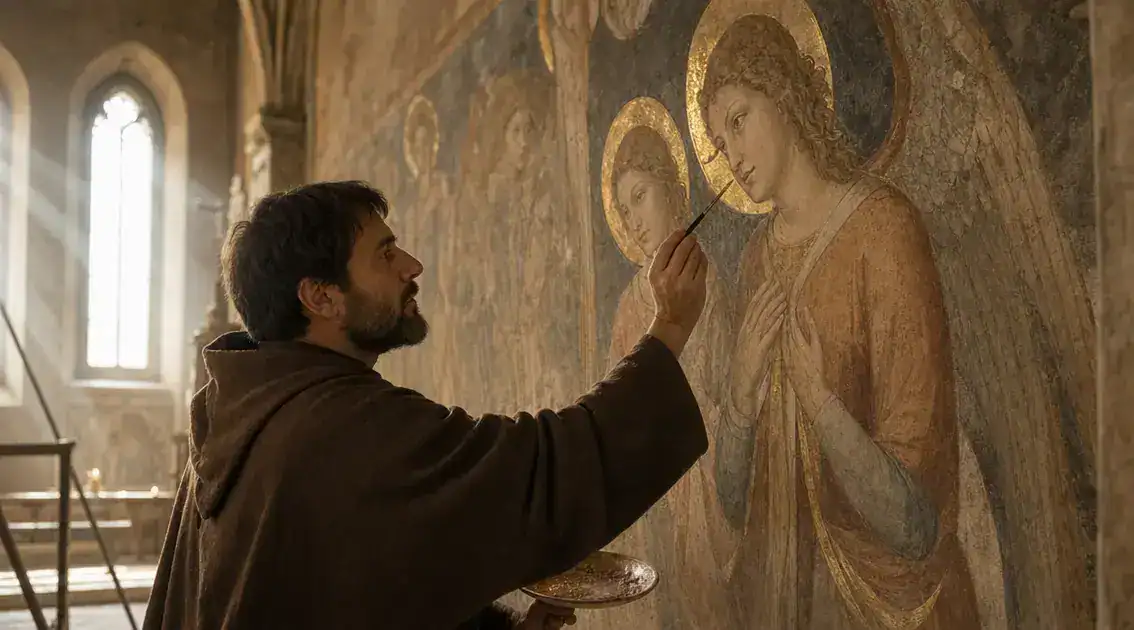
In medieval devotion, angels were woven into the daily rhythm of prayer and worship. People met them in books of hours, in chants, and in the carved figures that framed the church door. These images and texts taught simple habits of attention, so that the faithful would remember they were never entirely alone.
Within the liturgy, angels appear beside the altar in word and image, joining hymns and incense in a shared act of praise. Stained glass, choir songs, and processional rites made the presence of angels feel immediate and holy, turning public worship into a lived conversation with the unseen. For many, angels as liturgical companions helped bridge the distance between heaven and earth during the Mass.
That practice shaped personal prayer as well: people asked for angelic aid, paused before angelic images, and let carved wings guide their breath. These small devotional acts trained the heart to trust and to praise, not as an abstract doctrine but as a daily, gentle habit. Such practices invite us now to notice humble signs of grace and to let them lead our own moments of prayer.
Reading sculptures devotionally: how angels guide the faithful
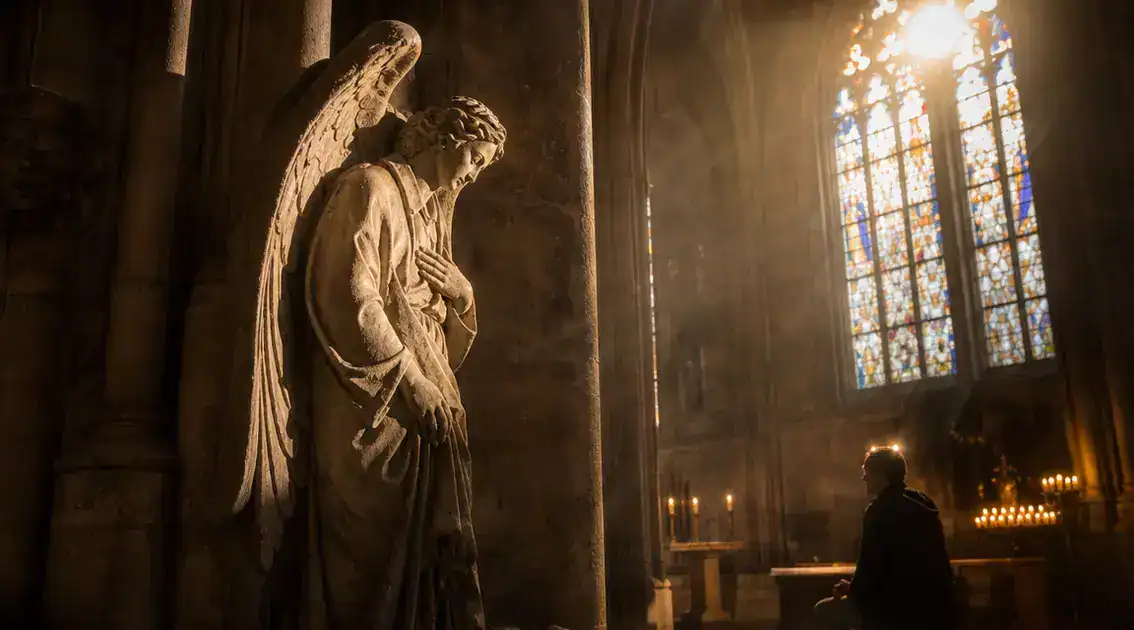
Stone angels invite a different kind of reading—one that uses quiet attention instead of words. Their carved faces, bent heads, and folded wings form a simple story you can follow with your eyes. These sculptures were made so people could learn to pray by looking and remembering, where each gesture points to mercy or praise.
Medieval worshipers treated these figures as companions on the way into worship. They paused, watched a hand or face, and let the image shape a short prayer. Scripture calls angels helpers, and that sense of service shapes the sculpture’s aim; Hebrews 1:14’s image of angels as ministering spirits helps us see these stones as signs that point to God’s care rather than as mere decoration.
To read a sculpture devotionally, slow your breathing and let your gaze follow the lines of the carving. Notice the direction of the eyes, the tilt of a head, the placement of a wing, and let each detail prompt a simple prayer—thanks, protection, or trust. Over time, these small acts of attention train the heart to find grace in ordinary places and to carry that calm into daily life.
A gentle closing prayer
May the carved wings and the colored light you have met here remind you that you are not alone. Let those stone and glass witnesses stir a quiet wonder and a soft trust in your heart.
When you step back into ordinary days, keep a small habit: pause, breathe, and offer a short prayer of thanks. Let that simple act be a way to notice grace in work, kindness, and rest, and to remember that unseen care walks beside you.
Go forward with peace, curiosity, and a steady hope. Carry the cathedral’s calm into your life, and let the memory of angels shape the way you love and pray.
FAQ – Angels in Gothic cathedral art and devotional practice
Do the angels carved and painted in cathedrals reflect what the Bible teaches about angels?
Yes. Cathedral imagery draws on biblical visions—cherubim in Ezekiel, Isaiah’s seraphim, and the angels of Revelation—to make Scripture visible. Passages like Hebrews 1:14 (angels as ministering spirits) and Luke and Matthew’s angelic visits provided the stories artists used to shape windows, reliefs, and sculptures as forms of sacred teaching.
Why do some cathedral figures look fierce, like gargoyles, while others are gentle angels?
Many gargoyles are practical waterspouts, but their fierce faces also carried symbolic meaning in the Middle Ages: they marked the boundary between the ordered sanctuary and the wild world outside. Nearby carved angels show protection and praise. The contrast taught worshipers that God’s care holds both the fierce and the gentle in service to the church’s safety and holiness.
Were stained-glass angels meant to educate the people who came to church?
Yes. In times when many could not read, stained glass served as a visual Bible and a classroom of grace. Scenes like the annunciation or heavenly choirs illustrated Luke and other Gospel episodes so that the faithful could learn scriptural stories and join them in prayer. The light that passes through those angels became a moving catechesis of God’s presence.
Is it proper to pray with or before an angel image without falling into superstition?
Yes, when done rightly. Tradition distinguishes veneration that leads to God from worship due to God alone. Use images as aids to prayer—tools that remind you of Scripture and of God’s care—while directing your worship to God. Scripture and councils in the church encourage images when they lead to deeper prayer and do not replace the living God.
Do specific angels carved in cathedrals have named roles like archangel Michael or Gabriel?
Often they do. Medieval artists often depicted named figures—Gabriel at the annunciation, Michael as protector—because Scripture and tradition assign them particular roles. The Bible names Michael and Gabriel (e.g., Daniel and Luke), and in Catholic and Orthodox tradition Raphael appears in Tobit as a healer. These figures help the faithful imagine aspects of God’s work—messenger, warrior, healer—without replacing God as the center of trust.
How can I allow these images to shape my prayer life today?
Start small and simple: pause before a carved angel or a window, breathe slowly, and read a short Scripture passage where angels appear (for example, Luke 1 or Matthew 28). Offer a brief prayer of thanks or a request for guidance, remembering Hebrews 1:14’s image of angels as helpers. Let the practice be an invitation to pay attention to grace, not a search for signs or miracles.