

Children have guardian angels according to Christian Scripture and longstanding tradition: they are entrusted from birth to ministering spirits who watch, guide, and intercede for the young within God’s providence, offering unseen care and aid, while caregivers are called to prayerful protection, faithful teaching, and responsible, loving presence.
do children have guardian angels? Have you ever watched a sleeping child and felt a quiet reassurance, as if faith and Scripture were gently guarding that breath. In the paragraphs ahead, we’ll listen to what Jesus said, what the church has treasured, and how that hope can shape a parent’s prayerful trust.
What Scripture reveals about children and guardian angels
Scripture gently suggests that children live within God’s attentive care. In the Gospel, Jesus reminds us not to despise little ones and speaks of angels who always see the Father’s face (Matthew 18:10). That quiet image places children close to God’s presence and invites us to imagine heavenly care that watches tenderly over them in both ordinary and fragile moments.
The Bible portrays angels as God’s messengers and companions who move between heaven and earth to serve those who will inherit salvation. When we read these passages, the idea of a guardian presence feels less like abstract theology and more like a lived hope: unseen care that attends to a child’s life, guides, and nudges creation toward safety. This presence does not promise a life without hardship, but it frames each breath and step as seen and held by divine love.
For parents and caregivers, these texts shape simple, faithful practices. A bedside blessing, a short prayer offered with hands on a child’s head, or a whispered word of thanks can make the scriptural promise tangible. Keeping Scripture’s image of angelic care close helps families cultivate trust and gentle courage, inviting children to grow with the sense that they are never alone on their journey.
Jesus’ teaching in Matthew 18:10 and its context
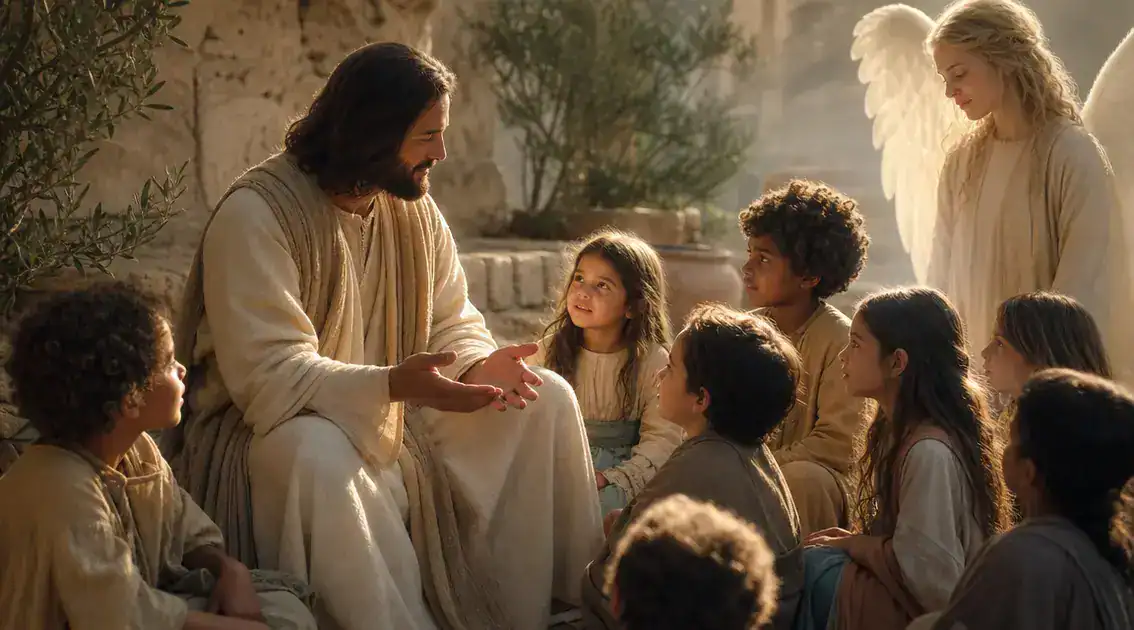
When Jesus speaks in Matthew 18:10, he gently reminds his listeners not to look down on children and then points to angels who “always see the face of my Father.” That brief line ties the care of children to the very presence of God and lifts the scene from mere ethics to a sacred trust. The image suggests that children stand within a circle of attention that reaches from earth into heaven.
Placed in context, this teaching follows Jesus’ call to humility and his warning against causing others to stumble. Children are held up as a model of trust and dependence, and the reference to angels helps explain why: the smallest among us are noticed by heaven itself. This does not turn children into angels, but it does mean their lives are dear in God’s sight, and that heavenly beings are attentive companions in the fragile landscape of childhood.
For those who care for children, the practical lesson is tender and steady. We are invited to protect, welcome, and guide, knowing that our work is joined by a larger story of divine care; yet that truth also calls us to responsibility, because angelic attention never frees us from the duty to love. Let the image of angels beholding the Father’s face shape simple acts of care—prayers at a bedside, gentle teaching, and the patient guarding of a child’s heart.
Patristic and medieval voices on children’s angelic care
Early Christian writers and later medieval thinkers often spoke of angels near the cradle. The church fathers, while careful with speculation, affirmed that God sends messengers to care for his children. Figures like Augustine and Gregory the Great treated angels not as myths but as part of faithful life, weaving the belief into sermons, homilies, and pastoral care.
In the medieval period, theologians and mystics made the idea even more present in daily devotion. Thomas Aquinas and other scholastics taught that guardian angels attend individuals, and that teaching shaped prayers, liturgy, and domestic piety. Artists in monasteries illuminated manuscripts showing a child and a gentle angel, turning doctrine into images families could hold close.
Those patristic and medieval voices did more than explain doctrine; they offered simple practices for caretakers: a short blessing at a bedside, a whispered prayer at baptism, steady watching in hard nights. Such practices help believers live with a sense of ongoing care, a quiet confidence that children are held within a larger, prayerful story rather than left to chance.
How Catholic, Orthodox, and Protestant traditions interpret guardian angels

Catholic, Orthodox, and many Protestant Christians share a humble confidence that God uses angels to care for his people, especially the weak and small. In each tradition, this belief meets everyday life: it is spoken in prayers, felt in liturgy, and lived at the bedside of a child. That common root helps families from different backgrounds name a gentle hope rather than a strange curiosity.
The ways this hope is held vary. In Catholic practice, guardian angels appear in prayers, hymns, and the memory of a feast that invites special devotion; believers often ask an angel’s protection at baptism and in brief household blessings. The Orthodox tradition enfolds angels in icons and liturgical hymns, seeing them as part of the church’s living prayer. Many Protestants are careful with elaborate angel lore, yet they often point back to Scripture—Jesus’ words about children and passages that call angels “ministering spirits”—and accept that God may send heavenly help without making it a central ritual focus. These differences ask for charity, not division.
Across all three streams, practical devotion looks simple and tender: a short prayer at night, a sign of the cross over a cradle, lighting a lamp before an icon, or reading a Psalm together. Such acts make the scriptural promise feel near while reminding caregivers of their calling. Angels may watch and guide, but they do not replace our duty to love, teach, and protect. The shared practice is a quiet partnership—human care joined to divine attention.
Signs, experiences, and how families notice angelic presence
Families often notice gentle signs that suggest a careful presence around their children. A sudden hush falls as a child calms, a small danger is averted at the last moment, or an unexpected helper appears just when needed. These moments do not prove anything by themselves, yet they can feel like a quiet nudge of grace and a reminder of an angelic presence watching over the child.
Some signs are ordinary and tender: a child who finds comfort in prayer, a parent’s sudden sense to change a plan, or a near miss that turns into a safe outcome. Other experiences come as dreams, peaceful impressions, or coincidences that comfort a worried heart. The Bible holds stories of angelic aid alongside these everyday hints, and those stories help families name what they feel without turning every event into a claim of the miraculous.
When families sense such care, the wise response is simple and humble: give thanks, pray, and exercise kindly discernment. Teach children to be grateful and to offer a short prayer before sleep, keep watchful love in daily choices, and share experiences with a trusted pastor or friend when needed. These practices turn fleeting signs into steady habits of trust and tender care, joining human guardianship with a hope that we are not alone.
Simple devotions and prayers parents may use

Parents can keep devotion simple and steady. A short blessing at bedtime, a whispered name, or a hand placed gently on a child’s head can become a sacred habit that shapes a child’s sense of safety. These small acts carry meaning without long words or elaborate ritual, and they help prayer feel like a natural part of family life.
Use brief, easy phrases that can be repeated together: “Lord, keep [name] close to you,” “Watch over this child tonight,” or “May your angels guard this sleeping heart.” You might also say a single verse from Scripture, such as a line from Psalm 121, or teach a short breath prayer that the child can learn. These tiny prayers make divine care personal and simple to hold in the mind.
Invite children into the practice as they are ready by singing a short song, showing the sign of the cross, or teaching a one-line prayer to say before sleep. Over time these small routines form a steady rhythm of trust and gratitude. They remind caregivers that while we hope for angelic care, our loving presence, steady prayer, and gentle protection are how that hope is woven into daily life.
Pastoral guidance: comforting doubt and cultivating trust
Doubt is a common companion of care; when a child is small, worry and questions often rise in a parent’s heart. A gentle pastoral response meets that worry with listening before offering answers. Naming the fear aloud, sharing it with a trusted pastor or friend, and receiving a calm, compassionate presence can lift a heavy moment into something manageable.
Scripture and tradition offer steady words without silencing honest questions. The Bible invites trust while also allowing room for wonder and uncertainty, and many faithful texts speak of angels as ministering spirits who serve those drawn to salvation. This balance means pastors often encourage both prayer and patient learning—inviting families to hold hope and question together rather than choosing one over the other.
Practical steps help cultivate trust over time: keep short bedside prayers, join a small group for shared stories, accept simple blessings at baptism or at home, and ask for pastoral guidance when worry feels large. Encourage children with small rituals—an evening verse, a sign of the cross, a whispered thanks—and remind caregivers that trust grows slowly. Pastoral care is not a quick fix but a steady companion that walks with families through doubt toward a quieter faith.
A quiet prayer for caregivers and children
Heavenly Father, thank you for the small lives you have given us. Hold every child close and keep them safe in your care. Let your gentle presence be felt in the quiet hours and the busy days.
May we remember that we are not journeying alone. Guardian angels attend to what we cannot see. Let that hope calm our fears and wake our gratitude when we notice small mercies.
Help us to turn ordinary moments into prayer: a simple blessing at bedtime, a soft word of thanks, a hand on a forehead. These small acts make faith real and teach children to trust in love that watches over them.
Go softly, carrying this wonder into each day. May peace rest on your home, and may your heart be brave in care and quiet in trust. Amen.
FAQ – Common questions about children, guardian angels, and what Scripture teaches
Do children have guardian angels from birth?
Many Christian traditions answer with a gentle yes. Jesus’ words in Matthew 18:10 link children with angels who behold the Father’s face, and doctrines in Catholic and Orthodox history affirm personal guardian angels. Protestant believers often point to the same scriptural hope (see Hebrews 1:14 and Psalm 91:11) while allowing room for varied emphasis. In all cases, the claim invites trust in God’s attentive care for the young.
What did Jesus mean when he spoke of angels in Matthew 18:10?
In context, Jesus calls attention to the humility and trust of children and warns against causing them to stumble. By mentioning angels who always see the Father’s face, he connects children’s worth with divine attention. The statement highlights that children are seen in God’s presence and that heavenly beings have a role in the economy of care, not to replace human responsibility but to surround the vulnerable with sacred regard.
How do Catholic, Orthodox, and Protestant traditions differ about guardian angels?
Catholic teaching gives formal space to guardian angels in prayers, liturgy, and catechesis, and often encourages invoking their protection at baptism and bedside blessings. The Orthodox Church enfolds angels into liturgy, icons, and the sense of the church’s cosmic worship. Many Protestant communities keep a scriptural emphasis—affirming angelic ministry while avoiding elaborate lore. Across traditions, the shared fruit is pastoral care and simple devotion rather than speculative detail.
How can parents invite angelic care into daily family life?
Keep practices humble and repeatable: a short bedtime blessing, a one-line prayer (for example, asking God to keep the child close), a Psalm read aloud, or the simple sign of the cross. Baptismal prayers and household blessings in many churches also name God’s angels. These acts do not control the unseen but cultivate trust and teach children to live with a felt sense of God’s nearness.
Can guardian angels stop every accident or suffering?
Scripture records angelic protection (Psalm 91:11) and also shows that life includes suffering within God’s larger providence. Tradition teaches that angels assist and guard, but they do not remove the realities of a fallen world or override human freedom. The faithful response is prayer, practical care, and trust in God’s wisdom when outcomes are uncertain, knowing that protection and permitting are both held within divine love.
How should I discern an experience that feels like an angelic sign?
Discernment is humble and communal: first, test the experience against Scripture and the fruits it produces (peace, charity, clarity). Share it with a trusted pastor or mature friend for perspective. Avoid sensational conclusions and look for patterns—does the moment lead to deeper faith, gratitude, or wise action? Prayerful gratitude and careful counsel help turn a felt sign into steady spiritual formation rather than a fleeting claim.