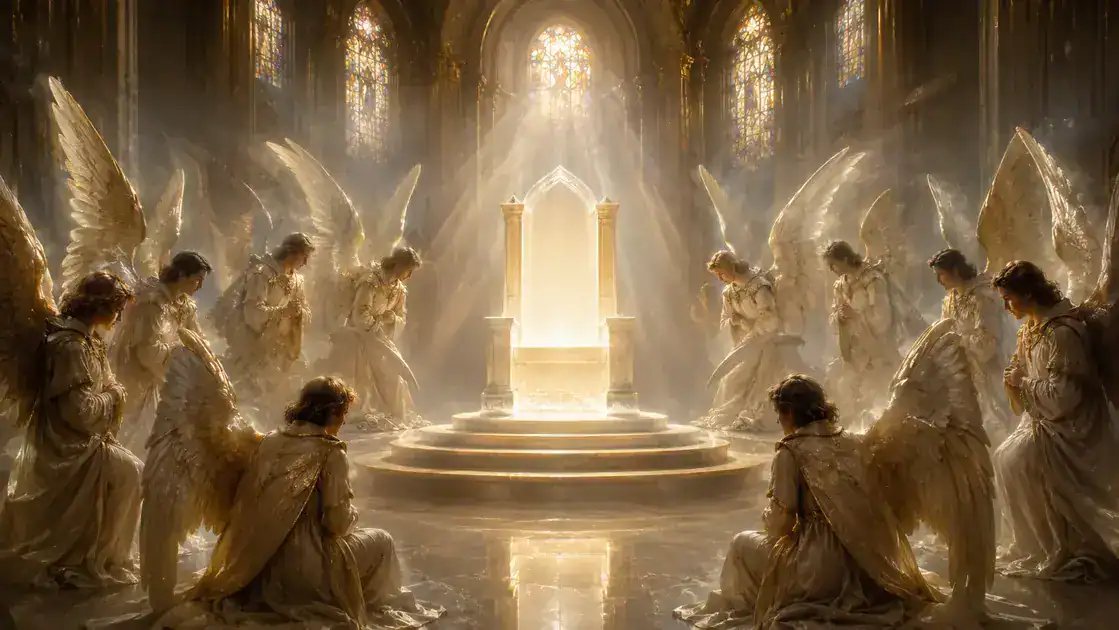

Thrones are a rank of angelic beings described in Scripture and Christian tradition as those who stand closest to God’s presence, witnessing worship and participating in the divine governance by upholding God’s justice, ordering creation toward right relation, and enabling mercy to be exercised with authority rooted in nearness to God.
Have you ever looked at a throne scene in Scripture and asked, what are thrones angels? Come with me as we trace the biblical images and devotional meaning of these angels who uphold God’s justice.
Thrones in Scripture: passages and images
In the Bible, throne scenes appear like windows into God’s presence. Isaiah sees the Lord on a high throne with seraphim crying, and Daniel watches the Ancient of Days seated in splendor. Ezekiel’s vision gives us strange wheels and living creatures near a throne, while Revelation paints a roaring picture of elders, living creatures, and a central throne surrounded by light. These passages do more than amaze; they shape how we imagine God meeting the world.
Each image points to a simple, deep truth: the throne is where God’s presence and justice meet. The angels and creatures around the throne are not distant ornaments but active witnesses and servants. In passages like Revelation 4–5 and Daniel 7, the heavenly court responds to God’s rule with worship, petition, and the carrying out of divine judgment. Those images teach that God’s rule is both majestic and morally attentive.
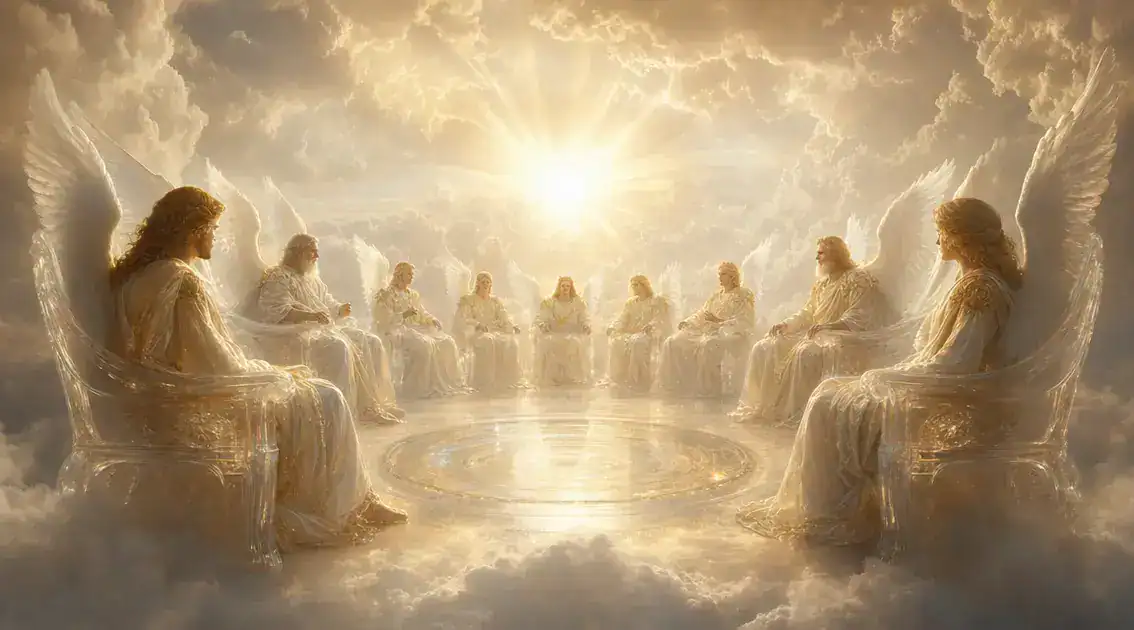
As you read these scenes, let them move you into prayer and wonder rather than into cold theology. Picture the light, the ordered circle of thrones, and the hush of worship. Such visions can steady us: they remind us that justice and mercy are held together in God’s presence. Allow the biblical throne images to shape your trust and your readiness to stand with God’s will in the world.
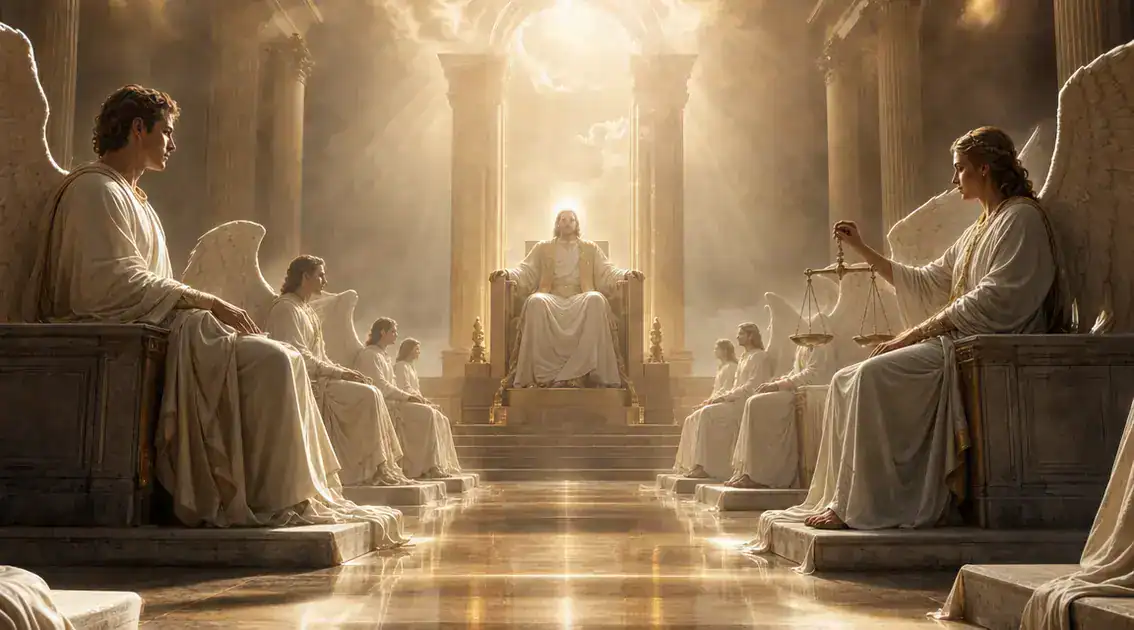
The Bible’s throne images point to how God rules with care. When Scripture shows angels around a throne, it presents them as thrones as ministers of God’s justice. They stand near the seat of judgment and worship, acting as witnesses and servants rather than distant judges.
Those scenes teach a close link between presence and power. The throne is where God’s nearness meets his rule, so the authority of these angels comes from being close to God. Their role is not raw force but ordered service; their authority is authority rooted in God’s presence that calls creation back to right relationship.
This theological vision invites a humble, hopeful faith. If the heavens hold both justice and mercy together, we can learn to seek truth with compassion. Let the image of the thrones shape your prayer and choices: trust in God’s just presence, and let that trust guide how you act toward others.
Thrones within angelic hierarchies: patristic and medieval perspectives
Early Christian writers and later medieval thinkers tried to name how heaven is ordered. One influential voice was Pseudo-Dionysius the Areopagite, who described a ninefold hierarchy and placed the Thrones in the inner triad closest to God. In his view, these angels are near the divine presence and help to carry the sense of God’s steady rule. That simple image shaped how Christians pictured heaven for many centuries.
Medieval theologians like Thomas Aquinas took up the Dionysian pattern and gave it pastoral shape. Aquinas spoke of Thrones not as rulers who lord it over others, but as beings whose authority grows from prayerful nearness to God. Artists and craftsmen then gave this theology a face: thrones as luminous seats, wheels, or circular ranks that show ordered service rather than raw power. The result was a vision of authority that feels ordered, quiet, and faithful.
That tradition matters for devotion today. Monks, cathedral builders, and mystics used these images to remind the faithful that God’s justice is held within relationship, not coercion. When we pray with the Thrones in mind, we are invited to learn the discipline of humble service and steadfast witness. Let that image shape how you seek justice: close to God, steady in mercy, and ready to serve.
Liturgical and devotional responses to the thrones
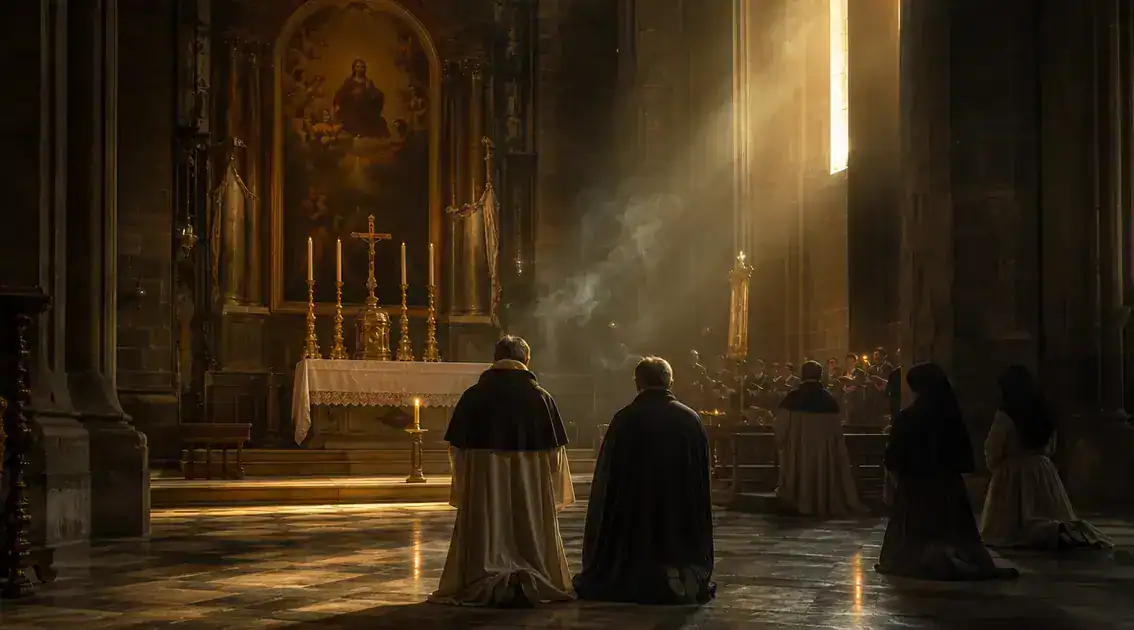
Church worship has long opened a small window onto the throne scenes of Scripture. In hymnody, incense, and the slow turning of candles, communities try to echo the heavenly court where angels offer constant praise. Those practices shape a sense of sacred order: worship becomes a way of entering into the presence where justice and mercy meet, not just a set of actions.
Monastic offices and liturgical rites often name the angels or recall the songs of Revelation as part of their prayer. Chant, silence, and reverent gesture are used to remind the faithful that liturgy participates in a larger heavenly liturgy. When a congregation sings the ancient acclamations or pauses in quiet adoration, it is learning the rhythm of heaven—attentive, humble, and ready to witness God’s will in the world.
These traditions offer simple practices you can use at home. Light a candle, read Revelation 4–5 slowly, and sit in a moment of silence to imagine the throne’s hush. Let the image of the thrones shape how you seek justice in daily life by turning prayer into steady action. This is not grand mysticism but a steady schooling: worship trains the heart to love what God loves and to serve with both truth and mercy.
Practical spiritual practices for sensing divine justice
Start with simple, steady practices that open the heart to what Scripture shows. Read throne passages slowly—like Revelation 4–5 or Daniel 7—and let the images settle. Sit with what you read for a few quiet minutes, then offer a short prayer asking to see how God’s justice and mercy meet in your life.
Let communal worship shape your sense of justice. Join a liturgy, sing ancient hymns, or keep a brief time of silence after communion. Pair prayer with small acts of service—give food, listen to someone in need, or speak up for fairness where you live. These actions train the heart to match prayer with practice.
Keep a few daily rituals that anchor you: light a candle, do a short examen of the day, and write one line about where you saw need. Practice calm breath and brief silence before making choices that affect others. Over time, these small habits help you live out justice held in God’s presence, steady and gentle in its care for the world.
As we close, imagine the circle of thrones and their angels standing in quiet watch around the divine presence. Let that vision settle like soft light over your day, reminding you that God’s justice and mercy meet in a single, holy gaze.
May we ask for courage to trust that justice is not distant but near. In prayer, offer your small worries and the world’s large needs, asking God to shape your heart toward right action and compassionate truth.
Practice simple things that keep your spirit steady: a breath of prayer before hard choices, a moment of silence for those who suffer, and a humble act of service in your neighborhood. These small habits are ways to carry the throne’s witness into daily life as justice held in God’s presence.
Go in peace with wonder in your heart. May the steady light of God’s reign guide your steps, and may you find joy in serving truth with mercy, today and every day.
FAQ – Questions about the Thrones and angelic ministry
What does the term ‘Thrones’ mean in the Bible?
The Bible uses throne imagery to show God’s rule (see Revelation 4–5, Daniel 7, Isaiah 6). The word ‘thrones’ sometimes names seats of authority and, in lists of heavenly orders, points to ranks of spiritual beings (see Colossians 1:16; Ephesians 1:21). Tradition then took these images and gave them a personal shape—Thrones as a choir of angels near God’s presence who witness, worship, and participate in divine governance.
Are the Thrones actually angels, or just poetic images?
Scripture often blends image and reality: throne scenes are vivid visions that name heavenly roles. New Testament passages that list ‘thrones’ among spiritual orders (Colossians 1:16; Ephesians 1:21) suggest they belong to the created spiritual realm. Classical authors such as Pseudo‑Dionysius and Thomas Aquinas developed the idea that Thrones are indeed an angelic choir, close to God, whose identity combines symbolic meaning with real ministry.
How do the Thrones relate to God’s justice?
Throne visions show justice and presence joined: in Daniel and Revelation, the court around the throne witnesses God’s judgments and affirms his kingship. The Thrones, in tradition, stand near the seat of judgment and worship so that authority is always disciplined by nearness to God. In short, they symbolize and serve the ordering of creation—justice exercised within the life of God’s presence, not apart from it.
Should I pray to the Thrones or ask them for help?
Christian practice directs prayer to God alone, while recognizing angels as servants who carry out God’s will. Many traditions encourage asking God to send angelic help or to entrust oneself to God’s angels (see Matthew 18:10; Psalm 91:11). Some believers also ask angels to intercede in a subordinate way, always keeping God as the primary focus of prayer and relying on Scripture and the church’s pastoral guidance about such practices.
What did church fathers and medieval theologians teach about the Thrones?
Early and medieval thinkers shaped our image of the Thrones. Pseudo‑Dionysius arranged the angelic orders into a ninefold hierarchy that places the Thrones close to God. Thomas Aquinas accepted and Christianized that pattern, describing Thrones as bearing divine justice and participating in God’s governance by their prayerful nearness. Their writings influenced liturgy and art, giving the Thrones a stable place in Christian imagination.
How can I cultivate a sense of God’s justice shaped by the throne images?
Begin with Scripture and simple practices: read Revelation 4–5 or Daniel 7 slowly, sit in brief silence, and let the images move you to compassionate action. Enter corporate worship where the church echoes heavenly praise, and translate prayer into small acts of service—listening, feeding the hungry, or standing for fairness. These steps help you live the lesson of the thrones: justice rooted in God’s presence, expressed through steady mercy.