Ophanim, the wheels of fire in the Bible’s Ezekiel vision, are symbolic heavenly chariot-wheels full of eyes that portray God’s attentive, moving presence—showing a throne that travels with the living creatures, perceives human need, and embodies divine holiness, watchful care, and active guidance for God’s people.
ophanim wheels of fire bible — have you ever felt the hush of Ezekiel’s vision, where fiery wheels full of eyes turn with divine intent? I’ll walk with you through the imagery and devotional questions it raises.
Ophanim in Ezekiel: the vision of the wheels
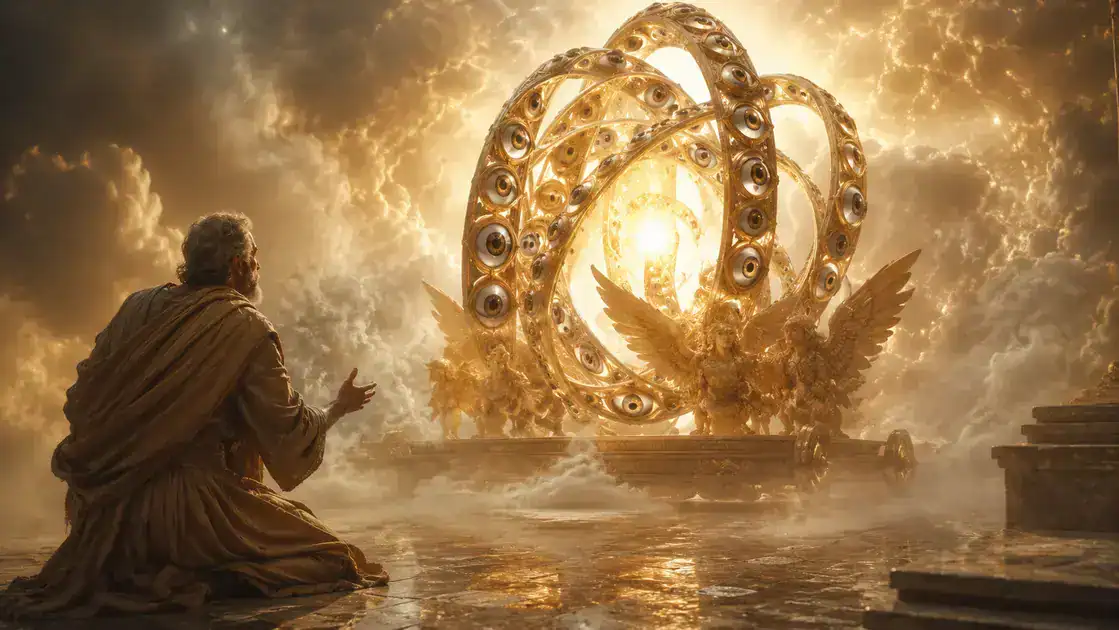
In Ezekiel’s vision the skies open and something unlike anything in the prophet’s day appears: a massive, living wheel that glows like coals and moves with a steady, holy purpose. The scene reads like a sacred machine and a living being at once, set in a sky of smoke and light. This odd, awe-filled image pulls the reader into a world where God’s presence is visible and active.
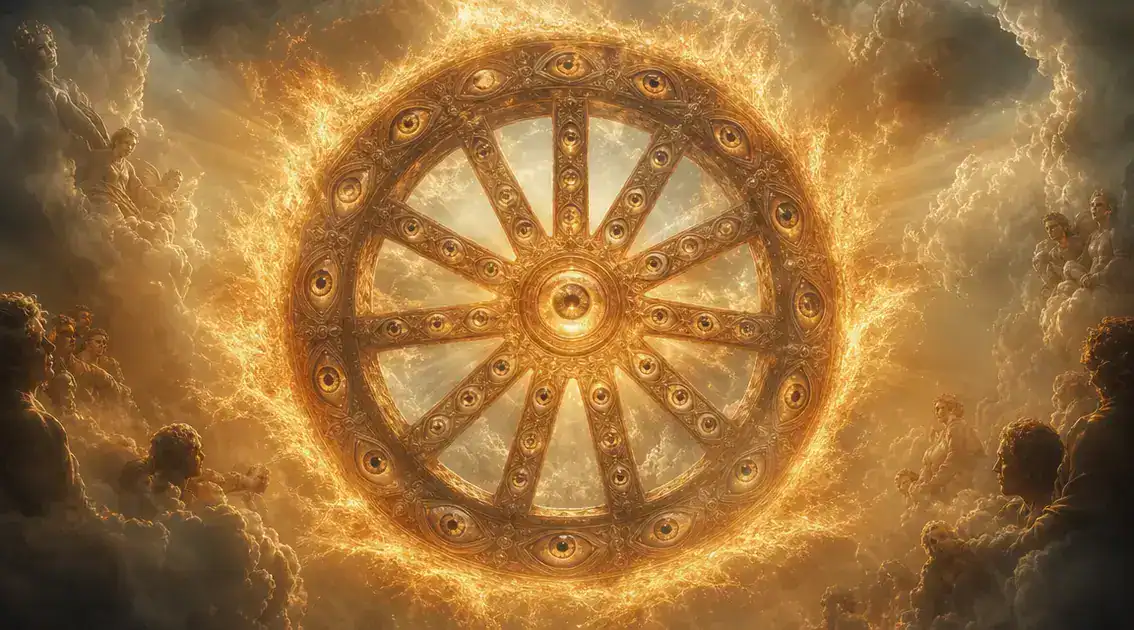
These wheels—called ophanim in later tradition—are described as “wheels within wheels” whose rims are full of eyes. The eyes are not mere decoration; they signal that the divine presence both sees and remembers. When the text says the spirit moved the living creatures and the wheels moved alongside them (Ezekiel 1:15–21), it shows a God who goes with the world, attentive and responsive rather than distant or static.
Let the vision shape a simple devotion: holiness that watches is also holiness that moves toward life. The fiery wheel invites us to expect God’s care in motion—steady, discerning, and full of mercy. As you linger with the image, let it draw you into a posture of reverent readiness, trusting that the One who sees will also come near in guidance and protection.
Imagery and symbolism: fire, eyes, mobility, and the divine chariot

The vision’s images are simple but rich: fire that burns without destroying, eyes that watch without coldness, and wheels that move as if alive. These symbols fit together like a single sentence. They do not tell a dry fact; they invite a response of awe and trust.
Fire in Scripture often means presence and purification, a bright sign that God is near and holy. The many eyes around the wheels suggest constant attention—an ever-watchful care that sees the suffering and guides the way. When the text links sight and flame, it teaches that God’s knowing heart is also a refining love, steady and attentive rather than distant.
Mobility is the final, living note: the wheel moves with the living creatures, showing a God who travels with his people. This is the meaning of the divine chariot—the throne that does not sit only in a temple but moves toward life and need. Let that image shape prayer: a presence that sees, purifies, and goes with you.
Theological interpretations across Jewish and Christian traditions
In Jewish reading, Ezekiel’s vision is often seen through the lens of merkavah tradition, which studies the prophet’s chariot as a direct encounter with God’s presence. Rabbis and mystics describe the ophanim as part of a living heavenly court, symbols of God’s attentive rule rather than mere machines. This view keeps the image close to worship: the wheel shows a God who moves and watches over the people.
Christian interpreters have tended to read the vision alongside the New Testament, where similar images appear in Revelation and in the language about Christ’s rule. Church fathers and later theologians saw the eyes and living movement as signs of omnipresence and active love, often linking the vision to Christ’s care for the world. In art and liturgy, the chariot and its wheels became a way to speak of a living God who reigns and reaches toward us.
Across both traditions the focus often shifts from the strange details to the pastoral meaning: these images teach that God is both holy and near. The many eyes remind us that God remembers and notices, and the moving wheel invites us to trust a presence that comes with us. Such readings turn a baffling vision into a steady lesson for prayer and life—an image of divine accompaniment that comforts and calls us deeper into trust.
Angelic taxonomy: Ophanim, cherubim, seraphim — similarities and differences
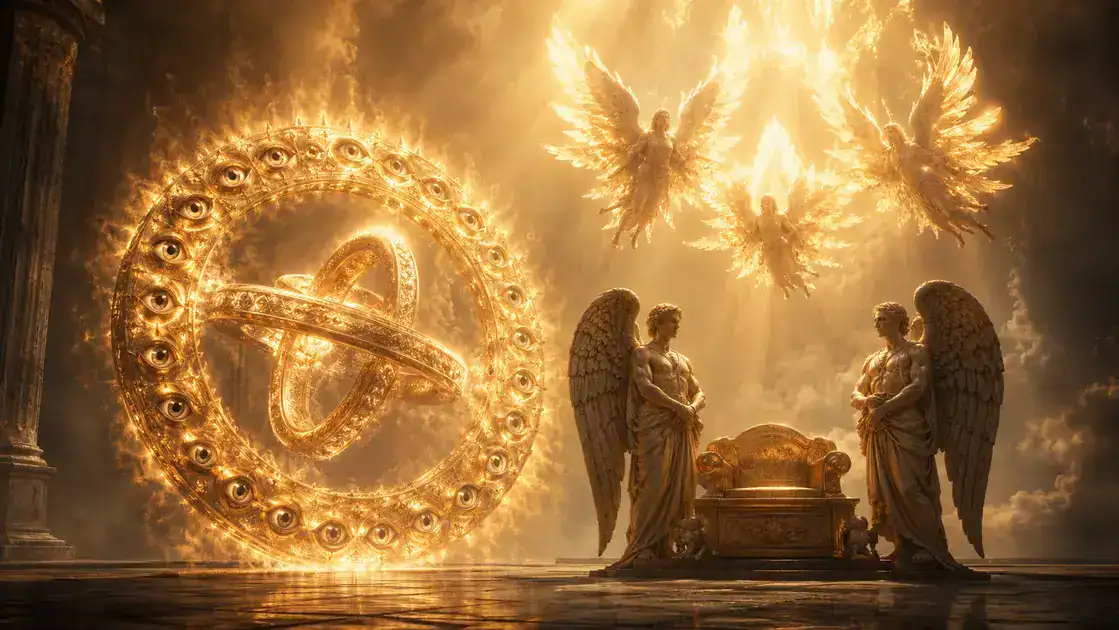
The Bible names different heavenly beings with distinct images: the ophanim appear as wheels full of eyes in Ezekiel, the cherubim stand as guardians and throne-bearers, and the seraphim circle the divine presence with fiery praise. Each image uses concrete things—wheels, wings, fire—to point to spiritual realities we can feel but not fully explain. These names are not rival titles; they are windows into how Scripture shows God’s nearness.
Seen together, these figures share a single purpose: to show God’s close, active presence. The eyes of the wheels speak of attention, the wings of the cherubim show service and protection, and the flames of the seraphim suggest purifying love. Yet each brings a different emphasis. Cherubim often stand watch or guard sacred space, ophanim show movement and the mobility of God’s throne, and seraphim lead the song of holiness. The differences help us grasp many sides of a single reality.
Let these images shape prayer and trust: they invite us to imagine a God who watches, moves toward us, and draws us into holiness. When we picture the watching wheel, the guarding cherub, or the praising seraph, we are reminded of divine accompaniment—a presence that sees, protects, and refines. That quiet, holy company can steady our heart and turn ordinary moments into small acts of worship.
Historical reception: art, mysticism, and medieval commentaries
Medieval artists took Ezekiel’s strange vision and made it a part of everyday worship so people could see and pray with it. In illuminated manuscripts, small wheels rimmed with eyes circle a painted chariot, while chapel frescoes and mosaics used gold and flame-like color to suggest living light. These images were never meant to explain everything; they invited a felt encounter with Ezekiel’s vision inside a sacred space.
At the same time, mystics and commentators wrote to guide that encounter. Jewish merkavah writers and later Kabbalists read the wheel as part of the heavenly throne and a path toward God’s presence, while Christian thinkers from Pseudo-Dionysius onward linked the image to God’s movement and care. Their words treated the vision as a tool for prayer and ascent, shaping how people read the strange signs and let them change the heart.
Art and commentary worked together to make the mysterious familiar and useful for faith. A person kneeling before a painted chariot or tracing a margin of gloss learned to imagine a God who watches, moves, and draws near. Those medieval pages and walls still teach us how to pray: not by solving every puzzle, but by letting the image steady our wonder and guide us into deeper trust and devotion.
Devotional reflections: encountering the holy through the image of the wheels
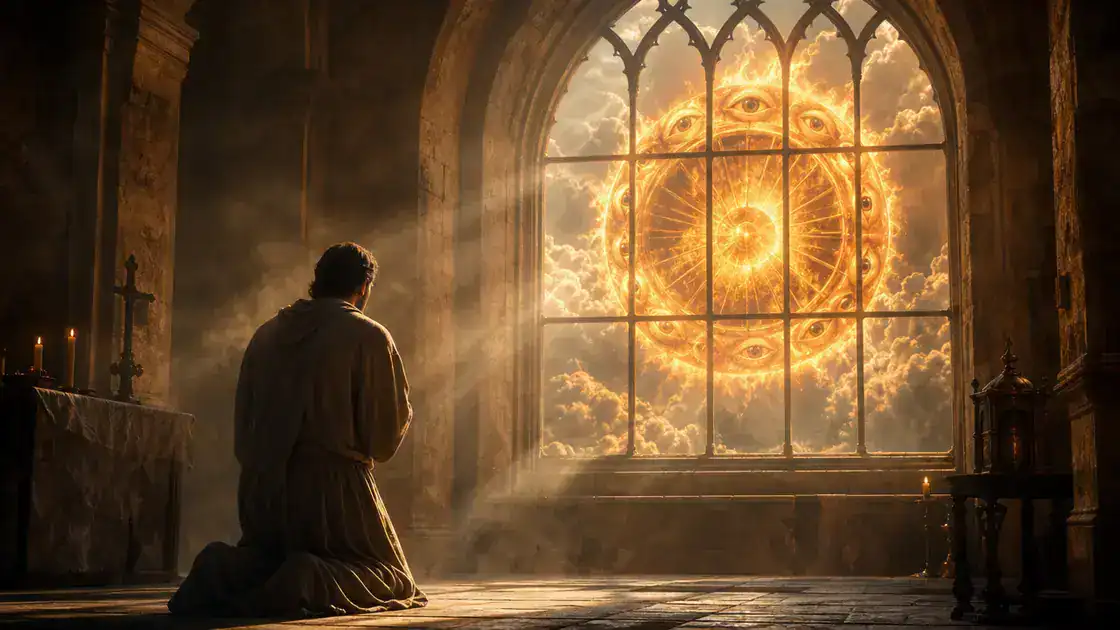
Picture a quiet hour of prayer where your eyes rest on the image of a slow, glowing wheel. That wheel does not intimidate; it invites attention. As you watch it, you may feel seen and held, a gentle reminder that holiness notices even the small corners of your life.
Let the wheel shape simple practices: begin your prayer by naming one thing you are grateful for, then breathe with the image of movement—trusting that the One who sees also moves toward need. This is not magic but a trained posture: a steady turning of attention from noise to presence. The many eyes in the vision teach us to offer our day honestly, knowing it meets a compassionate gaze.
Carry that gaze into work, care, and silence. When you face a hard choice or a lonely hour, remember the wheel’s motion and the call to keep moving in faith. Small acts—a phrase of thanks, a kind step, a pause to listen—become ways to walk with that moving throne. In these ordinary moments, the vision becomes a living help: a sacred companion that watches, refines, and goes with you.
A closing prayer
May the image of the wheels remind you that God’s gaze meets every small thing you carry, and that you are never alone.
May the moving wheel teach you to trust a presence that goes with you—gentle, steady, and true—especially in quiet or hard moments.
Hold this vision in your daily tasks: breathe, offer thanks, and step forward with calm courage as the wheels turn with you.
Go in peace, kept and guided by a watching, loving God; let wonder and trust shape each small step today.
FAQ – Common questions about the ophanim and Ezekiel’s vision
Who or what are the ophanim in the Bible?
The word ophanim (Hebrew for “wheels”) appears in Ezekiel’s vision of the divine chariot (Ezekiel 1, 10). They are described as wheels within wheels, full of eyes, and move with the living creatures. Later Jewish and Christian tradition reads them as a symbolic part of the heavenly throne, signifying God’s way of being present and active in the world.
What do the eyes on the wheels mean?
The many eyes emphasize that God’s presence is both watchful and remembering. Ezekiel’s detail points to attentive care and divine knowledge rather than mere surveillance. Traditions often interpret the eyes as signs of omniscience and compassionate notice of human need (cf. Revelation 4:6–8).
Are the ophanim the same as cherubim or seraphim?
They are related but distinct images. Cherubim, seraphim, and ophanim appear with different emphases: cherubim guard and bear the throne, seraphim proclaim holiness, and ophanim emphasize mobility and watchfulness in Ezekiel. Later traditions treat them as different aspects of the one heavenly court rather than competing classes.
How have Jewish and Christian traditions historically understood these wheels?
Jewish merkavah mystics and later Kabbalists read the chariot vision as an encounter with God’s throne and a map for spiritual ascent. Christian fathers and medieval theologians often read the wheels as signs of God’s active reign and as typological foreshadowing of Christ’s rule. Both streams used the image for prayer and worship, treating the vision as a pastoral resource.
Can the image of the wheels help in personal prayer or devotion?
Yes. Many find the vision invites a posture of humble attention: naming needs, trusting that God both sees and moves. Simple practices—quiet meditation on the image, brief prayers of offering, or breathing with the idea of a God who accompanies—turn the vision into a lived reminder of divine accompaniment rather than a puzzle to solve.
Is it appropriate to make art or icons of the ophanim for worship spaces?
Both Jewish and Christian artistic traditions have long used chariot imagery to aid devotion, from medieval manuscripts to church art. When done reverently, such images function as aids to prayer and reflection, helping worshippers imagine divine presence. Careful practice honors Scripture and community norms, avoiding sensationalism and focusing on the image’s pastoral use to draw the heart toward God.