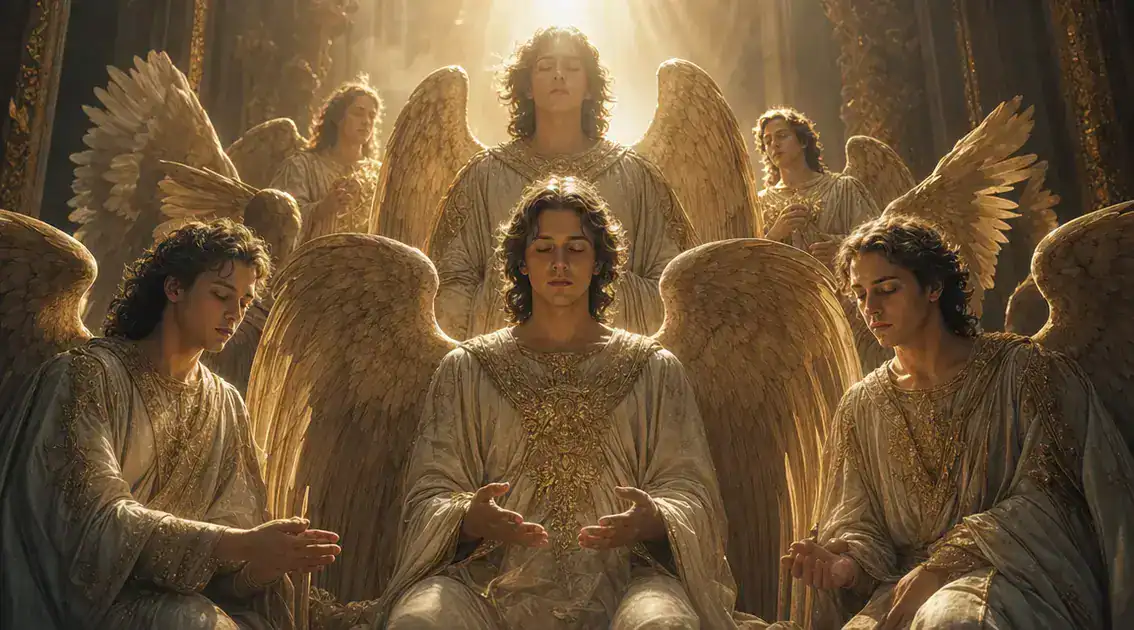

Thrones intercessors hierarchy describes thrones as a high celestial order that receives God’s presence and petitions, channels divine will toward lower angelic ranks, and preserves a mediated space of worship, judgment, and care so human prayers are formed and entrusted to the angelic ministry without replacing direct prayer to God.
thrones intercessors hierarchy — have you ever imagined a silent throne before God’s light? This brief reflection walks with Scripture, theological voices, and devotional practice to sense thrones as mediatory presences that invite prayerful curiosity rather than tidy answers.
Biblical foundations: where thrones appear in Scripture
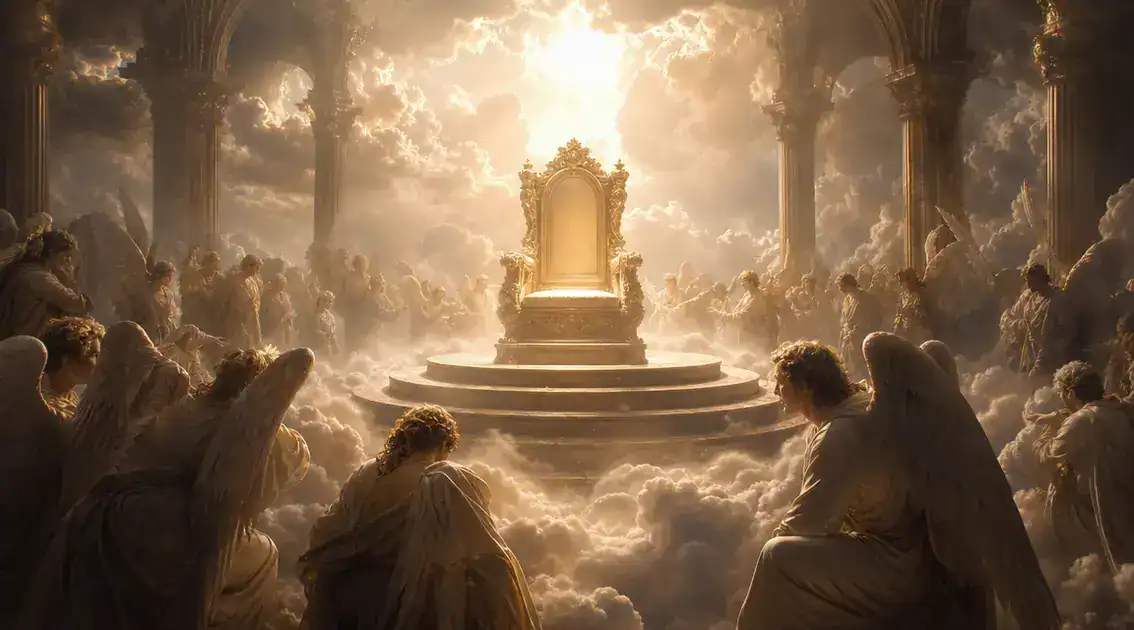
Scripture places thrones at the heart of God’s presence, not as empty furniture but as a sign of authority and communion. In Daniel’s vision the figure called the Ancient of Days appears with thrones set and a court gathered around him, a scene that feels both judicial and worshipful. The image teaches that thrones mark where heaven’s will meets earthly stories, and it invites us to watch how justice and mercy come from one center.
John’s vision in Revelation widens that view: a single throne in heaven becomes the center of praise, where living creatures and elders fall before the One who sits there. This throne scene pairs judgment with continual worship, showing that the same divine presence who rules also draws ceaseless devotion. Reading these passages side by side helps us see a throne that holds both authority and a space for relationship.
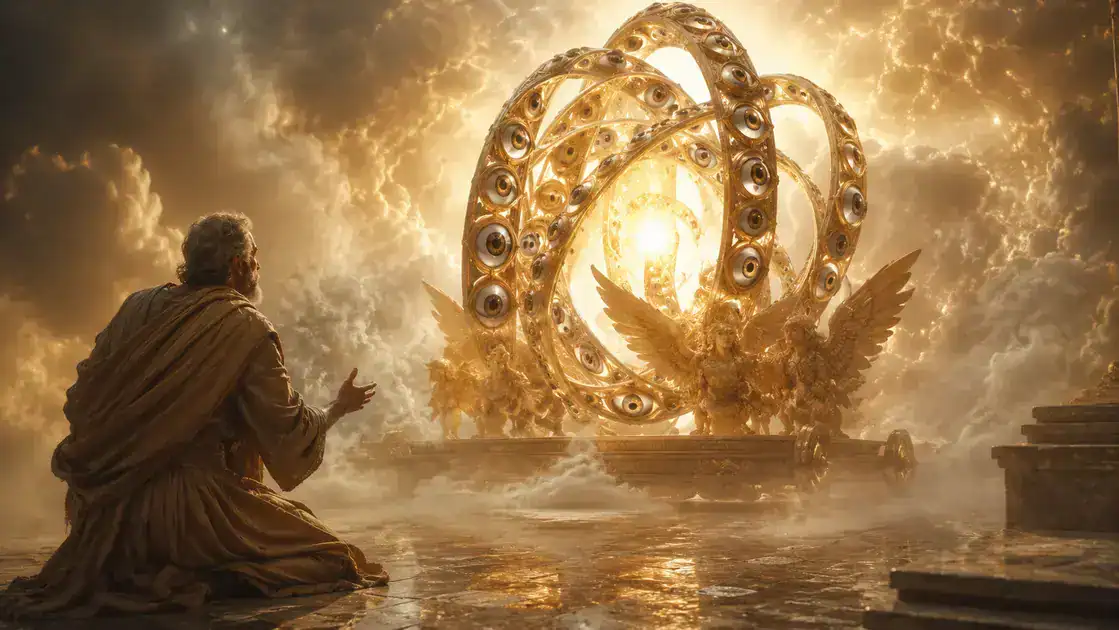
Other prophets add gentle detail: Isaiah hears seraphim around the throne and is made aware of holiness that both purifies and sends; Ezekiel describes a moving throne that links heaven and earth. Together these texts create a picture of thrones as places of encounter—where God’s holiness, governance, and care touch the world. For a reader seeking prayerful depth, these biblical throne-scenes are not remote descriptions but invitations to stand before God with reverence and hope.
Thrones in patristic and medieval theology
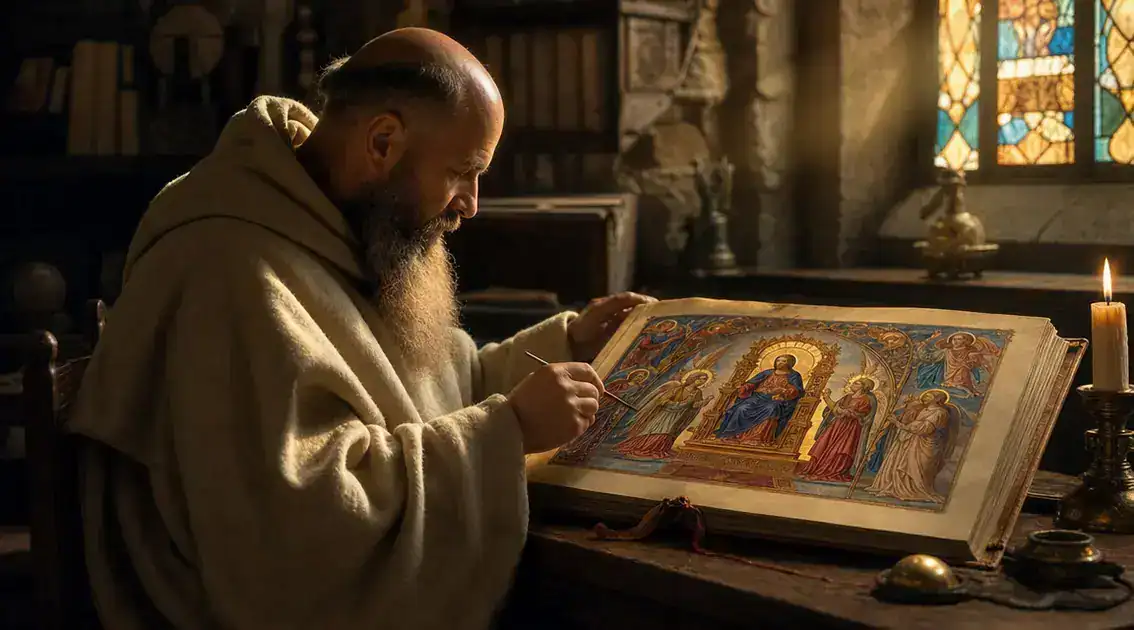
Early Christians kept the throne-images of Scripture close to their prayer life. Fathers like Augustine and Gregory read those scenes not as cold doctrine but as windows into God’s governance and nearness. When they spoke of thrones, they pointed to a presence that holds justice and draws praise, a divine center that shapes how the church prays and lives.
Centuries later, Pseudo-Dionysius gave that sense a clear shape by ordering the angelic ranks and placing the thrones among the highest triad. His vision treated thrones as guardians of divine order and as beings who reflect God’s light downward. Medieval writers picked up this image and let it shape sermons, art, and the way lay people imagined heaven—thrones were seen as both majestic and close to the flow of grace.
Thinkers such as Thomas Aquinas then wove these ideas into theology, saying that the orders above us serve by carrying God’s will toward the world. This made thrones a model for humble service: they stand firm before God so that mercy and law may reach us. For devotional life, these medieval treatments invite a gentle posture—watchful, reverent, and ready to receive how high things touch low ones in prayer.
Intercessory role: how thrones mediate prayers and divine will
The thrones in Scripture move beyond a static symbol to a living connection between heaven and the world. In scenes of worship and judgment they stand where God’s presence gathers, and from there they seem to receive the petitions of creation and set them before the divine will. That image helps us see thrones not as distant seats but as active points where prayer and purpose meet.
Seen this way, thrones function like conduits: worship rises and is held, and God’s ordering descends and is set in motion among lower angels and the world. The role is neither mechanical nor distant; it is relational and spiritual, shaping how angelic orders respond and how God’s care reaches human need. When prayer is offered with humble attention, it participates in that sacred exchange rather than floating aimlessly into the void.
For devotional life this invites a simple practice of trust and attentiveness. We may imagine standing before the throne with others in heaven, lifting our cares with quiet hope, and letting God shape our will so it aligns with mercy and truth. Such a posture is a small, steady way to enter the mystery: prayer becomes both receiving and being sent, a shared movement guided by the thrones who mediate between God and lower angels.
Symbolism and liturgy: images that shaped devotion to thrones
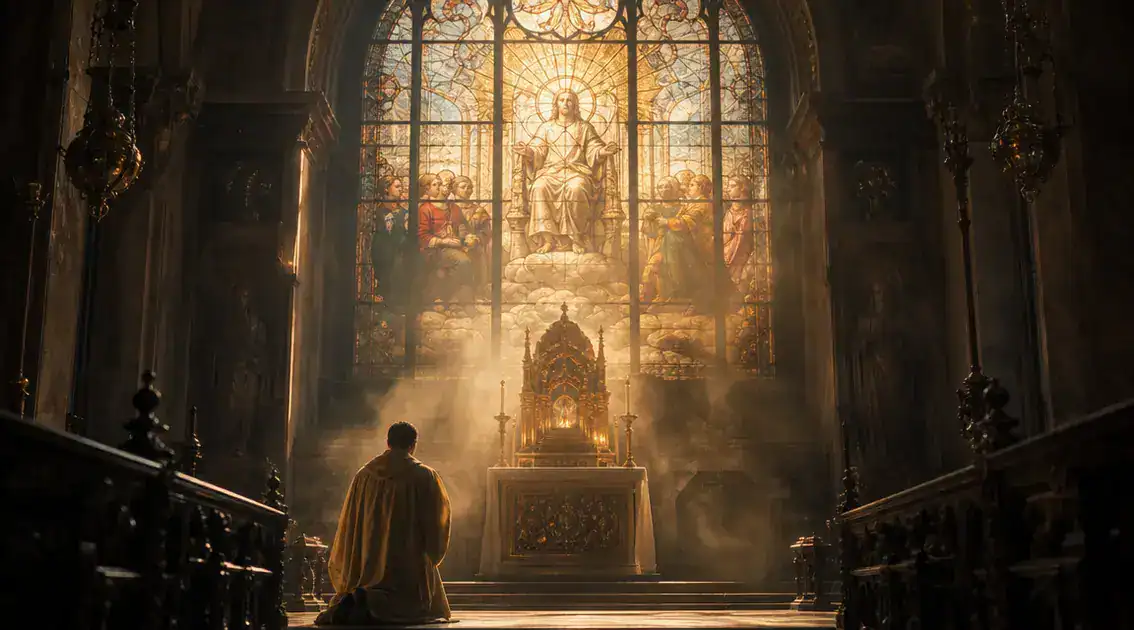
Art and liturgy have long shaped how believers picture the thrones of heaven. Mosaics, stained glass, and icons show a central seat surrounded by light and song, and these images teach a simple truth: the throne stands for God’s rule and nearness. When people see that image in a church, they learn to hold worship and authority together—praise that trusts and a rule that draws hearts upward.
Those visual images move into rituals. In many traditions the altar is treated like a small throne, incense rises like prayer, and sung acclamations echo the choirs described in Scripture. These actions turn an abstract idea into a lived habit: we bow, we sing, we bring the world to a place that points beyond itself. That liturgical shaping helps worshipers feel part of something larger—a shared prayer that reaches toward heaven.
For personal devotion, these symbols invite a calm, steady imagination. Looking at a painted throne or standing at an altar can remind us to bring needs and gratitude together, trusting that our prayers join a wider chorus. This is not showy piety but a quiet participation: we learn to watch, listen, and offer, letting the throne-image guide both humility and hope as we join in the life of heaven and earth.
Relationship to seraphim, cherubim and lower angels
The thrones stand in a kind of middle place among the angelic orders, receiving what comes from those closest to God and shaping what goes toward the world. In many Christian traditions the seraphim are pictured as beings of burning love and immediate praise, while the cherubim hold deep, holy knowledge. Thrones then appear as steady bearers of divine purpose, a calm center that reflects both the ardor of seraphic love and the insight of cherubic wisdom.
From that center the movement continues downward. Thrones do not act alone; they give form to what the higher orders perceive so that the lower angels can carry it out. The lower ranks—principalities, archangels, and angels—are often shown attending to the life of creation, carrying light, guidance, and care into human stories. This layered picture helps us imagine a shared labor: the highest worship, the thrones’ ordering, and the lower angels’ service all work together as one sacred economy.
For prayer and devotion this image is quietly hopeful. It asks us to trust a pattern we cannot see fully: that love and wisdom from God’s presence pass through faithful hands and reach our daily needs. When we bring troubles or gratitude to God, we may picture that light moving through the thrones into the care of those who serve the world. Such an image invites patience, reverence, and a renewed sense that our small prayers join a vast, ordered chorus of care.
Spiritual practice: praying with awareness of celestial hierarchies
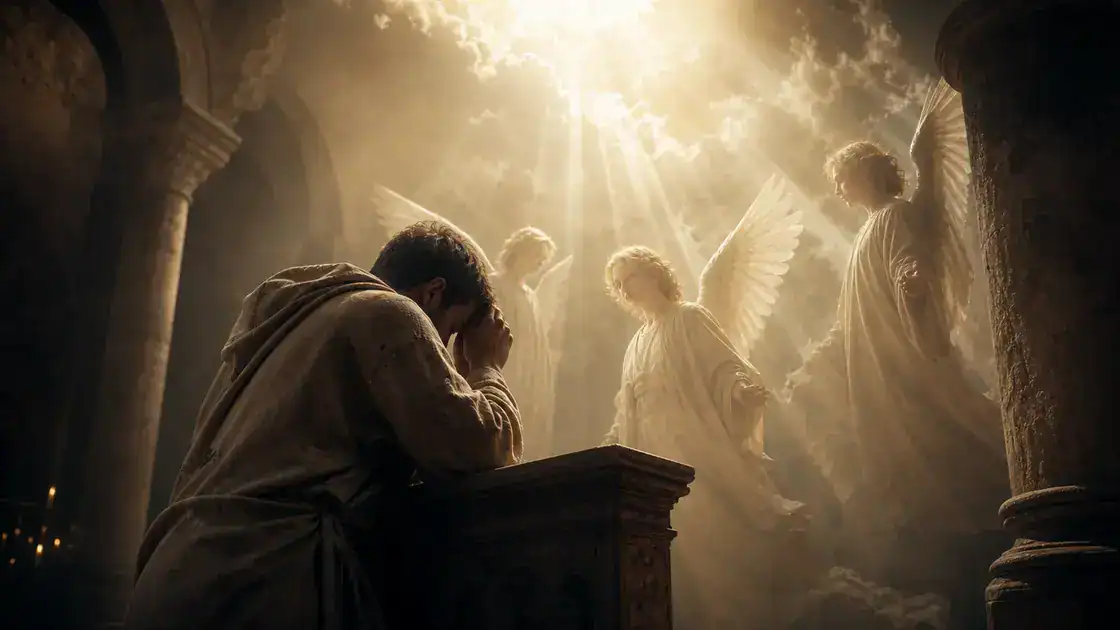
Prayer with an eye toward the heavens begins with a simple breath and a willing heart. Sit quietly and imagine a calm center above you where the thrones rest in steady light. This is not a demand for visions but a gentle way to place your needs into a larger picture, trusting that prayer moves within a shared, ordered life.
Begin by naming one clear intention and offering it softly, as if handing it upward. You might breathe in a word like “peace” and breathe out your need, keeping the rhythm slow and steady. In this practice, the thrones are like patient hosts: they receive what we offer and set it within God’s care. Let that thought shape your tone—humble, expectant, and open to how God may answer through many channels.
Use ordinary moments to keep the habit alive: a short breath prayer while waiting, a quiet dedication before meals, or a nightly offering of thanks. Join these small acts with the church’s rhythms when you can—song, silence, and simple liturgy help the imagination settle into the sacred pattern. Over time, this awareness trains patience and trust, reminding you that your prayers are part of a wide, loving economy that reaches from throne to world.
Contemporary theology and pastoral implications
Contemporary theologians often reframe ancient images of thrones so they speak to our time. Rather than treating them as distant curiosities, many now emphasize the mediation these images suggest—how God’s care can be pictured as both authoritative and tender. This shift helps people see thrones as signs of a relational order that invites trust, not as a secret power structure to master.
That change has clear pastoral use. In moments of loss or doubt, clergy and spiritual guides can point to these images to offer comfort and hope without promising tidy answers. Good pastoral care holds mystery gently: it encourages prayer, listening, and presence while avoiding speculation that can confuse or frighten. When ministers speak of angelic help or heavenly ordering, they do so to steady faith and to call people back to prayerful trust and humble obedience.
Practically, this looks like brief liturgical gestures, quiet prayers that name need, and the use of sacred art or music to shape imagination toward peace. Small practices—a breath prayer, a moment of silence before meals, or a short pastoral blessing—invite believers into the idea that their prayers join a wider, ordered life. These practices keep theology rooted in lived care, reminding us that heavenly images are meant to deepen devotion, encourage patience, and support hearts in the work of mercy.
A gentle prayer as we go
May the quiet image of the thrones rest in your mind like a warm light. Let it remind you that authority and care meet in the same place, and that your small prayers are received and held with love.
May you carry that peace into ordinary moments: a breath offered at dawn, a short prayer in the bustle, a calm surrender at night. These little acts join a wider life that reaches from heaven to earth, and they shape a steady heart.
Go forward with wonder and trust. When doubts come, remember that prayer moves through many hands and that you are held in a faithful, ordered love. Amen.
FAQ – Common questions about thrones as intercessors and heavenly order
Where do thrones appear in the Bible and what do those passages mean?
Thrones appear in key visions such as Daniel 7 (the Ancient of Days) and Revelation 4–5 (the heavenly throne and the elders). These texts place thrones at the center of divine rule and worship, showing a scene where God’s authority, judgment, and praise meet. Prophetic passages like Isaiah 6 and Ezekiel 1 add the sense that the throne is also a place of holy encounter that both purifies and sends forth mission.
Do the thrones actually intercede, or is that just later theology?
The Bible gives throne-scenes where worship, petition, and God’s will converge, and later theology—especially Pseudo-Dionysius and medieval writers—read these scenes as indicating orders that mediate God’s presence. So the idea of thrones as intercessory or mediating is a careful theological reading grounded in Scripture and ancient tradition, not a new invention. It is meant to help us picture how God’s care is ordered, not to replace direct prayer to God.
How do thrones relate to seraphim, cherubim, and the lower angels?
Scripture and tradition describe a layered celestial life: seraphim are often linked with burning praise (Isaiah 6), cherubim with divine knowledge and presence (Ezekiel), and other angels with service to creation. Theological accounts place thrones among the higher orders who receive and reflect God’s light, shaping what lower angels then carry into the world. This image portrays a cooperative economy of worship, ordering, and service rather than isolated ranks acting alone.
Should Christians pray to thrones or to angels as mediators?
Traditional Christian teaching distinguishes worship due to God from veneration or asking for help through holy beings. Scripture calls us to pray to God (e.g., the Lord’s Prayer), while many traditions also encourage asking saints or angels to pray for us as companions in the life of prayer. In short, direct prayer is to God; seeing thrones or angels as part of that ordered life can deepen trust and imagination but should not replace our primary address to God.
How have images of thrones shaped worship and devotion historically?
Art, icons, and liturgy have long embodied throne-imagery so worshipers could enter the meaning of those visions—think mosaics, stained glass, and altars treated as symbolic thrones. These images and rites help turn abstract teaching into lived prayer: incense, song, and sacred posture teach a people to place praise and petition before God. Rather than mere decoration, such forms train the imagination to hold authority and tenderness together in worship.
How can I bring awareness of celestial hierarchies into my own prayer life in a healthy way?
Begin with simple, short practices: a breath prayer offered upward, naming one intention, or a moment of silence that imagines a calm, luminous center receiving your prayer. Ground the practice in Scripture and communal worship—use psalms, brief liturgical prayers, or moments of thanksgiving—so the imagination serves faith rather than fanciful speculation. These small habits cultivate patience and trust, reminding you that your prayers join a larger life of praise and care.