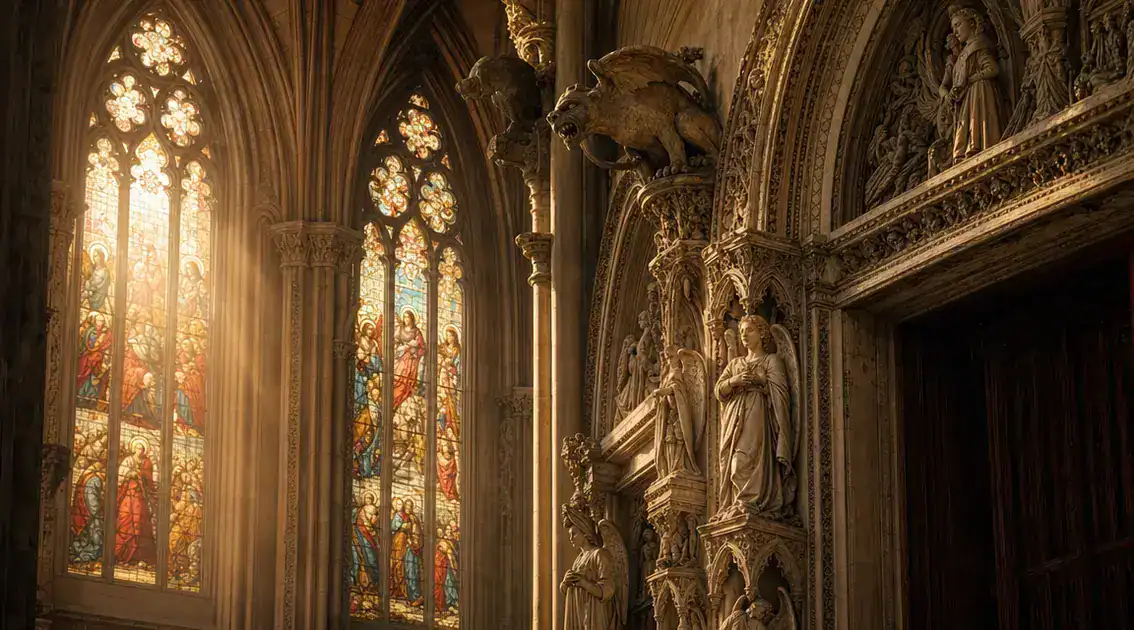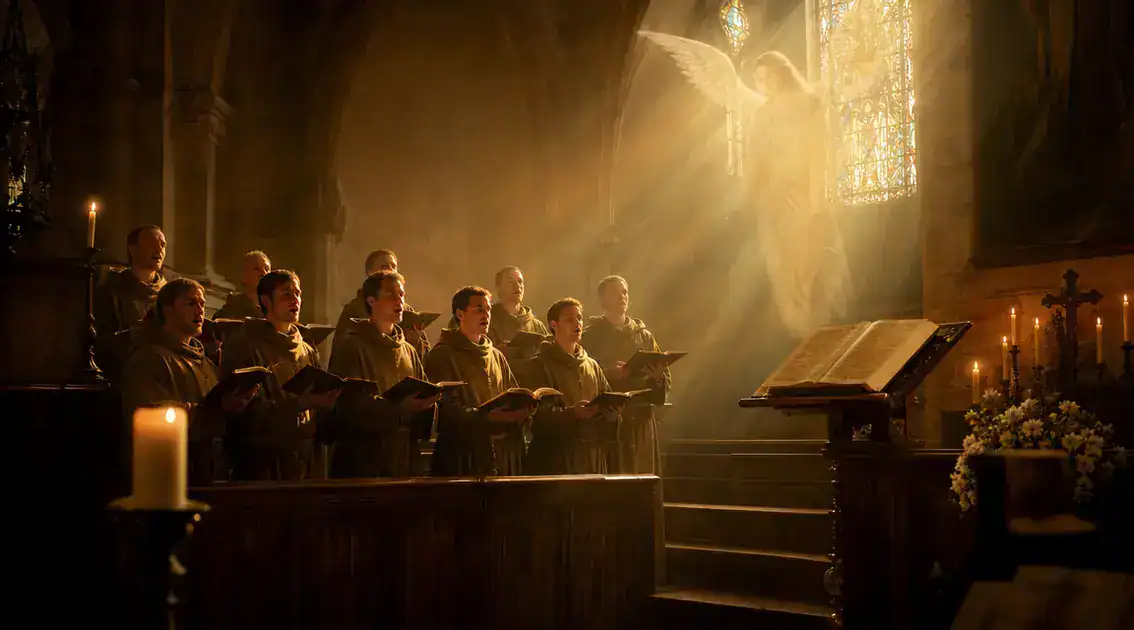

Angels in sacred music appear as scriptural presences and liturgical figures whose textual echoes, melodic motifs, and choral roles invite worshipers into participation in the heavenly liturgy, shaping prayer through chant, hymn, and oratorio while linking biblical vision, devotional practice, and musical symbolism into a sustained encounter with the divine.
angels in sacred music; have you ever heard a chant and felt a presence that seemed to answer? This piece follows those tender moments from Gregorian chant to Baroque oratorio, offering close readings of texts and melodies that have invited listeners into encounter and prayer.
Angels in the earliest chants: biblical echoes in Gregorian melody
Sitting with a plainchant can feel like stepping into an old prayer. The simple lines of Gregorian melody rise and fall like breath. These chants often take their words straight from Scripture, and in that sound we can still hear the Bible’s scenes of worship and heavenly praise. Angels appear in these texts as fellow worshipers, and the music quietly points us toward that shared praise.
Chant grew in cloistered rooms where monks sang the psalms again and again. The melodies are spare so the words stand clear: annunciations, visions, and songs from Revelation move through the same phrases. This spare music leaves space for the imagination to sense the unseen. In a chant’s long note you may feel the hush of a sanctuary that bridges earth and heaven.
Listening to chant invites a gentle change in how you breathe and pray. The human voice becomes a willing echo of the sacred patterns already named in Scripture. As you follow a phrase, your attention can lean toward what the text names—angels, praise, and the throne of God. In that listening, chant becomes a form of shared worship, a soft doorway where earthly sound meets a sense of the divine.
The role of angels in medieval liturgy and monastic devotion
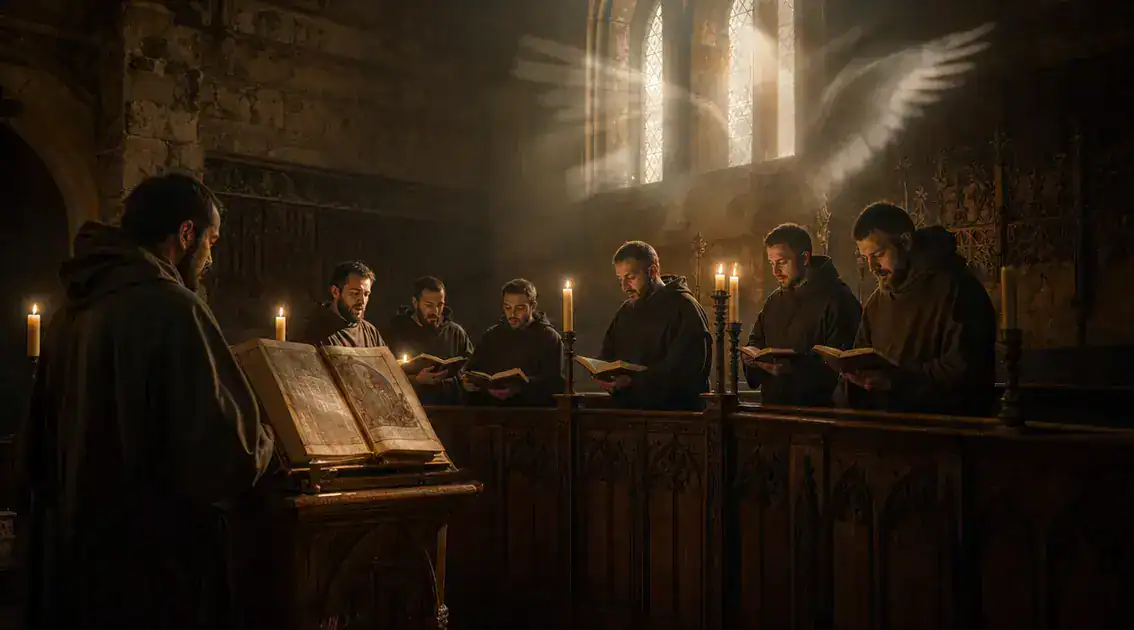
In the hush of a medieval chapel, the monks’ voices rise and fall like a single breath. Simple chants and antiphons often name angels directly, drawing on Isaiah’s vision and the book of Revelation where the heavenly court sings “holy, holy, holy”. Those words were not distant doctrine but living sound in the daily office, a reminder that worship on earth echoes what happens above.
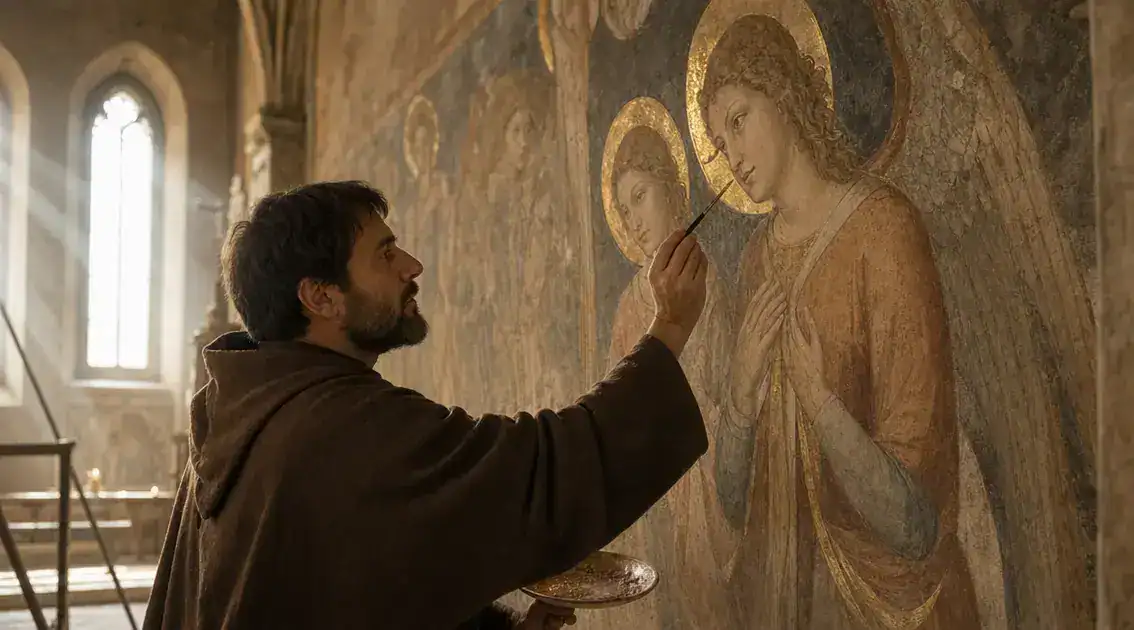
Monastic devotion treated angels as more than images in books; they were companions at the office and guides in prayer. Illuminated manuscripts show angels beside psalms and responsories, and processions for Michaelmas or the ringing of devotional bells invited a sense of presence. In these practices, monks felt their praying joined to a larger, unseen chorus that both steadied the heart and ordered the day.
That sense of joining is not merely poetic. Monks spoke of their work and prayer as participation in the heavenly liturgy, believing that each chant and silence helped bridge earth and heaven. This belief shaped humble habits: careful attention to text, slow breathing with the melody, and quiet listening for what the chant opened in the soul. Over time, those small practices formed a way of life where the angelic world and the human one met in daily praise.
Archangels and motifs: Michael, Gabriel and musical symbolism
The faces of Michael and Gabriel appear again and again in sacred art and song, and each carries a musical meaning. In many paintings Gabriel is tied to the moment of announcement, while Michael is shown as leader of the host. These roles moved into music too, where instruments and melodic shapes help tell their story. Gabriel announces God’s word with bright calls; Michael leads and protects with firm, steady gestures.
Composers used familiar musical signs to paint those roles. A clear trumpet fanfare or an upward melodic leap can signal arrival and message, while a steady, drum-like rhythm or a bold brass line can mark strength and defense. Gentle harps, sustained choir harmonies, and slow modal melodies point to praise, rest, and worship. These choices shape how the listener imagines the scene—ascending lines suggest a message coming down; wide, layered chords suggest the sweep of a heavenly court.
When you listen with that idea in mind, the music becomes a kind of prayer map. A bright fanfare readies the heart; a soft chorus invites stillness. Sacred composers used these tools to guide devotion, not just to show skill. Let the motifs work on you slowly: notice where the melody climbs like a message and where it settles like a watchful presence, and allow the sound to turn your attention toward worship.
Baroque oratorio and the choir as an angelic narrator
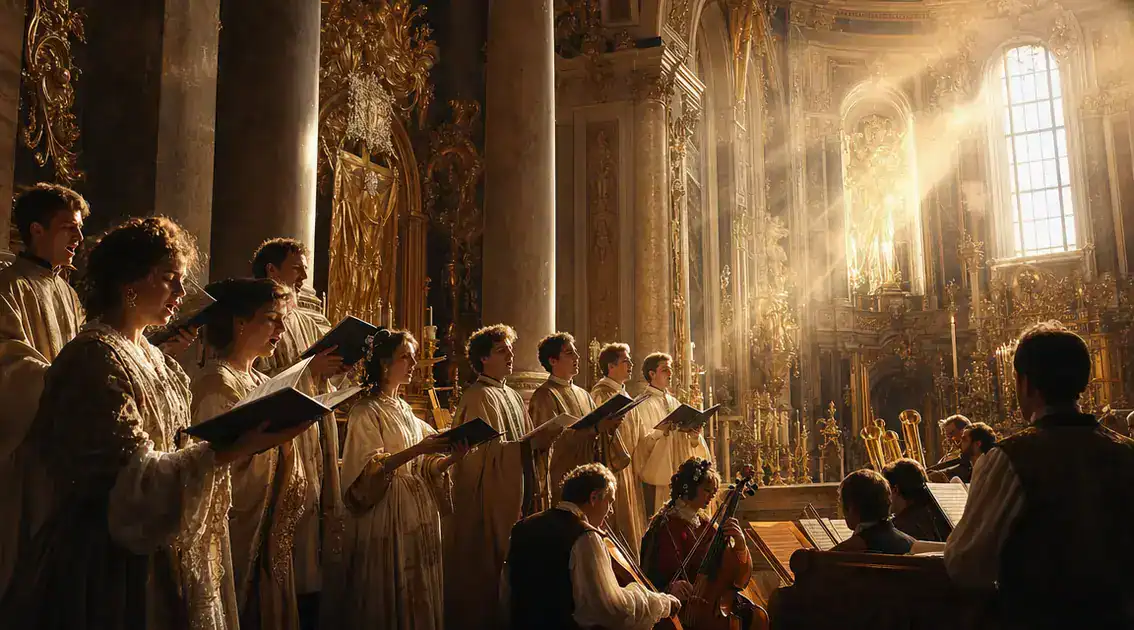
When a Baroque choir raises its voice, it can feel like the curtain parts and the heavens reply. Composers of the period often wrote the chorus as a kind of heavenly speaker, so the singing becomes more than sound — it narrates a sacred story. In performance the choir can act as the angelic narrator, naming events, proclaiming glad tidings, and drawing the listener into a shared act of praise. The choir stands in for the host of heaven, inviting our ears to meet the words as if they were spoken by angels.
Musical choices help make that sense real. Bright trumpets and high strings can announce a message, while layered choral harmonies and echoing phrases suggest a vast, unseen company. Composers used clear melodic calls for proclamation and soft, sustained chords for prayerful awe, so the music itself points the heart. When the chorus sings as one, the effect is not only dramatic but devotional; the sound shapes a space where the listener can listen and respond in spirit.
Hearing the choir this way changes what you do as a listener. You do not only admire craft — you let the chorus lead you into worship. The narrative voice of the chorus guides attention to particular words and images, and in that guidance we meet an invitation to join the song. In these moments the oratorio moves from spectacle into prayer, and the music becomes a small act of participation in heavenly praise.
Listening prayer: how sacred music shapes encounters with the divine
Have you ever closed your eyes and let a hymn hold you? Sacred music can become a gentle practice of listening prayer that asks you to pause and pay attention. The melody and the silence between notes create a kind of space where prayer is not only spoken but received. In that quiet, the heart learns to wait and to be open to what comes.
In simple practice, listening prayer asks little more than patience. Choose a short chant or hymn, breathe with its phrases, and let a repeated line sink into memory. When a choir lifts a phrase, allow it to shape your breathing and calm your thoughts; when the music settles, sit in the silence that follows. These small habits turn music into a doorway, guiding attention from noise to presence.
With time, the habit of listening reshapes daily life. A familiar hymn can steady you in trouble and sharpen your sense of praise in joy. Sacred music trains the ear to notice the holy in small things, and that trained attention becomes a way of meeting God. Listening prayer opens a shared song between the human voice and the heavenly, offering a steady companionship that follows beyond the chapel walls.
A closing prayer
May the songs you have met here rest gently in your heart and give you quiet strength. Let chant, hymn, and chorus be a calm companion when the day feels noisy.
Remember that each melody points beyond itself to a larger song. Angels in sacred music invite us to know that our praise joins a hidden choir and that our small prayers matter.
Carry this listening into your ordinary hours—pause, breathe with a line of chant, and let the music open your attention to wonder. In that soft practice you make room for peace.
May you go forward with a sense of awe, and may the voice of praise walk with you like a steady light. Amen.
FAQ – Angels, sacred music, and prayerful listening
How do angels appear in sacred music?
Angels appear in sacred music mainly through the texts and the function of the sound. Many chants and hymns set biblical passages that name angels (for example, Luke’s annunciation or the heavenly praise of Revelation 4–5), and composers use melodic shapes, calls, and harmonies to suggest arrival, message, or worship. In many traditions the choir itself is heard as an “angelic chorus” inviting listeners into the same praise described in Scripture.
Are angels real beings in Scripture or only poetic symbols used by composers?
Scripture treats angels as real, ministering beings (see Hebrews 1:14; Psalm 91:11). While music often uses poetic imagery, that symbolism rests on a long theological and biblical witness that regards angels as true actors in God’s economy, not merely literary devices. Church tradition from the Fathers onward affirms their real, though often unseen, presence.
Can listening to chant or an oratorio be a genuine form of prayer?
Yes. The Psalms model singing as worship (Psalm 95:1–2), and monastic practice treats chant as both proclamation and prayer. Listening prayer with sacred music asks for attentive, humble listening: letting words sink in, breathing with the phrases, and allowing silence to receive what has been sung. This practice is rooted in Scripture and centuries of Christian devotion.
Which archangels most often appear in musical and devotional contexts, and why?
Gabriel and Michael are the most frequent. Gabriel appears in the Gospel annunciation (Luke 1:26–38) and is musically evoked with bright, message-like motifs; Michael appears in Daniel and Revelation (Daniel 12:1; Revelation 12:7) as leader and protector and is often suggested by firm, martial musical gestures. Tradition links their biblical roles to distinctive musical and visual motifs.
How did medieval liturgy shape Christian beliefs about angels?
Medieval liturgy made the idea of a heavenly court tangible by enacting the psalms and canticles repeatedly in the daily office. Monastic rules (for example, the Benedictine emphasis on the Divine Office) and devotional practices framed worship as participation in the heavenly liturgy (Revelation 4–5). Manuscripts, feast days (like Michaelmas), and processions reinforced a lived sense that human praise joins angelic praise.
How can I begin a simple practice of listening prayer with sacred music at home?
Choose a short chant, hymn, or a single movement of an oratorio that uses scripture. Sit quietly, breathe with the melodic phrases, and repeat a key line slowly until it lodges in memory. After a stanza, sit in the silence and ask what the line is inviting you to notice (gratitude, confession, praise). Regular, brief practice—five to fifteen minutes—gradually trains the ear and heart to meet God in sound. Scripture helps: try the Magnificat (Luke 1:46–55) or a psalm passage as your listening focus.