

Angels in Zoroastrianism, known chiefly as Yazatas, are divine attendants and guardians who embody aspects of creation and virtue, cooperating with the Amesha Spentas to uphold asha; they are invoked in prayer and ritual to guide moral choice, protect the natural order, and nurture daily devotion.
angels in zoroastrianism — have you ever wondered how Yazatas shape moral life and devotion? Let me walk you through their stories, symbols, and prayers with reverence and clarity.
Who are the Yazatas and their place in Zoroastrian cosmology
The Yazatas are radiant divine beings in Zoroastrian faith, whose name marks them as worthy of worship and reverent attention. They stand close to Ahura Mazda as gentle helpers, present within the natural world and the moral life of people. Rather than distant judges, they are intimate companions who invite prayer, care, and a practice of right living.
Each Yazata attends a part of creation or a sacred quality — water, fire, healing, sky, or truth — and so they form a living map of the world’s goodness. Many act alongside the Amesha Spentas, the great divine attributes, working to keep the cosmic order of asha in balance. Seen this way, the cosmos is not abstract but populated by beings who protect the pattern of life and meaning.
In daily devotion, people call upon the Yazatas through simple rites, offerings of light, and prayers that name what must be kept pure. Their role shapes ethical choice: remembering a Yazata’s care can turn a thought toward honesty, a hand toward service, and a life toward repair. Meeting them in prayer is to discover a steady, nurturing presence that encourages goodness and holds the world in sacred companionship.
Amesha Spentas and Yazatas: divine qualities as spiritual companions
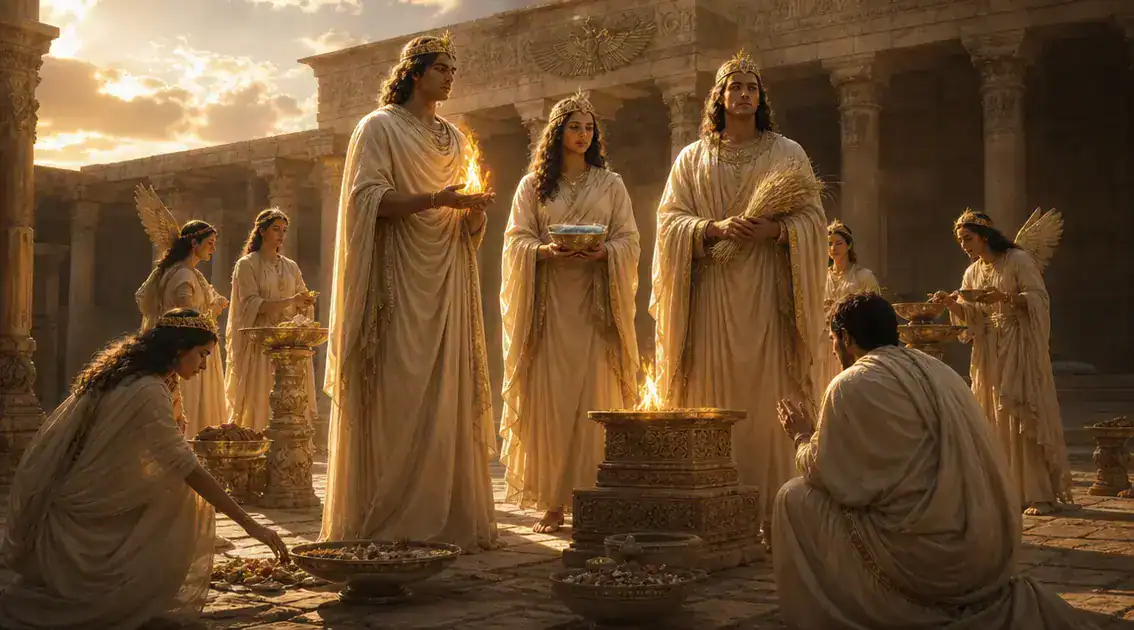
The Amesha Spentas are often felt as divine qualities made personal — holy guardians who represent truth, good mind, devotion, and life itself. In Zoroastrian thought they are not distant ideas but living companions. They shape the heart and guide the will, inviting each person to reflect their quality in simple acts like honest speech, care for the earth, and faithful service.
Alongside them stand the Yazatas, who attend specific elements of creation and help the Amesha Spentas in their work. Together they form a gentle hierarchy of care: the Amesha Spentas hold the great virtues, and the Yazatas watch over particulars such as water, healing, and the harvest. In prayer and ritual, naming these beings is a way to remember the pattern of asha — the right order that brings life and healing into the world.
To live with these companions is to practice small, steady choices that echo their character. Lighting a lamp, keeping water pure, speaking truth kindly — these acts are simple prayers that open us to the presence of the Amesha Spentas and their Yazata attendants. They teach that holiness is cultivated in daily care and that spiritual growth is a shared journey with these benevolent presences.
How Yazatas guide moral choice and daily devotion
The Yazatas gently guide everyday choices by making the moral question visible in small moments. They are not distant judges but steady companions whose presence helps us notice what honors asha, the right order that brings life and truth. When we see a choice as part of a sacred pattern, it becomes easier to choose care over convenience, honesty over ease, and service over comfort.
Calling on the Yazatas happens in simple acts: lighting a lamp, offering clean water, pausing to bless a meal, or speaking a brief prayer before work. These practices are plain and repeatable, like turning a thought toward goodness. Naming a Yazata in such a moment is like asking a trusted friend to stand with you — it focuses the heart, steadies the will, and makes small acts into meaningful devotion.
As these acts gather, they form a life shaped by attention and habit rather than rush and distraction. The Yazatas become partners in conscience, helping kindness to feel natural and right action to feel possible. In shared ritual and daily care, private devotion grows into communal repair, and the world is slowly remade by repeated, loving choices.
Rituals, prayers, and offerings to the Yazatas in traditional practice
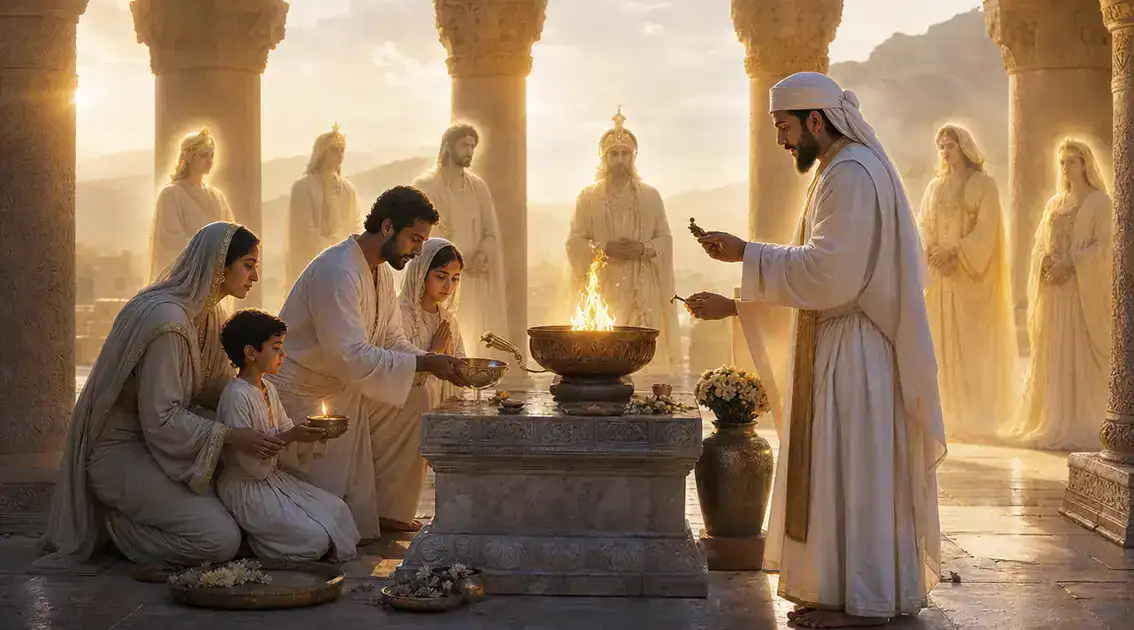
In Zoroastrian homes and temples, ritual is a gentle language spoken to the world. People tend a sacred flame or light a small lamp and place simple offerings — water, flowers, and clean food — before it. These actions are not magic tricks but careful signs that name the presence of the Yazatas and open a moment of attention. Doing this each day trains the heart to notice what is holy in ordinary life.
Priests lead formal ceremonies such as the communal prayer and the tending of larger fires, yet much devotion happens quietly at the household hearth. A prayer may be spoken, a bowl of water poured, or a hand held in blessing. These acts are made with clear intent and respectful gestures. In them the community remembers the order of asha and asks for the Yazatas’ help in keeping life pure and kind.
Over time, these rituals shape a moral rhythm. The repeated practice of offering light, keeping water clean, and speaking honest words forms habits of care. The Yazatas are called not as distant judges but as companions who watch over work, healing, and the natural world. When ritual is done with steady, loving attention, it becomes a lived prayer that mends both the person and the place they inhabit.
Images and symbols: representing angelic beings in Persian art
Persian art often shows angelic beings through clear, meaningful symbols that speak to the heart. You will see the winged figure of the Faravahar or humanlike attendants with soft halos, stylized flames, flowing water, and lively plant motifs carved in stone or painted on manuscripts. These visual signs are simple and steady; they point to the presence of the Yazatas without shouting, inviting a quiet gaze rather than theatrical awe.
These images work as devotional tools as much as decoration. A carved wing or a contained flame focuses attention and teaches virtues—truth, care, and purity—by making them visible in everyday life. In temples and household shrines, the symbols help people remember asha, the right order, and prompt small acts like lighting a lamp or offering water that join inner intention with outward practice.
Looking at these works today, we can learn to read each detail as an invitation rather than a relic. Notice the gesture of a hand, the steady curve of a wing, the warmth of a painted flame; these details guide a contemplative response and a practical one. Let the images slow you down: make a small place to light a lamp, keep water clean, or simply sit with the art and let its quiet call shape your next kind choice.
Comparing Yazatas with angels in Jewish, Christian, and Islamic traditions
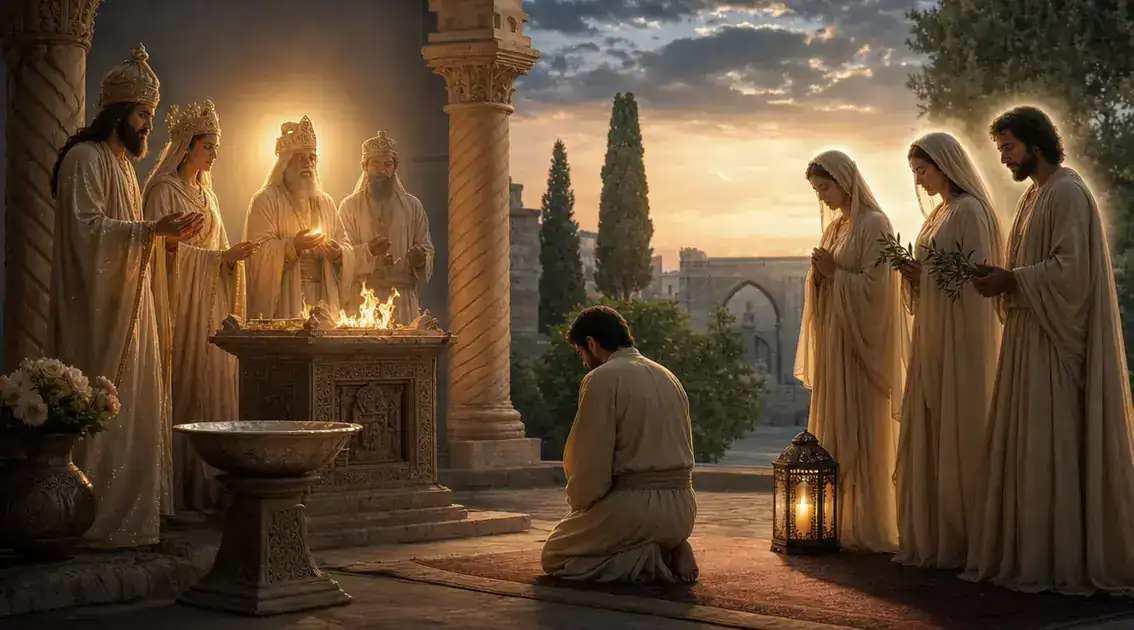
When we look across traditions, the Yazatas and the angels of Jewish, Christian, and Islamic faiths often feel like kindred companions. Each tradition speaks of luminous helpers who attend creation, guard the moral order, and aid human prayer. In practice, these beings remind people to choose truth, care, and service — duties that bridge cultures and ages.
There are also clear differences in how they are understood. Yazatas are closely tied to parts of the created world and to the principle of asha, so they are named in rituals that honor natural features and virtues. Angels in the Abrahamic traditions are usually described as God’s messengers or servants, focused on carrying out divine will rather than embodying created qualities. This shifts how people relate to them: one invites naming and household devotion, the other often appears as messenger, protector, or herald of God’s commands.
Knowing these similarities and differences can deepen devotion rather than dilute it. Seeing the Yazatas as companions of creation and angels as faithful servants of God helps us notice one shared goal: both call us back to right living. When we pray or light a lamp, we join a wider human practice of turning toward goodness. That simple act becomes a place where memory, ritual, and conscience meet, and where the presence of these compassionate attendants can steady our steps.
Personal encounters, prayers, and cultivating awareness of the Yazatas
Many people meet the Yazatas in small, ordinary ways. A sudden calm, a timely insight, or a helpful stranger can feel like company. These moments are quiet nudges rather than loud signs, and sitting with them helps you notice the presence of the Yazatas in daily life.
Prayer and encounter are often simple and practical. Light a lamp, pour clean water, offer a flower, or speak a short blessing that names a Yazata. A brief breath prayer or a few honest words will do; these small acts turn attention into habit and open the heart to listen for gentle guidance.
Growing awareness is a slow, steady work of practice. Choose one small ritual—tending a lamp, keeping water pure, or pausing before work—and repeat it with care. Share it with a friend or family member when you can, and watch how repeated acts train the will toward asha. In time, these habits make the sacred feel near and keep kindness at the center of your day.
Walking with the Yazatas
May the gentle presence of the Yazatas accompany your steps, turning small choices into quiet offerings of care. Let their company remind you that goodness is made by many simple acts, not sudden miracles.
In the hush of a lamp, the pour of clean water, or a short honest word, may you feel asha steady your heart and guide your will. These acts are prayers when done with attention and love.
Carry this steady practice into the day: pause before you act, speak with kindness, tend what is sacred. Each repeated kindness forms a path that brings light into ordinary life.
May you go in peace, held by these faithful companions, and may your hands and heart keep making the world a little truer and kinder with every humble step.
FAQ – Questions about the Yazatas and angels in Zoroastrian tradition
Who are the Yazatas and how do they differ from angels in other faiths?
The Yazatas are divine beings named in the Avesta as ‘worthy of worship.’ They often represent qualities or parts of creation (water, fire, healing) and work with the Amesha Spentas to uphold asha. Unlike some angelic figures in Abrahamic texts who act mainly as messengers, Yazatas are closely tied to the created world and to everyday moral life in Zoroastrian practice.
Where are Yazatas described in scripture and tradition?
They appear throughout Zoroastrian scripture and liturgy. The Avesta and later Pahlavi writings name many Yazatas and include prayers (Yasna, Yashts) addressed to them. The Gathas (Zarathustra’s hymns) emphasize divine attributes and moral choice, while later texts and ritual poetry develop the fuller roster and roles of the Yazatas.
Can a person form a personal relationship with a Yazata?
Yes. Traditional practice includes household prayers, tending a sacred flame, offering water or flowers, and invoking specific Yazatas by name. These simple acts are ways to cultivate a felt relationship, asking for guidance and aligning daily choices with the moral order of asha.
Do Yazatas directly influence moral choices and daily life?
In Zoroastrian thought, Yazatas help make the moral pattern visible. Their presence reminds people to choose truth, care, and right action. They do not coerce will; rather, their names and images call the heart to attention so that right choices become easier and more natural over time.
How do Yazatas relate to the Amesha Spentas?
The Amesha Spentas are the great divine virtues (holy immortals) that personify core aspects of God’s creative will. Yazatas often attend particular elements of creation and work with the Amesha Spentas to keep the cosmic order. Together they form a complementary network of care that links universal virtues with concrete parts of the world.
How can a modern seeker respectfully cultivate awareness of the Yazatas?
Begin with simple, grounded practices drawn from tradition: read short passages from the Avesta or trusted commentaries, light a lamp or tend a small flame with mindful intent, offer clean water or a flower, and speak a brief prayer naming a Yazata related to your need. Join community rites when possible and let repeated small acts shape a gentler, attentive life rooted in asha.