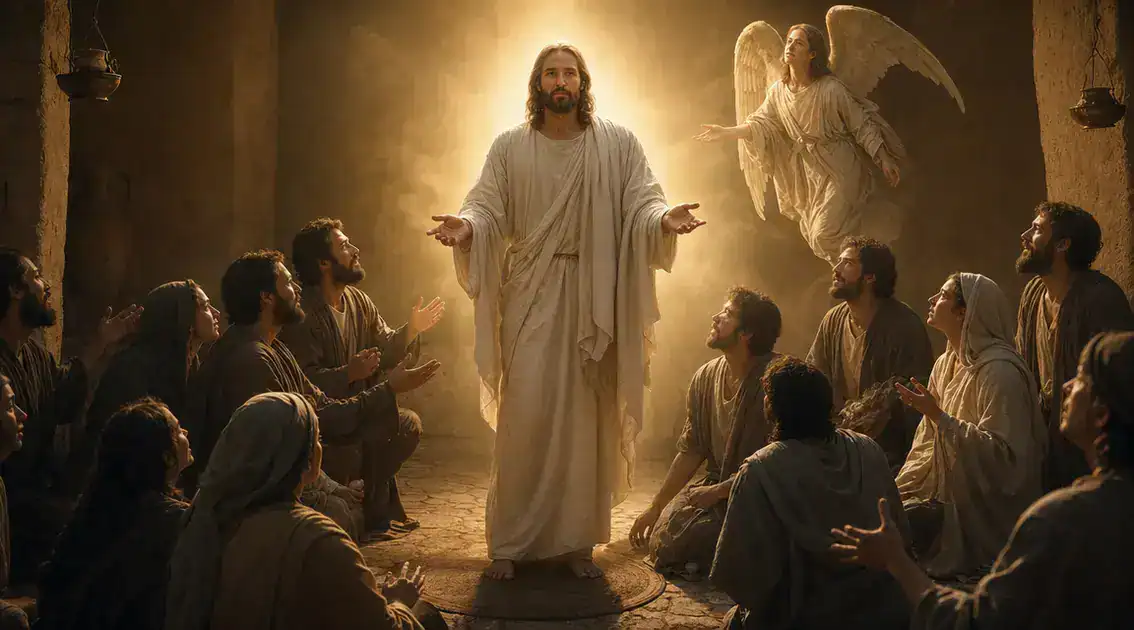

The heresy of angel worship, as Paul condemns in Colossians, arises when created celestial beings or secret rites are elevated into mediators of grace, displacing Christ’s unique headship; faithful response restores Christ’s supremacy through Scripture, prayer, and communal liturgy that keep angels as ministering servants, not objects of worship.
Have you ever wondered why the apostle Paul warns so strongly against the heresy of angel worship? In Colossians he gently but firmly redirects devotion back to Christ, inviting us to discern how reverence can slip into misdirected worship.
Paul’s critique in Colossians 2: a close reading
Paul watches a community pulled toward teachings that sound wise but shift devotion away from Christ. In Colossians he warns plainly about the worship of angels and the subtle words that lead hearts astray. His tone is pastoral, not merely polemical; he seeks to restore a simple, loving focus on what truly holds the life of faith.
At the center of his argument is a clear theological move: the fullness of God is found in Christ. That statement—Christ’s fullness—rewrites how people relate to spiritual beings and practices. When Christ is fully present, there is no need to elevate angels or secret rituals as mediators, because the one who is supreme already holds the whole of salvation in himself.
For readers today, Paul’s close reading becomes a practical call to steady devotion. Notice what draws your heart and test teachings by the measure of Christ’s life and work. Through prayer, Scripture, and humble worship we learn discernment, keeping our gaze on the One who is supreme and letting that truth shape how we pray, teach, and gather.
Jewish, Hellenistic, and pagan influences on angel veneration

Across the first-century world, honor for spiritual beings grew from many places. In Jewish life, books like Daniel and the apocryphal Enoch speak of angels as messengers and heavenly hosts, giving rise to careful language about ranks and roles. In Greek thought, people spoke of intermediary spirits or daimons who connect the human and divine, while Roman and pagan practice included household spirits and small shrines that received daily offerings. These streams fed a common current we can call angel veneration.
Where these cultures met, rituals and words mixed. Simple acts—kneeling, special prayers, secret visions, or the naming of a heavenly guide—could move from respect into patterns that placed angels between people and God. This social blending made it easy to mistake reverence for worship, and it set the scene Paul addresses when he warns against practices that end up displacing Christ in the life of faith.
Knowing this background helps us read Scripture with care and devotion. When we learn how Jewish, Hellenistic, and pagan habits shaped early worship, we gain tools for discernment: ask whether a teaching draws you toward Christ or away from him, test prayers by Scripture, and seek counsel in community. Let the simple rule guide us—keep Christ central, remembering that Christ alone is head—so that reverence leads to life, not confusion.
How first-century worship blurred devotion to Christ and angels
In many first-century gatherings, worship felt close and tactile. People met in homes, lit oil lamps, sang hymns, and spoke of heavenly beings seen in visions or texts. These practices grew from Jewish prayer, Greek ideas about intermediaries, and local shrine customs, so acts of honor could easily sit beside prayers to Christ.
Over time, small shifts made a big difference: a bowed head turned toward an angelic image, a hush for a named spirit, or a special ritual taught as the surest way to God’s favor. Such moves can make angels seem like necessary mediators, and the language of reverence can slip into the language of worship. Paul hears this confusion and pushes back because when honor meant dependence on these practices, devotion to Christ became dimmed.
Noticing how devotion blurs helps us pray and teach with care. Ask whether a practice draws your heart to Jesus or to something beside him, test it by Scripture and community, and cultivate simple acts that point to the cross and resurrection. This attentiveness keeps worship from drifting and helps the church hold fast to the truth that Christ alone is head and center of life.
Theological stakes: Christ’s supremacy versus mediated devotion
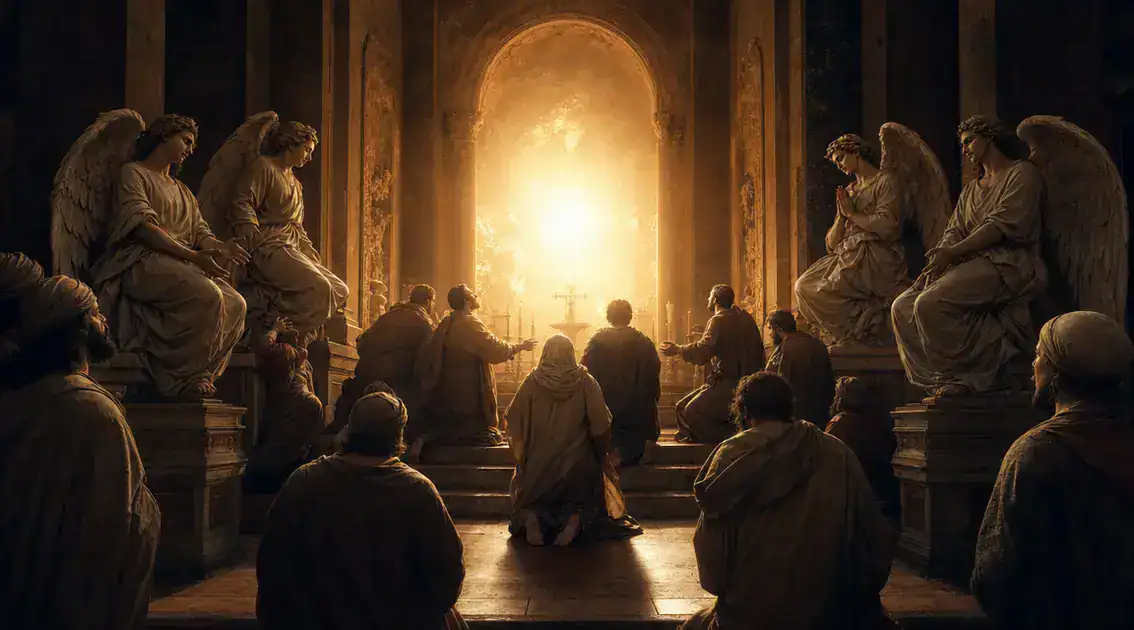
When Paul speaks about the danger of angel veneration, he is really naming a fork in how people live their faith. If worship becomes mediated by other beings or secret rites, the simple claim that Christ is supreme gets blurred. That matters because the shape of our prayer and our hope depends on whom we place at the center.
Paul frames the truth in relational language: Christ is the head of the church and in him the whole fullness of God dwells. When devotion is redirected to intermediaries, worship becomes layered and the church’s identity grows confused. This does not deny angels or their service, but it insists they are not the measure of our reconciliation or the source of our access to God.
Practically, the theological stake calls us to steady habits that keep Christ central: Scripture read aloud, simple prayers that name Jesus, and communal acts that return attention to the cross and resurrection. Such practices form discernment and guard against a faith that slips into mediated devotion, helping the community hold fast to the saving truth that all things are gathered in Christ rather than in any created intermediary.
Patristic and medieval responses to angel veneration
The early church fathers noticed angels everywhere in Scripture and honored their place as servants sent by God. Writers such as Augustine and Gregory spoke of angels with warmth, yet they also taught a firm rule: do not worship angels. That rule kept the community’s devotion pointed back to Christ, who alone reconciles us to the Father.
In later centuries, theologians worked to name the order and role of these heavenly beings. Pseudo-Dionysius gave language to a celestial hierarchy, and medieval thinkers helped Christians see angels as an ordered part of God’s care. At the same time, these scholars stressed that angels remain created servants, not sources of grace in themselves—they minister, they do not replace Christ.
Alongside learned theology, popular devotion brought angels into daily life through hymns, feast days, art, and illuminated books. These practices often lifted the heart toward heaven, but they also risked shifting attention away from the cross. Pastors and teachers thus urged simple habits: let images and liturgy lead you to Christ, test devotion by Scripture and prayer, and keep the church’s worship centered on the Savior rather than on his servants.
Pastoral dangers: where reverence becomes displacement
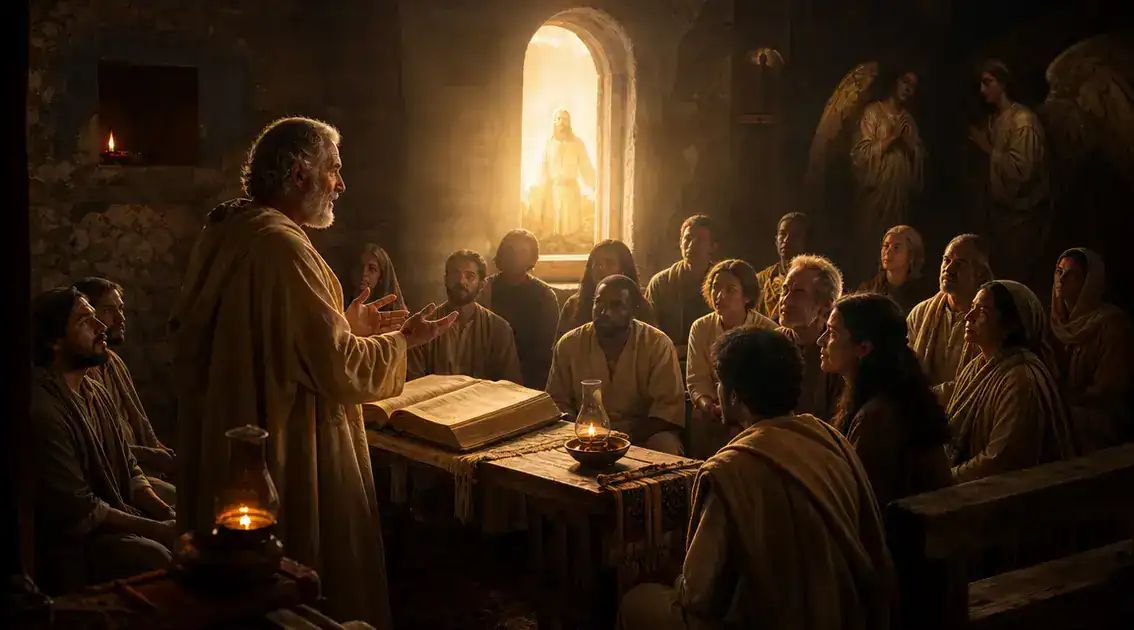
Reverence is a beautiful thing, but it can quietly shift into a harmful pattern when it begins to replace Christ at the center of worship. In some communities, attention to angels or special rites becomes the place people expect safety, answers, or favor. That slow shift—what pastors call displacement—leads hearts to rely on practices or beings rather than on the living Christ who alone brings reconciliation.
This danger shows up in everyday life: sermons that give more time to angelic stories than to the gospel, prayers that seek angelic signs as proof, or rituals taught as shortcuts to God’s blessing. Such habits create dependence and fear, and they can fracture a congregation’s trust in Scripture and in one another. Healthy faith grows when teaching, liturgy, and pastoral care point people back to the cross, not to secret knowledge or intermediaries.
Pastors and leaders can guard against this by keeping worship simple, Scripture central, and the role of angels rightly ordered. Encourage gentle correction, model humble devotion to Christ, and teach discernment in community. When the church forms habits that name Christ as the sole mediator and that nourish corporate prayer and study, reverence leads to life instead of displacement.
Practices for faithful devotion: discernment, prayer, and liturgy
True spiritual formation begins with simple habits of discernment. Read Scripture slowly, ask honest questions in community, and give new teachings the space of prayer before you accept them. Small practices—listening in silence, comparing words to the gospel, and seeking wise counsel—train the heart to notice what draws you closer to Christ and what draws you away.
Prayer should feel like a steady return to relationship rather than a search for signs. Make room for short, sincere prayers that name Jesus and trust his work for you. When we pray with plain words and expect nothing dramatic, our reliance shifts from practices or beings to the living Lord, and prayer becomes a quiet habit that shapes daily life.
Let liturgy and communal worship support these disciplines by centering Scripture, the Lord’s Table, and shared confession. Rituals are helpful when they point back to the cross and resurrection; they are harmful when they become ends in themselves. Keep acts of worship simple and repeated so that the whole congregation learns to love Christ as head and to hold angels and traditions in their proper, subordinate place.
May this reflection close like a quiet prayer: may your heart find rest in the one who gathers all things to himself. Let the steady truth of Christ alone calm your wonder and guide your steps.
Remember angels as faithful servants sent by God, not as the center of your hope. Let their presence draw you to worship, not distract you from the cross and the risen life we share in Jesus.
Keep simple habits of Scripture, prayer, and shared liturgy that form your faith day by day. Small, steady acts build discernment and make reverence life-giving rather than fearful.
Go forward in peace, held by a God who is nearer than any sign and kinder than our doubts. May your worship be humble, your eyes lifted to Christ, and your life shaped by his love. Amen.
FAQ – Questions on angel veneration and faithful worship
What does Paul mean by the “heresy of angel worship” in Colossians?
Paul warns against teachings that elevate angels so they become objects of devotion (Colossians 2:18). He contrasts that practice with his central claim that the fullness of God dwells in Christ (Colossians 1:19; 2:9). In other words, when devotion or religious practice makes angels into necessary mediators, it displaces Christ from his rightful place as head and savior.
Is it wrong to honor angels at all?
Honoring angels as God’s servants is biblical—Scripture portrays them as ministering spirits (Hebrews 1:14) and God’s messengers (Psalm 91:11). The mistake is worship: giving them the ultimate trust, praise, or role reserved for God alone. Christian tradition (for example Augustine and later teachings) insists we may respect angels but must not worship them as sources of grace.
How can I tell if a devotion or practice is sliding into angel worship?
Look for signs: does the practice shift attention away from Christ? Does it promise special access, secret knowledge, or salvation through rituals or beings rather than through Jesus? Paul’s test is simple—measure any teaching by whether it leads you to Christ (Colossians 2:6–7; 1:18). Bring questionable practices into prayer and community discernment and weigh them against Scripture.
Do angels still help and guide believers today?
Yes. Scripture shows angels assisting God’s people and serving those who inherit salvation (Hebrews 1:14; Acts 12:7–11). They can encourage, protect, and carry God’s messages. Yet their help is always subordinate to Christ’s work; they are servants sent by God, not alternate channels of salvation or worship.
What did the early church and medieval writers teach about angels?
Early and medieval theologians acknowledged angels widely. Figures like Augustine affirmed their role while warning against worship; Pseudo-Dionysius articulated a celestial order to help Christians imagine God’s rule. The consistent thread in patristic teaching is this: angels are honored as God’s servants and part of creation, but they remain created beings who point us to the Creator rather than replace him.
How should a church shape worship and pastoral care to avoid displacement by angel veneration?
Keep Scripture and the sacraments central, teach the supremacy of Christ (Colossians 1:18), and cultivate simple, repeatable practices of prayer and corporate liturgy that form Christians toward Christ. Pastors should gently correct confused devotion, encourage testing new teachings in community, and model worship that fixes the heart on Jesus so reverence for angels becomes life-giving rather than displacing.