Cherubim atop the ark of the covenant are depicted in Scripture and tradition as golden throne-bearers and guardians over the mercy seat, signaling God’s immediate presence, covenant faithfulness, and the meeting point of holiness and mercy where priestly atonement brings the community into restored relationship with God.
Have you ever felt the hush that hangs over a sacred space? cherubim ark of the covenant invites a slow, reverent listening — a chance to enter an ancient mystery rather than rush to explain it.
Cherubim in Scripture: images and first references
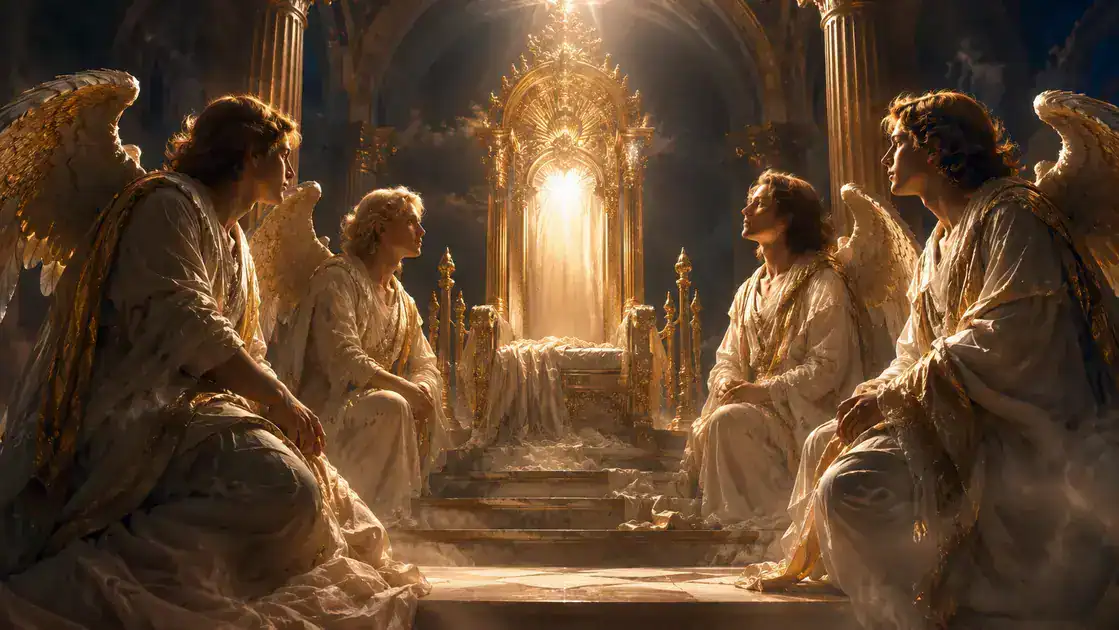
The Bible first paints cherubim in sharp, simple images that invite wonder more than full explanation. In Genesis they stand at the gate of Eden as a kind of sacred guardians, keeping the way to the tree of life. Later, God commands beaten gold cherubim to sit on the mercy seat of the ark, a small but weighty detail that links these figures to the very presence of God among the people.
Ezra and Ezekiel give fuller, stranger pictures: living creatures with wings, faces, and a sense of motion that breaks ordinary expectations. These visions mix beauty and mystery, suggesting that cherubim are not mere decoration but a visible sign of God’s hidden life. When Scripture layers these images—garden guardians, golden figures on the ark, and visionary beings in the prophet’s trance—it offers a portrait that holds both comfort and awe.
For devotion, these early references ask us to pay attention to how God chooses to be near us: through guardianship, presence, and surprising revelation. Seeing cherubim as an invitation to reverence helps us move from curiosity to practice, learning to meet God where the ordinary and the holy touch. In that space, the cherubim remind us of God’s careful nearness rather than being distant symbols of power.
The ark of the covenant: construction, materials, and meaning
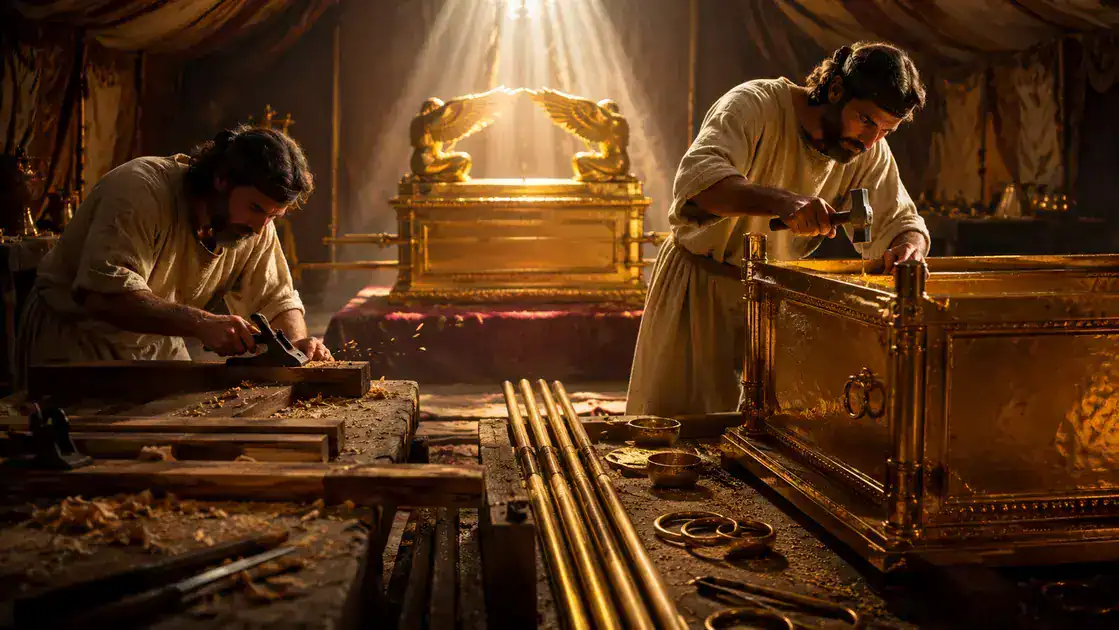
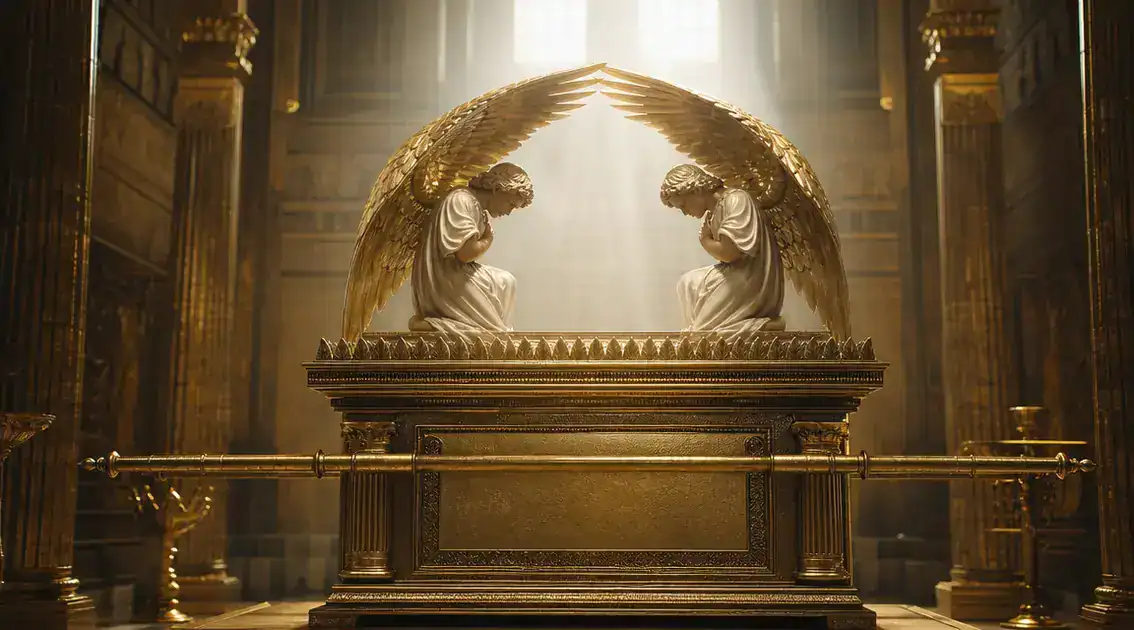
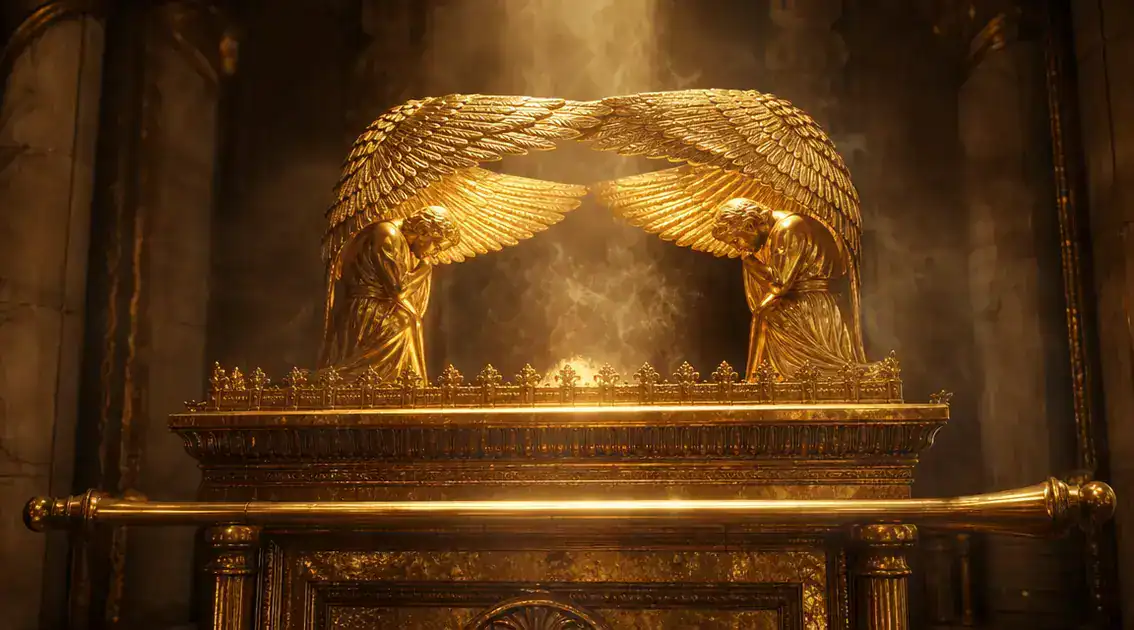
The ark of the covenant was built with care from acacia wood and overlaid with pure gold, following precise instructions given to Moses. Craftsmen fitted rings and poles so the ark could be carried, and a gold mercy seat with two cherubim was placed on top. These details show that the ark was both humble in its wood and radiant in its covering, a meeting of craftsmanship and sacred purpose.
Because it was portable, the ark moved with the people through wilderness and into the tent of meeting, becoming the visible center of Israel’s worship. It held the tablets of the covenant and reminders of God’s care, and its placement under the mercy seat marked a special place of encounter. This practical design taught the community how God’s presence travels with them, not as a distant idea but as a guiding reality.
Spiritually, the ark points us toward God’s faithfulness and holiness, inviting reverence without fear. The gold and the wood together remind us that the sacred can meet our daily life, and the mercy seat speaks of pardon and presence. Living with that image asks for obedience, trust, and a gentle awe so that our worship reflects both the art of care and the weight of covenant love.
The mercy seat and the meeting place: God’s presence among Israel
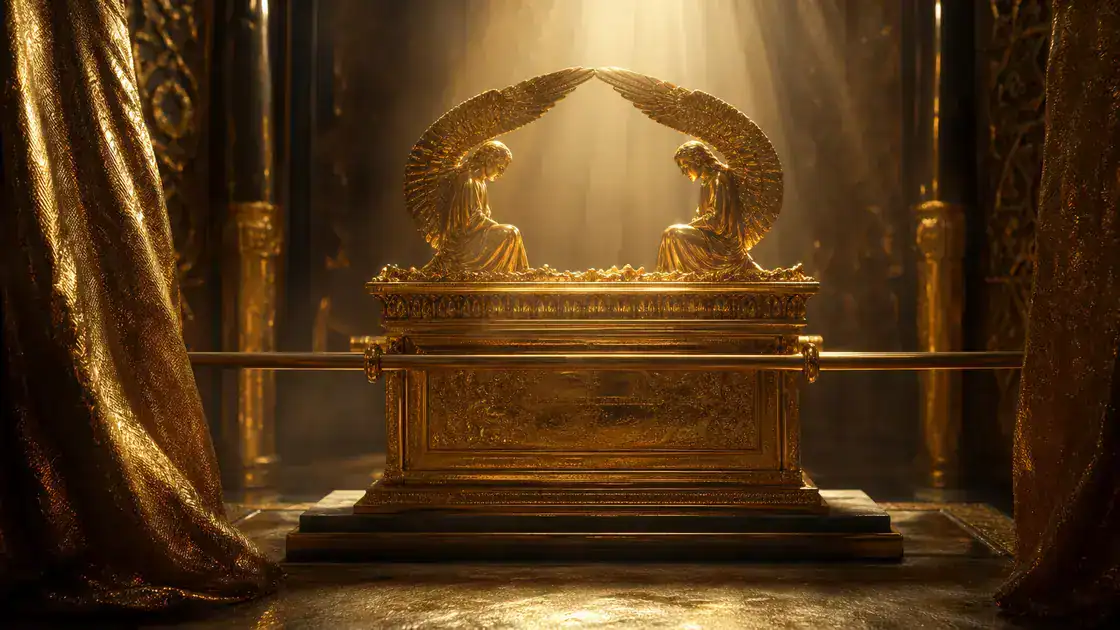
The mercy seat sat on the ark as the visible place where God chose to meet his people. Crafted from beaten gold and flanked by two cherubim, it marked a quiet, holy center inside the tent of meeting. Its presence was not showy spectacle but a gentle, heavy sign that the divine could dwell within a small, carried space.
Each year the high priest entered that inner room with incense and the blood of sacrifice, moving with careful steps toward the mercy seat to make atonement. Those rites taught a deep lesson: God’s holiness calls for reverence, yet his heart leans toward mercy. The ritual brought together judgment and pardon, law and grace, showing a God who meets people in the space between need and forgiveness.
Seen devotionally, the mercy seat invites a posture of both awe and hope. It asks us to come near with respect, not presumption, and to trust that God’s presence heals and guides. Holding that image close helps our worship become less about ritual alone and more about living as a people who carry God’s nearness into daily life.
Cherubim atop the ark: symbolism, posture, and theological interpretations
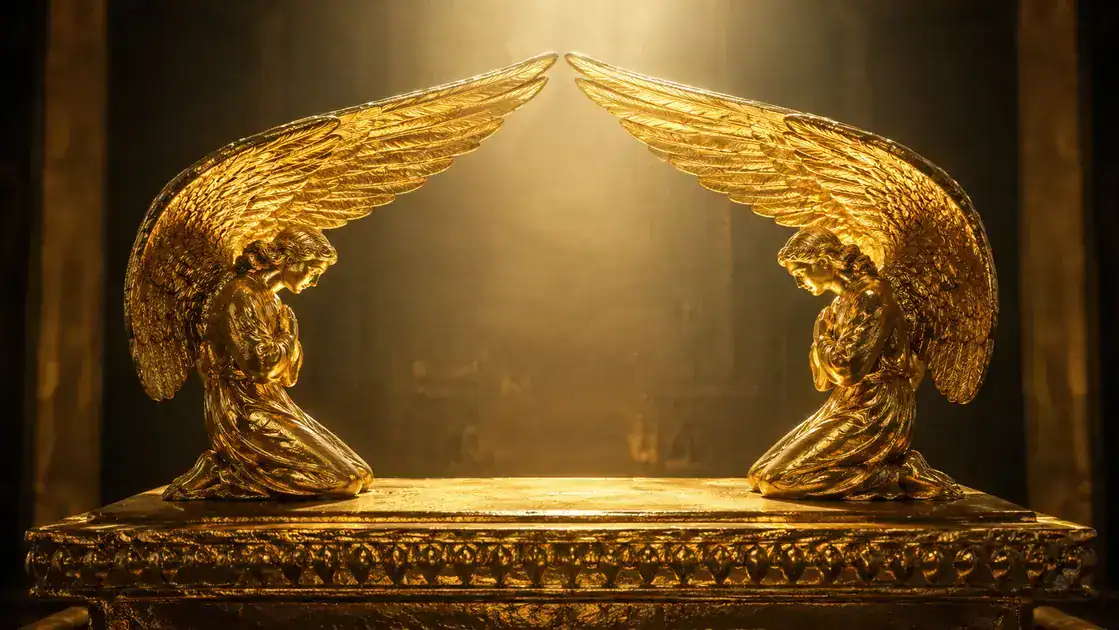
The cherubim atop the ark appear small in scale but full of meaning. Their bodies are carved or hammered in gold, wings spread forward so their tips nearly touch above the center. This posture makes a quiet shelter over the lid, and the angled heads draw the eye to the space between them.
That emptied space is the heart of the image. The cherubim act like a throne or canopy for God’s presence, pointing toward the mercy seat as the visible place where heaven meets earth. Their forward-leaning stance reads as both reverent watchfulness and gentle protection, inviting those who come near to stand with humility and hope.
Readers across traditions see rich meaning here: some call the cherubim guardian figures, others name them throne-bearers who accompany divine rule. For Christians, the ark and its cherubim often speak of atonement and the way God draws near to forgive. Devotionally, their posture teaches a simple lesson: approach the holy with reverence, trust in God’s nearness, and let awe shape the way we live and pray.
Priestly access and the holy of holies: ritual, law, and encounter
The law set careful limits on who could enter the holy of holies and when. Only the high priest went in, and then only once a year on the Day of Atonement, after fasting, washing, and careful rites. These rules guarded the sense that God is wholly other, and they trained the people to move toward God with care.
Inside, the high priest carried incense and the blood of sacrifice, stood before the mercy seat, and performed actions meant to heal the breach between God and the community. The veil, thick and solemn, marked the boundary between the ordinary space and the place of encounter, showing that approach required ritual, obedience, and trust. In these movements the law and worship work together: the law teaches reverence, and the rite points toward God’s mercy.
For personal devotion, these scenes invite a simple practice: prepare the heart, confess what separates you, and come to God with humility and hope. The priest’s careful steps remind us that sacred meetings shape how we live—softening haste, deepening attention, and holding expectation that grace meets need. Living with that memory helps our prayer become both respectful and quietly confident in God’s loving presence.
Patristic and medieval readings: how saints and scholars saw the cherubim
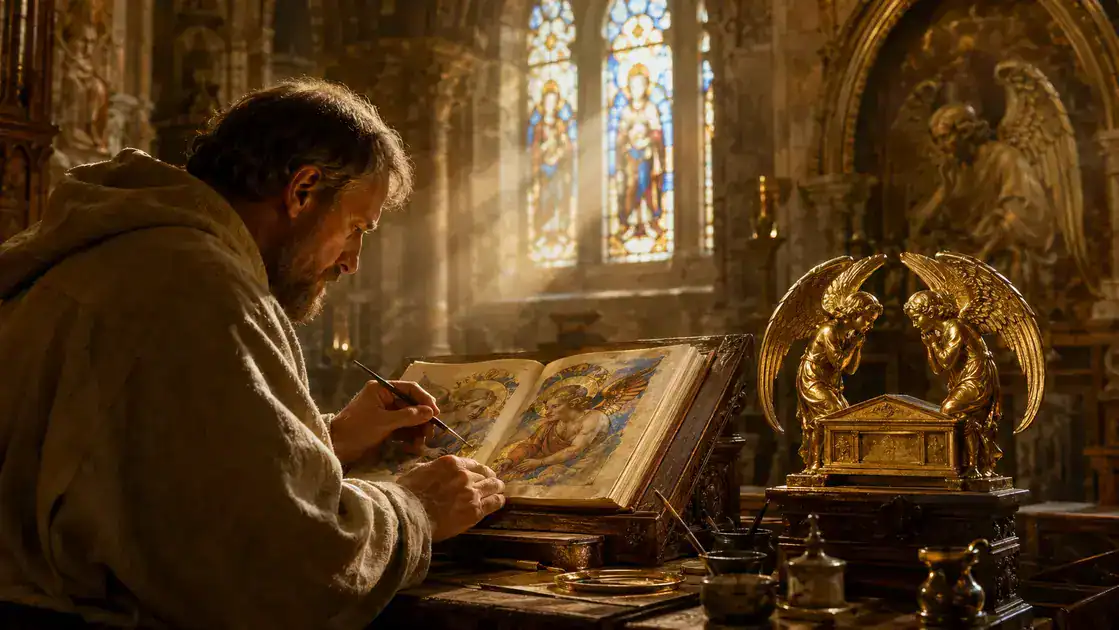
Early church fathers read the cherubim with a careful, prayerful eye. Writers like Augustine and Gregory saw them not as mere decoration but as symbols of God’s throne and wisdom, figures that point the mind toward heavenly order. Their sermons and letters often treat cherubim as signs that teach the faithful how to praise and how to stand in awe.
In the medieval world, monks and cathedral artists took these ideas into craft and color. Illuminated manuscripts, carved choir stalls, and gilded reliquaries show cherubim in ways meant to teach and to move the heart. Scholarly thinkers mixed plain devotion with careful interpretation, so that the image of the cherubim became both a theological lesson and a tool for prayer.
For those who followed these traditions, the result was practical and spiritual: cherubim shaped how people prayed, sang, and looked at scripture. They invited a posture of wonder and humble study rather than mere curiosity. Holding that legacy, we can let their careful seeing teach us to combine thought and devotion—learning from the past while letting the image pull our hearts toward reverent worship.
Devotional reflections: living with the mystery of the cherubim and ark
Standing with the ark and its cherubim in mind can reshape simple days into small acts of worship. The image asks us to notice how God chooses to come near—through a crafted object, a careful ritual, and a quiet heart. When we let that sight stay with us, it gently trains our attention to seek the holy in both chapel and kitchen.
In prayer, this means practicing stillness and attention more than words. We can pause at a doorway, offer a brief breath of thanks, or tend to work with the thought that God’s mercy seat is not far off. Such habits are not magic; they are quiet ways of learning to live inside the covenant story, letting mercy shape how we meet others and make decisions.
These reflections invite a soft humility: we do not force meaning from mystery, but we live beside it with trust. The cherubim remind us that holiness both protects and points—protecting our longing and pointing us toward God’s presence. Let that balance move your prayer: steady respect, steady hope, and the simple practice of carrying God’s nearness into everyday life.
A closing prayer: carrying the holy near
May the quiet shelter of the cherubim rest over your heart and guide your steps. May you feel God’s presence close in small moments and hard ones alike.
Let the image of the ark and mercy seat shape your days: move with care, speak with kindness, and hold hope when things feel fragile. Small acts of reverence turn the ordinary into prayer.
When fear or doubt comes, breathe and remember the mercy seat. Offer your need with plain words, trust that grace meets you, and let that trust shape how you live and love.
Go gently, carrying this quiet wonder into your work and rest. May peace keep you, may awe steady you, and may mercy draw you ever closer.
FAQ – Common questions about the cherubim and the ark of the covenant
What are cherubim according to Scripture?
Scripture presents cherubim in different ways: as guardians in Genesis 3:24, as living, winged beings in Ezekiel 1 and 10, and as golden figures placed on the mercy seat in Exodus 25. These texts show them as both protectors and visible signs of God’s presence rather than simple decorative images.
Why are cherubim placed on the ark’s mercy seat?
Exodus 25:17–22 describes the cherubim crowning the mercy seat as the place where God meets his people. Jewish and Christian traditions read them as throne-bearers or guardians that point to God’s nearness and mercy; Hebrews 9:3–5 likewise treats the ark and its covering as the sacred meeting point between heaven and earth.
Did the ark contain anything besides the tablets of the law?
Yes. Tradition and Scripture note other sacred items: Hebrews 9:4 lists the golden jar of manna and Aaron’s staff alongside the tablets. These objects function as reminders of God’s care, provision, and chosen leadership for Israel.
Should we read the cherubim literally or symbolically?
Both approaches are long-standing in faith communities. Jewish and Christian readings allow for literal, visionary, and symbolic senses: literal as created angelic beings, visionary in prophetic texts like Ezekiel, and symbolic as representations of God’s throne, justice, and mercy, a view reflected in patristic and medieval theology.
How did the Day of Atonement relate to the mercy seat and priestly access?
Leviticus 16 lays out the high priest’s annual entry to the holy of holies, where he applies the sacrificial blood to the mercy seat to make atonement for Israel. The rite shows that approach to God requires preparation and reverence, while the mercy seat itself stands as the place where forgiveness and presence meet.
How can the ark and cherubim shape my prayer life today?
They invite a posture of reverence, trust, and simple hope: remember God’s faithful presence, come with humility, and offer needs honestly. The New Testament invitation to approach God’s throne of grace (see Hebrews 4:16) echoes this—draw near with confidence because mercy meets our need, and let that assurance shape everyday acts of worship and care.