Cherubim in Ezekiel’s vision are living, multi-faced beings paired with interlocking, eye-filled wheels that bear and reveal God’s moving throne, symbolizing divine presence, attentive seeing, and holy motion; read devotionally across Jewish and Christian traditions, they call worshipers into reverent awe and a practical posture of attentive prayer and faithful service.
cherubim ezekiel’s vision — have you ever felt a scripture that both dazzles and unsettles? Ezekiel’s thunderous scene invites us into mystery, stirring prayer, awe, and humble questions.
The biblical account: reading Ezekiel 1 closely
Read Ezekiel 1 slowly and you are pulled into a living scene of motion and light. The prophet sees a great stormy wind and a bright cloud, and at the center stand the four living creatures that carry the vision. These beings are not mere symbols on a page; they move, speak, and shape the very presence unfolding before Ezekiel.
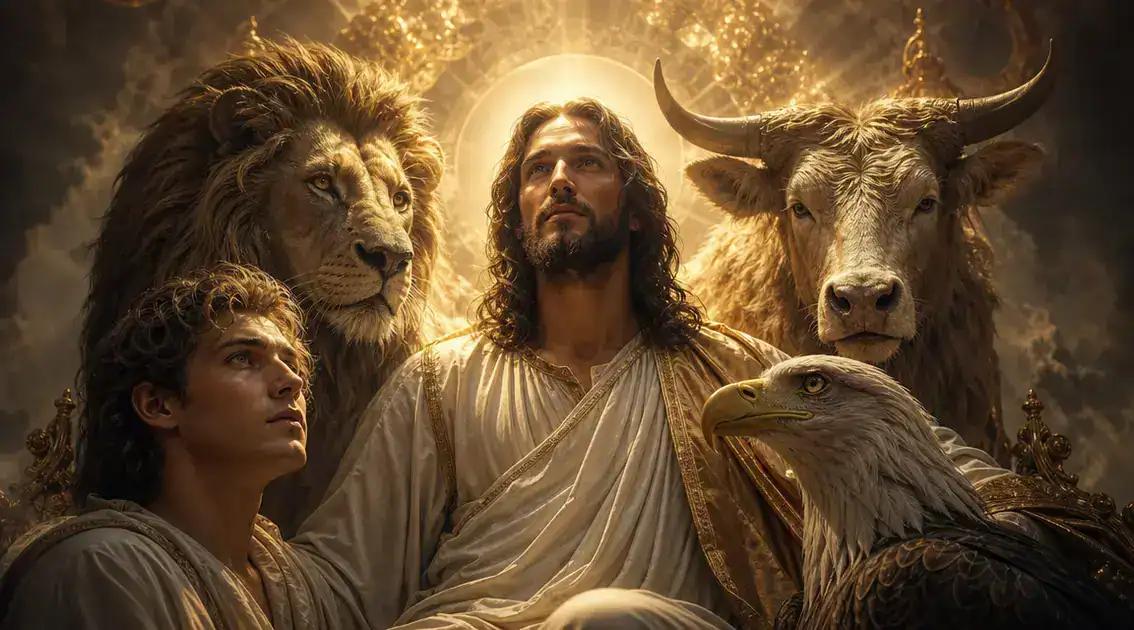
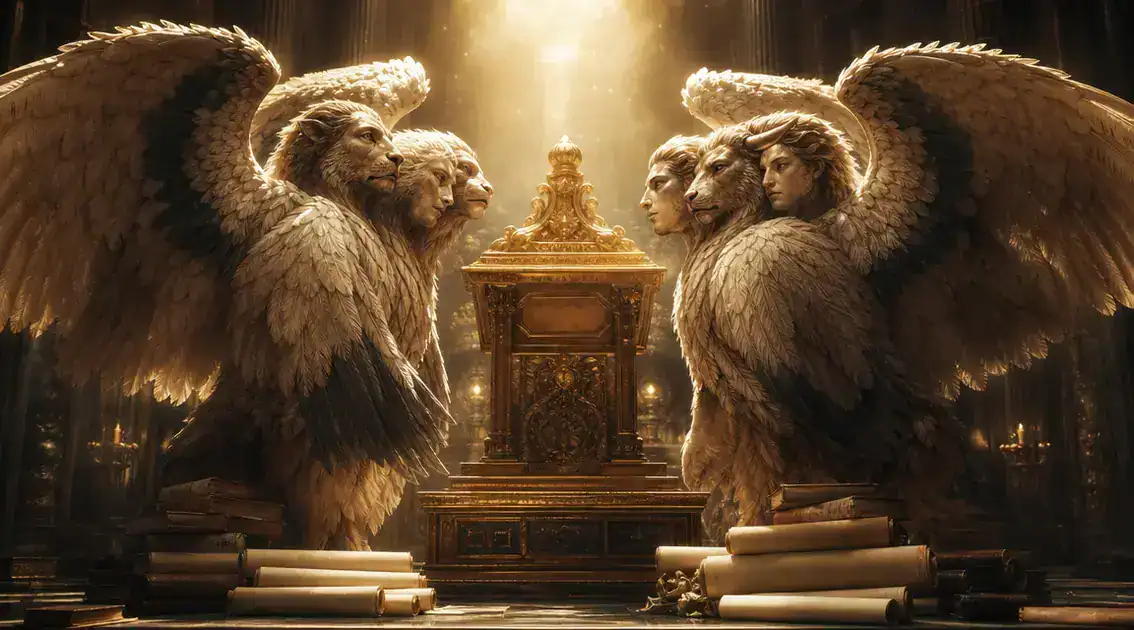
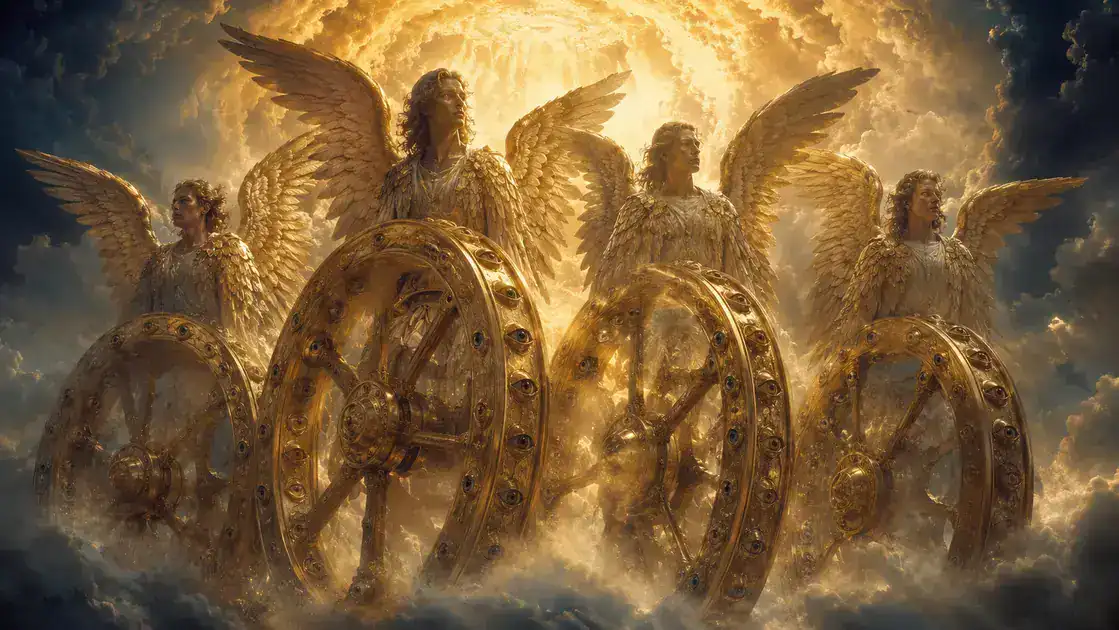
Each creature has distinct faces — a human face, a lion, an ox, and an eagle — with wings and straight feet like burnished bronze. Beside them are the striking wheels within wheels, each wheel full of eyes, turning with the creatures wherever the spirit leads. The text keeps returning to motion: the creatures move as one with the wheels, and the spirit guides their path, joining sight and movement in a single, vivid moment.
When we read these lines closely, the detail invites prayerful attention rather than quick answers. Notice the textures, the rhythms, and how the vision links divine presence to both steadiness and motion. Let the scene shape a quiet awe: the book asks us to watch, wonder, and respond with humble worship before a mystery that points beyond words.
Imagery decoded: cherubim, wheels, and living creatures
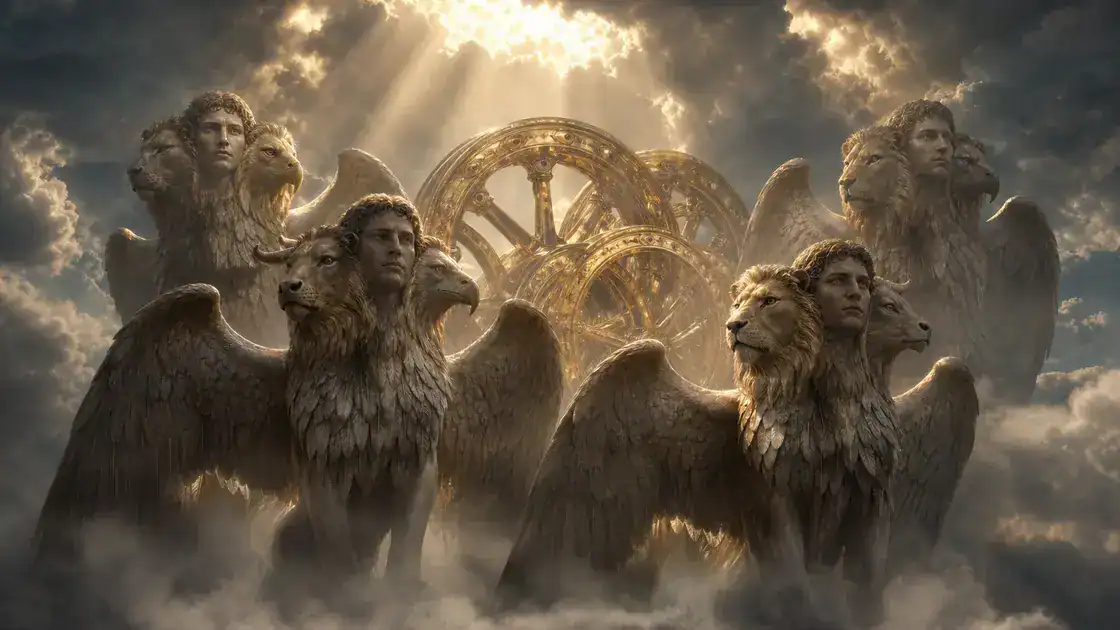
The vision’s images are strange yet striking. Ezekiel describes four living creatures each with a human face, a lion, an ox, and an eagle, covered with wings and standing on straight feet like burnished bronze. Beside them are the wheels — astonishingly described as wheels within wheels and full of eyes — turning in concert with the creatures as the spirit guides them.
These details work like a sacred language rather than a puzzle to be solved quickly. The four faces suggest a fullness of creation; the many eyes speak of divine attention that sees and knows; the wheels and their movement show that God’s presence is not static but active. In each image we are invited to hold both mystery and meaning together, seeing how form and motion point to a living reality.
Read slowly and let the description shape your prayer. Imagine the steady hum of movement, the glow around the wheels, and how the spirit leads with purpose. Allow the scene to move your heart toward reverence, letting the cherubim and wheels draw you into worship and quiet wonder rather than into tidy explanations.
Theological meanings: presence, mobility, and divine mystery
The vision speaks first of a nearness that fills the scene, a sense that God’s presence is not distant but active among creation. Ezekiel’s language makes presence tangible: light that surrounds, a voice that moves, and beings that reflect the glory they carry. When you linger on these details you begin to feel that presence not just as doctrine but as a lived, holy nearness.
That nearness is also a movement. The wheels and living creatures show a presence that travels, guided by the spirit and turning with purpose. The image of mobility tells us that the divine does not stay still; God moves toward people, across places, and through history. The wheels within wheels and the many eyes suggest a power that sees and accompanies as it goes, steady and sure though mysterious in form.
Such images resist tidy explanations and invite humble attention. The vision keeps some things hidden and others lit, and that balance points to a sacred mystery meant for wonder and worship. Rather than forcing answers, let the scene shape your prayer: watch how presence and motion meet, and allow that meeting to deepen reverence and trust.
Tradition and interpretation: Jewish and Christian lenses
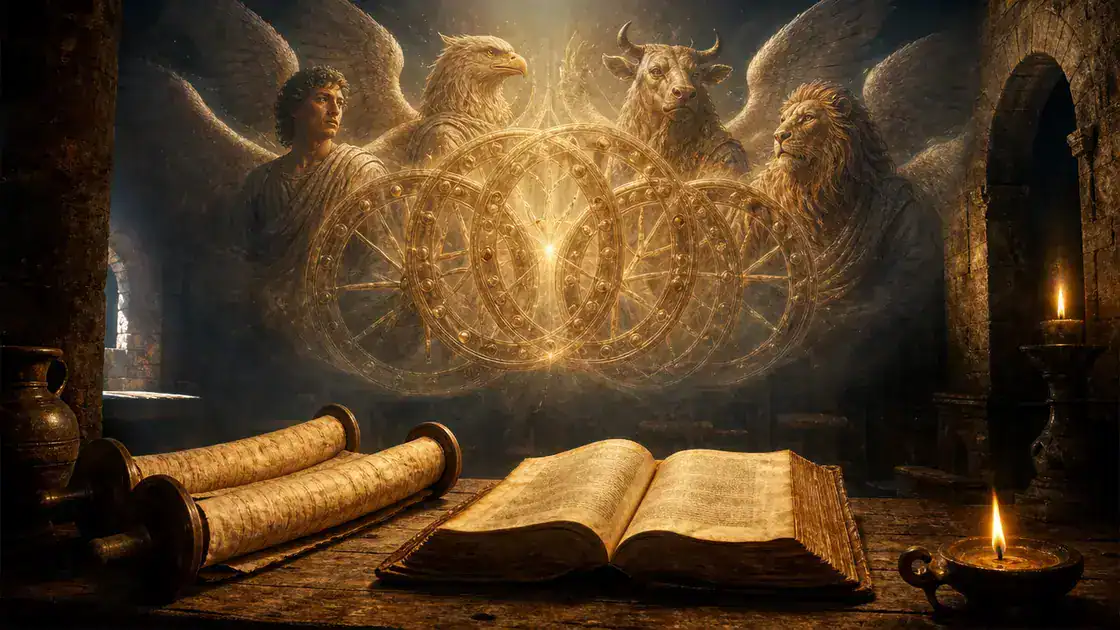
Jewish readers have long seen Ezekiel’s vision through the lens of the merkavah, the throne-chariot that shows God’s movement among the people. In exile, Ezekiel hears and sees a God who does not stay locked in a temple; instead, the divine presence travels with the community. Rabbinic reflection often treats the cherubim and wheels as part of a sacred language that names God’s mobility and nearness in hard times.
Christian interpreters, especially the early fathers, read the vision in light of Christ and worship. They notice how the creatures reflect creation and how the wheels suggest a guiding spirit at work in history. In Christian art and liturgy, the cherubim became symbols of the heavenly court that surround the throne and lead the faithful into praise, pointing to a living presence that meets the church in word and sacrament.
Across both traditions the image resists being only a puzzle to solve. The cherubim and wheels invite prayerful attention and a readiness to be seen and moved by God. Let the text shape a steady wonder rather than neat answers; in both synagogue and church the vision calls readers to watch, to listen, and to respond with humble devotion.
Spiritual practice: how the vision shapes prayer and awe
Allow the vision to shape a simple rhythm of prayer: read a short passage of Ezekiel, pause, and breathe as you picture the cherubim and wheels moving with the spirit. This gentle slowing helps words land in the heart instead of only the head. When attention rests on the image, prayer becomes listening and not just asking.
Try a brief practice of reflection: read two or three verses, close your eyes, and notice the sense of motion and light you imagined. Speak a one-line prayer that names what you felt — a request for guidance, a word of thanks, or a moment of silence. These small steps follow the pattern of lectio divina: read, reflect, respond, and rest, letting the text shape an inner posture of worship.
Carry that posture into daily life by letting the vision remind you that God’s presence is both steady and moving. In quiet and in service, imagine the wheels turning toward those who need care and the cherubim’s attention resting on our small acts of love. Keep the practice simple and repeated; over time the wonder it sparks will turn into humble action and sustained awe.
A gentle closing prayer
May the image of the cherubim and wheels rest gently in your heart, a reminder that God is near and moving with you. Let that sight bring calm more than fear, and curiosity more than quick answers.
May you sense the presence that watches with many eyes and moves with steady purpose. In quiet moments and busy days, may this nearness guide your steps and steady your breath.
Carry the vision into the small acts of life: a kind word, a hand offered, a minute of silence. These simple choices let wonder shape the way you live and love.
Go forward with peace and soft awe, trusting that the sacred sight you have met asks only for humble attention and faithful service.
FAQ – Ezekiel’s vision, the cherubim, and the wheels
What exactly does Ezekiel describe in chapter 1?
Ezekiel reports a dramatic vision of a stormy wind, a glowing cloud, four living creatures with multiple faces and wings, and interlocking wheels full of eyes. The scene centers on the manifestation of God’s glory and movement (see Ezekiel 1). Readers are invited to attend to the sensory detail as a revelation of divine presence rather than a simple diagram to decode.
Are the cherubim literal angels or symbolic images?
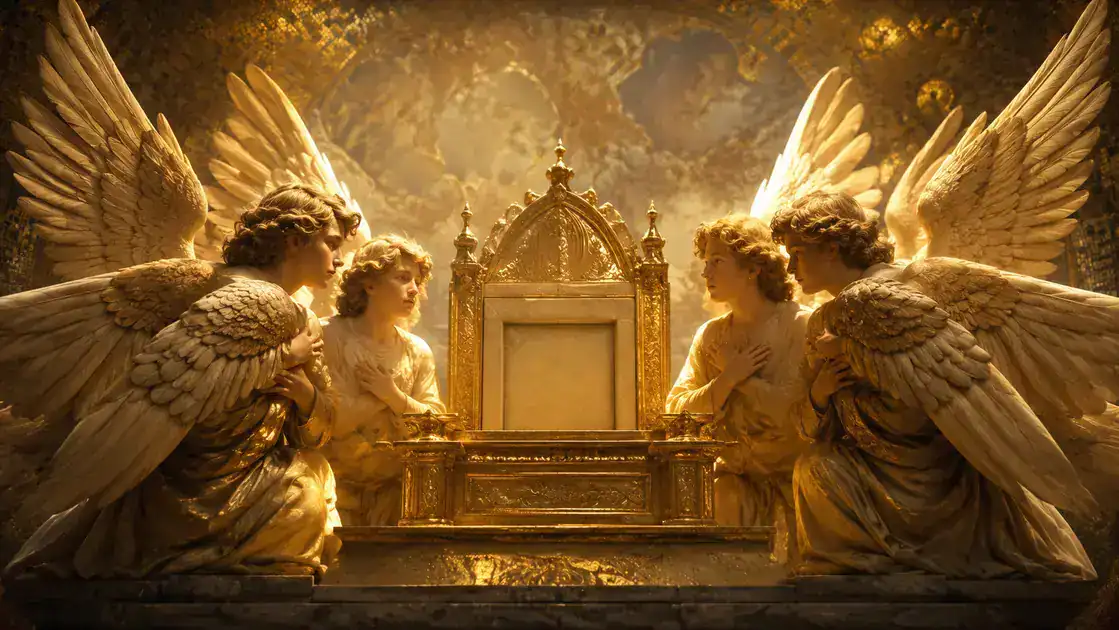
Scripture treats cherubim both as real, sacred beings and as symbols of God’s throne and presence. In Exodus (the ark’s mercy seat) they mark God’s dwelling; in Ezekiel they act in a living, active role. Jewish and Christian traditions hold that the image can be read devotionally (as an encounter with the holy) and theologically (as a sign of God’s nearness).
What do the “wheels within wheels” and the many eyes mean?
The wheels suggest mobility—God’s throne moves through history—and the eyes point to divine watchfulness and wisdom (Ezekiel 1:16–18). Together they convey that God both sees all and goes with the people. Traditional interpreters speak of these features as a way to hold God’s transcendent majesty alongside a caring, attentive presence.
How have Jewish and Christian traditions read this vision differently?
Jewish readings often emphasize the merkavah (throne-chariot) theme, especially in liturgy and mysticism, seeing God’s movement with Israel in exile. Christian interpreters, including the early fathers, tended to read the scene Christologically or as a portrait of the heavenly court that worships God. Both traditions, however, use the image to encourage reverence and to affirm God’s active presence in the world.
How can I use Ezekiel’s vision in my own prayer life?
Use the image as a focus for brief, contemplative practices: read a short passage, pause to breathe, and let the scene invite humble wonder. Simple lectio-style steps—read, reflect, respond, rest—help the vision turn into attentive prayer. Let the sense of movement remind you that God accompanies everyday life, guiding small acts of love and service.
Is the vision meant to frighten or to comfort readers?
Both elements are present. The vision’s power and strangeness can unsettle us, but that very intensity points to a comforting truth: God is present, seen and moving with purpose. The fear leads to reverence, and reverence opens us to trust the steady, watchful presence described in the text (compare Ezekiel 1:28 and the broader biblical witness to God’s care).