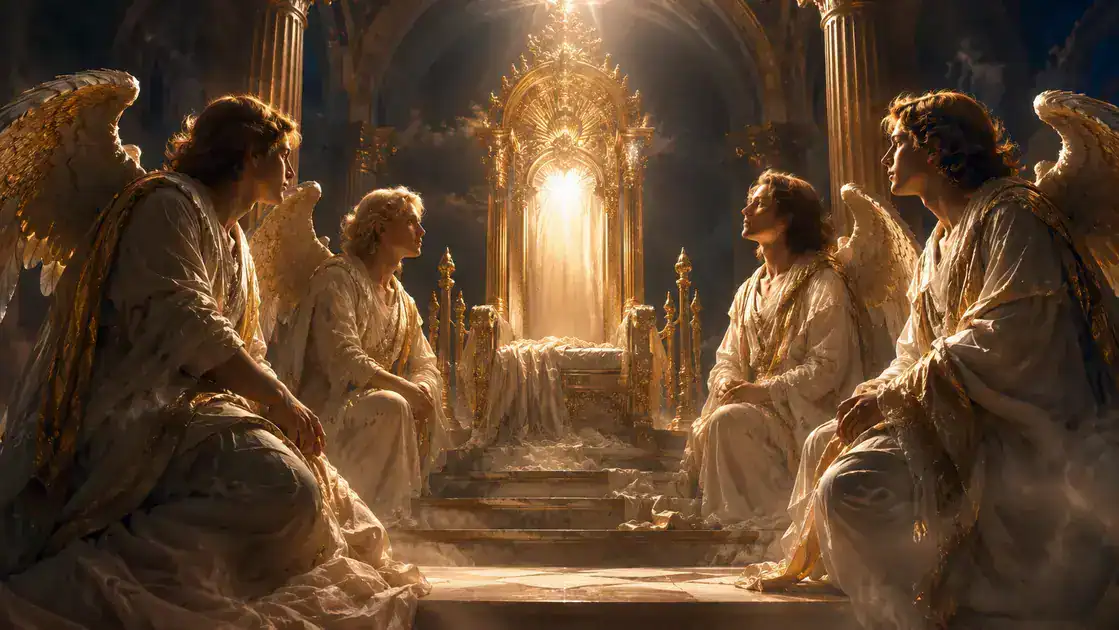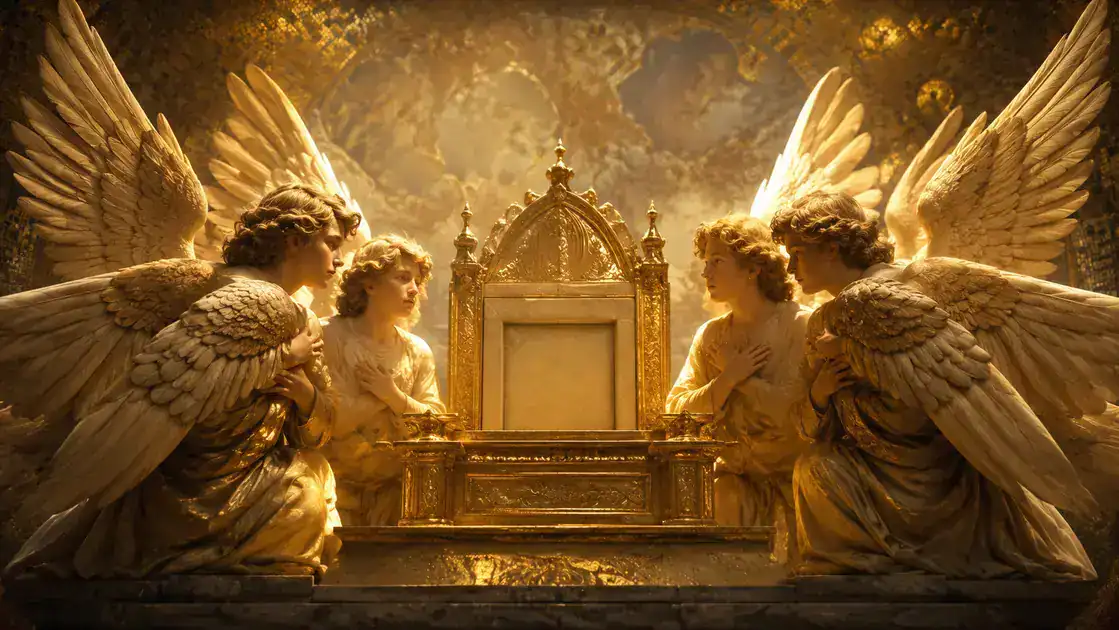

Cherubim in the Garden of Eden are depicted in Genesis as angelic guardians placed at Eden’s eastern gate with a flaming sword to guard the way to the tree of life, signifying God’s protective holiness that sets sacred boundaries while pointing toward the hope of restored access to divine life.
cherubim garden of eden — have you ever wondered why these guardians stand at the threshold of life? They hold a tension between warning and promise, inviting quiet reflection on exile, protection, and the hope of return.
Cherubim in Genesis: the biblical narrative of expulsion
The moment in Genesis when Adam and Eve leave the garden is quiet and full of feeling. Scripture says God placed cherubim at the east of Eden with a flaming sword, turning every way to guard the way to the tree of life. Imagine a garden gate at dawn, light on leaves and a solemn, watchful presence that marks a holy boundary.
These cherubim are not simply sentinels of punishment; they are guardians of the path to life. Their role shows that holiness has limits and that care can take the shape of protection. The flaming sword is both a sign of judgment and a reminder that the sacred is held with seriousness and love.
For those who pray and reflect, the scene invites a gentle, sober longing rather than despair. Remembering the cherubim can stir a desire for restored intimacy with God while also teaching respect for divine life. This image asks us to hold grief and hope together, trusting that God’s guarding presence points toward a future mercy beyond the gate.
Symbolism of the flaming sword: guardianship and the path to life

The image of a flaming sword in Genesis points to something more than danger. Scripture places cherubim and that sword at the east of Eden to guard the way to the tree of life. Picture the sword not as a tool of wrath but as a clear sign that the sacred is held with care and attention.
The sword’s flame turns every way, marking a boundary that protects what is holy. This guarding shows divine care—firm, watchful, and purposeful. It teaches us that some gifts need tending and that limits can be an act of love rather than only exclusion.
When we ponder this scene in prayer, it can steady our hearts. The guarded path invites humility and hopeful longing, not despair. Holding that tension helps us live with respect for the holy, patience for restoration, and trust that the same divine love that guards will guide the way forward.
How Jewish and Christian traditions read the cherubim
In Jewish reading, the cherubim of Genesis and the cherubim over the ark in Exodus portray a near and tender form of divine presence. Rabbis and Torah commentators often speak of these figures as markers of sacred space, a way to show that God’s presence is not casual but honored and protected. The image of winged beings above the mercy seat helped worshipers understand that holiness has a place and a pattern.
Christian tradition reads those same images through the life of Christ and the life of the church. Early fathers and artists saw the cherubim as signs of heaven touching earth, a reminder that God’s order and care reach into our worship and sacraments. In icons and altars, the cherubim appear as both majestic and intimate, inviting believers into a lived sense of awe rather than distant theory.
Between these streams there is a shared devotional lesson: cherubim teach careful reverence and hopeful longing. They call us to guard the life of the soul and to practice humility before what is holy. When we dwell on their presence, we are reminded to tend our inner gardens with prayer, obedience, and a steady trust that God’s protecting love surrounds the path home.
Angelic iconography: artistic portrayals and their devotional meanings
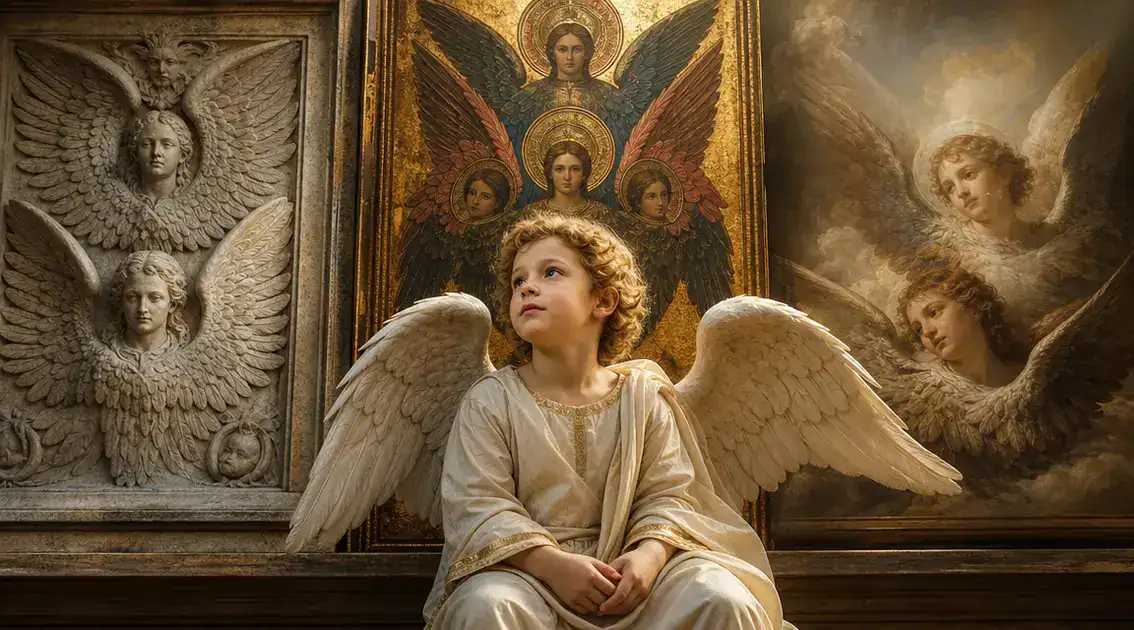
Artists have given cherubim many faces across time, from carved temple reliefs to gilded icons and grand Renaissance altarpieces. Each form reflects how a community met the holy: stone reliefs speak of ritual and place, icons invite quiet prayer, and painted altars draw the eye to the story. In all these forms, the cherubim serve as visible signs of divine presence, helping people feel that the sacred is near.
Look closely at how artists show meaning through simple choices: wings that enfold, faces that mix solemnity with gentleness, gold and light that suggest another world. Sometimes a sword or a bright halo marks protection and awe. These elements are not just decoration; they teach. The way light falls on a wing or the curve of a face can guide a viewer toward reverence and trust, showing that art can shape belief as much as words do.
For many believers, these images become aids to prayer and memory. We may sit with a painted cherub, let its gaze remind us of care, or trace a carved relief with our mind as we pray for protection. Such practices help us enter the story behind the art and live with its lessons: that holiness asks for respect, that boundaries can be loving, and that God’s care can be both distant mystery and close comfort.
Spiritual lessons from exile: longing, care, and the memory of Eden
The loss of Eden leaves a quiet ache in the heart. Genesis shows cherubim at the gate, and that image often stirs a deep, gentle longing for a nearer walk with God. This longing is not only grief; it is a living desire that guides prayer and honest reflection.
At the same time, the scene teaches us about divine care. The cherubim and the flaming sword mark a holy boundary that protects the tree of life, showing that limits can be acts of love. From this we learn small, steady practices—prayer, repentance, acts of kindness—that help keep our inner lives tended and open to healing.
Holding the memory of Eden becomes a spiritual habit that shapes daily choices. That memory asks us to cultivate patience, mercy, and faithful stewardship where we are planted. By tending our own little gardens of care, we live into the hope that the guarding love which once kept the way also guides the journey back toward restoration.
Prayerful practices: living with the image of a guarded garden
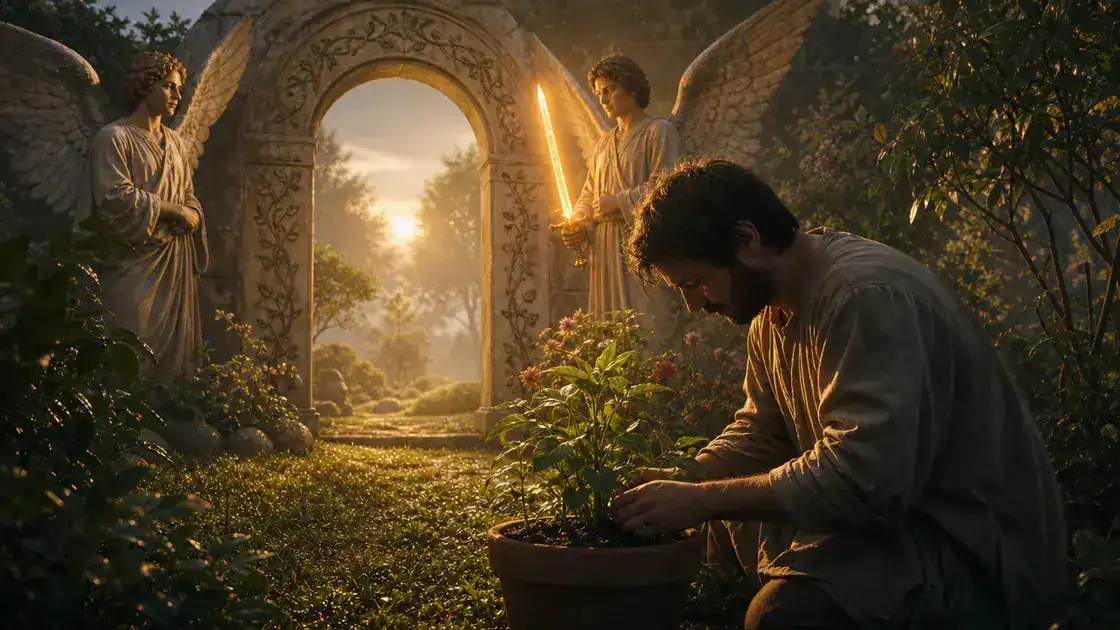
Bringing the image of a guarded garden into prayer can calm a restless heart. Picture a quiet gate, morning light on leaves, and a watchful presence that keeps the inner life safe. That image invites you to sit with honesty, to notice what needs tending and what needs gentle letting go.
Simple practices help the image live. Try a short breath prayer while imagining the path to the tree of life, or keep a small ritual of watering a plant as a way to remember tending the soul. The examen—asking where you felt life and where you drifted—becomes clearer when you hold the guarded garden before your mind, because limits then feel like care rather than loss.
These habits grow in community as well as alone. Shared readings, quiet art, and brief moments of blessing in worship keep the memory of Eden alive and practical. Living with the image of a guarded garden helps us choose patience, mercy, and steady acts of service, trusting that small, faithful tending points us toward hope and restoration.
May the image of the cherubim and the guarded garden settle softly in your heart, a gentle reminder that holiness holds and watches over life. Let that memory bring calm when your steps are unsure and hope when the way feels closed.
Let their watchful presence teach you about divine care—that boundaries can be acts of love and that longing can become prayer. Carry the idea of the guarded path as a guide for small, faithful choices that keep your inner life tended.
When you face hard days, return to simple practices: a breath prayer, a quiet moment with a plant, a pause to name what you need. These small acts help the sacred story live in ordinary time and shape how you move through the world.
May you go forward held by a protecting love, learning patience, mercy, and steady hope. May the same grace that guarded Eden walk with you now, and may your heart find its way toward life.
FAQ – Cherubim, the Garden of Eden, and spiritual meaning
Who are the cherubim mentioned in Genesis?
The Bible names cherubim as angelic beings placed “at the east of Eden” after the Fall (Genesis 3:24). Later Scriptures, especially Ezekiel 1 and 10 and the description above the mercy seat in Exodus 25:18–22, show them as figures associated with God’s presence and holiness. Jewish and Christian readers have long seen them as guardians who mark sacred space and point to the nearness of God.
What does the flaming sword represent?
Genesis describes a flaming sword that turns every way to guard the way to the tree of life (Genesis 3:24). The sword symbolizes both the seriousness of holiness and God’s protective care—limits set to guard life rather than merely to punish. Christians often read this alongside the promise of restored access to life (see Revelation 22:1–2) as a sign that God’s judgment and mercy work together toward renewal.
Do cherubim still watch over sacred places today?
Scripture ties cherubim to the presence of God in sacred space (Exodus 25). In Jewish tradition this was expressed in the Temple and its liturgy; in Christian thought the presence is fulfilled in Christ and in the life of the church. Practically, believers understand that God’s protecting presence continues—sometimes pictured by cherubim—but always rooted in God’s ongoing care rather than a single static location.
How do Jewish and Christian traditions differ in reading the cherubim?
Jewish readings often emphasize cherubim as markers of divine presence and as part of Temple symbolism and rabbinic reflection. Christian readings frequently connect them to heavenly worship and to Christ’s reconciling work, seeing echoes of Eden’s life in the church and in Revelation’s heavenly scenes. Both traditions, however, use the image devotionally to teach reverence, awe, and the sacredness of life.
Can I use the image of a guarded garden in prayer or spiritual practice?
Yes. The guarded garden can be a simple, faithful aid: a breath prayer imagining the path to the tree of life, quietly tending a plant as a reminder of stewardship, or using the examen to notice where life is flourishing. These practices turn memory into daily habit, helping longing become prayer and guiding small choices toward mercy and patience.
Where in Scripture can I read more about cherubim and angelic beings?
Key passages include Genesis 3:24 (cherubim and the flaming sword), Exodus 25:18–22 (cherubim over the ark), Ezekiel 1 and 10 (detailed visionary images), Isaiah 6 (seraphim), Daniel (angelic figures and Michael), and Revelation 4 and 22 (heavenly worship and the tree of life). Read slowly and prayerfully, and consult trusted commentaries or liturgical tradition for deeper guidance.