

Fasting in honor of angels is an ancient Christian practice in which believers undertake brief abstinence, paired with prayer and charity, to cultivate inner purity, attentive waiting, and openness to angelic ministry—drawing on scriptural examples like Daniel and Christ’s fast and patristic liturgical traditions.
fasting in honor of angels — have you ever wondered why early Christians set aside fasts for celestial companions? I’ve followed patristic texts and liturgical fragments that open this gentle, surprising tradition; come and see what it might mean for your prayer life.
Origins of fasting in honor of angels in early Christian communities
Long before Christian rites took shape, Jewish worship linked fasting with encounters and revelation. In passages like Daniel, people fasted to wait on God and to receive heavenly messages, which drew together the acts of abstinence and the presence of angels. That biblical habit planted a seed that early Christians would tend in their own way.
As the first communities formed, they kept that sense but gave it a distinctly Christian shape. Monks and lay congregations in Syria and Egypt practiced communal fasts on days tied to archangels, and many liturgical fragments show these fasts paired with prayerful remembrance. These observances were framed not as magic but as acts of reverence, a way to honor creatures who serve God and to deepen the community’s prayer.
The spiritual aim was simple and steady: to join the angels in watchful devotion and to cultivate inward purity. Fasting helped believers sharpen their prayer, silence distractions, and feel a kinship with the heavenly hosts rather than a distant curiosity. Over time, such fasts shaped the daily rhythm of prayer and the identity of communities that sought to live with an attentive, humble heart.
Scriptural passages and angelic encounters that inspired sacred fasting

Scripture links fasting and angelic visits in clear, tender scenes that early Christians cherished. In Babylon, Daniel’s 21-day fast is described as a time of mourning, prayer, and waiting; at the end of that period an angel arrives with comfort and explanation, showing that abstinence often prepares the soul to hear heaven’s voice. That story teaches that fasting can be a posture of attentive waiting rather than a mere discipline.
Daniel’s encounter shows how fasting sharpens the heart so revelation can come with clarity. The angel does not reward a show of piety; he meets a humbled, focused person whose prayers have been sustained. This link between inward humility and outward revelation helped early Christians see fasting as a means to clear distractions and receive guidance from the unseen world that serves God.
At the same time, the Gospels give us another angle: after Jesus’ forty days of fasting, angels came and ministered to him. Here fasting leads not only to insight but to comfort and strength for mission. Early communities read these passages together and found a pattern—fasting deepens prayer, opens a space for heavenly ministry, and joins the believer to the same watchful care that attends Christ himself.
Patristic theology: angels, intercession, and the meaning of abstinence
The early church fathers spoke of angels as close companions in the life of prayer. They taught that these beings move the heart toward God and stand near those who seek him. For many patristic writers, the idea that angels intercede for us was not abstract but a comfort — a promise that our fasting and prayers join a larger chorus of heaven.
Abstinence held a clear spiritual meaning for these leaders. Fasting was a way to quiet the body so the soul could listen, a practice of humility that broke habits of excess and sharpened attention to God’s voice. Fathers like those from monastic traditions framed fasting as purification rather than a bargaining tool; it prepared the heart to receive grace and to stand with the angels in watchful worship.
These teachings shaped communal life and private devotion alike. When people fasted together, they learned patience, care for the poor, and a steady rhythm of prayer that echoed angelic service. In this light, abstinence becomes less about proving worth and more about learning to dwell in silence where heavenly help can be felt and where faithful action grows from a heart made simple.
Liturgical observances and feast days devoted to archangels in ancient rites
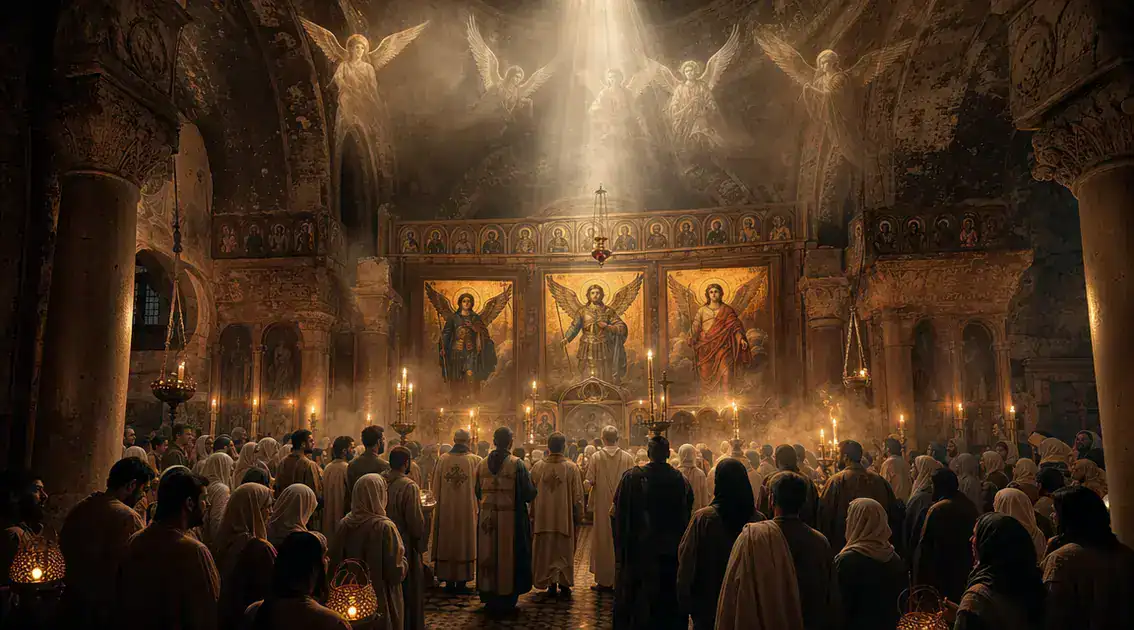
In the ancient church, gatherings for archangel feasts were rich with prayer and ritual. Communities kept special days that honored Michael, Gabriel, and other heavenly ministers with evening vigils, scriptural readings, and chanting. These observances often began with a fast and moved into prayers that asked for protection and guidance, making the day both solemn and hopeful.
Liturgical actions carried deep meaning: processions around the church, incense rising like prayer, and hymns that named the angels’ roles in God’s work. Clergy read stories of angelic appearances and the people responded with communal silence and song. Such moments taught the faithful to see fasting not as punishment but as a way to enter more fully into worship and to stand in solidarity with the heavenly choir.
The sensory life of these rites shaped the heart of the community. Icons and simple banners showed angelic figures, candles lit faces in the dim nave, and bowls of bread and water waited for those who had fasted. By living these rites together, believers learned to link their daily hunger and prayer to a larger, sacred rhythm where earth and heaven drew near.
Personal devotion and discernment: how angelic fasting shaped prayerful life
Many believers practiced fasts offered to angels as a way to steady the heart before prayer. When they set aside food or kept a simple meal, they did so to listen more clearly. In that quiet, the rush of desire softens and prayer can become a watchful prayer rather than a hurried wish.
Fasting also trained people in discernment. Without the noise of appetite, they learned to notice gentle promptings, warnings, or comforts that might otherwise pass unseen. This did not mean instant answers; rather, fasting made the soul patient, able to test impressions against scripture, wise counsel, and a calm interior witness.
In daily life, fasting was joined with works of mercy and steady prayer so the practice did not become merely private. Those who fasted for the angels often shared food with the poor, kept brief hours of silence, and returned to ordinary tasks with a softer, more attentive heart. The result was a humble rhythm where charity, prayer, and inner listening shaped each choice.
Recovering the tradition today: practical, reverent steps for modern practice

Begin with a small, clear intention: choose one day or a short meal to fast and offer it with prayer. Start simply so the practice becomes a gentle habit, not a test of will. This humble beginning lets the heart learn to listen and keeps fasting safe and sustainable.
Pair the fast with quiet reading and short prayers that recall biblical examples such as Daniel and the ministry to Jesus after his fast; let those passages shape your attention. Add a concrete act of love like giving the saved money or time to someone in need, because fasting without mercy is hollow. Seek counsel from a pastor or a trusted elder if you have health concerns or spiritual questions.
Make the practice part of a steady rhythm rather than a one-time display: keep a brief journal, mark a small feast day, or join others in a shared day of prayer. Let the aim be interior growth and service, allowing the discipline to soften pride and open you to quiet promptings of guidance. Over time, this measured approach can recover an ancient rhythm where abstinence, prayer, and charity form a simple path toward deeper devotion.
A humble sending
May the quiet practice you have read about settle gently into your days. Let each small fast be a soft opening of the heart, a way to make room for prayer and for the gentle aid of the unseen. In that stillness, you are invited to listen more than to rush.
May you know the calm truth that you are held by a greater kindness. Let this be more than a ritual: let it shape your care for others, your patience in hard moments, and your steady return to prayer. Remember that presence is often quieter than we expect.
Carry this prayer into ordinary time—break a meal with gratitude, offer what you can to those in need, and let your soul grow attentive to small promptings of grace. In this way, abstinence becomes a path to compassion and a bridge to heaven’s watchful care.
Go in peace, with a softer heart and a clearer ear. May the memory of these ancient rhythms give you courage to pray, to serve, and to wonder each day.
FAQ – Fasting in Honor of the Angels: questions seekers often ask
Did the early church really fast in honor of angels?
Yes. Early Christian communities — especially in Syriac and Egyptian monastic circles — kept fasts and vigils connected to archangels and angelic memory. Patristic and liturgical fragments show these practices were meant as acts of reverent watchfulness and prayer rather than superstition, modeled on biblical patterns of fasting and waiting on God (see Daniel 10; the monastic tradition).
Which Scriptures link fasting with angelic ministry?
Key texts include Daniel’s long fast that precedes an angelic explanation (Daniel 10) and the Gospel account where, after Jesus’ forty days of fasting, angels come to minister to him (Matthew 4:11). Psalm 91:11 and other passages also speak of angelic care. These scriptures gave early Christians a pattern: fasting can open a listening posture in which God’s messengers minister or guide.
If I want to try this practice today, how should I begin?
Begin simply: pick one short fast or a single meal, pair it with Scripture reading and brief prayers that recall Daniel or Christ, and add a concrete act of charity. Keep health and vocation in view and seek a pastor’s guidance if you have medical or spiritual concerns. The ancient habit combined abstinence, prayer, and mercy — start modestly so the practice forms a steady rhythm of devotion.
Am I praying to angels when I fast in their honor?
No. Christian tradition directs prayer and worship to God alone. Angels are God’s servants who assist and intercede, but they are not objects of worship. Scriptural and ecclesial instruction reminds us to address God while gratefully acknowledging angelic aid (see Revelation 19:10 where an angel redirects worship to God). Fast with the aim of growing closer to God, not to venerate angels as ends in themselves.
Are there spiritual or physical dangers in practicing angelic fasts?
There can be pitfalls if fasting becomes prideful, legalistic, or disconnected from charity. Scripture warns that fasting without compassion is empty (see Isaiah 58). Physically, fasting should respect health limits — elders, pregnant people, and the sick should not undertake strict fasts without medical or pastoral advice. Keep humility, charity, and wise counsel at the center of the practice.
How can I tell whether a prompting during a fast is truly from God or an angelic aid?
Discernment is communal and scriptural. Test impressions against Scripture (1 John 4:1), look for good fruit such as peace, humility, and increased love for others, and consult a trusted spiritual guide or pastor. True promptings will lead to charity, steadiness in prayer, and alignment with the church’s teaching rather than fear, confusion, or self-exaltation.