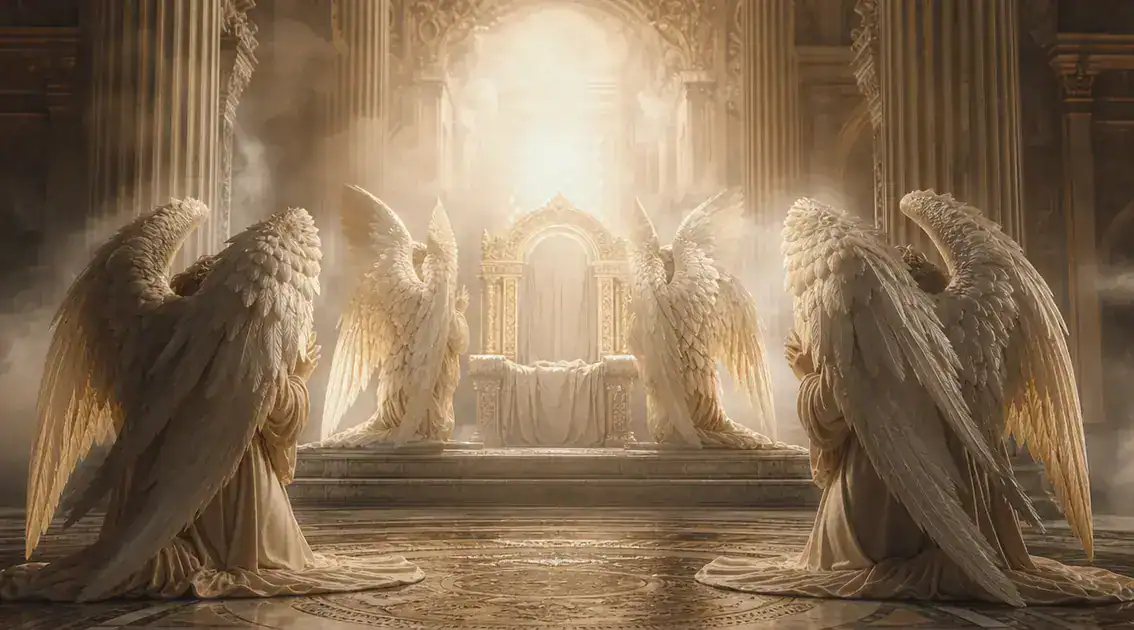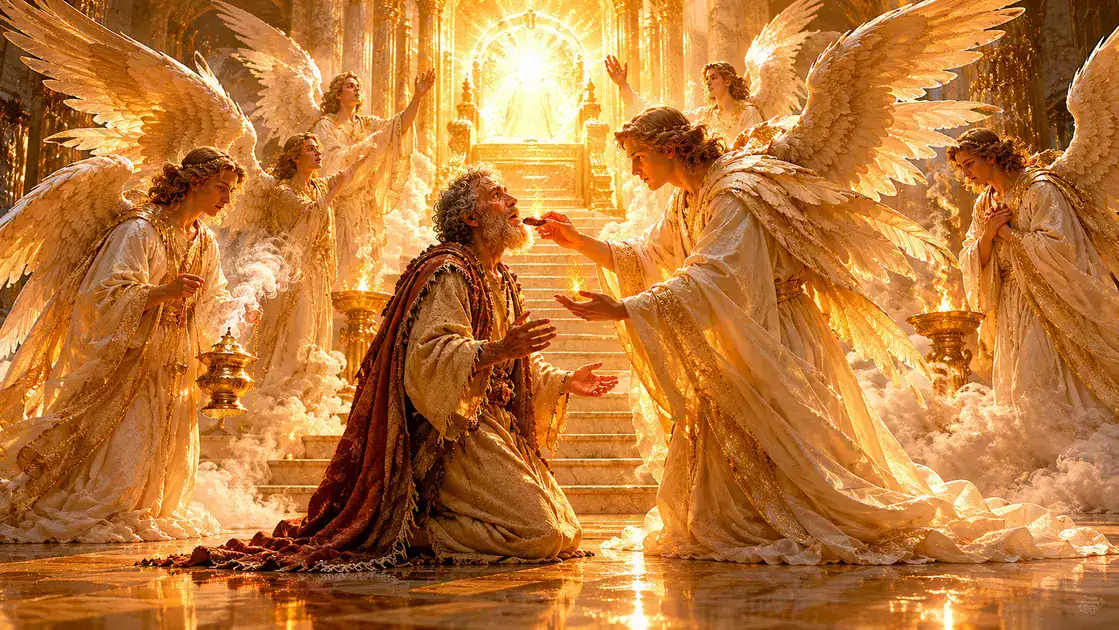

Seraphim in the Bible are a distinct order of heavenly beings encountered in Isaiah 6, depicted as six-winged, fiery attendants around God’s throne whose continuous cry ‘holy, holy, holy’ proclaims divine otherness, while their ritual action—touching a coal to Isaiah’s lips—symbolizes purification, commissioning, and the making of a prophetic voice.
Have you ever felt a silence that seemed alive? In Isaiah’s throne room, seraphim in the bible appear—six-winged and radiant—and their cry of holiness both humbles and commissions the prophet.
Isaiah’s setting: throne-room imagery and historical context
The scene Isaiah describes feels immediate: a great temple space, the air thick with smoke and the hush of something vast. In that hush a throne dominates the room—an image of God’s presence that gives shape to the whole vision. This throne-room setting tells us at once that we are not seeing a private dream but a courtlike reality where heaven draws near the temple.
Knowing a little history helps the image land. Isaiah prophesied around the time King Uzziah died, when people felt small and unsure about the nation’s future. Placing God on a lofty throne in the temple answers that fear in a simple way: even when human leaders fall, God’s rule stands. The throne language emphasizes sovereignty and a holiness that commands the attention of everyone present, human and angelic alike.
When you sit with that picture, it shapes how the rest of the story unfolds. The throne-room invites awe, humility, and a readiness to be changed; it also gives context for Isaiah’s later encounter and mission. That sense of nearness and authority makes the prophet’s response—all trembling, confession, and eventual sending—feel like the right human reaction to a holy God who reigns in the temple.
Who are the seraphim? names, functions, and biblical language
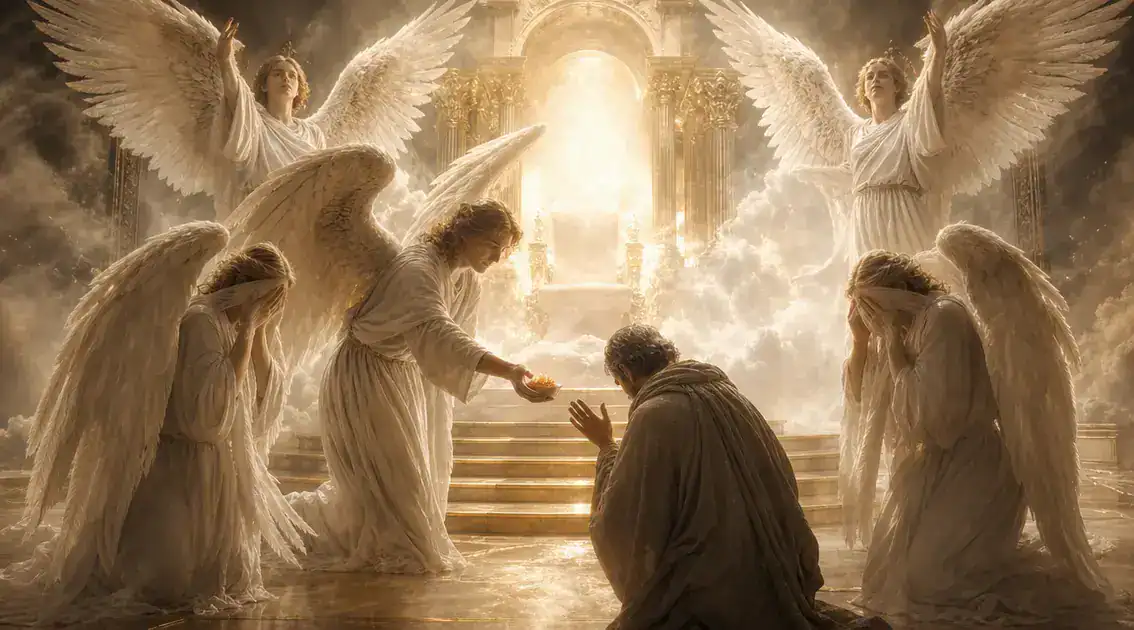
The seraphim appear in Isaiah’s vision as heavenly attendants whose name points to their nature. The word seraphim comes from a root that suggests burning or radiant fire, which helps explain why they are pictured with a glowing presence. This fiery image is not about danger alone but about a living, purifying brightness that surrounds God’s throne.
Isaiah describes their form simply: each has six wings, two to cover the face, two to cover the feet, and two to fly. Their main actions are clear and steady: they stand before God, they worship, and they call out God’s holiness. In this way the seraphim both reveal God’s majesty and perform a practical role in the heavenly court—as worshipers, witnesses, and ministers of purification.
The biblical language around the seraphim mixes vivid images—smoke, coals, and a ringing cry of holiness—with direct action, like touching the prophet’s lips with a coal. That blend of image and deed shows how the sacred and the personal meet: the seraphim’s presence pulls us into worship and also points toward transformation. Their task invites us to sit in awe, confess what is broken, and accept the gentle work of being made ready for service.
The role of holiness: seraphim’s cry of ‘holy, holy, holy’
The seraphim’s cry fills the temple with a steady, ringing refrain that points beyond words to God’s nature. In Isaiah’s vision they chant holy, holy, holy, a phrase that lands like a bright bell: it names God’s complete otherness and calls every listener to silent attention. The sound shapes the space, making the throne-room feel both distant and near.
In the Bible, repeating a word three times is a way to show intensity and depth, and here the repetition highlights the supreme and overflowing quality of God’s holiness. The seraphim cover their faces and feet in reverent awe, which shows that even heavenly beings respond to holiness with humility. That gesture and that cry work together to show how awe and nearness can coexist—God is wholly other, yet present among his people.
For our spiritual life, the seraphim’s proclamation becomes a steady invitation to worship and renewal. Hearing holy, holy, holy asks us to notice where we long for change and where we step back in wonder. The chant moves worship toward transformation: it humbles, it purifies, and it sends us outward to live with a deeper sense of God’s presence and purpose.
The coal and the lips: purification, vocation, and prophetic commissioning

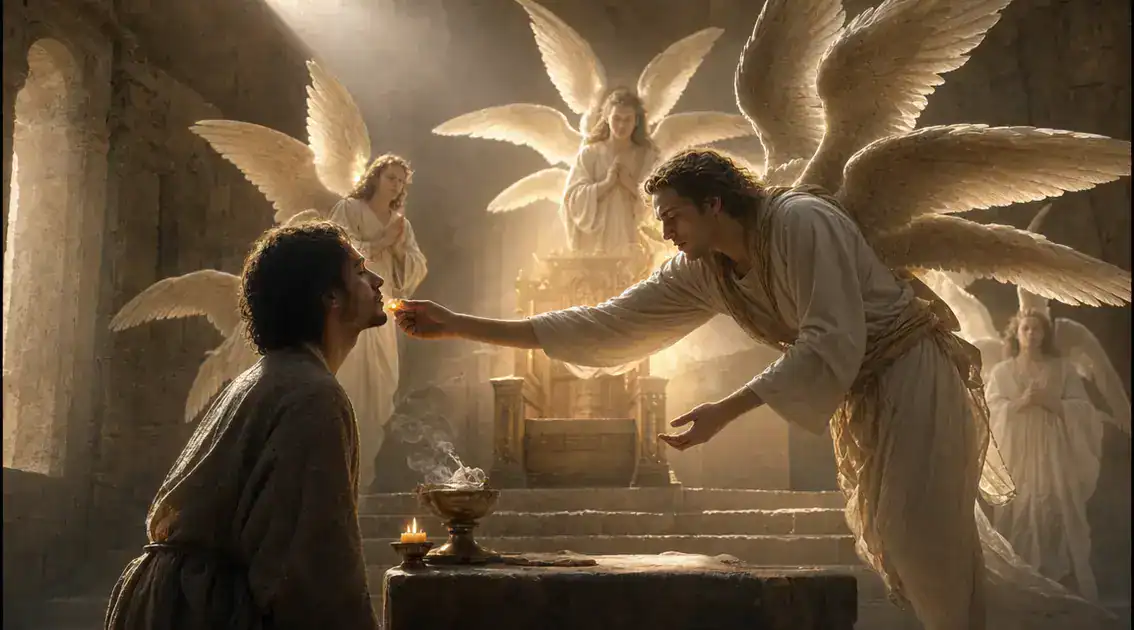
In Isaiah’s vision a seraph takes a glowing coal from the altar and touches it to the prophet’s lips. This small, intimate act carries deep meaning: the coal represents purification, a holy fire that cleanses what was unclean and readies a person to stand before God. The image borrows from sacrificial language, where fire both consumes and consecrates, turning what was profane into what can serve at the altar of speech and praise.
That touch moves quickly from symbol to calling. By touching Isaiah’s mouth, the seraph does more than forgive; it opens a path for speaking truth. The prophet’s voice is no longer bound by guilt or fear but shaped for clear proclamation. In that moment we see vocation as recovery of speech—God restores a heart and gives a task, so that words can carry God’s judgment, mercy, and comfort.
Once purified and equipped, the prophet is ready to be sent. Isaiah’s reply—“Here am I; send me”—shows how commissioning follows cleansing: God readies us inwardly so we can go outwardly. This sequence invites readers to a practice of humble confession, quiet readiness, and willing service, trusting that the same gentle purifying touch that frees us will also set us toward the work God asks of us.
Comparisons in Scripture: seraphim, cherubim, and angelic orders
Scripture names several kinds of heavenly beings, and each title hints at a special work. The seraphim appear in Isaiah as fiery worshipers who purify and proclaim God’s holiness. The cherubim show up in other books as guardians and bearers of divine presence, placed on the ark and pictured in Ezekiel as weighty attendants of God’s throne.
Those differences matter because they reveal how heaven serves God in many ways. Seraphim draw us into worship and cleansing, their motion and song pointing to devotion and renewal. Cherubim underline protection and presence, reminding us that God both dwells among his people and keeps the sacred boundaries of his space.
For devotional life this variety teaches a simple truth: God’s work toward us is both refining and keeping. We can learn from the seraphim to approach God with reverent praise and the readiness to be changed, and from the cherubim to rest in the assurance that God watches over his people. Together these images invite a balanced faith—bold worship paired with quiet trust in God’s guarded presence.
Living with the vision: spiritual practices inspired by Isaiah 6
Begin by practicing short, regular pauses that open you to God’s presence. Sit quietly for five minutes, breathe, and let your attention settle on the idea of a throne-room — not to imagine too much, but to make space for silent attention. Small, steady pauses help shape a habit of listening that echoes Isaiah’s moment of awe.
Pair silence with honest confession and surrender. Recall the image of the coal touching the lips as a simple guide: name what needs cleansing, speak it softly, and trust that God’s touch can change your words. This practice of purification helps free speech for truth and mercy, turning fear into readiness to speak when called.
Finally, let quiet and cleansing move you toward service and witness. After a short time of silence and confession, ask quietly, with willingness, to be sent; offer one small act of care or truth that day. Practicing this cycle — silence, cleansing, and sending — trains the heart to live out Isaiah’s vision in ordinary moments.
May the quiet awe of Isaiah’s vision settle in your heart, a gentle reminder that God’s throne is close and tenderly present.
May the coal’s touch purify your speech and free you to speak truth with kindness; let honest confession open you to mercy and service.
Practice short pauses, humble words, and ready hands—small acts that keep you centered and open to God’s call each day.
Go forward with calm courage, carrying wonder into ordinary moments. May the holy presence you have met here shape your steps, now and always.
FAQ – Common questions about seraphim, Isaiah’s vision, and sacred practice
Who are the seraphim in Isaiah 6?
The seraphim are heavenly attendants who appear in Isaiah 6:1–7. Their name links to a root meaning “burning,” which points to their radiant, purifying role. In the vision they worship at God’s throne and serve as agents of cleansing and commission for the prophet.
Why do the seraphim chant “holy, holy, holy”?
Isaiah 6:3 records the threefold cry to emphasize the fullness and otherness of God. Repeating the word three times intensifies the praise and points to God’s perfect holiness; Revelation 4:8 echoes this heavenly worship, showing continuity in Scripture’s picture of divine glory.
What does the coal touching Isaiah’s lips signify?
The coal from the altar (Isaiah 6:6–7) symbolizes purification and forgiveness. The touch cleanses Isaiah’s guilt and prepares his mouth for prophecy, showing how God both heals and equips those called to speak for him.
Are seraphim the same as cherubim or ordinary angels?
Not exactly. “Angel” is a general term for heavenly messengers, while seraphim and cherubim are distinct orders with different roles. Cherubim often appear as guardians of sacred space (see Exodus 25:18–22 and Ezekiel), whereas seraphim are depicted in Isaiah as worshiping, purifying attendants around God’s throne.
Might a regular believer have a vision like Isaiah’s today?
Scripture records prophetic visions in special times and roles, so Isaiah’s encounter is not the ordinary pattern for most believers. The tradition encourages prayer, Scripture, and the sacraments as ways God makes his presence known. Seek openness to God, but avoid expecting that dramatic visions are required for true faith.
How can Isaiah’s vision shape my daily worship and life?
Let the vision guide simple practices: pause for silent attention, bring honest confession before God, and offer your words and actions for service. The pattern of awe, purification, and sending helps ordinary people grow in reverent praise and faithful work in daily life.