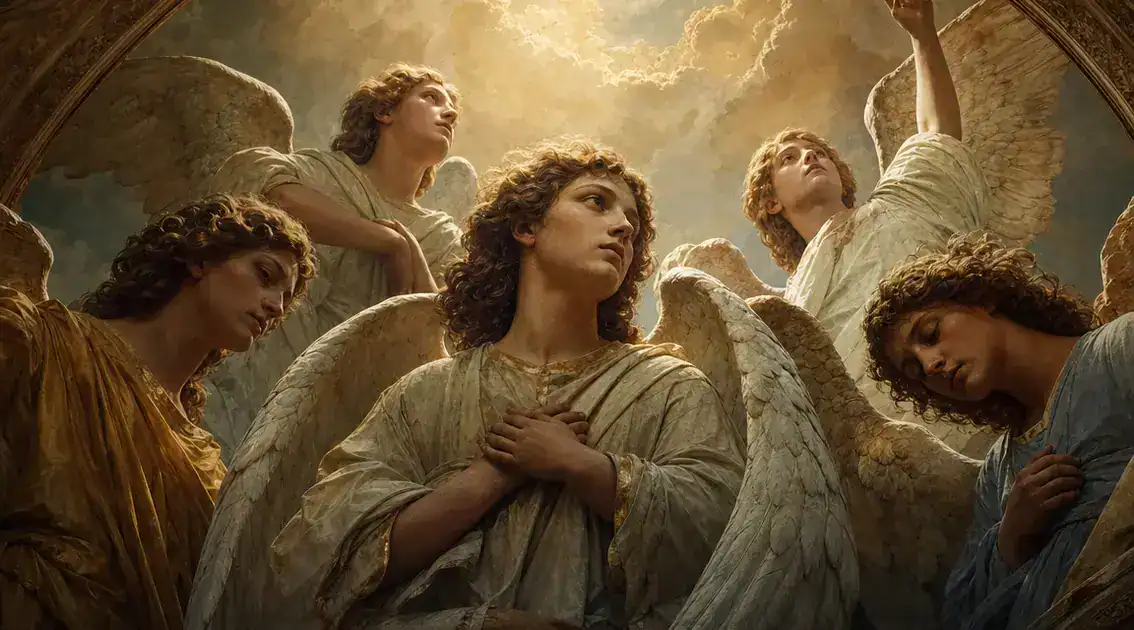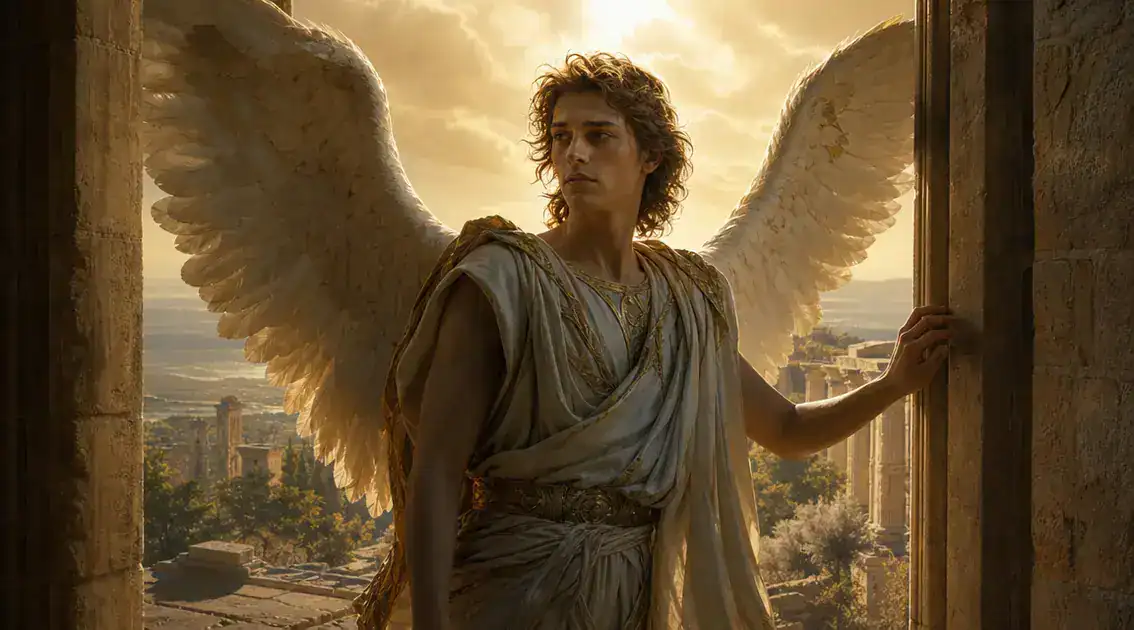

Angel wings symbolism origin shows how Scripture, ancient Near Eastern imagery, patristic interpretation, and devotional practice converged to portray wings as signs of divine movement, protection, and transcendence—images reclaimed by faith to teach God’s sheltering care and sending rather than to describe literal anatomy.
angel wings symbolism origin — have you ever noticed the hush that settles when an angel appears in a biblical scene? Join a brief, reverent look at why wings became the language of divine movement and presence.
wings in Scripture: images and key passages
Biblical writers often use the image of wings to speak of nearness and care. In psalms and prayers we read of being covered, lifted, and kept beneath feathers, a tender picture of divine protection. When the psalmist says God will “cover you with his feathers,” that language draws us close to a trust that rests in a living, sheltering presence rather than a distant idea.
The prophetic visions widen the scene and show wings in the heavenly court. In passages like Isaiah 6 and Ezekiel 1, winged beings attend the throne, moving with purpose and awe. These images do not aim only to describe physical form; they invite us to see holiness in motion — worship that moves, service that obeys, and a world made alive by the presence of God.
For readers seeking spiritual comfort, the scriptural wings offer both shelter and direction. They remind us that God’s care can be both intimate and majestic, a quiet cover in the night and a swift messenger in times of need. Let the images of wings shape your prayer: imagine being held, guided, and set in motion by a presence that cares for both your safety and your call to worship.
ancient near eastern and pagan influences on angelic imagery
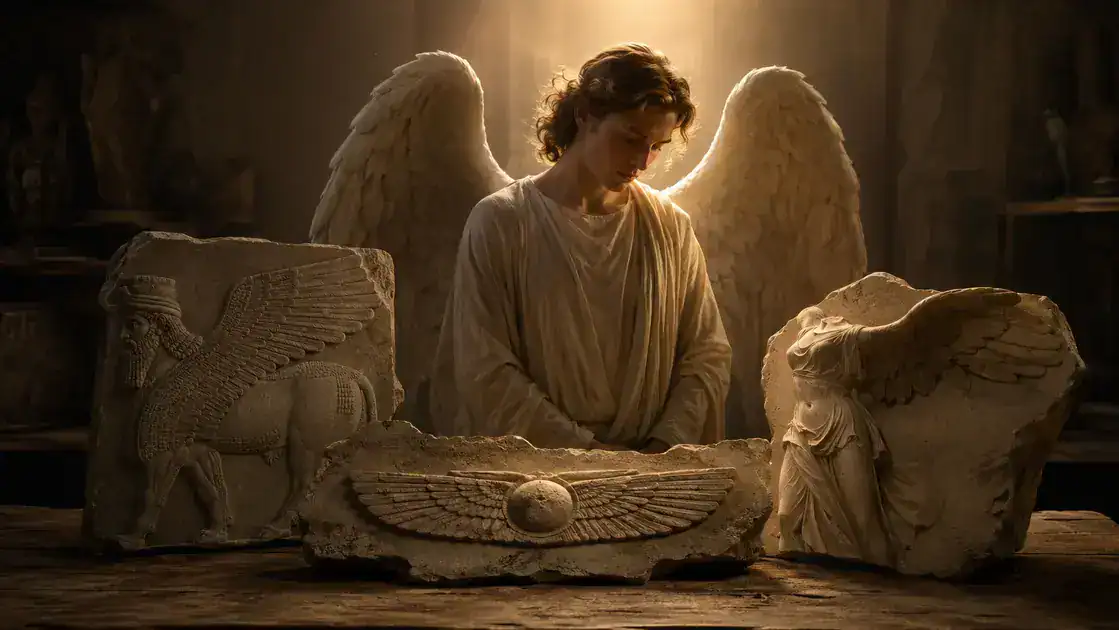
Long before Israel’s prophets, the peoples of the ancient Near East shaped images of winged beings to speak of power, protection, and the sky. Stone reliefs of Mesopotamia show winged figures called genii and the great lamassu with human faces and lion bodies; Egypt used the winged sun disk as a sign of royal care and cosmic order; even later Greek art gave wings to Nike, the personification of victory. These images were common, simple ways for people to picture what moved between heaven and earth.
As Israel lived among these neighbors, the Bible sometimes adopted similar shapes but gave them a new voice. In the tabernacle and temple, the cherubim appear as guardians with outstretched wings; in Isaiah 6 the seraphim use six wings in a vision of holy worship. Rather than copying foreign gods, the biblical authors turned the familiar language of wings toward service and worship—wings become a sign of movement toward God, of protecting presence, and of obedient ministry.
Seeing these connections need not lessen wonder; it can deepen it. When we learn that wings once meant royal protection or triumph, we can better hear how Scripture reclaims the symbol for a God who neither competes with idols nor hides from human language. Let the shared images guide your prayer: imagine being sheltered and sent, held tenderly and moved gently toward the work God invites you to do, as wings both protect and point the way.
theological meanings: movement, transcendence and divine presence
Wings in theology point first to movement. Angels with wings are not still pictures but active presences, messengers who bridge heaven and earth. This image helps us see God’s care as lived and moving—sending aid, guiding paths, and carrying grace into ordinary days.
Wings also speak of transcendence, the power to pass borders we cannot cross on our own. In visions like Isaiah 6 the winged creatures hover around the throne, showing holiness that both draws near and lifts us up. That lifting does not withdraw us from life; it changes how we meet life, giving new sight and a gentler gravity shaped by divine presence.
Finally, wings tell of a presence that shelters and accompanies. The psalmic picture of being kept under God’s care is like being held under a wing in a storm—both refuge and call to trust, as in Psalm 91. Let that image guide your prayer: be comforted by protection and moved by the care that sends you back into love and service.
how church fathers and mystics interpreted the wings

The church fathers read wings as more than decoration. To them, wings were a simple language that spoke of purpose and motion. In their sermons and homilies, a wing signaled movement toward God, watchful care, and the living activity of worship rather than a mere costume for a spirit.
Some writers, like Pseudo-Dionysius, shaped a vision of the heavenly court where winged beings serve in ordered ranks, and others—Augustine and Gregory among them—used the image to talk about love, the mind, and the will being lifted upward. Centuries later, mystics such as Teresa of Avila and John of the Cross took that image into the soul, describing times of prayer when the heart feels gently raised and carried closer to God.
Those interpretations changed how Christians saw art, prayer, and daily life. Churches painted winged figures not just to amaze but to teach the faithful how to pray and act. In quiet devotion, the wings invite a twofold movement: the calm shelter of being held and the gentle impulse to serve, a reminder that faith both rests and moves toward love. Be held and be sent becomes a way to pray with the symbol, not just look at it.
practical devotion: receiving the symbol in prayer and life
Let the image of wings shape a simple prayer practice you can use each day. Sit quietly and place your hands over your heart, breathing slowly. Picture being sheltered as in Psalm 91—not as a fairy tale, but as a gentle, steady care that holds you when life feels heavy.
Turn that same image outward into small acts. When you feed a neighbor, visit the sick, or offer a kind word, imagine those actions as being carried on a wing. This is how the symbol moves from art into life: it both comforts and prompts motion. A short breath prayer—”Under your wings, lead me”—can be said while making the sign of the cross or lighting a candle.
Keep the practice simple and steady so it becomes part of your rhythm. Use a picture, a carved icon, or a quiet phrase to remind you that you are both held and sent. Let the wings guide choices: to rest when needed, to show mercy when called, and to return again to prayer with a calm heart ready for service.
A prayer of wings and guidance
May the quiet image of wings rest over your heart like a gentle shelter. Picture yourself held in a calm, warm presence that steadies your breath and brightens small moments. Let that simple assurance ease fear and invite a soft trust.
Let the shelter move you outward in small, loving steps. To be held and sent is the way of grace—receive care, then share it. When you visit, listen, or offer help, imagine those acts carried on a wing toward another.
When doubt or hurry comes, breathe slowly and say a short prayer: “Under your wings, lead me.” Return to that phrase often until it steadies your day and grounds your choices in mercy.
May peace go with you, wonder keep you, and the God of gentle wings both hold you close and send you forth to love.
FAQ – Common questions about angel wings, Scripture, and devotion
Do angels in the Bible have wings?
Scripture uses winged language, as in Isaiah 6 and Ezekiel 1, and psalms that speak of being kept “under his wings” (Psalm 91). Yet angels also appear as men (Genesis 18; Hebrews 13:2). The Bible’s winged images are therefore both descriptive in visions and symbolic, meant to show God’s care, swiftness, and holiness rather than provide a natural-history sketch.
Why are angels often shown with wings in church art?
Artists drew on biblical vision language and nearby cultural imagery to teach what words alone could not. The church fathers and later medieval and Renaissance painters used wings to convey movement toward God, protection, and transcendence, making an invisible truth visible so worshipers could pray with images that point to God’s presence.
Does every person have a guardian angel according to tradition?
Many Christian traditions—Eastern, Roman Catholic, and a broad range of Protestant thought—affirm that individuals are entrusted to angelic care. Jesus’ words in Matthew 18:10 speak of angels who behold the Father’s face and watch over the little ones, a passage long read as support for the idea of personal guardian care within God’s providence.
Can angels intervene in our lives, and are there biblical examples?
Yes, the Bible records angelic intervention under God’s direction: Acts 12:7–11 depicts an angel freeing Peter, Daniel 3 describes a saved company in the furnace, and Psalm 91:11–12 speaks of angels guarding the faithful. Tradition teaches such aid is always subordinate to God’s will and Providence rather than an automatic guarantee.
How should I relate to angels in prayer and devotion?
Prayer should be addressed to God, but tradition lovingly invites us to acknowledge and welcome angels as God’s servants assigned to help. Simple practices—short morning prayers to your guardian angel, asking for guidance before a decision, or invoking angelic aid in liturgical prayers—honor Scripture and the witness of the saints while keeping Christ at the center.
Do wings mean angels are like birds or literal flying creatures?
Wings function as theological and devotional imagery: they signify swiftness, protection, and the crossing of heaven and earth. Because angels sometimes appear as human agents (see Genesis 18; Hebrews 13:2), wings are best read as a sacred language that helps us imagine how God’s servants operate, not as a strict biological description.