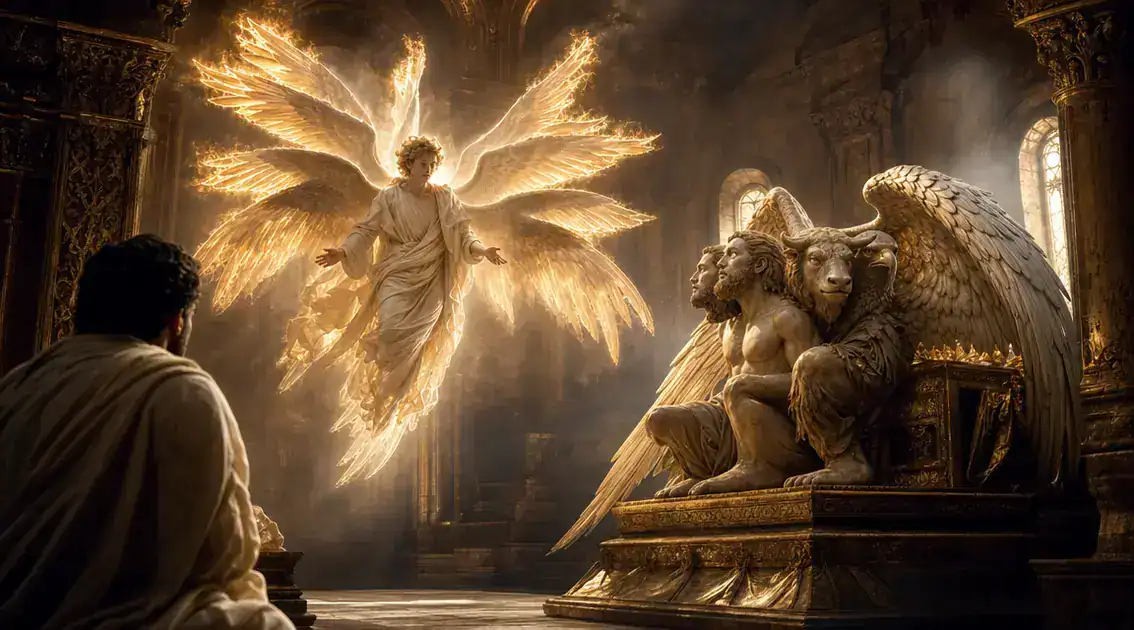

Seraphim, guardians of the throne, are six‑winged celestial beings depicted in Isaiah 6 and later Christian tradition as nearest to God’s presence, whose ceaseless praise, purifying fire, and protective ministry both safeguard the divine throne and ready prophets and worshipers for holy encounter.
seraphim guardians of the throne: have you ever wondered why Scripture sets these fiery beings before God, wings beating like a sacred wind and voices crying, “Holy, holy, holy”? This short reflection invites a closer look — not to solve every mystery, but to receive a clearer sense of their presence in worship and prayer.
A biblical portrait of seraphim and their throne ministry
In Isaiah’s vision the seraphim stand close to the throne, their six wings moving like a sacred wind. Two wings cover their faces, two cover their feet, and two lift them in flight. Their voice fills the chamber with the cry \”Holy, holy, holy\”, a triple declaration that points beyond all names to God’s absolute otherness and glory.
These beings are not mere decoration around the throne but active ministers of God’s presence. They guard the inner court of worship and call creation to recognize God’s purity. When a seraph draws a live coal to touch the prophet’s lips, the act serves as both judgment and gift: a gentle burning that cleanses speech and readies the servant for mission. That visible touch becomes a sign of purification and of being made fit to speak in God’s presence.
Holding this scene in the heart shapes how we pray and worship. The seraphim teach a posture of awe mixed with hope, constant praise joined to longing for change. Imagine approaching the throne with humility, hearing the unending song, and trusting that the same presence that convicts also restores. Their ministry invites us to draw nearer to God with reverent love and a desire to be renewed.
Isaiah’s vision: fire, purity, and the cry of holiness
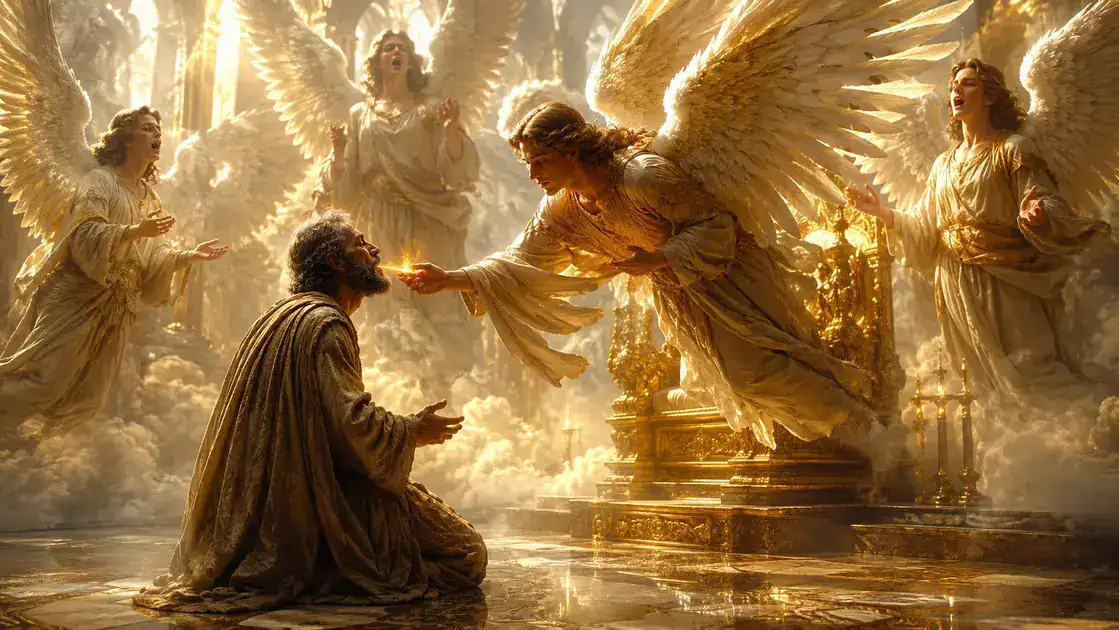
Isaiah’s vision opens in a hall of light where the seraphim hover around the throne, each with six wings moving like a steady breath. Two wings veil their faces, two shade their feet, and two hold them aloft while their voices roll across the chamber. The cry that fills the space is “Holy, holy, holy”, a threefold song that presses the heart outward toward God’s absolute otherness and glory.
In the midst of that praise a seraph touches a live coal to the prophet’s lips, a small, burning action that changes everything. This is not merely punishment but a striking act of cleansing and calling, a moment of purification that clears speech and opens service. The coal both removes guilt and sets Isaish ready to speak God’s word — a gentle, powerful commissioning born from the same holy fire that convicts.
Holding this scene helps shape our prayer and worship today. The unending cry of holiness reminds us to approach with awe, while the touching coal invites trust in God’s mercy to transform us. We can stand before the throne with humble hearts, listening for both correction and call, and let that sacred encounter shape how we speak, praise, and serve.
Jewish and Christian traditions on seraphic hierarchy
In Jewish scripture the seraphim first appear in Isaiah’s vision as fierce, holy attendants at the throne, close enough to touch the altar of God’s presence. Rabbis and early Jewish writers built on that image, seeing them as beings of fire who both guard the sacred space and bring cleansing. This picture keeps the focus on their service: they are not distant symbols but active participants in worship around the divine throne.
Christian tradition took that same image and placed it in a larger angelic ordering. Writers like Pseudo-Dionysius name the seraphim as the highest order, nearest in love and light to God, while other ranks serve distinct roles further out. In icons and hymns the seraphim remain linked to intense praise and warmth, their presence a reminder that heaven’s first response to God is worship that burns like flame.
Across both traditions the emphasis falls less on trivia of rank and more on function: the seraphim call creation to holiness, purify what is unfit for God’s presence, and guard the mystery of the throne. Devotional life borrows this language when it speaks of being warmed, cleansed, or drawn into deeper praise. Their role invites us to approach God with reverence, to let worship change our speech and our hearts, and to trust that the same holy fire that convicts also heals and sends.
Symbolism of wings, fire, and praise in worship
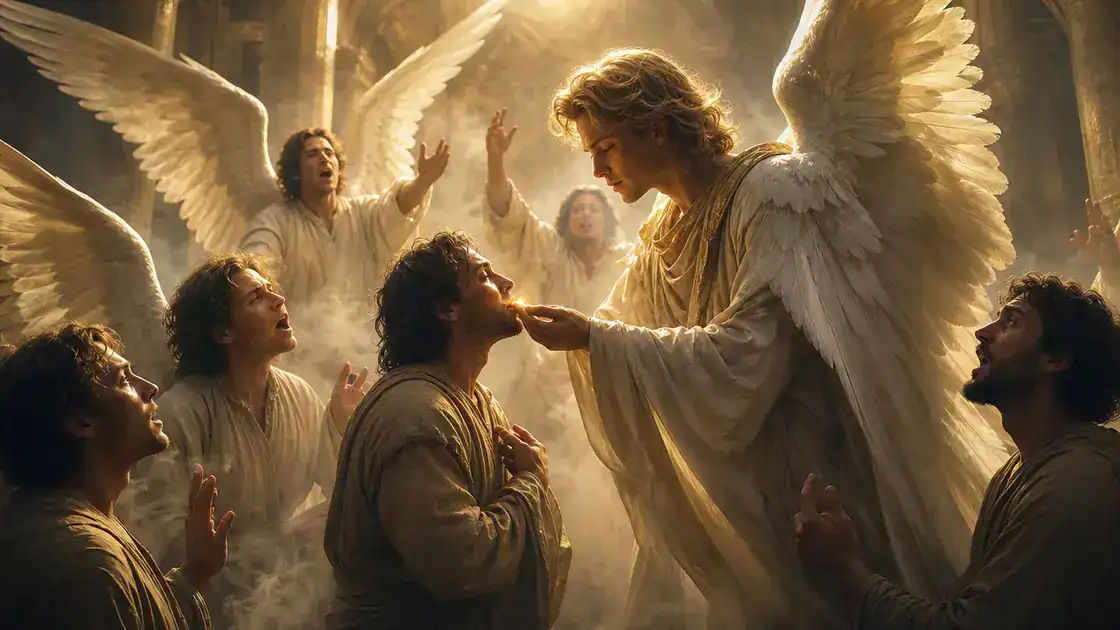
Wings in Scripture often speak of nearness, shelter, and motion. The seraphim’s six wings show this plainly: some cover faces in reverence, some shield their feet in humility, and others lift them in service toward the throne. In that simple image we learn that worship itself moves—both drawing us close and lifting our praise upward.
Fire carries a similar, clear message about God’s presence and change. Isaiah’s coal touched the prophet’s lips as a sign that holy fire cleanses and readies speech for God’s service. This fire is not only a sign of judgment; it is a gentle, purifying heat that heals what keeps us from speaking or living honestly before God.
When wings and fire meet in worship they shape our whole response: awe, confession, and renewed speech. The seraphim’s continuous cry of “Holy, holy, holy” models praise that both honors God and changes the worshiper. Let that union—shelter, motion, and purifying flame—guide how you approach prayer, sing, and live in the light of the throne.
How theologians interpret seraphim as guardians of God’s presence
Theologians read the seraphim as more than bright figures; they see them as guardians of God’s presence who mark the border between the holy and the human. Isaiah places them so close to the throne that their song and motion shape the very space around God. That nearness becomes a theological clue: the seraphim show what it means to dwell in unbroken praise and to protect the purity of the divine court.
Early Christian thinkers like Pseudo‑Dionysius described the seraphim as the closest order to God, where love and light meet. Other voices stress their active role: they purify speech, shield the throne, and call creation into right relation with God. The common thread is function over fancy—seraphim are defined by what they do: calling worship, guarding holiness, and enabling encounter through purification and praise.
That theological view shapes how communities pray and sing. If seraphim guard God’s presence, then worship asks for both awe and honesty: we come with wonder but also with readiness to be changed. This helps explain why liturgies often include silence, confession, and cleansing rites—practices that prepare hearts to enter the holy space the seraphim tend. For personal devotion, the image invites humble courage: to draw near, to let speech be healed, and to remain open to the refining work of love and light.
Mystical and devotional practices inspired by seraphim
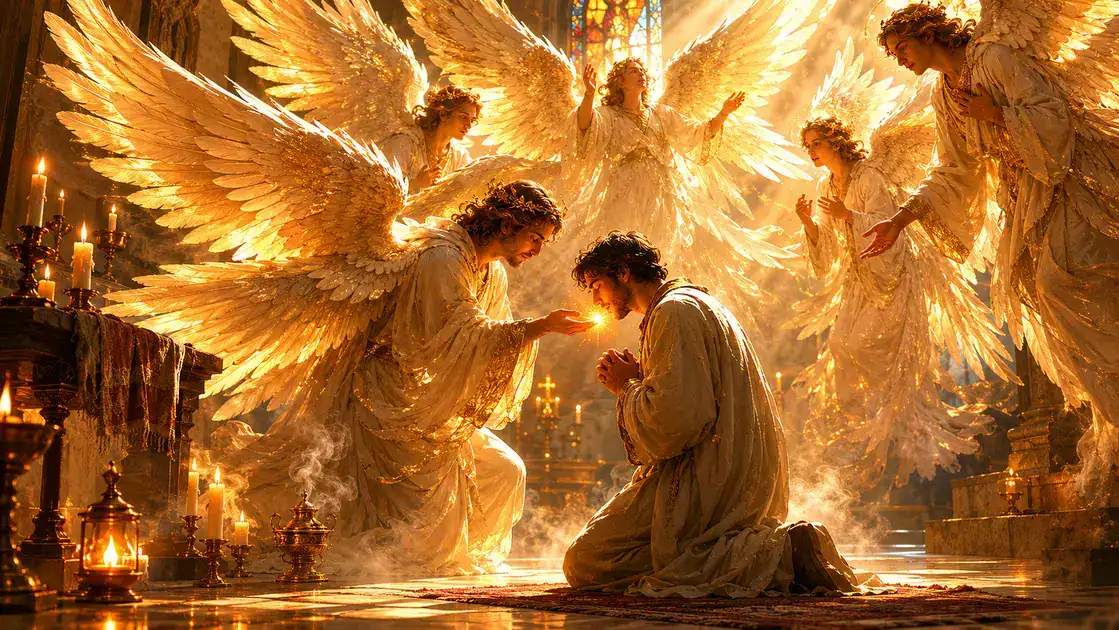
Many devotional paths borrow the seraphim’s images to shape prayer that feels close and honest. People imagine wings as shelter when they seek quiet, or picture the throne’s light when they long for guidance. These simple images help prayer move from ideas into the body: breath slows, posture softens, and the heart learns to listen.
Some practices center on the seraphim’s cry and the idea of holy refinement. Worshippers may repeat the phrase holy, holy, holy as a short breath prayer to steady the mind and join heaven’s song. Others use a brief imaginative act—picture a warm ember touching the lips—as a way to bring confession and trust together, trusting the purifying fire not to punish but to ready speech and service.
Communal rites and quiet personal habits grow from the same root of reverence. Lighting a single candle, pausing in silence before a hymn, or holding hands in a circle can echo the seraphim’s steady praise and protect the space of worship. These practices are not about dramatic signs but about steady change: more honest speech, gentler judgment, and a deeper willingness to be warmed and sent forth in love.
Seeing the seraphim’s message in personal prayer and liturgy
When you enter personal prayer, imagine the seraphim’s steady song near the throne and let that sense shape how you breathe and speak. Many find it helpful to use a short breath prayer such as repeating \”Holy, holy, holy\” quietly on the in-breath or out-breath to steady attention. That simple joining with heaven’s cry can move prayer from ideas into a felt practice, where awe and trust sit together and make room for honest speech.
In corporate liturgy the seraphim’s presence lives most clearly in moments of silence, confession, and the ancient Sanctus that sings the same threefold praise. Incense, bowed heads, and careful gestures prepare the assembly to meet the divine, while confession and absolution echo the idea of a purifying fire that readies speech and service. These practices do not dramatize holiness so much as shape a space where people may be changed by it.
On a practical level, try combining both paths: a brief imaginative act in private prayer—picture a warm ember touching your lips—then bring that humility into the community by listening well, speaking less, and entering liturgy with soft attention. Let ritual and quiet form one another so prayerfulness becomes habit, not performance. In that steady rhythm the seraphim’s message—praise that purifies and guards the space of encounter—can quietly deepen how you pray and worship.
A gentle sending
As the seraphim circle the throne in endless song, may that praise settle in your heart and bring quiet. Listen to the echo of holy, holy, holy and let it steady your breath.
Trust the image of a warm ember touching your lips: a sign that God’s fire purifies, not destroys. Let that small cleansing soften your words and give courage to your service.
Wear this prayer in small acts each day—pause for a breath prayer, enter silence before speaking, offer kindness without seeking praise. These simple habits shape a life that joins the song of heaven.
May peace go with you, and wonder keep your eyes open to grace. May the guardians of the throne walk beside you, warming and guiding each step toward love.
FAQ – Seraphim and the guardianship of the throne
Where do seraphim appear in the Bible?
The clearest biblical portrait is in Isaiah 6:1–7, where seraphim stand by the throne, cry “Holy, holy, holy,” and touch a coal to the prophet’s lips. Revelation 4:8 echoes the heavenly song with living creatures, and later tradition reads these passages together in worship and theology.
Are seraphim really guardians of God’s throne?
Yes. Isaiah places them closest to the throne, calling creation to recognize God’s holiness. Christian thinkers such as Pseudo‑Dionysius later name them the highest order, emphasizing their role in praise, purification, and guarding the holy presence.
What does the seraph’s coal mean—should I be afraid of their fire?
The coal in Isaiah is a sign of cleansing and commissioning, not destructive wrath. Scripture and tradition present the fire as purifying: it heals speech and readies a servant for mission. The pastoral tone of the text invites trust rather than fear.
How can I let the seraphim’s message shape my prayer life?
Simple practices help: join the heaven-song with a brief breath prayer like repeating “Holy, holy, holy,” keep moments of silence and confession before liturgy, and use gentle imagination—picture an ember touching your lips—to invite God’s refining presence. These steps are rooted in both Scripture and long devotional practice.
Are seraphim the same as archangels or guardian angels?
No. Tradition distinguishes orders and roles: seraphim are a celestial rank nearest the throne, archangels (e.g., Michael, Gabriel) have named missions in Scripture, and guardian angels are described as personal companions (see Matthew 18:10). Each category serves the divine purpose in different ways.
Do religious traditions venerate or invoke seraphim directly?
Most traditions honor the seraphim’s witness through liturgy and hymnody (the Sanctus draws on Isaiah and Revelation) rather than invoking them as independent intercessors. Worship centers on joining their praise and allowing their example of purification and guarding holiness to shape our hearts.