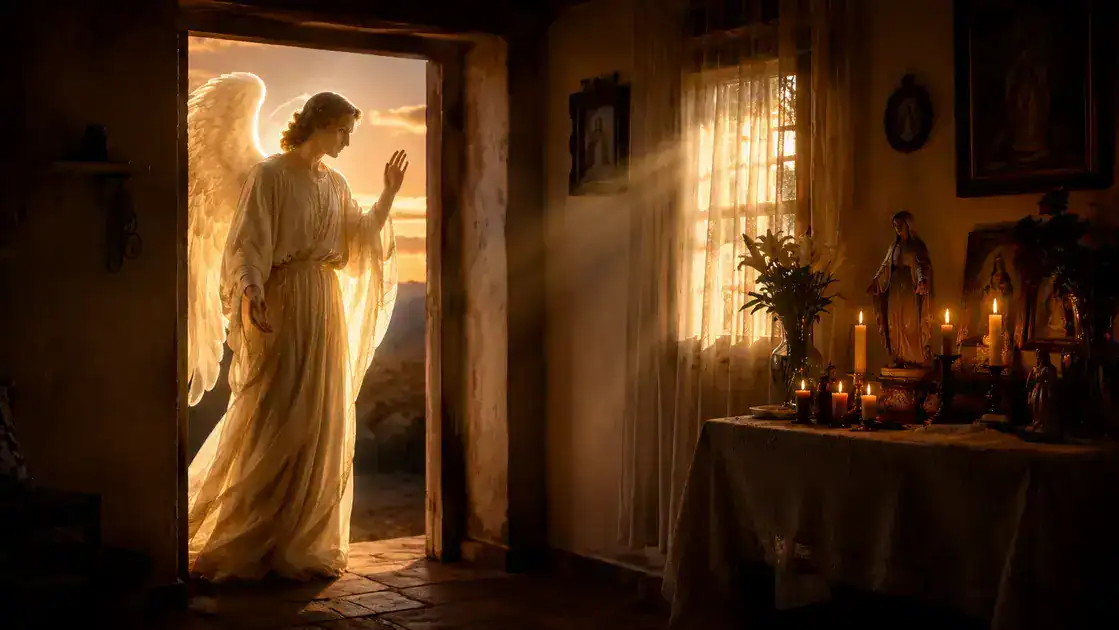

Angel protector of the home is a spiritual minister described in Scripture and long Christian tradition as a guardian sent by God to watch over households, accompany family life, and intercede with vigilant care, invited through Scripture-based prayers, simple blessings, and steady devotional practices.
angel protector of the home: Have you ever felt a sudden calm enter a room, like a presence making the path clear? I’ll walk with you through scripture, gentle rites, and devotional gestures that welcome angelic guardianship into ordinary life.
Biblical roots: angels as household guardians
From the earliest pages of Scripture, angels appear as God’s messengers and protectors near homes. Psalm 34:7 speaks of the angel of the Lord who encamps around those who fear him, and Psalm 91:11 promises that God will command his angels to guard you in all your ways. These images point to a quiet, watchful care that touches ordinary moments in kitchens, doorways, and bedsides.
In the Gospels, Jesus gives a tender glimpse of that care when he warns against despising little ones, for their angels always behold the face of my Father in heaven (Matthew 18:10). That short line links angelic service to God’s own presence and reminds us that divine attention reaches into family life. Acts and other narratives show angels guiding, guarding, and intervening at crucial times, which places them beside our human journeys rather than far above them.
When we read these texts together, they invite a gentle practice of household devotion rather than dramatic signs. Saying a simple blessing at the door, praying at the table, or keeping a small corner for quiet can be ways we live into the same tradition of care. Such gestures do not demand visions; they cultivate a sacred trust that our homes dwell within God’s vigilant love, carried by faithful servants who watch and keep.
Theological foundations: angels and sacred space
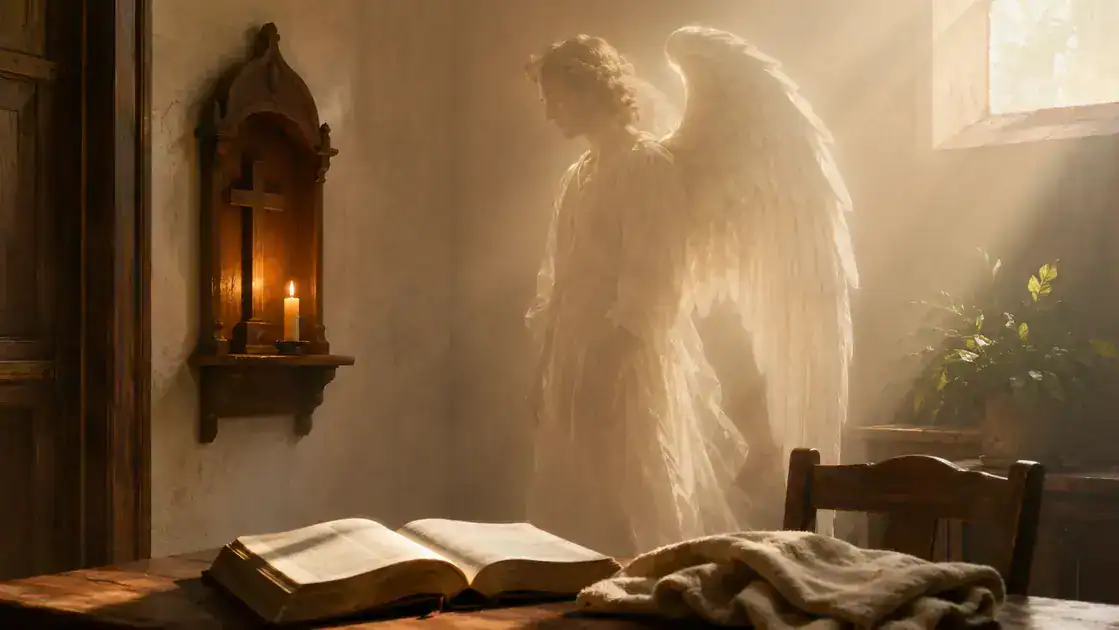
Scripture and worship shape how we see sacred space, and angels are woven into that story. In the tabernacle and temple, cherubim marked where God met his people. Psalm writers and prophets gave the heavenly court a voice, and Revelation paints a scene of service and praise. These biblical scenes show that angels often stand at the borders of the holy, marking where heaven touches earth.
That biblical pattern helps us understand why our homes can carry a sacred quality. The Incarnation means God drew near to ordinary life, and angels serve as ministers of that nearness. They do not replace God’s presence but point to it, moving between heaven and our rooms in a way that honors both mystery and intimacy. Angels help make a space feel set apart without turning it into something distant or strange.
When this theology meets daily practice, small, consistent gestures matter. Lighting a candle, offering a short prayer at the threshold, or keeping a humble prayer corner are not magic, but ways we join the heavenly order. Such acts create a quiet habit of attention, inviting grace to rest on ordinary places and reminding us that our homes are part of a larger, sacred story.
Scriptural prayers and blessings for the home
Scripture gives simple words that steady a household. The ancient Aaronic blessing — Numbers 6:24–26 — offers a short, tender way to speak God’s care over a door, a table, or a bed: “The LORD bless you and keep you; the LORD make his face shine upon you.” Saying a short verse like this aloud at the threshold makes the home a place named by God’s promise.
Prayers and small rituals can be plain and loving. You might sprinkle a little blessed water at entrances, trace a gentle sign of the cross over a room, or speak a brief prayer such as, “Lord, send your angels to guard this house.” Using short, simple words lets everyone participate — children and guests feel included and the practice becomes a living memory more than a ceremony.
Make these acts part of your rhythm rather than a one-time show. Bless the home on a chosen day each week, offer a short prayer before meals, or pause together at bedtime. The goal is not power but mindfulness: an intentional habit that shapes how you see ordinary moments as touched by grace and watched over with care.
Liturgical rites and simple consecration practices
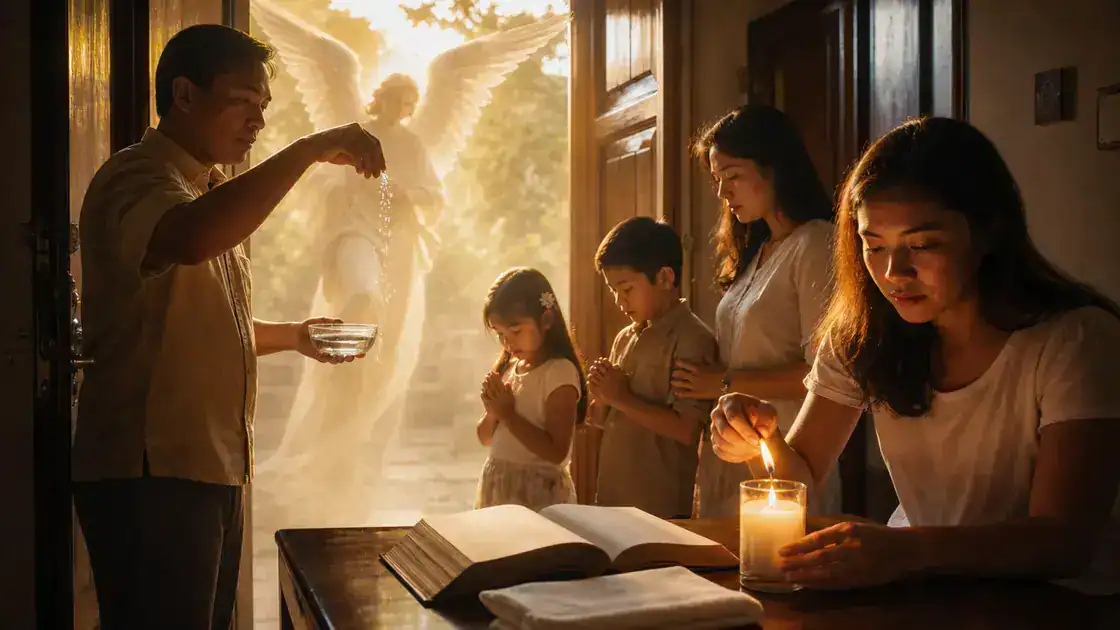
Many Christian communities offer brief liturgical blessings for a home that use Scripture, prayer, and a simple action to mark the space as sacred. A minister may read a verse, sprinkle a little water, and make the sign of the cross while praying a short blessing. These rites use sacramentals—objects and gestures that point to God’s promised care—so the house is not changed by magic but named by faith.
For those who do not use a formal rite, simple consecration practices are gentle and accessible. You can light a candle, read a Psalm aloud, trace a small sign of the cross at the main doorway, or sprinkle water while saying a short prayer inviting protection. Keeping the words brief and the gesture clear helps everyone in the household enter the moment; the power is in the intentional prayer, not in showy ceremony.
Make these acts part of your household rhythm rather than a single event. Choose a day, gather the family or household members, read a comforting passage, and speak a few sentences that ask for blessing and protection. Mentioning guardian angels or invoking Archangel Michael in a simple petition can feel natural for many; the aim is a steady habit of attention. Over time, these small practices form a lived memory of welcome and create a home that feels both ordinary and held by grace through consistent practice.
Invoking archangel Michael and guardian angels
Scripture names powerful messengers who stand near God and near us, and among them is Archangel Michael, who appears as a protector in Daniel and Revelation. The New Testament also gives a quiet image of guardian angels watching over the vulnerable, a reminder that heavenly care often comes in humble forms. Holding these images together helps us pray with both confidence and reverence, trusting God rather than treating angels as substitutes for God’s work.
When we invoke Michael or call on guardian angels, keep the words simple and rooted in Scripture or the Psalms. A short petition such as, “Lord, send your angels to guard this house” or a humble request to Saint Michael for protection can be said aloud at a doorway, before sleep, or in moments of need. The practice is not meant to command the unseen but to ask God’s protection through faithful servants; say the prayer with a quiet heart and expect gentle presence rather than dramatic signs.
Make invocation part of ordinary rhythms so it becomes natural and steady. Light a candle, read a verse like Psalm 91, speak a short petition together as a family, and then go about your day with calm intention. Over time these small acts form a lived habit of trust: you remember that a faithful order surrounds your life and that asking for help is simply joining your need to God’s care through the ministry of guardian angels.
Living under angelic protection: daily habits and vigil
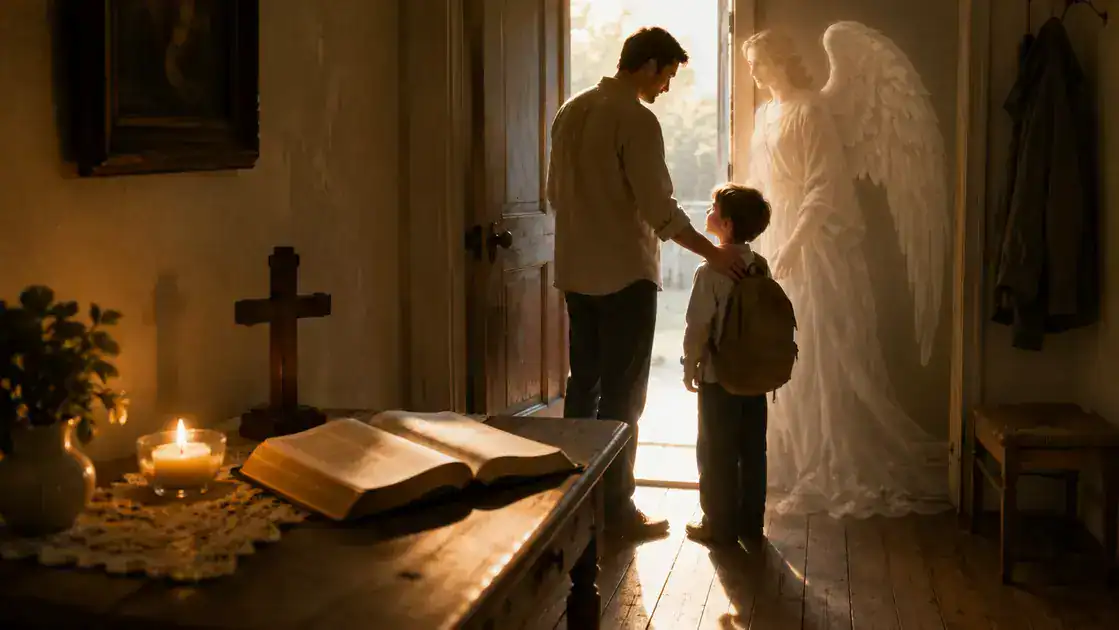
Living under angelic protection grows out of small, steady habits more than one grand moment. Begin the day with a short blessing at the doorway or a quiet morning prayer, and let that action set the tone for ordinary tasks. Such practices become gentle reminders that your life is held, turning routine mornings into moments of grace.
Meals, travel, and bedtime offer natural pauses for simple petitions and thanks. Saying a short verse like Psalm 91 aloud before leaving the house or offering a brief prayer before meals invites a sense of watchful care without ceremony. These repeated acts create an everyday vigilance—not anxious watching, but steady attention to God’s presence through the ministry of angels.
Vigil also shows itself in how you shape your home: a tidy prayer corner, a lit candle at dusk, hospitality to neighbors, and forgiving words among family. These choices make the house a place where blessing can rest. Over time, the rhythm of prayer, welcome, and kindness teaches everyone in the home to live as if held by faithful guardians, each small habit weaving the ordinary into a holy pattern.
A prayer of blessing for your home
May this house be a place of calm and care. Remember that you are never truly alone. The same God who watches the dawn watches your doorway. Let that thought bring gentle courage to small tasks and quiet nights.
Lord, send your holy angels to guard these rooms, to keep soft watch over sleep and work. Help us speak simple blessings at doors and tables, so our days are marked by trust, not fear. Teach us to welcome the stranger and to forgive within these walls.
Take these small practices into your mornings and evenings. A short prayer, a lit candle, a kind word — each act opens the door for grace to enter. Walk with peace, with wonder, and with the steady comfort that you are held.
Amen.
FAQ – Questions about consecrating your home and angelic protection
Do guardian angels really exist according to Scripture?
Yes. Scripture speaks of angelic care in passages like Psalm 91:11, which says God commands his angels to guard you, and Matthew 18:10, where Jesus speaks of angels who behold the Father’s face on behalf of the little ones. Both the biblical witness and long Christian tradition affirm their ministry as God’s servants.
How do I consecrate my home without a priest or formal rite?
You can use simple, Scripture-based gestures: read a short blessing such as Numbers 6:24–26 aloud at the threshold, sprinkle a little blessed water, light a candle, and offer a clear petition asking for God’s protection. These actions are sacramentals—signs that point to God’s care—and the key is faithful simplicity rather than elaborate ceremony.
Can I ask Archangel Michael or guardian angels for help directly?
Yes, you may ask for their help in prayer, but always as a way of turning to God. Scripture names Michael as a protector (Daniel 12; Revelation 12), and Christian devotion has long included brief petitions to saints and angels. Keep requests humble and Christ-centered: the angels are agents of God’s will, not substitutes for prayer to the Lord.
Will consecration or blessings protect us from every danger?
Blessings and consecrations do not guarantee a life without trial; they name God’s presence and ask for his care. Scripture and tradition offer protection as a promise of faithful watchfulness rather than a magic shield. The practice shapes trust and invites God’s grace into daily life, helping us face hardship with courage and hope.
Are there specific Scriptures or prayers I should use regularly?
Psalm 91 and the Aaronic blessing (Numbers 6:24–26) are especially fitting for home use. Short prayers such as a petition for angels to guard the house, a recitation of Psalm verses at key moments, or a daily family blessing before meals create a steady rhythm of devotion rooted in Scripture and tradition.
How do I make angelic protection part of everyday life?
Create small, repeatable habits: a morning doorway blessing, a brief prayer before travel, a short evening thanksgiving, a tidy prayer corner with a candle and Bible, and acts of hospitality and forgiveness. These steady practices form a lived vigilance—an ordinary rhythm that invites grace and remembers that your home is held within God’s care.