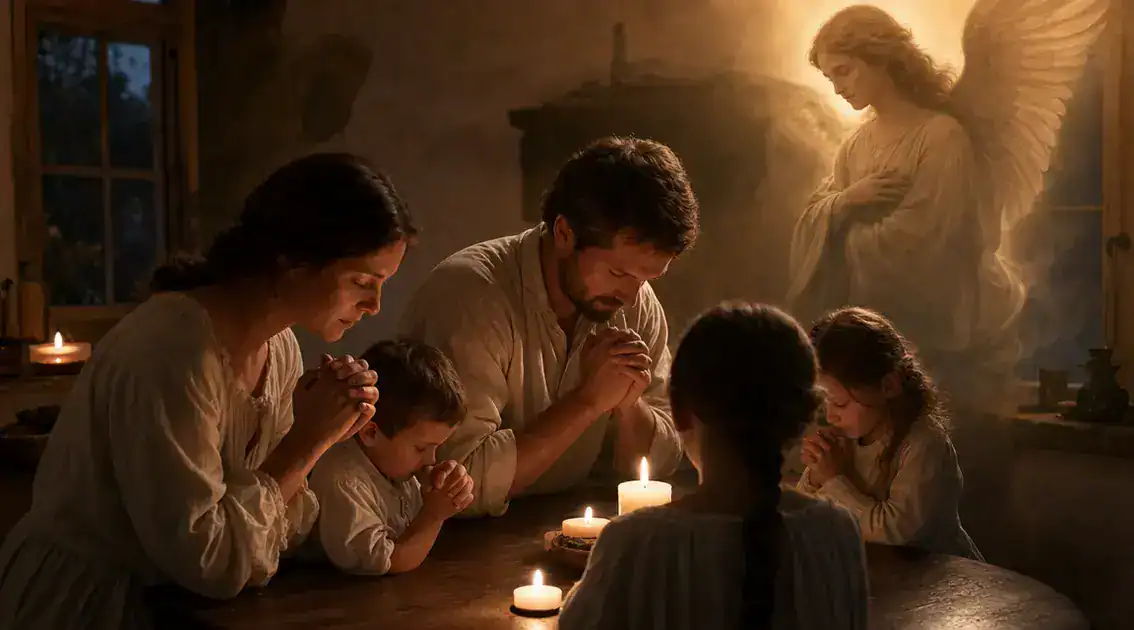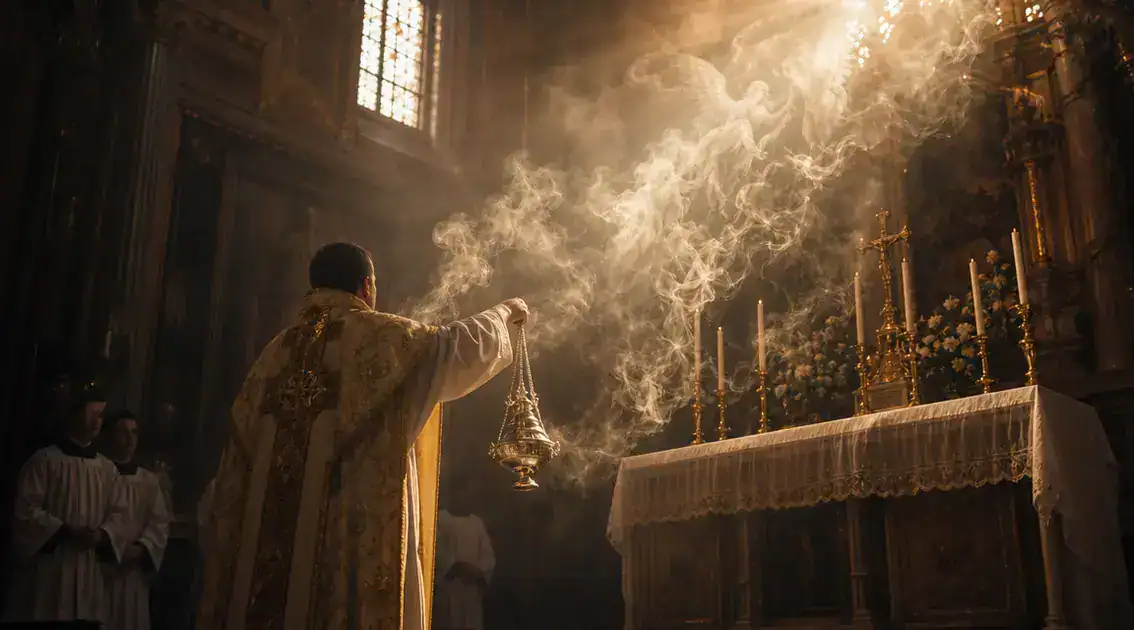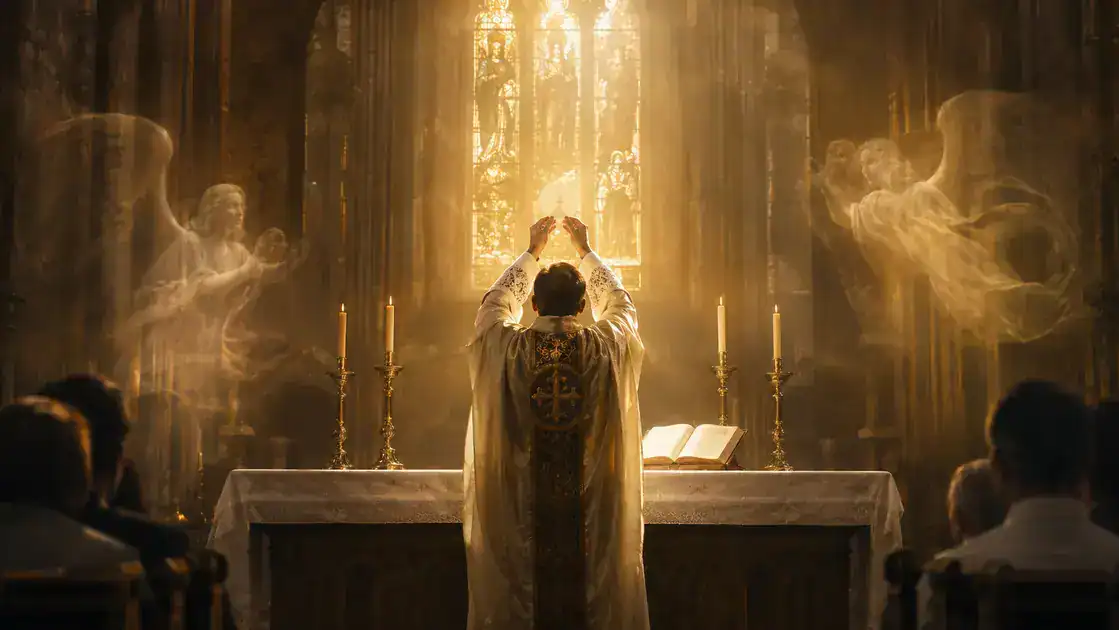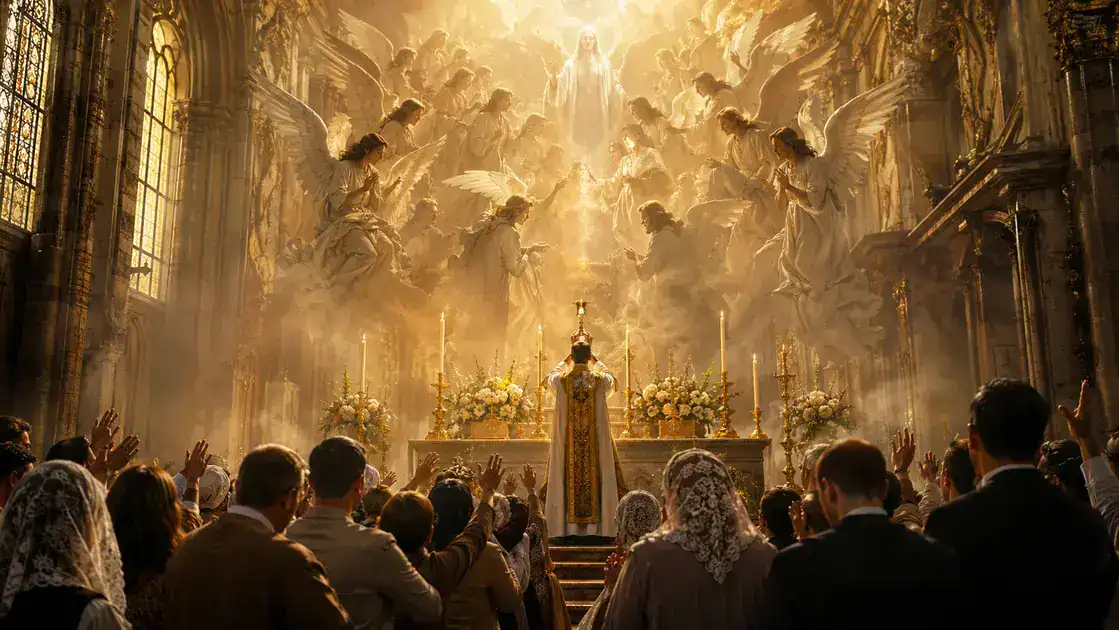
Sanctus angels in the liturgy describe the biblical and traditional conviction that when the assembly proclaims ‘Holy, holy, holy’ it joins the angelic praise before God’s throne, uniting human worship with heavenly adoration and preparing the faithful to enter the Eucharistic mystery with reverent awe and communal participation.
sanctus angels in the liturgy — have you noticed that sudden hush when the congregation feels lifted toward heaven? Walk with me through Scripture, tradition, and the Mass to discover how the assembly quietly becomes part of the angelic song.
The biblical roots of the sanctus: Isaiah’s vision and heavenly praise
In Isaiah’s vision the temple is alive with light and sound: the Lord sits high and lifted, and around the throne the seraphim call out in a voice that fills the space. Their cry rings out as “Holy, holy, holy”, a threefold praise that points to God’s utter otherness and mercy. The scene is both vast and intimate, as heaven’s song touches the prophet and draws him into the movement of divine worship.
Isaiah answers not with triumph but with a sense of smallness—“Woe is me,” he confesses—until a seraph touches his lips with a coal from the altar and his sin is taken away. That simple, tender act links the vision’s praise with cleansing: awe and pardon belong together. In the Mass, the Sanctus carries that same pairing, calling the assembly to join the angelic hymn while being invited into God’s forgiving presence.
The book of Revelation echoes this heavenly chorus, where living creatures and multitudes of angels repeat the thrice-holy song, showing that liturgy belongs to a larger, cosmic praise. When the assembly sings the Sanctus, it steps into that timeless worship, letting incense, throne imagery, and the ancient words lift ordinary voices into the angelic song. In this way, the biblical roots of the Sanctus make the Mass a place where human praise and heavenly adoration meet and transform the worshiper.
Theological meaning: why the assembly sings with the angels
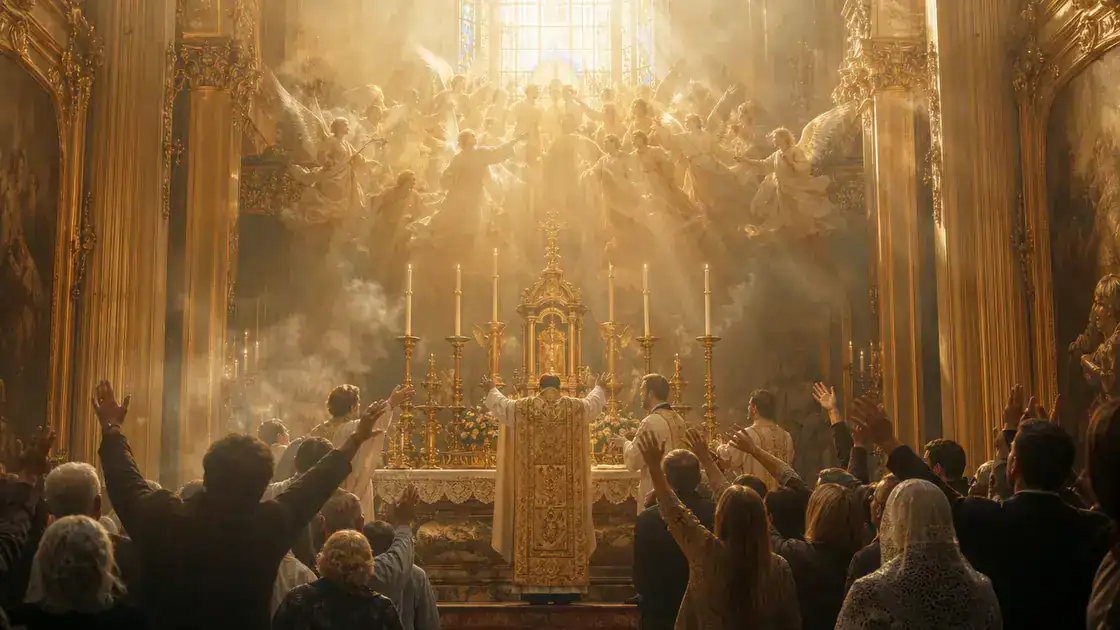
When the congregation sings the Sanctus, we do more than repeat ancient words; we step into a scene that Scripture and tradition have always held up to us. The cry of heaven—“Holy, holy, holy”—is not distant noise but an invitation. As the angels praise around God’s throne, the assembly joins that same song, so our voices become part of a larger chorus that links earth and heaven.
This joining has deep meaning: liturgy is a shared action that makes present what it names. In the Eucharist, our praise rises with the offerings, and the Church declares an ancient truth in which worship is both remembrance and participation. Here, the faithful are invited into participation in heavenly worship, receiving cleansing, strength, and the promise of unity with God and one another.
That truth changes how we stand and sing. The Sanctus calls for quiet awe, humble hearts, and a confident hope that God is near. When we lift our voices together, we practice a habit of unity and wonder that shapes our lives beyond the pew. Singing with the angels is less about spectacle and more about being formed into a people who live and pray as if heaven has already begun among us.
Where the sanctus sits inside the eucharistic prayer
The Sanctus normally comes at the close of the preface, rising like a breath from the whole assembly just before the heart of the Mass. It marks the hinge between thanksgiving and the Eucharistic Prayer, so the community moves together from spoken praise into a deeper, prayerful stillness. In many rites the words echo the angelic song of heaven, reminding us that our voice joins a much larger chorus around God’s throne.
Liturgically this placement matters because the Sanctus functions as both acclamation and entry. It is the people’s response to the priest’s invitation and a shared assent to what follows in the Eucharistic Prayer. The threefold “holy” shapes the space: it draws attention upward toward God’s holiness while rooting the assembly in a common posture of reverence and expectation.
Practically, knowing where the Sanctus sits can change how you pray it. Instead of treating it as a routine line, try to notice the movement from the priest’s words into the congregation’s voice, breathe with that shift, and let the moment gather your attention. When we sing or speak the Sanctus with awareness, we practice joining heaven’s praise and prepare our hearts for the sacred action about to unfold at the altar.
Historical shapes: how ancient liturgies heard the heavenly choir
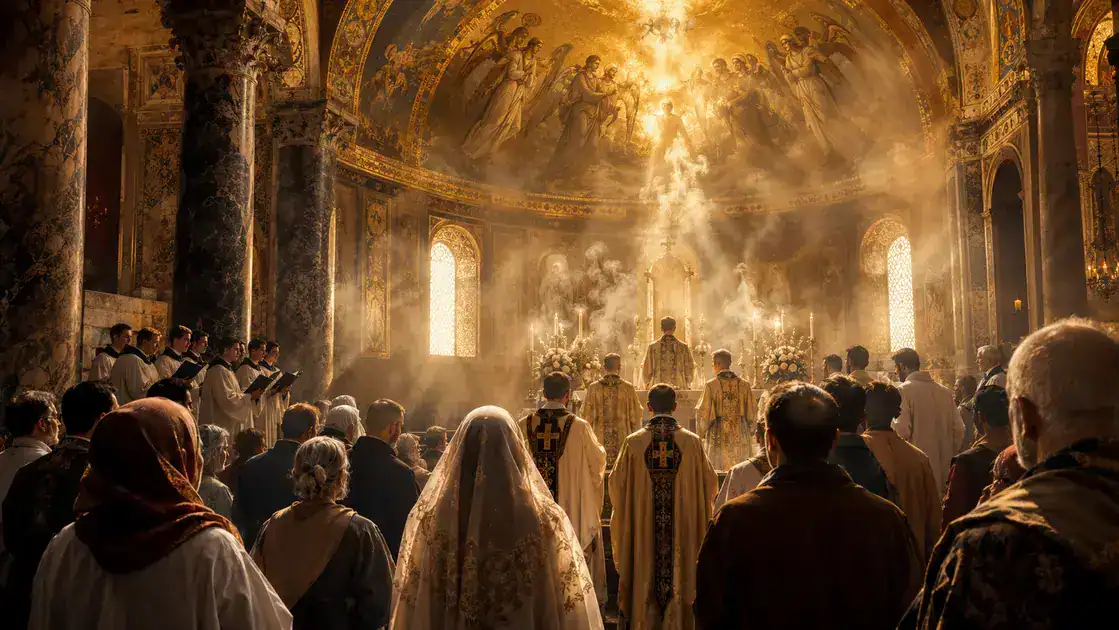
Ancient Christians heard the Sanctus as a living link to the temple and the prophets. In synagogue and temple the thrice-holy praise echoed in Isaiah and later in Revelation, and the early Church carried that sound into its worship. The words became a bridge: the people on earth joining the song that the biblical vision places around God’s throne.
Over time different churches gave the hymn their own shape while keeping the same voice. In the East the Trisagion and the Cherubic Hymn rose in the midst of the liturgy with rich chant and incense, while in the West the Latin Sanctus took on plainchant and later polyphony in cathedral settings. These forms kept a shared aim: to make the assembly feel part of a heavenly chorus through word, melody, and sacred space.
Hearing those ancient shapes today can change how we stand and sing. The older rites show that liturgy is not only saying words but entering a story where angels and people worship together. When you listen to the chant, smell the incense, or notice the slow turn of prayer, you are touching a very old practice that invites the faithful to join heaven’s praise here and now.
Angelic imagery: incense, throne, and the language of transcendence
The image of incense rising before a throne gives the Sanctus its weight and wonder. In scripture, smoke and song meet around the divine seat, and angels stand where heaven touches earth. Those elements place our small praises inside a vast scene, where sight and scent point beyond what we can name toward the holy presence.
Incense in the liturgy works like a simple language of prayer. The smoke lifts the congregation’s prayers, and the scent helps the body remember devotion. The throne and angelic figures remind us of God’s majesty and care, and together they teach that worship is both humble longing and confident awe. These symbols do not hide God; they help our hearts reach up.
Noticing these signs can change how you pray at Mass. Let the rising smoke call you to quiet attention, let the throne imagery steady your trust, and let the idea of angels lifting praise invite you to join the song with a sincere heart. In that small, attentive movement the ordinary assembly touches the same timeless worship sung around the throne.
Practical devotion: ways to enter the angelic song during Mass
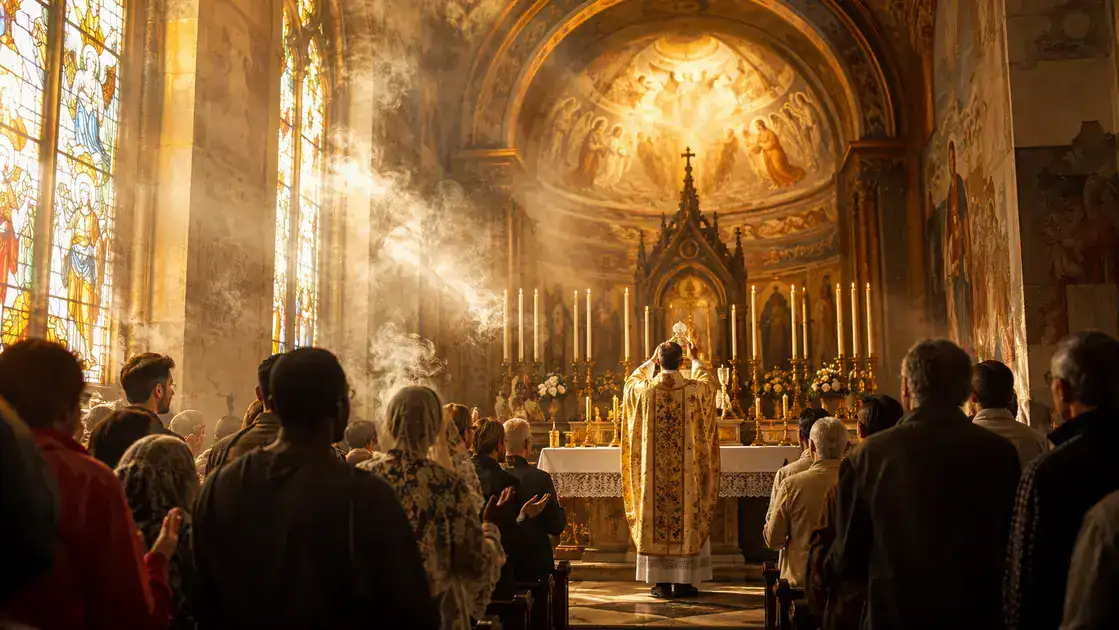
Start with a quiet offering before Mass: a short prayer asking to be joined with heaven, a slow breath to steady the body, and a simple turning of the heart toward worship. This small pause helps the senses settle so the words and music land more deeply. In that cleared space, the mind is ready to listen and the voice is ready to follow.
During the Sanctus, try to sing with attention rather than speed through the line. Match the breath of the people beside you, feel the lift of the melody, and let the threefold “holy” slow your thinking. Posture and gesture matter too—open hands, bowed head, or uplifted face can shape an inner readiness to join the angels in praise.
After Mass, keep a small practice that deepens the habit: recall the moment of the Sanctus, name one line that moved you, and carry that wonder into the day. You can also learn a simple chant or sit in brief silence before Communion to make the meeting with heaven more familiar. Over time these tiny acts become a steady way of living as a people who pray together with the angelic song.
Tradition and voices: patristic, medieval, and modern reflections
For the early Church, the Sanctus was more than poetry; it was a window into a larger worship that already filled heaven. Fathers and mothers of the faith often described the liturgy as a meeting where earth and heaven greet one another, and the cry of angels became a model for earthly praise. This view helped people see the Mass as part of a continuous story of prayer that stretches back to Isaiah and forward to Revelation.
In the medieval ages that sense of wonder found new musical and artistic forms. Monastic chant and cathedral polyphony let voices linger on the threefold “holy,” and sacred art filled apses and mosaics with throne and angel imagery. The result was a lived theology: prayer shaped by sound, space, and beauty so the assembly could feel itself joined to the timeless chorus of heaven.
Today, voices from the liturgical movement and recent councils invite us to reclaim that ancient vision while keeping it simple and shared. Active participation asks the whole people to sing, listen, and be formed by the rite, not just watch it. When ancient echoes, medieval music, and modern devotion meet, the Sanctus becomes a practical habit: a daily way for ordinary people to join the angelic song with heart, voice, and a steady, humble wonder.
A prayer to carry the Sanctus
May the memory of the angelic song rest gently in your heart, softening your steps and opening your lips to praise. As you go, remember that when the Church sings “Holy, holy, holy” it is inviting you to join a larger chorus that holds mercy and wonder together.
Practice small acts that keep that song near: a quiet breath before Mass, attention to the rising smoke of incense, a slow, sincere singing of the Sanctus. These simple habits help the praise move from the building into your daily life, shaping how you face work, rest, and care for others.
May the holiness you name in worship be the same presence that steadies your heart in ordinary moments. Receive this blessing: that heaven’s praise may shape your hope, strengthen your love, and guide your steps. Amen.
FAQ – Questions about the Sanctus and angelic praise
Where does the Sanctus come from in Scripture?
The Sanctus grows directly from Isaiah’s vision where the seraphim cry, “Holy, holy, holy” (Isaiah 6:1–3), and from Revelation’s heavenly liturgy where living creatures and angels repeat that same praise (Revelation 4:8; 5:11–14). Early Christian worship took these biblical scenes and wove them into the Eucharist so the assembly could speak the language of heaven.
Why is the word “holy” said three times?
The threefold acclamation emphasizes the depth and fullness of God’s holiness. In biblical poetry, repetition intensifies meaning; church tradition also reads it as a sublime way to name God’s perfect holiness. Over the centuries theologians and worshiping communities have seen in the triple cry both the absolute otherness of God and a reverent echo of the mystery of God revealed in Scripture.
Do angels really join our worship at Mass?
Scripture and tradition portray angels as worshiping beings who stand before God’s throne (e.g., Revelation 4–5). The Church teaches that the liturgy makes present the heavenly worship, so when we celebrate the Eucharist we enter into that same reality. This is not merely poetic: it is the conviction that heaven and earth meet in prayer and sacrament.
How can I pray the Sanctus so I truly join the angelic song?
Attend with a simple, steady posture—settle your breath and let the words land in your heart. Sing or speak the threefold “holy” slowly enough to mean it, follow the assembly’s rhythm, and let the rising incense and silence help gather your attention. These concrete practices echo the liturgical movement’s call to active, conscious participation and help transform a line into an experience of shared worship.
Is the Sanctus an essential part of the Eucharistic Prayer?
Yes. Liturgically the Sanctus traditionally concludes the preface and opens the Eucharistic Prayer, serving as the people’s acclamation before the central action of the Mass. Its place has deep roots in the Church’s rites and expresses the assembly’s assent to enter the mystery that follows.
Can the Sanctus shape my life outside of Mass?
Absolutely. Repeating the angelic praise forms a habit of wonder and humility that reaches beyond the church building. Remembering the Sanctus during the day—briefly recalling the words, a breath of praise, or a moment of quiet—helps daily life be lived as ongoing worship, shaping how you work, rest, and love others in light of God’s holiness (see Psalms and the long tradition of prayerful life).