Jacob wrestles with an angel is the biblical night encounter in which Jacob’s physical struggle becomes a sacred encounter—he persists in prayerful combat, receives a blessing, is renamed Israel, and departs marked by a wound that testifies to transformation, showing that spiritual wrestling can shape identity and covenantal calling.
Have you ever wondered how a single night can alter a life? jacob wrestles with an angel describes that strange, intimate struggle — a riverbank held in silence where blessing is wrestled into being. Walk the scene with me and listen to what the text quietly holds.
The nighttime encounter: reading Genesis 32 closely
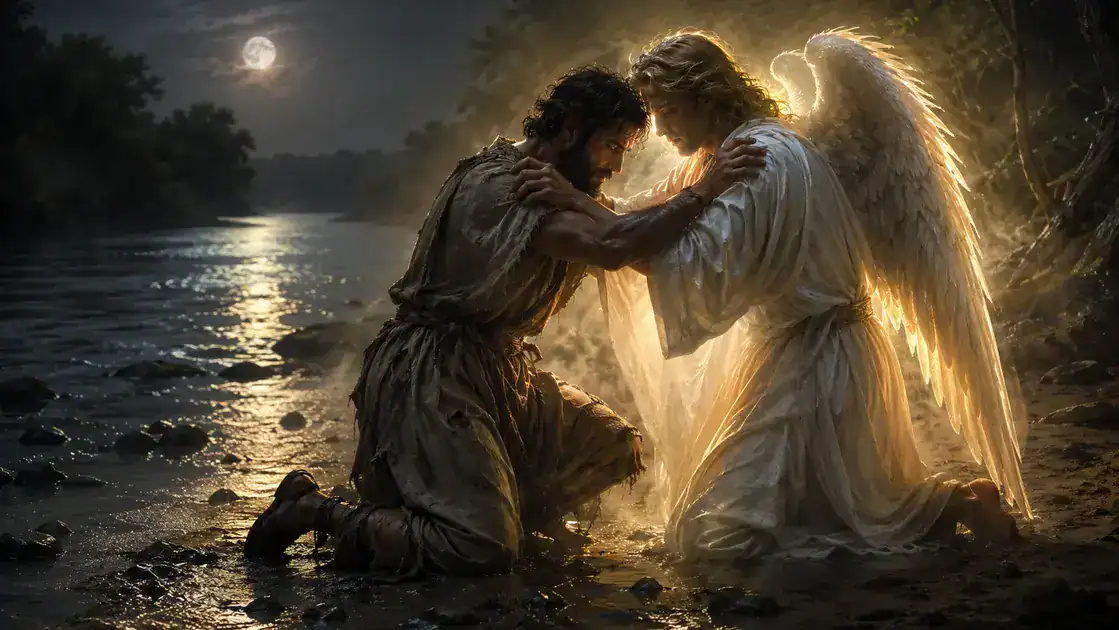
The night at the Jabbok is close and heavy: Jacob sits with a divided camp and a heart full of fear. He has sent gifts ahead and waited in the dark, listening for footsteps. In that hush a stranger comes and the quiet world shrinks to the single, startling grip of two bodies in struggle.
They grapple in the mud and moonlight, hands locked, breath clouding in the cold air, and the scene feels like prayer given skin. The text tells us he wrestled with a man until daybreak, and that simple line opens a thousand questions: is this a stranger, an angel, or God veiled in human form? The fight shows Jacob’s fear, his cunning, and a fierce refusal to let go until he meets a blessing.
As dawn presses pale light across the river, a touch cripples his hip and a new name is spoken—Israel. The limp becomes a holy sign, the blessing and the wound held together. The moment keeps its mystery: a night that makes identity, a struggle that shapes destiny, inviting us to reflect on how our own dark nights might be the place where we are changed.
Jacob’s fear and faith: psychological and spiritual portrait
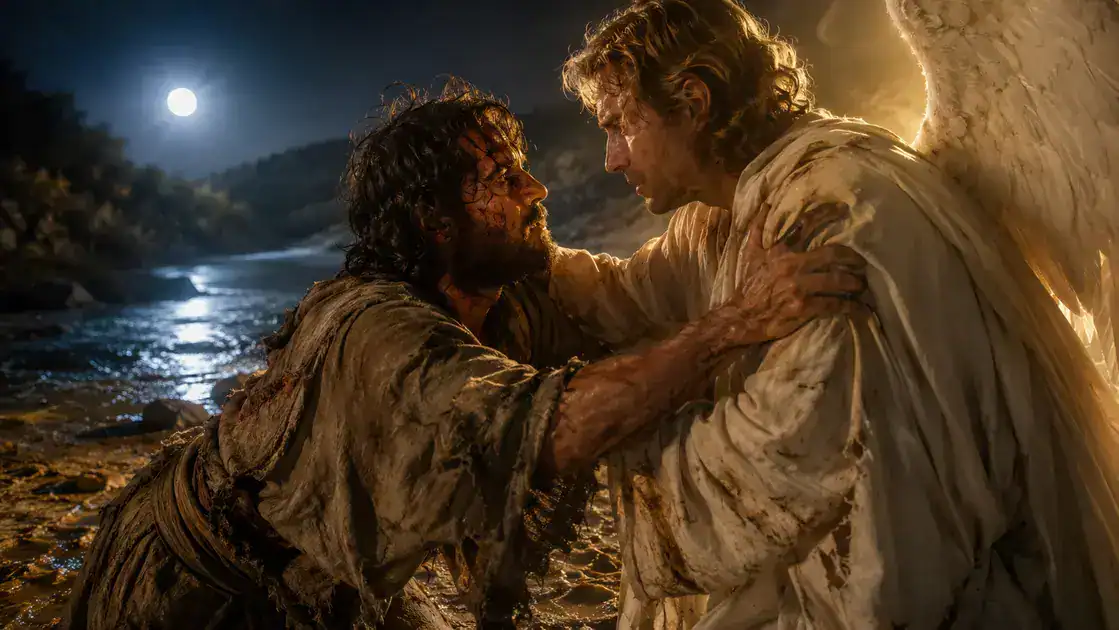
Jacob stood on the riverbank with his heart pulled between dread and a fragile hope. He had sent his family across and kept watch in the dark, alive to every sound. When a stranger came and hands closed on him, that moment showed how fear and faith can live side by side in one soul.
The physical struggle reveals more than strength; it reveals a spiritual posture. Jacob is shrewd, tired, and fierce, bargaining with the night until he cannot let go. His hold is not passive trust but an active clinging — a form of prayer that grips reality and will not release until it meets a blessing. In this way the scene teaches that faith sometimes looks like persistent struggle rather than calm assurance.
The morning brings both a wound and a name. The injured hip and the new name, Israel, do not cancel each other; they belong together as witness and gift. Jacob leaves the river changed, limping yet blessed, and his story invites us to see our own hard nights as places where fear and faith wrestle and, by God’s mercy, reshape us.
Who is the angel? Jewish and Christian readings
The text of Genesis is spare: a man appears, they wrestle through the night, and at dawn Jacob says he has seen God. Readers linger over that line in Genesis 32:24–30, because the story names a human struggle and then speaks of a divine meeting. The plain words leave space for wonder, and that very openness has shaped how Jews and Christians have read the scene across the ages.
In many Jewish readings the figure is understood as an angel—often a guardian or adversary tied to Esau’s camp. Midrash and some medieval commentaries imagine a heavenly messenger testing or wrestling with Jacob on behalf of nations. This view keeps the encounter within the world of angels and yet insists the meeting is deeply spiritual: the angel stands as God’s agent, and Jacob’s refusal to let go becomes a moment of covenantal insistence.
Christian interpreters often press the language of the text in another direction, seeing in the struggle a theophany or a pre-incarnate appearance of Christ. Jacob’s own words—“I have seen God face to face”—make that reading powerful, because the blessing and the new name, Israel, are given in the wake of the encounter. Whether called angel or God, the figure marks a turning point: the night’s struggle becomes a sacred shaping of identity, a reminder that our hardest wrestlings may also be where blessing and transformation first take hold.
Wrestling as prayer: the encounter as spiritual discipline
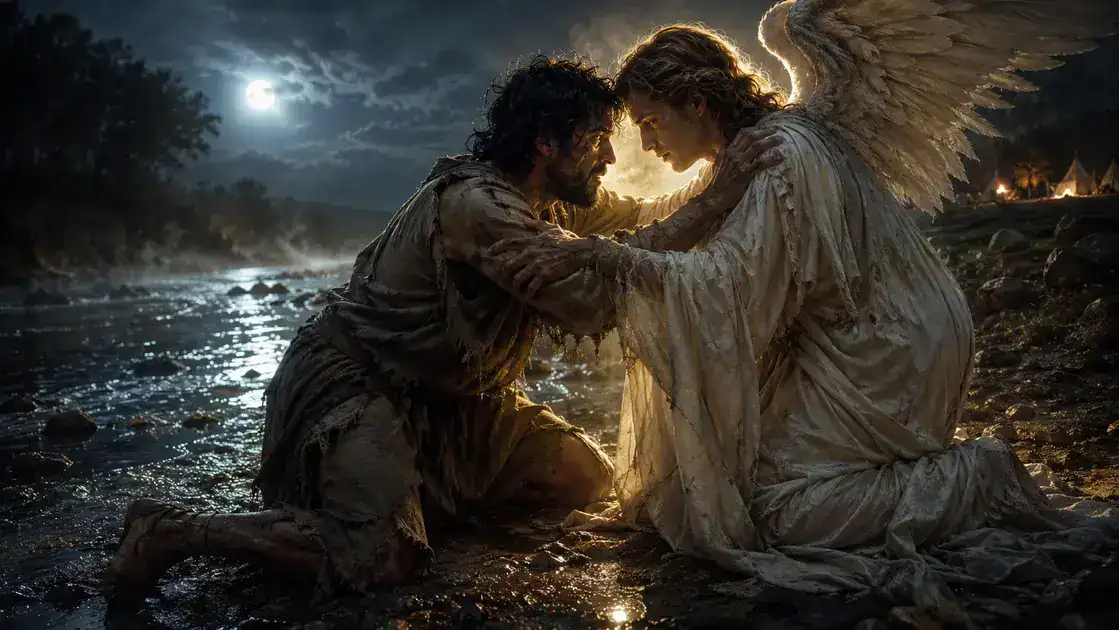
The encounter at the river becomes a long, lived prayer where movement is speech. Jacob does not offer a tidy petition or a calm litany; he holds on through the night, breath and body straining. In that stubborn clutch we see wrestling as prayer—a physical, persistent reaching toward blessing.
Spiritual discipline often looks quiet, but here it looks like effort and grit. Staying, grappling, refusing to release—these actions resemble a vigil or a night of steady petition. Jacob’s grip teaches that prayer can be active and messy, a trust that keeps working even when answers do not come quickly.
The outcome is not instant comfort but a changed life: a wound and a new name. That tension—pain and blessing held together—shows how discipline forms us. If we bring our restless nights and honest struggles to God, they can become places of shaping, where persistence meets mercy and the soul learns a deeper faith.
Renaming and transformation: from Jacob to Israel
The moment of renaming lands like a quiet verdict at dawn. Jacob, who once clutched heels and schemes, receives a new sound of himself: Israel. The name catches his story and reshapes it, turning a lifetime of slipping and grasping into a calling to wrestle with God and with people in faith.
A name in the ancient world held weight; it marked who you were and who you would become. Here the word is not given lightly but after a night of struggle and a wounded hip. The gift of a new name is also a promise—a way of seeing Jacob now that the struggle has touched him and changed him at the core. That is why the text pairs the name with a blessing, making identity and vocation come together.
The limp and the blessing belong to the same story and to the same life. Jacob walks away marked and named, both vulnerable and commissioned. In our own lives, wounds sometimes open the door to calling, and a hard night can make clear the work God means to do through us. Holding these twin truths—pain and purpose—helps us live into whatever new name our life may be given.
Memory and worship: how the story shapes liturgy and art
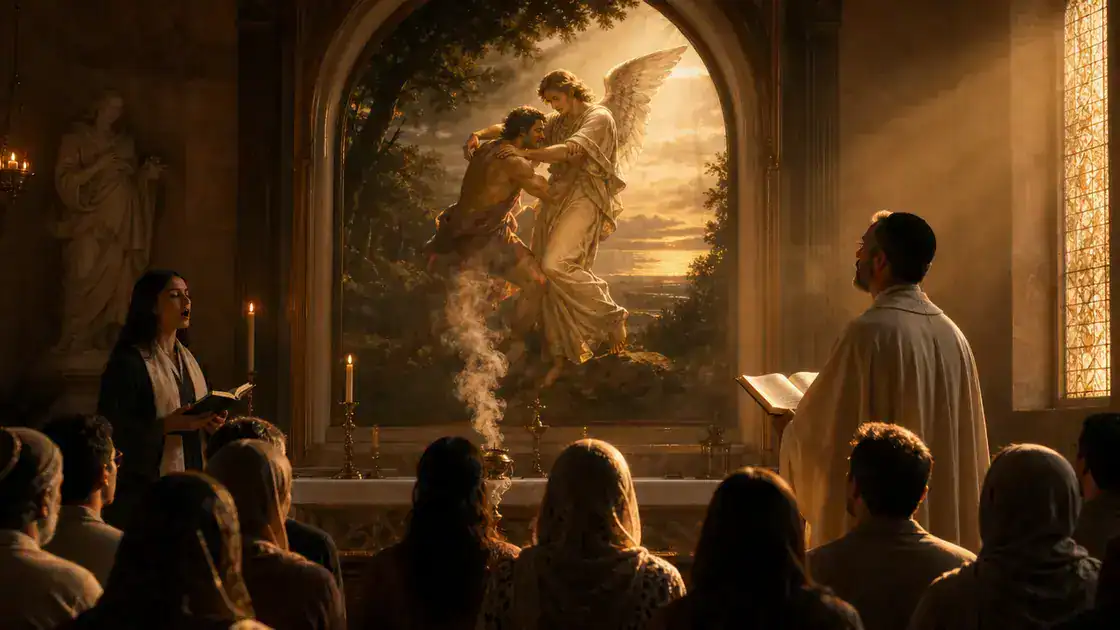
The story of Jacob’s wrestling does more than tell an odd night; it lives in the memory of worshiping communities. People gather around the tale because it names a common human moment: a dark hour that leads to change. When preachers, poets, and teachers retell the scene, they invite congregations to remember that struggle can be holy and that memory shapes how a people pray.
In worship the narrative becomes a tool for formation. Hymns, prayers, and liturgical sermons borrow its images—holding on, limping, receiving a new name—to help worshipers name their own nights of trial. These liturgical echoes do not solve the pain, but they give language and ritual to it, turning private fear into shared memory and opening a path toward mercy and blessing.
Artists and craftsmen have also kept the story alive, carving it into stained glass, painting it on altarpieces, and shaping it into icons that a congregation can behold. Such art does more than illustrate; it summons the body to remember. Seeing Jacob’s wound and blessing invites a posture of humble attention, a way of worship that knows struggle and trusts that God meets us in the wrestling.
Personal application: when night struggles become doors to blessing
Night struggles often feel private and heavy, like a long, cold river you must cross alone. Jacob’s story helps us see that such nights can be full of meaning: the fight itself can be a way of reaching for blessing when calm words fail. When wrestling becomes a form of honest prayer, the soul learns to hold both fear and hope at once.
Practically, this means staying with what hurts and naming it honestly before God and a trusted friend. Persistent prayer, small acts of faith, and listening in silence build a pattern of trust that does not demand quick answers. These habits shape a holy endurance where wounds and mercy meet, and they let blessing arrive even through pain.
We are invited to leave the river changed, not simply triumphant. A limp or a scar can remind us of a gift received and a lesson learned, and a new step forward may carry a new sense of purpose. By bringing our nights to God with steadfast honesty and a readiness to receive both wound and blessing, we open the door for grace to reshape our name and our walk.
A prayer for the night that shapes us
As we leave the riverbank of this story, may you carry its quiet light into your own nights. The memory of Jacob’s struggle reminds us that God meets us where we are—tired, frightened, and holding on. May you know that a wound does not cancel a blessing; often the two come together.
Lord, meet us in our wrestling. Give us the courage to stay with what is hard and the grace to receive what is given. Let our prayers be honest and persistent, and let our endurance open us to mercy. Help us to live with both humility and hope.
May your scars become signs of a new name and a new purpose. When you walk forward, let the limp remind you of what was learned and the blessing you received. Share your story with a friend, bring your night into prayer, and trust that God is shaping you in ways you do not yet see.
Go in peace and wonder. Keep returning to the sacred story. Let it teach you to wrestle with truth, to wait for blessing, and to walk into each new day changed by grace.
FAQ – Questions about Jacob wrestling with the angel and its meaning
Who was the angel Jacob wrestled with?
The Genesis account is deliberately ambiguous (Genesis 32:24–30). Jewish tradition often reads the figure as an angel or heavenly messenger; many Christian interpreters also read the scene as a theophany or an appearance of God (some even see a pre‑incarnate Christ). In short, the text holds both views: an encounter with a heavenly being and, at the same time, an encounter with the divine presence.
Did Jacob really see God face to face?
Jacob himself says, “I have seen God face to face” (Genesis 32:30). That claim has been read as a genuine, transformative encounter with God’s presence rather than a full comprehension of God. Scripture often speaks of such piercing, limited encounters that change a person without removing all mystery.
What does the name Israel mean and why is it important?
The name Israel is rooted in Hebrew and is commonly understood as “he who strives with God” or “God strives.” The new name, given after the struggle, marks a change of identity and calling: Jacob is not simply renamed but is commissioned into a life shaped by that sacred wrestling and the covenantal blessing he receives.
Why does the story present wrestling instead of calm prayer?
The struggle shows a form of persistent, embodied prayer. Jacob’s refusal to let go models a faith that grapples honestly with fear, need, and hope. Religious tradition reads this as spiritual discipline: sometimes prayer is steady holding, not only words—persistence that refuses to accept a blessing without encountering God fully.
How can I apply this story to my own dark nights and struggles?
Bring your honest need to God and to a trusted companion. Persistent prayer, small faithful acts, and patient waiting shape endurance. Name your wound, lean into community, and remain open to change—the story teaches that wounds and blessings can come together and that transformation often follows faithful wrestling.
Is Jacob’s limp just a detail, or does it carry meaning?
The limp is a lasting sign (Genesis 32:31). It testifies that the encounter was real and costly, and it serves as a reminder that blessing may come with vulnerability. In liturgy and art the limp becomes a symbol: a holy mark of encounter, memory, and the life that follows being touched by God.