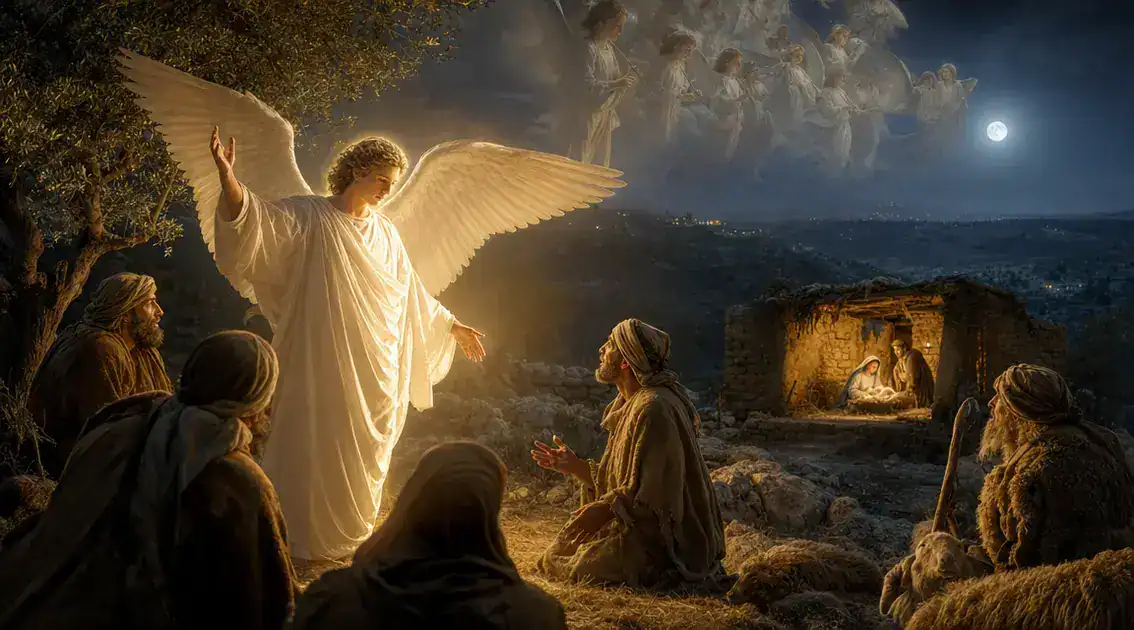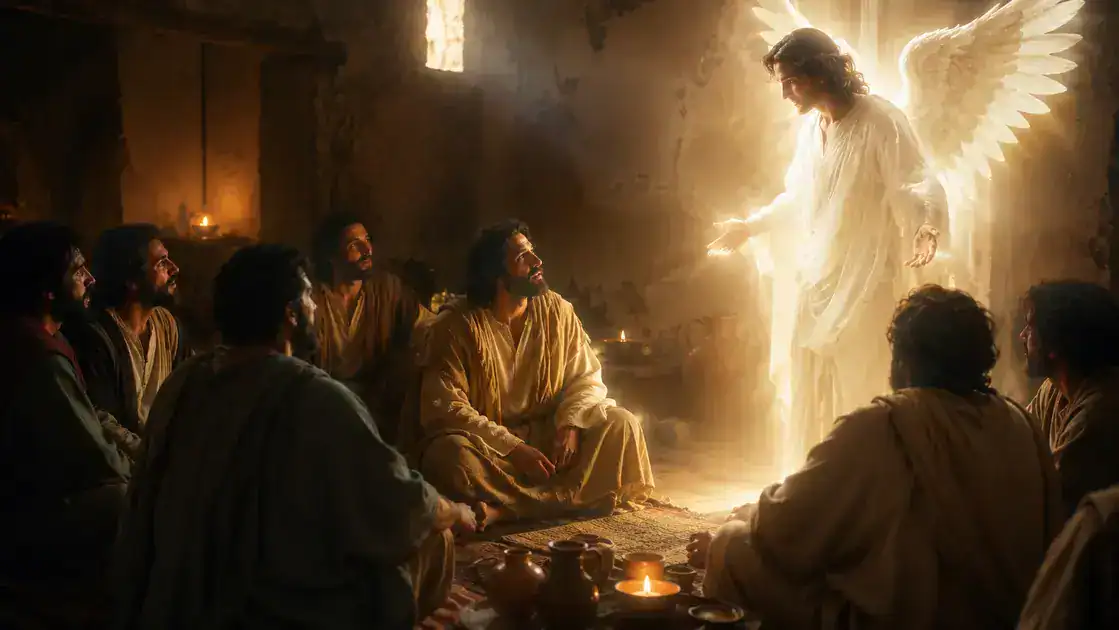

Elisha’s angelic army, as revealed in 2 Kings, refers to the heavenly host God displayed to Elisha’s servant—real, obedient celestial warriors stationed to protect and serve under divine command—teaching that God can grant vision amid fear, assure protection, and call his people to pray with trust in his sovereign care.
Have you ever pictured a night suddenly lit by a host of protectors? elisha’s angelic army appears in 2 Kings as a tender, astonishing moment that invites us to see how God reveals hidden help.
the scene at Dothan: context and danger
The night around Dothan was heavy with fear and urgency. Soldiers had come looking for a prophet, and the city felt small against the weight of an army outside. The biblical account in 2 Kings 6 shows a real, human danger: a plotted capture, a desperate king, and the sense that the world might tip into violence at any moment.
Inside a quiet house, Elisha and his young servant faced that threat together. The servant woke and saw the encamped enemy; his heart raced and his first thought was panic. Elisha did not deny the danger; instead he opened his friend’s eyes to a deeper sight, and Elisha’s angelic army became the true company standing guard. This moment teaches that ministry often lives at the meeting point of visible threats and invisible help.
When we sit with this scene, we find a calm that is not naïve but rooted in divine care. Danger does not erase God’s presence; it can make that presence more real to those who watch and pray. The story invites us to notice how fear can be met by a clearer view of protection, and how trust grows when our eyes are opened to what God is already doing on the hillside.
Elisha’s prayer and the nature of prophetic intercession
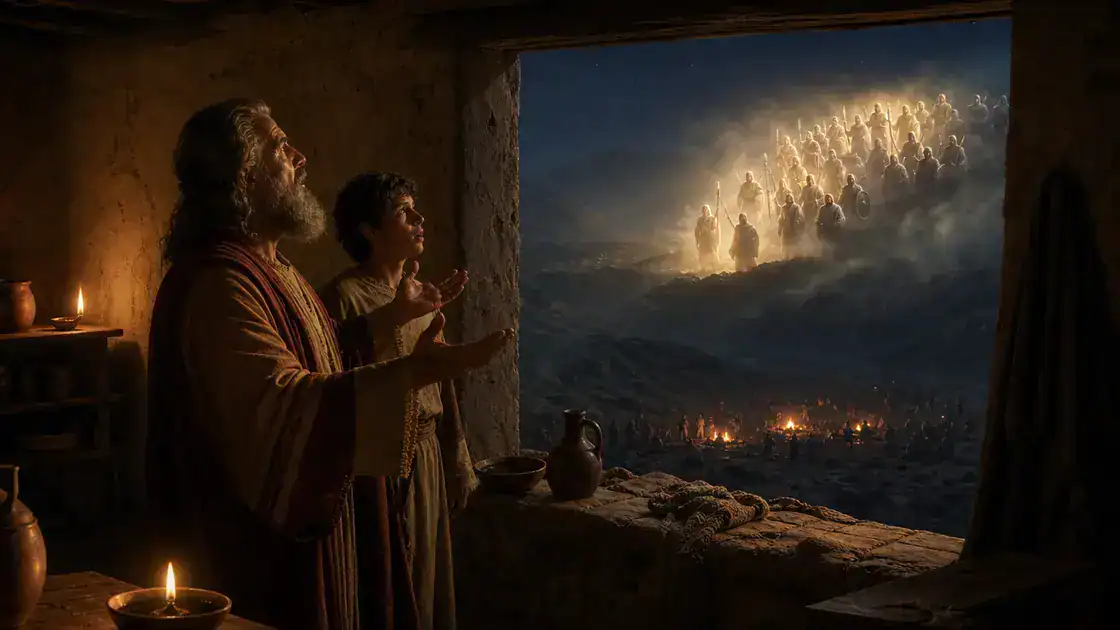
At Dothan, Elisha’s prayer rose like a steady lamp in a dark room. The young servant woke to a field full of armed men and felt panic; Elisha did not dismiss that fear but met it with a plea to God. Elisha’s prayer shows how a prophet stands between a people and the unseen, asking God to reveal what human sight cannot yet grasp.
Prophetic intercession is not a secret formula; it is a caring, bold asking grounded in relationship with God. The prophet speaks not for power’s sake but out of love and attention to danger. When Elisha prayed, the result was not magic but revelation: God opened eyes to the angelic company already present and at work on the hillside.
This moment invites a simple practice for our own prayers: ask God to open eyes where there is fear, confusion, or weakness. To pray like Elisha is to seek both protection and vision, to stand with others and ask God to make the hidden helpers known. Such prayer reshapes how we respond to threats and how we carry one another through the night.
the servant’s blindness: a spiritual and psychological reading
The servant woke to a battlefield he could see but did not understand. His eyes fell on armed men and his heart raced, a narrow focus that left out anything kinder or stronger than the threat. This is what Scripture calls a form of spiritual blindness: not an absence of sight, but a sight limited by fear, where the soul can only register danger and misses the fuller reality around it.
Fear changes the way the mind works. It shortens attention, speeds the pulse, and makes every sound a sign of harm. From a psychological angle, the servant’s panic is natural and honest; he had not yet learned to hold steady under pressure. Elisha’s calm presence shows the pastoral remedy: someone who knows the larger story can help steady the frightened heart and widen a frightened gaze.
When God opens eyes there is both a psychological relief and a spiritual revelation. The servant sees not only soldiers but a protective host at work on the hills, and that new vision reshapes his feelings and choices. This teaches us a practical way to pray and live—ask for vision where fear narrows your view, and trust that God can replace panic with a clearer, kinder sight of help already at hand, like Elisha’s angelic army standing around the city.
the opening of eyes: how God reveals the heavenly host

When Elisha prayed and God answered, the servant’s world changed in an instant. What had felt like a plain of enemies became a scene full of light and purpose. The moment of revelation was quiet and sudden: his fear did not vanish by force, but his sight was widened so he could see the help that was already there.
The Bible shows us that true sight is often a gift from God, not only a matter of the eyes. God opens eyes to show what the heart cannot yet trust. The angels on the hills are not a distraction from God’s rule; they are signs of care and instruments of protection. This helps us see that heavenly presence joins God’s action, offering comfort and order amid what seems chaotic.
That scene invites a simple spiritual practice: ask God to open your eyes where you feel small or afraid. In prayer, name the fear and ask for the grace to see more than the threat. Often the change is gentle—a new calm, a different focus—and it reshapes how we move forward, knowing we are watched over by a faithful, unseen company.
angelic hosts in Scripture: echoes from Psalms to Revelation
The Bible speaks of angelic hosts again and again, painting a steady thread from the psalms to the final visions of Revelation. In many passages they gather not simply as messengers but as a vast company that surrounds God’s throne and moves through history with purpose. These scenes give us a sense that angels are woven into God’s care for the world, both as worshipers and as helpers in human affairs.
In the Psalms, angels appear as voices of praise and as servants who obey God’s will, calling creation to honor its Maker. Prophetic books like Daniel and the narratives of the Gospels show angels acting as protectors and guides—bringing messages, opening doors, guarding lives. Even the story of Elisha’s angelic army echoes this double role: divine praise and faithful service meet protection on the battlefield.
Revelation brings those threads to a climax, where multitudes of heaven join in worship and where angels enact final judgments and deliverance. The result is a full picture: angels praise, proclaim, and act under God’s command. For devotional life this means we can listen for their echo in Scripture and learn to live with a quieter, confident faith—asking God to open our eyes to the hidden help that Scripture already honors as real.
theological implications: protection, sovereignty, and spiritual warfare
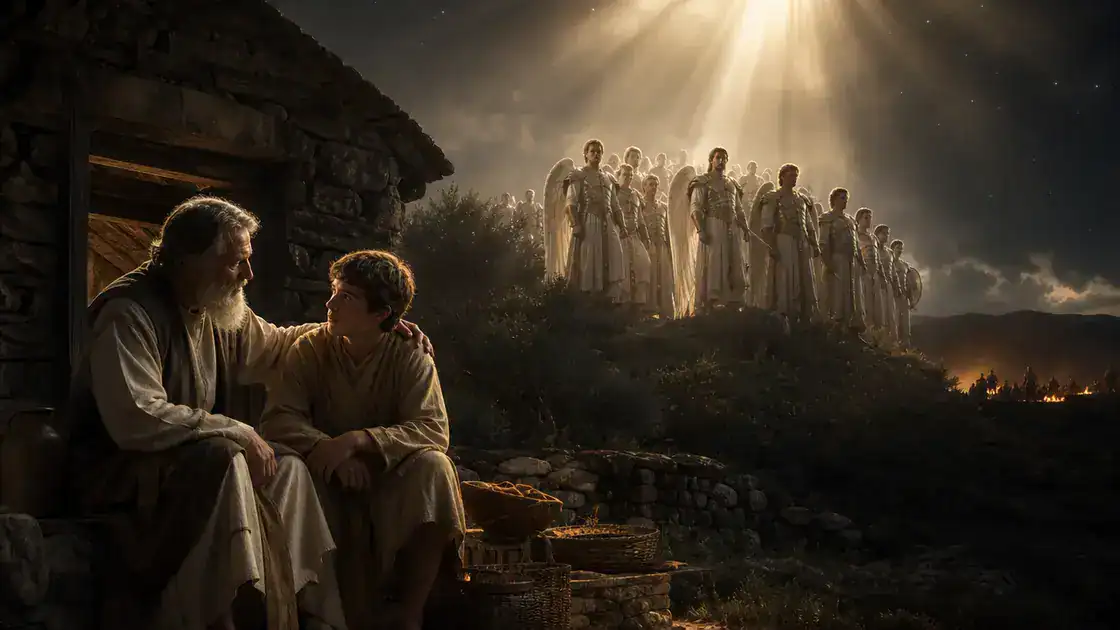
Angelic presence in the story of Elisha points first to protection. The angels do not erase danger, but they stand between the threat and the ones at risk. Scripture brings this idea again and again: God places help near those who cannot save themselves, and that presence often arrives as a company we cannot see with ordinary eyes.
That visible help also speaks to God’s sovereignty. The heavenly host acts under a shepherd’s command, not as a force of its own will. When we watch the scene, we are invited to trust a larger order—that God rules history and marshals care for his people. This trust frees us from the need to manage every danger alone.
Finally, the moment hints at how spiritual battle is real but not chaotic—what Scripture names spiritual warfare. Angels take part, but the fight belongs to God, and our role is to pray, to stand with one another, and to ask for open eyes. The image of Elisha’s angelic army encourages a faith that is alert yet peaceful, courageous because it rests in God’s hands rather than its own strength.
practical devotion: recognizing unseen help in daily life
When you move through a normal day, help often arrives without fanfare. You might feel a sudden calm in traffic, a timely word from a friend, or a clear thought that guides a choice. These small moments can be signs of unseen help, and learning to notice them turns ordinary hours into a quiet field of grace.
Simple practices help us pay attention. Begin with a short morning pause to name one worry and ask God to open your eyes; keep a small gratitude list for moments you sense care; tell a trusted friend about times you felt helped. These habits do not force visions; they tune the heart to receive what God already gives and invite a restful courage in daily choices.
Living with this awareness changes how we act toward others. When we expect God’s care, we are more likely to offer kindness, to pray for people under stress, and to share gentle stories of help rather than holding fear alone. Such living is not loud or certain; it is a steady practice of trust that roots us in mercy and keeps our steps gentle and brave.
A quiet prayer for opened eyes
Lord, in the hush of this story teach us to see with heart as well as eyes. Let fear meet calm and trust, like the servant who learned to look beyond what was first before him.
May the memory of Elisha’s angelic army remind us that help often comes unseen. Give us grace to notice small mercies, to name our worries, and to ask for fresh vision in simple, honest prayer.
Help us carry this hope into everyday choices: a gentle word, a patient step, a pause to breathe. When we feel alone, steady us with the sense that God’s care and hidden helpers are near.
Keep our hearts soft, our eyes open, and our feet ready to serve. May wonder and peace go with us as we walk, breathe, and pray. Amen.
FAQ – Questions about Elisha’s angelic army and unseen help
Do angels really appear in the Bible, and can we trust those accounts?
Yes. Scripture records many encounters with angels, from the host around God’s throne to visits on earth. Read 2 Kings 6 for Elisha’s story, Psalm 91:11 about God giving angels charge over us, and passages like Daniel 10 and Revelation for other heavenly activity. These texts have been honored across Jewish and Christian tradition as real encounters that point to God’s care.
What exactly happened at Dothan when Elisha’s servant saw the army?
In 2 Kings 6, a king sent soldiers to seize Elisha, and the servant woke to find the plain full of enemy troops. Elisha prayed, and God opened the servant’s eyes to see a protective host of angels around the hills. The scene shows that God can give new sight in the midst of real danger, revealing help already at work.
Why would God use angels instead of acting directly in a crisis?
Angels are God’s servants and instruments—part of how he cares for the world. Scripture (for example Hebrews 1:14) describes them as ministering spirits sent to help those who will inherit salvation. Their presence underlines God’s sovereignty and providence: he orders history and often works through a company of faithful servants to accomplish his purposes.
Can I ask God to open my eyes like Elisha’s servant? How should I pray?
Yes. The Bible invites us to ask God for wisdom and sight (see James 1:5 and Ephesians 1:18). Pray simply and humbly: name your fear, ask for clearer vision, and invite God to reveal what you cannot see. Expect grace in ordinary forms—peace, a helpful thought, a timely word from someone—rather than dramatic signs.
Does the story mean we are in a spiritual battle with angels fighting for us?
Scripture affirms spiritual struggle, and angels appear in biblical conflict scenes (see Daniel 10 and Revelation 12, and Michael in Jude). But these passages place angels under God’s authority; the true contest belongs to God. Our calling is to pray, trust, and live faithfully, seeking God’s protection while remembering that victory rests with him.
How can I notice unseen help in my daily life without looking for signs all the time?
Grow simple habits of attention: pause each morning, name one worry, and give thanks for small mercies through the day. Keep a short list of moments where you felt guided or helped and share them with a friend or spiritual mentor. Scripture and tradition teach that memory and gratitude train the heart to recognize God’s quiet care—what the psalms often call the Lord’s watching presence around those who trust him (Psalm 34:7).